The Weekly Re-Motivator: The Sounding Board


What do you think of when you think of the writer? A few days (or maybe weeks) worth of stubble? Empty bottles of liquor clinking around the derelict typewriter as he hammers away on a hopeless draft? A dark room, leather-bound books, lots of oak? A pathological aversion to sunlight? A tendency to yammer or babble, even when nobody else is in the room?

There’s a reason writers face such stereotypes, and a primary cause for that reason is that writing is so overwhelmingly a solitary activity. After all, no matter how many people you involve in the process, it all ultimately comes down to just you and the blank page. The overwhelmingly intimidating blank page. The soul-crushing perfect white expanse. The gaping void waiting to swallow your futile effort at wordsmithy. At the end of the day, it comes down to the writer and his blind, fumbling self. Or, sometimes, his multiple, ever-arguing, ever cross-contradicting selves.

Most of the writer’s problems are problems he must solve by himself. Plot’s knotted up? Well, it’s your plot — nobody else even knows what the various bits of twine and frayed yarn you’ve snarled like a plate of stale spaghetti are attached to. Characters misbehaving? You’re the only one inside their heads, you grab the bonesaw and go hacking around til you figure it out. Theme not coming through? Well, theme is subjective, so maybe you’re off the hook there.

There’s no denying it, we’re on our own most of the time.

(Photo by Drew Coffman.)

But.

There’s a wealth of good to be gained by inviting somebody else into our lairs, though seriously, it’s probably a good idea to clean up the liquor bottles and the lunatic scribbles covering the walls first. Because as much as you understand the Rube Goldberg machine that is your broken story, you’ve been living with it for a while. You’ve become desensitized to some of its finer features, like how a hoarder isn’t bothered by the pure funky wave of cat-pee-stink lurking in the dark corners of her house. You don’t even notice the peeled wallpaper, the layer of sticky film on the linoleum, the ring around the tub.

But when you spin out the tale and talk out the problems to somebody else, all of a sudden, it’s like turning on a floodlight in a dark alley. It’s like throwing open the window on a musty study. It’s like calling the cops on a house full of drunk teenagers. All of a sudden, all the little stuff you’ve been ignoring looks stupid bad; all the unsightly bits are not only eminently visible, they become outright embarrassing.

How did I miss that?

Where did that even come from?

What, to be direct, in the fargo was I thinking?

Whether the friend (and make no mistake, if they’re listening to you prattle on about your story for any length of time beyond five seconds, this person is your friend, and one you probably owe a few adult beverages to in exchange for the favor) who’s loaned you an ear has any solutions to offer or not, you will see your work in a whole new light, simply by virtue of the act of putting it on display for somebody else to see.

You just can’t catch it all by yourself. The echo chamber between your ears makes you deaf to the nonsense you’re spitting. The smoke you’re blowing up your own butt blinds you to the blemishes in your draft. (And yeah, I realize if the smoke is going up your butt, it would have a hard time blinding you, just … I’m almost there, okay? GOD.)

I’m not even talking about a beta reader. Make no mistake, you need good beta readers. But I’m talking about long before the beta reader stage. Maybe even before you’ve finished spawning the ill-formed first draft.

You need that sounding board.

And you owe this person for listening to your drabble.

Find them and be nice to them.

(For reference, this week’s SOCS prompt was the suffix -ing. While it’s virtually impossible to write without using this little structure, I thought that for the sake of doing something to death, I’d document my usage. Also, as an English teacher, I enjoyed the exercise. I used -ing 40 times in this post. Thirty times as a participle, eight times as a gerund, and twice as part of a non-verbal word. Yeah, I’m that kind of thinker. Sigh.)

This weekly Re-Motivational post is part of Stream of Consciousness Saturday. Every Saturday, I use LindaGHill‘s prompt to refocus my efforts and evaluate my process, sometimes with productive results.

The Weekly Re-Motivator: Write From the Wayside


If you look down the path any writer has walked, you’re likely to see piles and piles of detritus littering his footsteps. Busted plots like broken wagon wheels tossed by the wayside. Failed or half-formed characters curled up like dead beetles, hollow and husk-like, waiting for the broom. Exercises and sketches and scattered bits of dialogue and unturned plot twists like so much broken glass and twisted slag. People think of writers as creators, but they destroy and abandon twice as much again as they ever shape to completion.

But it’s a poor writer indeed who walks that path, strews the debris of all the ideas that didn’t make the cut in his wake like so many dead fish after an oil spill, and doesn’t double back now and then to pick through the scraps and see if a scarecrow can’t be fashioned out of the trash.

Photo by Rene Schwietzke @ flickr.

Because, sure, we toss those ideas out the window, discarded cheeseburger wrappers fluttering on the wind, because they didn’t work, because they don’t fit, because something about them makes them not belong. But just because an idea didn’t work with this project, doesn’t mean it can’t work for any project. We’re like sharks. If we stop moving, we die, and when one idea has run its course, the next one bubbles to the surface like the breath of some great beast of the deep. A writer has to be a hoarder, ready to cover old ground and see if some of those old puzzle pieces fit with the new project better than they fit with the old.

If it’s a writer’s nightmare to end up in a publisher’s slush-pile, wasting away for eternity in the purgatory of unread manuscripts, then it’s an idea’s nightmare to end up in the writer’s slush-pile, atrophying and turning to dust while waiting its turn to find just the right story to fit into.

But you’ve got to keep that slush pile.

Whether it’s old notebooks covered with chicken scratch and legions of notes hastily scribbled in the margins, or an overflowing cache of text documents in a dusty folder in the depths of your hard drive, or reams of parchment in the forgotten tongues of Eldritch terrors, those ideas have to be allowed to hang around. There’s no room for minimalism in the mind of the writer. There’s no sense in cleaning out the garage. A writer is only as good as his storehouse of ideas, only as good as the engine of his creativity.

So as you write, be ruthless. Be brutal. Cut the dead weight with savage abandon and cast by the wayside that which doesn’t make the story sing. But keep a roadmap, so you can find your way back to the gems that you leave behind.

This weekly Re-Motivational post is part of Stream of Consciousness Saturday. Every Saturday, I use LindaGHill‘s prompt to refocus my efforts and evaluate my process, sometimes with productive results.

The Narrative: Break It to Fix It


So the story is struggling along like a winged pigeon. It’s limping here, stopping to investigate this pile of birdseed, fleeing for its life with halting, awkward steps, trying occasionally to fly and only crashing back to the earth.

Something’s wrong with it, but you can’t put your finger on what it is. You like your premise. Your plot is fine. Characters are not bad either. But when you put it all together, it’s sort of like trying to reassemble the bits of a broken vase. In theory they add up to one complete thing, but in practice it just isn’t happening, and never will, because whatever broke the thing in the first place warped it before it broke.

Still, all the writing advice in the world tells you to keep writing even when the writing sucks, so you keep writing dutifully, pounding your face against the keys in the vain hopes that it won’t suck so bad the next time you come back to it, but each time it’s like you slip a little further down the well, you take another step into the unlit basement, you drift a little closer to the waterfall. Meanwhile you’re doubting yourself. The things you’re writing just don’t feel right, even above and beyond the standard-issue writerly self-doubt that affects all who practice the pen. If you’re writing crap, maybe you are crap, and maybe you should stop writing this really crappy crap and get back to the crap you could be doing that might not be total crap by the time you’re finished with it.

But then, a thought occurs to you, like a lone ray of sunshine piercing through a veil of clouds, or like a ping on the sonar detector you thought was dead when you crash-landed on the alien planet. The story isn’t broken, struggling toward its inevitable awful ending on legs that can barely carry it under the weight of its own suckitude. The story isn’t diseased, shambling forward with shaky, poxy steps while a fever of words burns it from the inside out. The story hasn’t died already, drawing flies to feast on its inkblood oozing out through the plot holes left by your incompetence.

It’s nothing so all-encompassing, so fatal as all that. No, there’s just that one thing wrong with it.

And that one thing is poisoning your entire story.

Maybe your protagonist rescued a bunny from hungry wolves in the first act, and that bunny has turned out to be a real pain in the narrative neck since your hero now has to haul it around to meetings and clean up after it. (I read that rabbit pee can actually corrode aluminum. What a jerk of an animal.) Maybe the plot twist you planted for later in the book is about as unexpected as a jab in the opening round of a boxing match, or a hot day in a Georgia summer.

Problem is, you’ve written the story so far with this one thing in mind, and now you see the thing for the insidious venom that it is, you see it scarring the veins of your precious story, burning the heart out with its slow acid drip. To press on, allowing the poison to remain, is madness; it’ll keep corroding the work, no matter how much you’re now aware of it. To double back, try to excise the poison and correct the damage is just as unthinkable: you can’t throw away the work you’ve done, the time you’ve spent, to begin the Sisyphean task of a massive edit before you’ve even finished a draft. What to do?

Cut off the diseased limb.

Writing the first draft is a combat landing. You parachute in with guns blazing, find a bit of cover and pray to god you can make the rendezvous before your head gets taken off by the shrapnel of an exploding real life obligation. You don’t get to go back and say, no, sorry, I borked the landing, let me get back on the plane and try again. The only way out is through. Got a problematic element? Damn the cannons and ditch the damn thing, then pick up your rifle and wade back into combat. Agonizing over the decision will get you shot, or worse, get you killed: you’ll bog down in the existential doubt over your work, and before you know it you just can’t make yourself pick up the pen today, or tomorrow for that matter, and gosh golly the weekend is coming up, and then you’re dead in the ditch with the thousands upon thousands of other would-be writers who just couldn’t do it because of this or that or the other.

The good news is that if you can survive the incursion — if you can finish a draft — you get as many chances as you like to go back and fix it. Make it less crappy. Take out the bits about boring business meetings and toss in more unicorn deathmatches instead. But you’ll never make it through the draft if your heart isn’t in it. Sure, when you get to the end, your draft might look like a civil war armory after a heavy shelling. It might be dripping with blood and bits of brain, it might be hanging together with the flimsiest of threads, it might be written on chicken bones rattling around in a voodoo medicine bag. But if you can finish it, you can fix it later. You have to pull a rotten tooth to put in an implant. You have to break the fractured bone again to set it properly. You have to break your story to fix it, shatter it into a million pieces and then start looking for the super glue when it’s all said and done.

So, what’s it going to be? Suck it up, tie a tourniquet around the poisoned arm and hack it off at the elbow so you can keep slaughtering zombies with your machete hand (Yeah, I’m mixing my metaphors pretty badly, but THERE’S NO STOPPING NOW)? Or throw your hands up, sit back and die while the poison eats you alive?

Tonight I made the decision to erase one of my three main characters from the story completely. Gone like he never existed. He was dead weight, slowing the story down instead of catapulting it forward, and he’s been poisoning the story since the first day I wrote his name down.

What’s poisoning your story? And how are you going to fix it?

The First Draft: The Shape-Shifting Target


Writing, as I think I’ve mentioned before, is an exercise in futility.

You work so hard to craft a story, to chisel characters from the soft stone of imagination and breathe life into their formless husks. You try to communicate themes, to send messages, to tie up loose ends, to suggest ideologies, but it’s all a mug’s game, really. I was reading the other day another blogger’s dismay that her father refused to read the Lord of the Rings series, or watch the movies, on the grounds that it was “satanic”. For all the work that you put into a story, all that matters at the end of the day is what other people make of it.

Which is kind of a bummer, because you can only involve other people so much in the writing of it, which is to say, you can hardly involve them at all. I mean, research aside, 99% of the writing of a story is completed by the author himself, probably in a dark room with no windows, certainly removed from most human contact, except for the plate of gruel that gets pushed through the slot in the door a couple of times a day.

So you try to write a story for other people, but that’s a mug’s game, too, because you simply can’t control the headspace that another person lives in, you can’t sit there over their shoulder to tell them this character is blowing up the village because she really wants everybody to love her. You can’t be there on-call to answer questions your readers have. They make their own meaning, and that’s that, so there’s not much point in trying to steer their interpretations — the best thing you can do is write the story you want to write, and write it as best you can.

But even that’s next to impossible, it seems, because a story has a life of its own. You set out to write a science-fiction thriller and end up writing a teen angst comedy. You set out to write a romance and end up with a twisted love-hate psycho-suspense novel like Gone Girl. My current project has changed from the seedling I started with so many times, I can’t even keep track. It’s a post-apocalyptic horror book. No, wait, it’s a sci-fi mystery. No, never mind, it’s a YA coming-of-age.

It doesn’t stop there. My protagonist is a nerdy guy who has never lived anywhere for more than three months. No, she’s a photography student with a project from a whimsical art teacher on deadline. No, I have three protagonists. And there’s a wild-eyed scientist who may or may not be directly responsible for the apocalypse that we’re living in post of. But he’s really a good guy. No, he’s really a bad guy. No, he’s really a bad guy who pretends to be a good guy. No, wait, he’s just this guy who really doesn’t care about the protagonists, and concepts like good and bad are a little bit like asking whether I want chocolate or vanilla ice cream for dessert, because the answer is inevitably “yes please, a little of both.”

There’s a time machine. No, there are time portals scattered around. There’s an evil robot. No, there are lots of evil robots. There’s a robot that gets captured and reprogrammed to allow the heroes to thwart the system. There are no robots at all, but everybody has biological implants that make them act like robots.

My first draft contains elements of ALL OF THE ABOVE, thrown together and mangled like the lump of junkyard metal that used to be my ’99 Chevy Malibu (god rest that train wreck of a car).

Because the story keeps changing on me, the target keeps moving. Not only does it move, it changes shape and size and color and even, in this case, blinks in and out of existence as it dances through different dimensions of my unsettled imagination.
And there are two ways to feel about that.

Way number the first: get incredibly frustrated. You start a story with a certain idea in mind, you should stick to that idea. Deviations from the path are a waste of time and counter-productive. Bang your head against the wall until the poisonous ideas go away and you find your way back to the one true path that you started with, no matter how long it takes.

Way number the second: Fargo the target. Write what feels good, allow the story to change and shift its shape, allow it to tangle itself up in knots and to contradict its own existence, until it figures out just what the hell it wants to be, anyway.

I feel like I should feel the first way, because that would make me feel more powerful as a writer. You set out to write a story and you end up with pretty much that story, plus or minus a few unexpected elements along the way.

But I’m starting to feel okay about the fact that, deep down, I really feel the second way. Because it’s a lot less stressful writing when you allow yourself not to make perfect sense, when you allow yourself to make mistakes and detour down all the dark, twisting paths in the maze.

Because writing is one of those rare things that you don’t have to get perfect the first time. You get a second bite at the apple, and a third, and a fourth, and in fact you can get a whole other apple after you’ve chewed the first one to bits, because until you’re published, it doesn’t matter if the apple is green or red or golden or filled with worms or made of plastic.

I think it’s okay if you set out to build a tree house and end up building a coffee table instead. Maybe that’s your subconscious telling you that what you really needed, deep down, was a place to put your coffee cups. And magazines. And remote controls. And dirty diapers.

Okay, things got too real there for a moment. Point is, if the target is moving, maybe it’s not the target moving at all.

Maybe it’s you.

And you can argue against it and rail against it, or you can accept that the picture has changed, take aim, and keep shooting.

Weekly Re-Motivator: Island Escape


I posted a few days ago about having a “down day”, and my wife pointed out that what I was feeling was a perfectly normal bout of depression caused by being locked in close quarters and basically chained at the wrist to two tiny humans without hope of respite for all of my waking hours and most of my non-waking ones.

In other words, this happens to stay-at-home parents. Apparently. And seeing as I’m a stay-at-home dad during the summer months, apparently it was an inevitability that I would be so stricken. But there is hope. Because this week, we’re heading out to a literal island for some much-needed time away.

Okay, so it’s maybe not an island like you think of island paradise. It’s just a barrier island in humble Georgia. But still, it’s a landmass surrounded by water, and we all know the therapeutic effects inherent to the open sea (something something waves, something something ocean breezes, something something sunset shattered and reflected millions of times in the soothing waters). Also, we’ll be just a stone’s throw from Savannah, so there will be lots of ghosts hanging about.

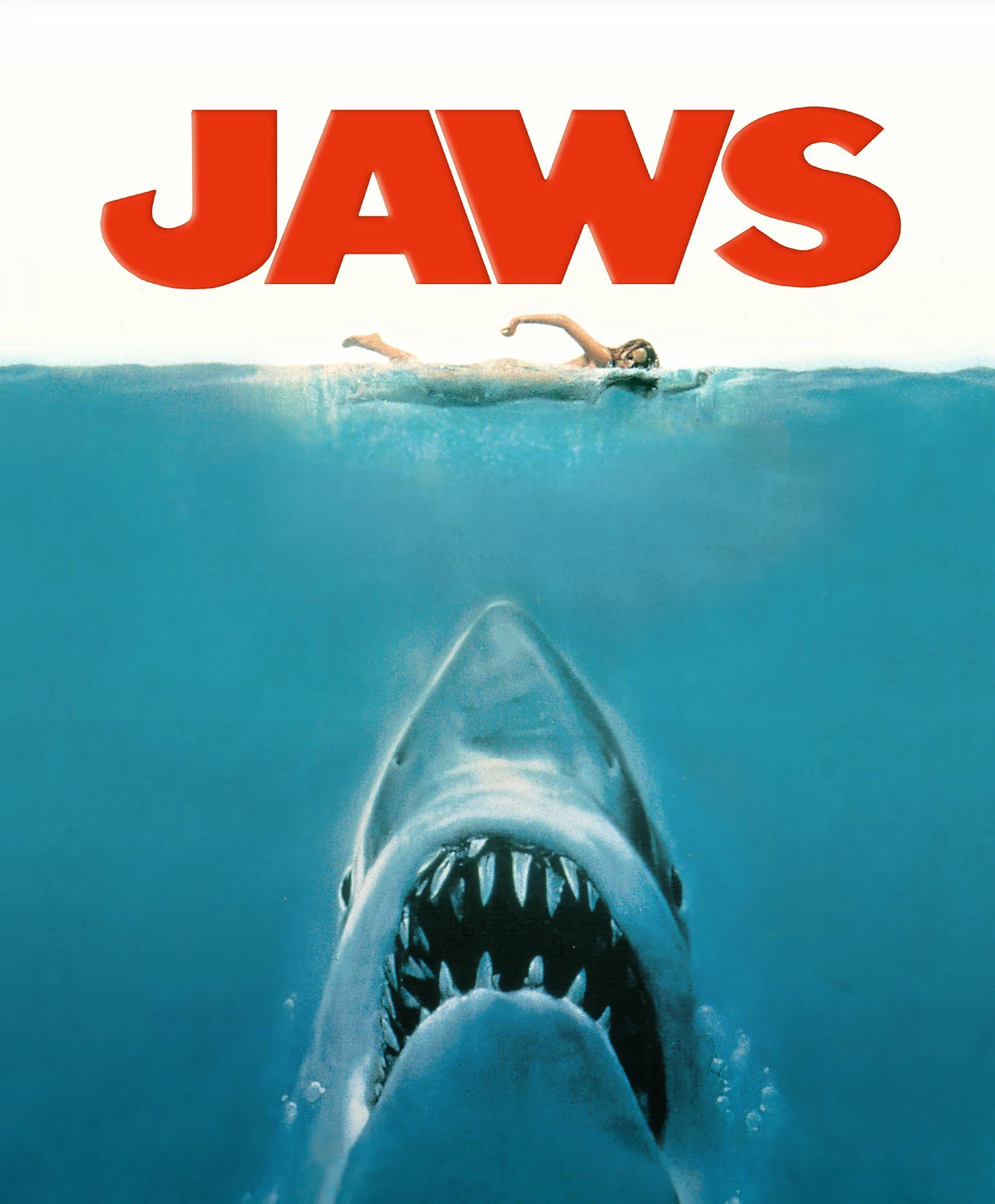
Also, sharks. If you’ve been watching the news, you’ll be well aware that there have been something like fifteen shark attacks on the Atlantic coast this summer. In fact, this morning’s news packages on the attacks bore so much similarity to the film Jaws I just had to shut the thing off. “All these attacks keep happening up and down the coast, and we’re coming up on the July 4th weekend… these beaches are going to be packed.” And all I can think of is a sleek dorsal fin gliding through the water with a harsh orchestral score behind it, and me fighting the urge to shout we’re gonna need a bigger boat.

But more important than avoiding becoming a sharky snack, I’m going to use the time to noodle a bunch on the project. Because despite my halfhearted jubilation and dutiful self-back-scratching over reaching the halfway mark, the project has some problems. Bugs in the batter that need picking out. Knots that need untying or cutting or being burned at both ends. Cracks in the mortar that need spackle or patching or that need to be opened right up with a jackhammer. And the only way to really come to a decision on problems like that — the only way to really see what’s functioning as intended and what’s fargoed beyond repair — is to take a step back, get a bird’s eye view, and take a good, long, look. Hike back out of the trees to get a look at the forest.

Image by Katerha @Flickr.

And while a week away won’t do that for me — the thing’s not even finished, so I can’t do a proper big-picture analysis — it’ll help. Just like every now and then on a road trip you have to pull over and check the map, when working on a big project like this you need to build in time to catch your breath from it, to let it sit and settle before you go back to work.

I don’t yet know if I’m going to work on the novel over the week away or not. Part of me says that the vacation is primo writing time, and I should take full advantage of it. Another part of me says that vacation is vacation is vacation, and maybe I shouldn’t even bring the laptop with me.

Well, maybe I’ll just bring it to write a blarg post or two and send up a few pictures of sunsets.

This weekly Re-Motivational post is part of Stream of Consciousness Saturday. Every Saturday, I use LindaGHill‘s prompt to refocus my efforts and evaluate my process, sometimes with productive results.