Weekly Re-Motivator: Island Escape


I posted a few days ago about having a “down day”, and my wife pointed out that what I was feeling was a perfectly normal bout of depression caused by being locked in close quarters and basically chained at the wrist to two tiny humans without hope of respite for all of my waking hours and most of my non-waking ones.

In other words, this happens to stay-at-home parents. Apparently. And seeing as I’m a stay-at-home dad during the summer months, apparently it was an inevitability that I would be so stricken. But there is hope. Because this week, we’re heading out to a literal island for some much-needed time away.

Okay, so it’s maybe not an island like you think of island paradise. It’s just a barrier island in humble Georgia. But still, it’s a landmass surrounded by water, and we all know the therapeutic effects inherent to the open sea (something something waves, something something ocean breezes, something something sunset shattered and reflected millions of times in the soothing waters). Also, we’ll be just a stone’s throw from Savannah, so there will be lots of ghosts hanging about.

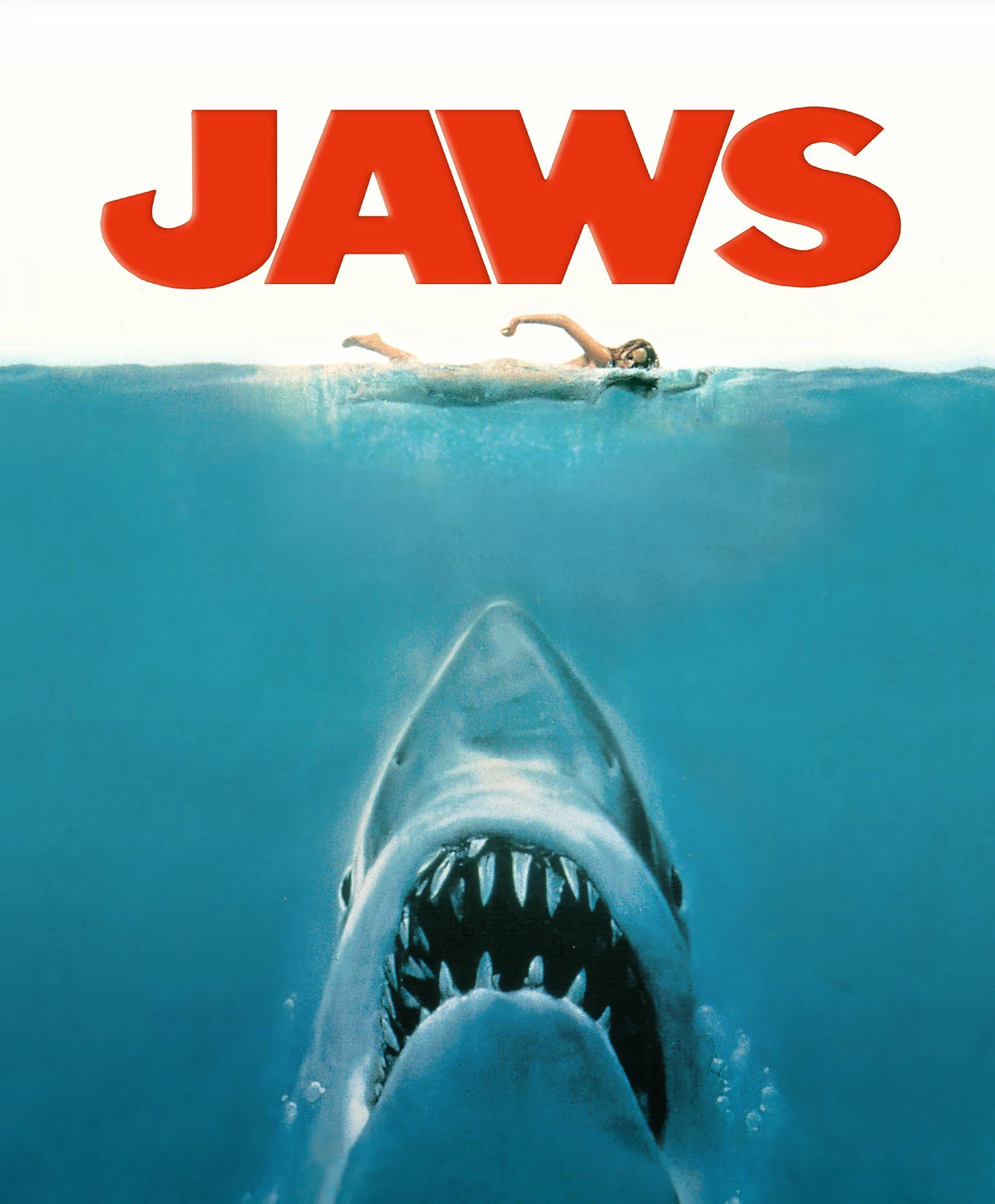
Also, sharks. If you’ve been watching the news, you’ll be well aware that there have been something like fifteen shark attacks on the Atlantic coast this summer. In fact, this morning’s news packages on the attacks bore so much similarity to the film Jaws I just had to shut the thing off. “All these attacks keep happening up and down the coast, and we’re coming up on the July 4th weekend… these beaches are going to be packed.” And all I can think of is a sleek dorsal fin gliding through the water with a harsh orchestral score behind it, and me fighting the urge to shout we’re gonna need a bigger boat.

But more important than avoiding becoming a sharky snack, I’m going to use the time to noodle a bunch on the project. Because despite my halfhearted jubilation and dutiful self-back-scratching over reaching the halfway mark, the project has some problems. Bugs in the batter that need picking out. Knots that need untying or cutting or being burned at both ends. Cracks in the mortar that need spackle or patching or that need to be opened right up with a jackhammer. And the only way to really come to a decision on problems like that — the only way to really see what’s functioning as intended and what’s fargoed beyond repair — is to take a step back, get a bird’s eye view, and take a good, long, look. Hike back out of the trees to get a look at the forest.

Image by Katerha @Flickr.

And while a week away won’t do that for me — the thing’s not even finished, so I can’t do a proper big-picture analysis — it’ll help. Just like every now and then on a road trip you have to pull over and check the map, when working on a big project like this you need to build in time to catch your breath from it, to let it sit and settle before you go back to work.

I don’t yet know if I’m going to work on the novel over the week away or not. Part of me says that the vacation is primo writing time, and I should take full advantage of it. Another part of me says that vacation is vacation is vacation, and maybe I shouldn’t even bring the laptop with me.

Well, maybe I’ll just bring it to write a blarg post or two and send up a few pictures of sunsets.

This weekly Re-Motivational post is part of Stream of Consciousness Saturday. Every Saturday, I use LindaGHill‘s prompt to refocus my efforts and evaluate my process, sometimes with productive results.

51%


I don’t update a whole lot about my projects on here anymore — I can only say the same things about authorial strife and creative doubt so many times before even I get tired of listening to myself — but the current project hit a milestone.

I was typing merrily along today, the words flying from me like so much projectile vomit from my one-year-old’s mouth (okay, that’s a lie, the words have been tooth-yankingly recalcitrant lately, springing forth only when I literally shackle myself to the desk and allow myself to do nothing but write), when I happened to glance at the progress bar.

Glancing at the progress bar is something best done rarely if at all. When you’re penning a 90,000 word novel that seems to be fighting your will to birth it into the world (sort of like, I imagine, the way a honey badger might be born), checking your overall progress is a little bit like watching paint dry. That is, if you left the paint in the can and just waited the long winter for it to congeal into a paint brick. It ticks away, slowly, resolutely, like an inchworm shimmying its way down Route 66, but I’m lucky to get 2% in a day. Some days, it doesn’t move at all, even after an hour’s slavish work in the word mines.

Nonetheless, today I checked it, my eye flopping inartfully across it like a cat falling off the arm of the sofa as it stretches for the fading noonday sun.

And it was at 51%.

Over halfway.

That’s shocking to me, because even though I know the time has been passing, and I’ve been dutifully plugging away on this project all the time, it just hasn’t had the same flow as my first project. If the first project was a traipse trough a neglected, overgrown garden — mostly clearing brambles and weeds but occasionally strolling through patches of still-blooming wildflowers — this project has been more like clear-cutting a path through the rainforest to make way for an interstate bypass. Using a hand axe. I feel every sluggish, seemingly ineffectual stroke of the axe-pen.

Still.

51% is a pretty good milestone. One worth bragging about, going into the weekend.

51% is like, I’ve rebuilt the shell of a classic Mustang in the garage, now all I have to do is put the engine back together, reassemble the transmission, rewire all of the electrics, replace the tires, and paint the thing.

51% is like, I’m making a pot luck dish for fifty of my co-workers and I’ve been to the grocery store, now all I have to do is prep the dish, cook it, portion it up neatly, wrap and seal it, and carry it in to work.

51% is like, I’ve cleaned one bathroom in the house, so I might as well clean the other bathroom, and the living room, and the kids’ bedrooms, and the garage, and maybe take down all the blinds that the cats tore up a year ago.

51% means the story is more written than not, and it would be a damn shame not to A) acknowledge that fact and B) really fling myself into the writing of it for this second half.

The pieces are all there. The characters are all there, and behaving as expected (or, if not as expected, at least teaching me how they would prefer to behave). The answers to the questions posed by the first half of the book are lurking in the mist like razor-sharp cliffs and rocks, shapes to be carefully navigated around as I search for the harbor.

Only 44,000 words to go.

Little Victories Fuel Big Victories


If you’re like me, a wannabe writer trying to figure out how to make the dream happen, you might be struggling to write every day. I know I did; writing the first draft of my first novel was as challenging as pulling the teeth from an enraged baboon while whistling “Happy Birthday” backwards. Sure, you start off full of chutzpah, ready to slay dragons and save the world every day, but the honeymoon only lasts so long. After a few weeks, you find yourself tasked with churning out more and more words, even though you’ve already used up your good ideas — or even though you don’ t know how to get to the good ideas.

That blank page stretches out in front of you like a wasteland, cruel and without end.

Some days are better than others, but every day is hard. Not just because you have to claim your time from the jaws of your enemies with blood and fire, but because you have to keep the creative engine churning, you have to keep the cursor moving, you have to keep that word counter ticking over like the odometer on a road trip.

Now, I’m not an expert. I’ve yet to make a dime off of anything I’ve written creatively, so I can’t claim to know any better than anybody what you should do to make any money at this endeavor. But I do know that if you aren’t writing, every day, you’re handicapping yourself before the race has even begun. Momentum matters, and if you keep the ball rolling a little every day, you don’t have to kickstart it from a dead stop again. To that end, if there were one piece of advice I’d offer to anybody trying to start writing, it’s this:

You need a daily goal. A set amount of progress that you will, one way or another, put to “paper” one way or another before today turns into tomorrow. Momentum matters. Achieving this goal every day will keep you sliding forward like a glacier. You can’t set out to say you want to write eighty thousand words by November and hope to get there by focusing on the eighty thousand. It’s too big. You might as well be thinking about climbing the summit of Mount Everest when you haven’t even left base camp. It’s a good goal to have, but you’re not going to achieve it today. Or tomorrow. Or next week. And when you fail to achieve that goal, you will lose gumption, you will lose drive, you will lose the confidence that you can achieve this thing. What you need is to focus on what’s in front of you and achieve that, however big or small that goal is. What’s your daily goal? 100 words? 300? 2000? It depends on the kind of time you have available in your days (or, more correctly, the amount of time you can prise from your day’s cold, dead fingers).

I find that, on a normal workday, I can usually find about 45 minutes to write, and that tends to be enough time for about 900 words.

Now, 900 words assumes I’m able to write productively and without pauses for almost the entire time, and that’s not always the case. So my “on paper” goal per day is 600, even though I’m really trying for 900. 600, therefore, is what I want to accomplish so that I can feel I’m not neglecting my writerly duties. 900, however, makes me happy.

How does it go, writing 900 words a day?

A little something like this:

0-100 words: Man, this is hard. Why did I decide to do this, again? I’m not sure what I should be writing at all. (re-reads yesterday’s work.) Okay, maybe this can happen, or maybe this character can set this trap… I dunno, it sounds lame. But if I don’t get to work, I’m not getting my words. Whatever. Just write something.

100-300 words: Well, I guess this is happening. I’m not sure I love what’s happening, but it’s happening. Make sure to keep that character involved. Think about what this character is thinking. Where is this heading? Just keep writing.

300-500 words: Okay, I like what’s happening now, and I see where it’s heading. Maybe, though, it doesn’t make sense for this character to say this thing now, or to take this action now, but I’m not sure how else it could go. Don’t think about it, don’t think about it, don’t think about it… fix it later.

500 words: SHARKNADO. I just realized the perfect thing that should have happened earlier to set up the thing I just realized needs to happen now. Do I go back and fix it? Press on and make a note? (This is usually where I get up and walk around for a minute to rearrange my thoughts.)

500-700 words: I’m either going back and inserting an alternate text to something I already wrote, or I’m forging ahead full-speed with today’s beats. Either way, at this moment, I’m in a state of flow, just letting the words come on their own and keeping up with the narrative as quickly as it’s unspooling in my head.I don’t even check word count during this step. It just happens.

700-900: Flow continues and the possibilities for future events are exploding like popcorn, one after another, each one showing a road to the rest of the novel that might develop into something or that might wither on the vine. There’s no telling which one is the right one, though, so I grab hold of one and ride the wave while it’s high. At some point in this range I realize that I’m almost out of time for today, so…

900-1???: I use my remaining time to find a stopping point. I used to try and finish a beat, but now I like to either stop right in the middle of one or just at the beginning of a new one. That way, when I come back to write next time, I still have fresh in my mind some semblance of where this scene is going. I don’t usually want to stop writing at this point, but by this time there are other responsibilities banging on my door, either literally or figuratively.

So that’s pretty much every day. I push through five days a week like that when I’m drafting. I aim for a blarg post about every other day or when I can manage it, but I don’t stress about the length of the posts anymore (I used to shoot for 1000 words… yeah, this post is over 1000 already, but sheesh, that’s a lot in a day).

900 words might seem like not very much to you. Or maybe it seems so lofty as to be insurmountable. Point is, it’s been a sweet spot for me: It’s a challenge to get there, but not so daunting that I have to struggle every day to make it. But it’s not so easy that I can do it without any effort at all. It’s significant enough to give me a pick-me-up when I meet the milestone, but not so significant that I feel I can’t make it. Pick a goal that stretches you a little bit, but one that you can realistically reach from where you are. Little victories fuel big victories.

I’ll admit I’m feeling somewhat at sea with my current story. There are loose ends all over the place, I’m still getting a feel for the characters, and I’m not even 100% sure where I want the story to go. But what I do know is, I’ll be writing about 900 words a day every day for the next few months. If I can keep to that schedule, then long about September, I’ll have my second novel drafted.

How do you eat an elephant? One bite at a time.

Why I Love/Hate My First Chapter


Beginnings are the worst.

Just ask the guys muscling for position at the starting line of a race; all elbows and hip checks and ankles getting stomped on. Ask the folks dragging themselves out of bed for a pre-dawn workout, fighting against the gravitational pull of the singularity created by a warm bed. Ask the authors, staring at the terrible white expanse of the blank first page.

The beginning of any endeavor is the worst, because each step is a battle. Every inch of ground is an inch that must be won not only from the enemy (your competitors, the weights you’ll lift, the miles you’ll run, the white space you’ll reclaim in ink) but also from your own momentum — momentum that wants to let you slide to the back of the pack, stay in bed, watch TV… do ANYTHING but fight that fight.

So it goes with writing.

I’ve just started a second novel, and MAN is it tempting not to do it. As much as I’m excited about the prospect of a new project, I know that for the few months of fun in drafting I’ll have the long slog of a better part of a year or more in edits ahead. Then, there’s the story itself. I don’t know for entirely sure where it’s going yet. I’ve got some moments and ideas mapped, but it’s still a lump of clay. It needs shaping. The result is that each foray into this new world feels a bit like a fish flopping around on a riverbank: There’s water just over there, just at the edge of vision, and if I can just get there, if I can just find the flow, everything will be okay. Problem is, a fish is designed for swimming, slicing through the water, carving liquid paths in currents and bubbles… the movement comes out as herky-jerky twitching on land, and I can’t even tell if it’s moving me closer to my goal or not.

I’m also pretty sure I’m terrible at writing beginnings anyway. Every word that goes on the page feels like needless exposition; clunky, unnecessary, and obtrusive, like riding an elephant to work. Any attempt at action takes a hard left with an explanation of who this person is, what the place looks like, why it’s even going on… end result? The 3000 words or so I’ve written so far feel positively glacial. My sneaking suspicion is that it’s crap, and I should probably pack this thing in, cut my losses, and do something more productive with my time.

But.

Much as the drafting is frustrating, it is freeing: the first draft is not constrained by the need to be perfect or even good. It doesn’t even have to hang together; it can have unformed limbs, elbows that bend the wrong way, or a vestigial tail. All that crap — the characters that randomly appear and disappear throughout the narrative, the note that you forgot to plant earlier in the story, the the gobs and gobs of exposition that feels like so many monster trucks spinning their wheels, spraying mud all over the walls — can be fixed when the narrative surgery begins, in the edit.

The draft is raw, bleeding genesis, messy and gory, staining the earth red in its wake. (Give me Genesis!)

The draft is rainbows spewing from the netherparts of unicorns, coloring the sky with a riot of sound and fury. It’s a newborn eagle spreading its wings for the first time after its mother boots it out of the nest: nervous at first, stumbling over its own tangle of talons and beak, but then — then! — the wind catches its wings and it soars. The story creates its own momentum and, once tilted over the edge, it rolls and tumbles and picks up crumbs and absorbs stray cats and it barrels down the hill, absorbing everything in its path.

At least, that’s how I think it will be. I’ve only done this once before, after all. But having done it once, the inertia is that much easier to break; the fear of failure is that much easier to overcome.

The first draft is awesome.

The first draft is awful.

The starting is the hardest part, but the good news is, as long as you keep your momentum up, you only have to start once.

Word Wars: A New Hope


I’ve been in a writing funk for, gosh, let’s just go ahead and call it three months.

I’d been beating my head against the wall of the edit of my novel and… it’s just so exhausting. Reading the pages over and over again. Checking for continuity. Evaluating the language. Fixing this. Tweaking that. Blasting holes in the drywall and going back in with a blowtorch to re-weld the pipes. The most tedious and thankless of work.

Yeah, WORK. Who ever thought this writing thing would be WORK? It turned into such an ungainly mass of WORK that just like real work, I was hiding from it, finding excuses not to do it, stretching it out, and basically procrastinating myself into a corner, and teaching myself to hate it at the same time. Seriously, if I didn’t love it so dearly, I could almost say I hated the project right now.

But it’s out of my hands now. I’ve passed it on to a few beta readers and I have feelers out for a few more, so now it’s time to cut the cord and let that one fly away (birds have cords, right?). I started thinking about the other novel ideas I had kicking around in my head from a few months back. I stopped stressing about the details of the “finished” work. I began thinking about what sort of deadline I could impose upon myself for a new project; how many words a day I could write, how many months it might take. I started dreaming up characters and themes and plots and motifs and a hundred other little things I want to include in the next story. I cobbled together some notes and a ghost of an outline in Evernote (god I love Evernote, it’s like a personal assistant I don’t have to pay or buy lunch for).

And then last night, the craziest thing happened. I cracked the seal on a brand new word document, breathed in the heady aroma of that blank page, and started writing. Originally I only planned to get a couple hundred words down — just the introduction of a character and a place — but before I knew it I was back in top drafting form, slinging words with abandon, hastily leaving notes to myself, swearing at myself in the margins, in short having a ball of a time. Within just forty five minutes, I’d penned a thousand words, and it had felt as effortless as falling off a toaster. This, I reminded myself, is what it’s supposed to feel like. This is why writing is awesome. Creating people, giving life to worlds, unearthing plot devices from the raw soil of my cerebellum… ahh yeah, that’s the stuff.

The months of ennui fell away like a cobra’s skin. Underneath was the churning engine of creation that so wrapped me up and carried me away at about this time, one year ago. Still purring like a kitten, still snarling like a junkyard dog to chew up some words and spit out some copy. I felt glorious; I felt renewed. I guess this is the start of the next chapter.

When I started my blog last year hand in hand with my novel project, I had a simple system for organizing posts. Everything I posted about the novel here on the blarg last year, I tagged “the project” and/or “commitment 2014”. I had promised myself that I’d get the first draft written before 2014 was out, and I fargoing did it despite my own expectations that I wouldn’t. I’m on Twitter now, so I guess it’s only right that I start the tradition anew.

#TheProject lives.

#Commitment2015 is here.

Fasten your seat belts and hide your children.