The Last 10,000


The novel is down to the last ten thousand words.

It’s a bizarre feeling. If my first novel was written in a flurry of inspiration, stolen minutes and creeping inevitability, this novel has been written via a series of well-placed skull strikes against the keyboard. Or maybe not so well-placed. The narrative of this one hasn’t flowed as well as the first. The path was never so clear. The words more reluctant. The voice, nonexistent.

Still, I’m almost there, and the proverbial light is shining at the proverbial end of the proverbial tunnel. It ain’t far off now, which means I’m too close to even think about packing it all in. I should be done within the month, which is startlingly enough true to the (unofficial) deadline I set for myself back in … whenever the fargo I began writing it. It seems so long ago now as to be hardly worth pondering, but I want to say it was maybe February? March?

It’s taken longer than the first novel, pushing out this newest squalling bundle of joy, but that’s because I realized that the breakneck pace I set back then (1200 words a day was my goal) was a bit too much for other areas of my life to bear. I backed the daily requirement back to 600 (though I really do aim for 900 most days), which has of course made the project stretch out, but has also given me more time to assess as I go.

And I’m not sure if that’s been a good thing or not. With the first novel I plowed ahead full force, writing the story as it occurred to me, hardly pausing for breath or to check my bearings at all as I scrambled for the finish. With this project, I’m constantly evaluating how things are going, second-guessing my decisions, agonizing over each new turn. As a result, the thing has been reshaped so many times along the way it’s as if I started off building a replica of the Iron Throne and ended up with a misshapen ashtray made from discarded banana peels. And then sat on it. Eww slimy.

It’s gonna require major rewrites. Months of work. And I can’t help wondering if by taking my time a little bit more I hamstrung myself by allowing things to settle. If instead of spinning the whole tale out like a blown glass bottle, the thing is hardening and solidifying fit to break when I start to apply pressure to it.

But those are concerns for future me.

Now that I can see the end, I can feel that restless energy seeping in, that urge to push for the finish.

For the moment, it’s time to focus on those last 10,000 words, and the feeling over the last few days is that they’re going to go fast. I can feel the frenetic pacing from my first novel creeping in. I can feel myself reaching for Chekhov’s Guns that weren’t written yet, weapons that materialize under my fingers as the story demands them. The time will come when I can go back and invent the methods of their inception. Right now, the story is full steam ahead, and if a character needs a robotic limb in order to break out of their holographic jail cell, then by god, that character has what she needs. The details will come later, for now it’s time to find an ending for this thing, even if that means steering its smoldering wreckage into the side of a mountain.

So.

Deep breath.

Head down.

Time to write.

Mutual Back-Scratching


Regulars around here will know that I take part in weekly flash fiction challenges over at Chuck Wendig’s blog. These are a lot of fun in their own right, but occasionally he switches things up and gives us the chance to co-op a little bit. Last week we were tasked with creating an interesting character, and this week we’re using those characters created by other authors in short stories of our own.

Well, I crafted a sketch of a shape-changing individual last week, and that character was picked up and run with by Kira Jessup, in a story she called “Shifters.” It’s pretty cool. Also, she’s Australian. Check it out!

The Forty-Second


The basement hallway stretched away in front of Prad, the maw of a great jungle flower in the night. The lights had gone out hours ago — just another cost-saving measure of the DraxilCorp power structure — and they did not light up at his passing.

This was by design.

The security guard stalked past him in the dark, the beam of his flashlight playing lazily this way and that as he wandered down the hall. Prad was on him in a heartbeat, his wicked, tri-tipped blade thrusting up under the base of the skull, shattering the bone, and muddling the brain.

It took a special kind of strength to pierce bone like that, a strength forged on farm tools and honed in hatred. The man felt nothing, and for that, Prad was thankful. As he fell down, the flashlight picked out distinctly Orarosian features in the man’s face. Prad relieved him of his multi-key and stole along down the passage, finding his way by the NightSpec goggles he’d liberated from a DraxilCorp storehouse.

There was a decided irony, he thought, in using DraxilCorp tech tonight. Who else could manufacture the top-of-the-line combat gear needed for such an operation? DraxilCorp alone had a net worth over five times that of Oraros’s entire wealth of nations combined, so their new headquarters going up in the heart of Gester was heralded and welcomed with jubilation.

At least at first.

On the promise of mutual bounty, the contracts were signed in haste, if not fully understood. Oraros operated on good faith and good will in matters of business, and was completely blindsided by the cutthroat, take-all-you-can business practices embraced on Anankeros, the home world of DraxilCorp. But the people of Oraros had learned, and learned quickly. Prad more than most.

Two years ago, Prad had been a humble, happy farmhand in a family of twelve. He had been engaged to a lovely girl from Gester. His life was simple, but enviable.  Now, his sisters and fiancee were slaves to the Anankerosian transplants. His brothers worked backbreaking shifts in the mines. Prad himself was lost in the menial labor system that had swallowed almost all the indigenous people of Oraros.

All, that is, except those who had signed the life of the planet away. Those privileged few now resided in the DraxilCorp complex themselves, though their appearances were limited to public service announcements from the corporation. It was widely believed that the Corp had brainwashed them to put on the company message, if it hadn’t killed them outright and replaced them with clones more than happy to be puppeted by the Corp.

So Prad found himself alone on a mission for the benefit of his homeland, disavowed as a traitor and erased from public record, halfway down a hallway leading to rooms whose purposes were unknown even to those who worked their entire lives in the building. On paper the room didn’t exist. Certainly it wasn’t listed on the corporate directory. On the outside, it brooked no suspicion at all: a simple door of Stavromulan Oak with a curt Authorized Access Only placard. This door was locked at all times.

Prad swiped the pilfered multikey across the scanner pad. It beeped and slid open on smooth, soundless hydraulics. Behind the first door was another door, this one featureless and blank as the Anankerosian polar desert. As the first door closed behind him, the room was bathed in a sickly purple light, the color of an Orarosian thunderfish about to part its prey from its skin. Prad tensed, but forced himself to stand up straight. He clicked a button at his wrist and his suit hissed agreeably.

Hidden sensors in the walls began sampling everything in the room, from the quality and texture of Prad’s hair to the slightly acidic signature of his sweat to the striated blue and green irises around his overlarge eyes. These readings did not match the only readings that the sensors would accept, but this was also by design. Instead of Prad’s readings, the sensors picked up the sensory holograms projected by his suit, recognizing not Prad Arkid, resistance operative, but rather Orthan Lob, personal physician and preservationist to the top brass at DraxilCorp.

Prad felt no particular remorse for Lob’s blood, some of which was still dried under his fingernails. Lob had indirectly spilled more than enough Orarosian blood to balance the debt.

The glow in the room shifted from electric purple to soothing green, and the door before Prad withdrew into the ceiling.

Before him, the room opened up into a smoothly circular chamber bedecked with monitor screens showing hundreds — perhaps thousands — of real-time diagnostics and three-dimensional representations of the biological functions of the figure at the center of the room. The head of DraxilCorp. The de facto despot of Anankeros. Menoetius Moros.

He slept, or seemed to sleep, propped upright in a tube broiling with a thick, vaporous fog. Bluish and translucent, it simmered full of enzymes and nutrients. The chemicals he bathed in renewed him while he slumbered, giving him the youthful, vibrant, charming appearance that had kept him the face of his corporation for centuries. “Why settle for being remembered forever,” Moros had famously said, “when you can be forever?” The man’s face rose, ghostlike, out of the fog; his thick, virile mass of black hair waved gently in invisible currents in the stuff. His smooth, untroubled eyes were closed gently as if in a pleasant dream. His vile mouth was slack, but seemed almost twisted into a smirk of inexhaustible advantage, the expression of a man who, the moment his opponent touches his first pawn, knows he’s won the chess match already.

Prad crept toward the tube, a spider advancing on an entangled moth. He leaned over the sleeping form of Menoetius, the gaunt, harsh features of his own face reflected and blended grotesquely with the smooth, perfected curves of the sleeping man.

At the hands of Moros, Oraros had bled. At the hands of Moros, Oraros had suffered. At the hands of Moros, Oraros was dying. Just like every other planet in the belt.

And now, beneath his own hands, Moros slept.

Prad couldn’t help smiling. One by one, he slipped his fingers out of their gloves. He wanted to feel the life go out of the old man. He wanted to look into the cold, dead eyes of the planet-killer as his blood ran out.

Prad reached for the console next to the Vitatube.

At the press of a button, the face of the tube slid back.

The fog billowed out, an ocean trapped within a bottle. It bathed Lewis’s skin, icy and slimy and stinking of death.

With one hand, Prad reached into the tube and seized the back of Moros’s neck, bringing the sleeping man’s face up as he bent his own face downwards. With the other hand, he brought the knife up under Moros’s jaw.

Prad thought of his brothers, entombed alive when a karillen mine collapsed on a DraxilCorp dig. He thought of his father, wasting away on a reservation for the old and infirm of Oraros in a DraxilCorp facility. He thought of his hometown, bulldozed and flattened to make way for the DraxilCorp complex, to lay the foundation for the building in which he now stood.

He thought of these and a thousand other injustices, and found he had no words for any of them. He pressed his face hard against that of the sleeping man. Tightened his grip on the knife.

“Die.”

The knife slipped through Moros’s jaw without a hint of resistance, hesitated for an instant as it sheared through his palate, and finally buried itself in his brain. Moros’s eyes shot open, his hands wrapped convulsively around Prad’s shoulder, pulling him into a bizarre embrace as he struggled. Prad watched coldly, his face still pressed to the dying man’s, as Moros thrashed, slowed, and stilled: an ant kicking feebly as it drowns in vinegar. He sank finally into the Vitatube.

The blood began to coagulate almost immediately on Prad’s arms and hands. It was darker than blood should be, blackish and ice-cold. As Lewis went to sheath his knife, he found he could no longer move his arms.

The fog.

His arms and legs had been bathed in the fog that shrouded the sleeping man. With mounting panic, Prad realized he could not move at all.

The banks of displays showing the failing vitals of the dead man flickered and went blank as the tube sank down into the floor. Then laughter flooded the room: piercing, gleeful laughter, the laughter of a schoolyard psychopath pulling the wings off butterflies. Then, the perfect, manufactured face of Menoetius filled every screen, staring at him, sneering at him, laughing at him.

“Congratulations,” said the disembodied faces of Menoetius Moros. “You’ve killed me. And now I have you.”

Prad blinked, uncomprehending, hatred bringing a snarl to his lips.

“Oh, yes, very good,” the faces said. “It might please you to know that you’re the forty-first person to successfully kill Menoetius Moros. Which means you’re the forty-first person to learn my dirty little secret.”

The Vitatube holding the dead Moros had vanished completely into the floor now, and a second tube was descending rapidly from the ceiling. It lit on the floor and opened like a clockwork box, and Menoetius Moros stepped out of the tube: young, beautiful, terrible, and immaculate in a pressed suit and starched tie, that same knowing smirk yanking on the corner of his mouth.

This time the man himself spoke, the impossible man that Prad had just killed, standing before him, flawless and self-satisfied and smug as ever. “Not that you’ll live to tell anybody about it.”

***************

This week’s flash fiction challenge from Chuck Wendig involved taking a character created by another author and crafting a short story featuring that character. This feels more like a vignette than a self-contained story, but man, it’s so hard to wrap these things up in tidy little packages…

I used a character offered by elctrcrngr, a devious fellow named Menoetius Moros. He was just too unlikable; I had to try my hand at killing him off. But then, a guy like Moros doesn’t go down easy…

A Plague of Excuses


Usually I like to use the SOCS prompt to write about my writing process, but given that the prompt for the week is “four-letter words”, there’s only really one thing I can think about.

Plague.

No, wait. Disease.

No, sorry. Too fancy.

Sick.

We’re all sick. Everybody in my the house. Sprout the first is sniffling and snuffling and coughing his brains out. Sprout the second has a perpetual river of snot running down her face. Poor wife has been snagged by the grasping claws of the sore throat that I shook off a couple of days ago, and I’ve got the stuffy-headed feeling of a skull stuffed full of mucus. So, we’re all a little bit miserable.

And maybe that’s why this week seemed to stretch out for eternity, as my wife and I both agreed it did. In addition to the regular tribulations of the day, we had to come home to runny noses and coughing fits and the general bad humor of little kids suffering from sickness. Which is enough to take the wind out of anybody’s sails.

And as much as I like to find an inspirational or motivational spin to put on any hurdle to writing, it’s hard to think of much that’s positive to say about this one. There’s no positive to mopping snot off faces and having millions of germs coughed into your face holes by kids who haven’t got the motor control or consideration to even conceive of covering their mouths.

So writing on the project has been at a bare minimum this week. Posts here on the blarg have been next to non-existent. The plague going around the house has taken the mustard right out of my sails. And for all I write about powering through the crap days, writing even when you don’t feel like it, and embracing the work for its own sake for its therapeutic and uplifting properties, even I recognize that there are some days when that just isn’t the case. When you’re sick — really afflicted with something nasty, something physical or chemical that’s keeping you from firing on any of your cylinders, let alone all of them — the only thing to do is to hunker down, chug back a bottle of Nyquil or Pepto or whatever, and wait for the storm to pass.

Luckily, it feels like the storm might be breaking. I feel much better today than in the past couple of days, Sprout the Second’s face is not nearly so crusty this morning, and Sprout the First… well, he’s still coughing fit to serve as the percussion backbeat to a dubstep track.

Guess you can’t win ’em all.

Luckily, for that, they have Dayquil.

Writer Moments: The Hero is not the Hero


Funny things happen when you’re writing.

Writing isn’t building a parking deck, with schematics on file at the city office describing exactly how many steel girders go where, how many tons of concrete, how close to paint the lines, how exactly to best get that fresh pee smell in the elevators. Writing is more like surfing. You practice the mechanics, the balance, the paddling and the positioning, but it all means nothing until the right wave hits. But then, when the wave hits, all the preparation goes out the window and you ride what the ocean gives you. (And if that’s not what surfing is like, I apologize. I know as much about surfing as I do about effective lawn maintenance, which is to say, I know it’s a thing that some people who are not me are capable of doing, and I imagine there is some skill involved.)

I’ve learned a lot from writing my current novel, much more than I learned writing the first. The current story has changed so many times that the disassembled cadaver on my table looks more like the bodies of six or seven different deep-sea monstrosities whacked together with crazy glue and culinary twine. It’s either missing a head or it has two heads too many, depending on what angle the light strikes it at. And it’s still not finished. Soon, but not there yet.

And by finished, of course, I mean only the first draft; there is a long period of re-writing ahead of this one, considering all the narrative surgery to be conducted on those half-formed fish-beast parts.

But I am always learning new things about my writing, and a thing I learned today was that this story is about the entirely wrong things.

The chain of events is good. Maybe even exciting. But there was something wrong with my protagonist. I felt a niggling seed of doubt a month or so ago when I axed one of the major supporting characters who just wasn’t doing much. But I’ve been feeling a much fainter, though much more impossible to ignore, sensation at the same time; sort of like how, on a cruise ship, you can get used to the motion of the ocean and forget for a time that you’re bobbing around like a cork, but then a storm hits and you realize, with your entire life at a thirty degree angle, that things are a bit more off-kilter than you realized. And that sensation is that the protagonist of my story isn’t actually the protagonist of the story.

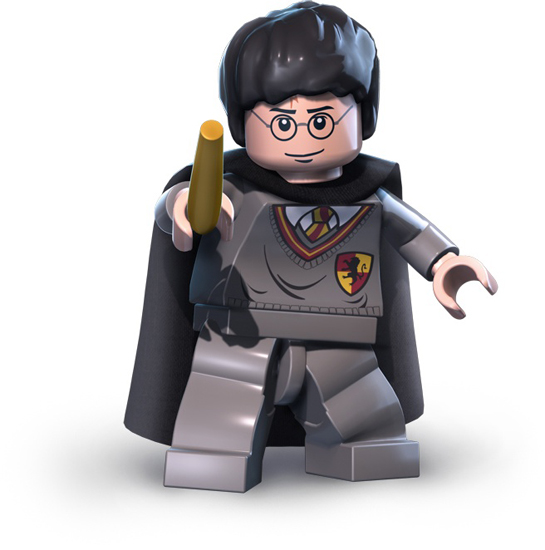
To be clear, this character belongs in the story. She’s even, maybe, integral to it. But far too often, things happen to her rather than the other way around. Kind of like how, in Twilight (and I apologize already for using a Twilight comparison), Bella watches events unfold for three freaking books before she actually does something (and even then, she’s only a small part of what the rest of the world, basically, is already doing without her), whereas Harry Potter grabs his wand and wizard hat (okay, wizards in HP don’t have pointy hats as a rule, but they should) and goes bumblingly about the business of saving the world. Things happen to Bella, whereas Harry Potter goes out and happens to things.

In my story? The character I thought was the protagonist gets plucked out of her own time and wants desperately to get back. And … that’s pretty much it. There are more capable and knowledgeable parties on all sides of her making things happen, and she’s just along for the ride. She helps out here and there, but she never leads the charge. She’s not dead weight, but she’s not slugging above her weight class either.

On the other hand, I’ve got another character who is also plucked out of her own time and also wants desperately to get back, but she fights like a demon against the people trying to help her because she doesn’t believe they’re actually out to help her. She befriends the evil gatekeepers because she doesn’t know well enough not to. Her worldview gets mucked about with more than that bowl full of stale pretzels at the hotel bar, and every time somebody dips their fingers in her sensibilities she fights back and goes in an entirely new direction.

She is, in short, much more interesting than the character I thought was the protagonist. Which means, like a second-string running back when the superstar goes down with an ACL injury, it’s time for her to step up into the bright lights. And sure, this will mean some pretty serious rewriting, but LOLOL I’m going to be rewriting this one for months after the fact already.

And it’s work worth doing, because the story will be better with her at the helm. It’ll be easier for an audience to care about this girl. She doesn’t simply accept the world as it is, she believes it to be better than it is. And when she learns that the world actually isn’t better, she will fight to make it better.

That’s what we want in stories. That’s why Twilight left me feeling empty when I read it. We want a protagonist who does things. We want a protagonist who takes the car out for a spin and yeah, maybe, wrecks it, rather than the salesperson who gets thrown out the window when the whole thing rolls over. We want the guy who grabs the gun and wades into the fray rather than the politician that voted to send him there.

My hero was the wrong hero.

But the real hero has revealed herself.

I can’t be the only one who writes this way. Surely your stories (the ones you’re writing, or the ones you’re living) have surprised you in the same way. Right?

(He shouted into the featureless void.)