
My grandfather has passed. Programming will return shortly.
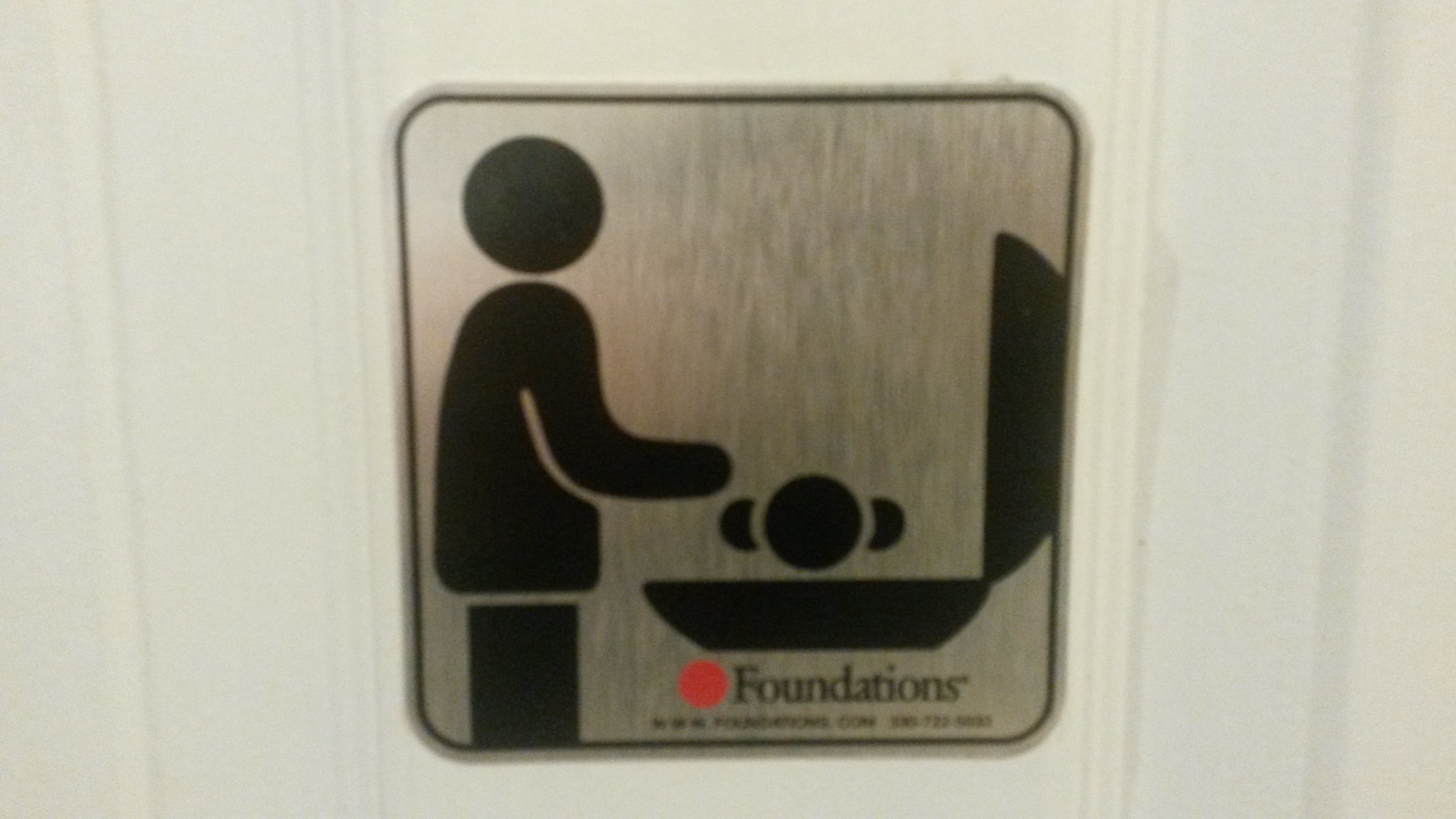
In the meantime, here’s a sign we saw yesterday. I refuse to believe this is anything other than a baby on a grill.
My grandfather has passed. Programming will return shortly.
In the meantime, here’s a sign we saw yesterday. I refuse to believe this is anything other than a baby on a grill.
Okay, this is a blarg about writing (mostly), how the fargo did math come into it?

Like this. My wife and I were reading a Buzzfeed article today (yeah, I know) about a dad who sent in a check using Common Core mathematics to send his own sort of indignant statement about his feelings on the Common Core. And yeah, it’s funny. But I also take an interest in this because I’m a teacher and Common Core, like it or not, is kinda my business these days.
Also, I’m a dad whose son is going to be headed off to the hallowed halls of learning soon, so Common Core is doubly my jam. Apparently, lots of parents in my generation struggle with the way they’re teaching math now, and that’s a problem, because math is hard enough for kids without coming home and seeing that their parents can’t do it either. Which is not a situation that I want my kids to be in. So I did a quick search to see if I could get a handle on this “new math” thing.
And you know what? It wasn’t that bad. For clarity, here’s what I read:
Lifted from Business Insider:
First, Carney explains the old way subtraction was taught:
Take this: 474-195.
Old way: Try 4-5. Nope. So cross out 7, carry the 1. Add 1 to 4. Now subtract 6 5 from 5. Write down 0.
Wait. That’s wrong. It’s not add 1+4. It’s 10+4. So cross out my 1. 10+4=14. Minus 5. Write down 9.
Next subtract 9 from 7. Carrying again. But remember it’s 9 from 6. Dammit. Cross out 4. Add a one … wait, a 10 to 7 … err, rather 6. 16 minus 9 is 7.
The four is crossed out. So it’s a three. Minus one
My answer is: 279.
To get that I had to add and subtract a lot. You can actually count the operations.
(1) 4-5.
(2) 7-1
(3) 10+4
(4) 14-5
=9
(5) 6-9
(6) 4-1
(7) 10+6
(8) 16-9
=7(9) 3-1
=2= 279.
Notice how many occasions for error and how much switching between addition and subtraction is required. This is a system built to fail.
Now here’s Carney explaining the new way subtraction is taught:
They key to (new way) is realizing this subtraction problem is asking you to measure the distance between 474 and 195. You do that, in turn, by measuring the distance between landmarks (easy, round numbers). It’s turning math into a road map.
So 474-195.
Starting point is 195. How do we get to 474? Well, first we’ll drive to 200.
(1) 200 is 5 from 195
(2) 400 is 200 from 200
(3) 474 is 74 from 400
(5) 74+200 = 274.
(6) 274 + 5 = 279.Not only are there fewer steps, the steps are far less complex. You aren’t carrying, or worrying about adding 10 then subtracting the other thing, then remembering to subtract one from the other column. It’s much straighter.
Now, if you’re like me, you probably read that and experienced a bit of skepticism. The way we learned it is simple; why complicate it by bringing in addition?
Except that the way we learned it isn’t simple. It isn’t any simpler than any other way. It’s only simple to us because that’s how we learned it, and we have, god, I dunno, maybe about ten thousand repetitions of it throughout our educational careers reinforcing that way of doing it? Of course our way is simple and this looks like gibberish.
But our way of doing math is no more intuitive for a child than this “new” way is. One way or another, kids have to be taught subtraction, and whether they do it this way or our way or some completely different way entirely (let’s come back around to this discussion in twenty years or so), the important thing is whether they get the right answer or not.
Come to think of it…
I seem to recall there being some argument about the way math was being taught around the time I was being taught math. Lots of parents couldn’t wrap their heads around it. Tom Lehrer even had a song about it:
Which is great for making you feel very, very confused if you never learned how to do math in base 8. (What, you didn’t learn how to do math in base 8? That’s okay, NOBODY knows how to do math in base 8.)
Back to my point: there’s pushback on the current state of affairs in math classrooms. So the fargo what? There is always controversy about what’s going on in classrooms. Like it or not, our kids are in those classrooms, and no small measure of their success in life depends upon their success in their classrooms. So, to my way of thinking, digging in your heels and saying “No, this new math is stupid, I don’t get it, and I don’t see why my kid has to learn it” is a little bit like a dinosaur shouting at the oncoming meteor that if it’s all just the same, he’d like to get on munching on these palm fronds.
Boom.
This iteration of mathematical thinking is here. It’s time to get on the train, whether it makes sense to you or not. Guess what? If you’re a parent, it’s your job to make sure you understand at least some part of what your kid is learning in school. And I’d much rather take a little time to learn something myself so that, when my kid comes home with a math problem he doesn’t understand, we can work through it together, than the alternatives: he flunks out since he sees dad doesn’t care enough about math to learn it, or we hire a tutor because dad can’t be bothered.
If you struggle with the way they do math, I’m not judging you.
But if you are sitting here insisting that Common Core math is bad and needs to be repealed because you don’t understand it, then I am judging you.
I’m not saying it’s perfect. Common Core in all disciplines has no shortage of flaws, but holy cheese doodles, at least educators are trying new things to fix our abysmal test scores. Point is, for the moment, this is the only train running. You can either hop on or walk.
Now.
This is a writing blog, as I said before, so — is there a tie-in here to writing?
You betcha.
Because the person who can’t — or won’t — wrap his or her mind about the “new math” is in a rut. They’re stuck in a routine that’s comfortable, that they see no reason to change. Which is all fine and well as long as they stay insulated in their own particular corner of the world.
But, short of living out your life on a mountainside, draping yourself in the skins of the animals you slay for food, the world has a funny way of not allowing you to remain insulated. You have to interact with other minds, which means interacting with other ways of thinking.
The good writer will embrace this inevitability. He’ll adapt his craft based on new things he learns, he’ll absorb and experiment with ideas from the world outside his bubble. He’ll continue to craft stories and characters and worlds that reflect the changes going on in the world around him rather than rowing his boat backwards against the current. The good writer — hell, the good human — will see something that challenges his way of thinking and examine it, poke at it, see what makes it tick, rather than casting it aside as a foolish diversion.
To do otherwise is to live in the past.
To do otherwise is the antithesis of growth.
To do otherwise is the root of so much conflict in our world it absolutely makes my head spin.
Give the new stuff a try. Just because it’s strange to you at first doesn’t make it wrong. It just means you haven’t tried it yet.
This weekly Re-Motivational post is part of Stream of Consciousness Saturday. Every Saturday, I use LindaGHill‘s prompt to refocus my efforts and evaluate my process, sometimes with productive results.

Sak was exactly the sort of man you’d want to have his finger on the big, red button in the control room of the Omnilator, the Empire’s moon-sized death-ray that drifted in and out of hyperspace to annihilate entire planets at a whim. Sak was shortish, baldish, ever so slightly round around the middle, and perfectly boring. It was widely rumored that he had once talked an eternal stone tree on Naraloos Seven to death. It was also widely known that he was the best paid finger in seven galaxies. For that was Sak’s only task: to wait for the order of Commander Martock, confirm it, and push the button that would open a black hole at the planet’s center, sucking it away into infinite nothingness.
But the nights are long in space, especially in a tri-star system in a galaxy billions of light-years from home where there is no day nor night, just a constant, neverending noon, and eventually ways must be thought of to pass the time.
And over the course of several deployments, and a score of worlds evaporated away into the gaping void, a contest was concocted by the crew: get Sak to push the button early, and win a reprieve from all duties for the space of a full galactic month.
The Omnilator loomed in deadly orbit around a tiny, peace-loving planet named Pardala. The coordinates of its horrible assault had long been programmed into the targeting computer. Peace talks dragged on for months as dignitaries of the Empire wheedled with the elders of Pardala, and day by day, Sak’s finger floated over the button that would make Pardala into nothing more than a memory.
Lieutenant Loda thought to catch Sak unawares by sounding the alarm in the middle of the night and haranguing him into pushing the button on Martock’s authority, but it turned out that Sak didn’t even respond to an alarm, such was the power of his monotonous routine. The klaxon sounded for a full five minutes before Commander Martock caught Loda and sent him for a week of latrine duty.
Engineer Elara, she of the flowing hair and generous assets stuffed into a too-tight Empire-issued space skirt, wagered she could distract him with her wiles while Deckmaster Dervin imitated M’s voice to give the command. But Sak paid no more attention to her bouncing personality than to the flavorless sandwiches he lunched on, and Dervin’s voice broke in a way that Martock’s never would, and she swayed away, dejected, to cozy up with Dervin in a closet instead.
Navigator Norr decided that perhaps the way to Sak’s finger was through his heart, and invented all manner of truly horrible insults that the poor fated planet was purported to have leveled against Sak’s mother and sisters and any other women who happened to be in his life. But Sak, he informed Norr sadly, was adopted by a happy single man and had never had use for any women, and besides he wouldn’t feel right murdering an entire planet just because of some hasty words.
Dozens of schemes were hatched to try and budge Sak’s finger, but he shot them all down, deftly and without much interest. They finally admitted that Sak was, after all, the perfect man to man the switch.
And then, finally, the call came down from Martock himself. Peace talks had failed, and the Pardalans were doomed, by order of the Emperor. Martock’s voice barked out, rattling the far reaches of the ship, the order: destroy them.
But Sak’s finger did not budge.
Lieutenant Loda thought he must not have heard properly, and urged Sak to push the button, but his finger would not budge.
Engineer Elara thought perhaps Sak suspected another prank, and shook him and insisted that he push the button, but his finger would not budge.
Navigator Norr knew that Martock’s wrath would be terrible if his order was not followed, and pleaded for Sak to push the button, but his finger would not budge.
Then the door exploded in from the hallway, blasted to pieces by Commander Martock’s custom-made multi-phasing disruptor rifle. It smoldered with menace as Martock stalked into the control room, his face red and twisted with fury.
He saw Sak sitting by the button, his finger poised but still not pressing. Without a word of explanation, he shouldered his rifle and fired. Sak caught the red bolt of plasmic death in the shoulder, whirled, and fell from his chair, the bloodless wound hissing with smoke.
“Who’s going to push the button?” Commander Martock’s voice rang in the silence like the calamity of two planets crashing together.
As one, they dove toward the big red button, clawing across Sak’s still smoldering corpse. Norr, through luck and lanky arms, was the first to touch it.
As the button clicked home and the wicked machinery of the Omnilator began to hum, Sak hopped up from the floor, throwing off the smoking, hissing trick jacket and howling with laughter. He and Martock flung their arms around each other in hysterics, pointing and cackling like madmen at the horrified expressions on the faces of the crew.
Their joy was short-lived, however; the black hole yawned open in the heart of Pardala and, with no more fanfare than an Arquillian Flea emerging from its egg, swallowed the planet, the Omnilator, and half of the surrounding galaxy in an infinite mass of inescapable gravity.
It had, Sak decided, been worth it.
Chuck’s challenge this week is a Space Opera. I wrote a truly epic, philosophical piece of utter tripe before scrapping it entirely and writing this bit of fluff instead. Not exactly my usual style, but a fun time nonetheless.
This work was inspired more than a little bit by the collective works of Douglas Adams and the steady diet of Doctor Seuss I’ve been reading with my son of late.
We all want our stuff a certain way.
Well, let me back up.
We all want certain things a certain way.
For example, somehow, some way, I’ve come up against this thing several times in the past few months:

This is a Chemex, and if you haven’t heard about it, BOY OH BOY it’s time to buckle up. A Chemex is a coffee pot. But it’s not your ordinary coffee pot. Well, yeah, it’s an ordinary coffee pot, but it also has MAGICAL POWERS. The power to transform an otherwise ordinary human being into an absolutely insufferable coffee snob. The power to infuse said human’s vocabulary with nonsensical coffee jargon like “brewology.” The ability to cause friends and acquaintances of that person to, in tiny, almost unnoticeable ways, hate that person.
There are videos dedicated to the Chemex and how to best use it. There are detailed, multi-step guides with entire nested webpages devoted to it. In particular, one of my favorite authors of late and one of my favorite youtube channels have both written and explained in great and grating detail how much they love their Chemex.
The secret behind it (apparently, if you buy into all that neo-hippie coffee-infatuada nonsense) is: you like coffee, sure, but you’re not getting the most out of your coffee.
With that, you fall down the rabbit hole. You buy the thing. You have to get the right filters to go with the thing, filters made from recycled thousand-year-old rainforest wood. You have to get the right coffee beans for your particular demographic and unique taste. You have to hand grind the beans using stones purified in the bowels of goats. You have to boil your water in a kettle, preferably one consecrated by an aged, castrated bishop. The boiling must be done using a hand-torch crafted by the elders of unnamed tribes in the heart of Africa. The steam must not be allowed to escape; you must inhale every molecule to open up your nose for the taste explosion that’s about to happen.
And I hear about this, and I ponder on my life and the choices I’ve made, and I find myself starting to think, well, hot holy hell, maybe I should get one — I AM missing out on this vital part of the coffee experience. Except I don’t drink coffee. And I really find all this gobbledygook about filters and glass and grinding and inhaling to be utter nonsense. Not only nonsense, but wasteful and snobbish nonsense, the worst kind. If you want a cup of coffee, just make a cup of coffee and get on with your life — why do you need to devote twenty minutes of your morning to it?
So I prepare to make a scathing diatribe about exactly how foolish it is. An all-out attack, not just on users of this product, but on anybody who gets at all uptight about their coffee. IT’S JUST BEANS.
But when I pull back to let this stone fly, I pause, because I catch my own reflection in the walls of this glass house I live in.
Sure, I couldn’t give two randy Sharknados about coffee, but you’d better believe I’ve got my own series of oddities.
I could go on and on and on about the “right” running shoes and the “right” way to run. How your shoe needs to provide protection from the ground but not insulate your foot from feeling the bumps in the road. How you need to adjust your footstrike (and there I go using nonsensical jargon) to properly engage the musculature of the leg and the back. How the average runner should aim to run on trails from time to time rather than pounding pavement all the time because of the instability the body has to deal with.
I could ramble for ages about my writing process. The right music to help empty and focus my mind, the right programs to capture the draft and insulate myself from distractions. When writing longhand, I much, much, much prefer pencil to pen; the faint skritch of graphite on paper is soothing beyond words. Preferably, it’s a .7 gauge mechanical pencil: smaller and the lead breaks too easily, larger and I feel like I’m writing with a freaking crayon. But if it must be pen, then it’s got to be a Pilot g2. The ink slides out like a seal slathered in syrup, and there’s a crease in the grip that settles right into the grooves in my index finger, and let’s just leave it there before it starts getting uncomfortable in here.
Or shaving. I’ve become one of these guys about shaving recently (though not as bad as some); I use soap or cream from a tub, lather with a brush, shave with an old-school double-edged blade (1000 blades for $10, how could this not be for me?!?!).
For that matter, here’s a not-at-all-exhaustive, by-no-means-in-order-of-importance list of things I feel unnecessarily strongly about, that I have to have just so:
The amount of thought and mental distress I’ve experienced over these things is probably much more than I feel comfortable discussing, but suffice it to say, I have realized that humans, as a rule, are a weird bunch.
We gravitate toward others who are weird like us.
We are repelled, or at least puzzled, by others whose weird we don’t understand.
Point is, you can take your gross weird coffee snobbery and your gross weird birdwatching and your gross weird homemade macaroni replicas of famous renaissance monarchs and stay the hell away from me. Go over there. In the corner. Where it’s dark. And weird.
Of course, you can have all you like of my awesome, cool, somewhat-nerdy-but-ultimately-enviable weird.
But I’ll ask, just because I’m curious.
What’s your weird?
Writing the end of a novel is something like the last stage of a video game.
A really long video game, that you’re playing through for the first time. And you find yourself in the last level — the final dungeon, the Temple that Houses the Big Bad — and all of a sudden, there’s that rush. It’s all been building up to this. There’s that moment of doubt: did I collect enough ammunition? Are all my magic spells charged? Did I re-forge my +9 sword of nerditude in preparation for this? But before you know it, the monster is upon you, and you’re in a fight for your life.
He looks familiar — he’s been hinted at throughout the whole game to this point, after all — but he’s got some entirely unexpected tricks up his sleeve, too, and within a few moments, you’re in the fight of your life. With reckless abandon, you reach again and again into the bag of goodies you’ve been collecting all along: plasma grenades, portable portals, chicken legs that somehow restore your health, hypodermic needles full of spirit energy. One after another, you deploy your best gambits, and one after another, they seem to have a tiny effect but they keep coming up short.
And, ultimately, you probably screw it up. Screw it up badly. You probably don’t do much more than leave a bloody stain on the boss’s knuckles after he beats you down; leave a greasy smear of your DNA on the walls of the temple.
So it is with writing.
You’ve laid the groundwork, you’ve brought your hero(es) to some grand, lofty conclusion, ready to face off with the demons (literal or figurative) that have hounded their every step. They’ve learned some things along the way. The story has built in a certain direction. And the ending you envision is right there, just at the end of the next few days’ worth of writing.

And holy crap, do you screw it up. The resolution to the conflict comes flying out of left field like a meteor, solving the problems but opening up all new ones. Or you realize that the conflict you’ve been building to all along is the wrong one. Or that the conflict is right, but your hero has changed along the way and no longer wants the ending you thought she wanted all the way through.
Luckily, the video game, just like writing, has a reset button. When you get to the end and find that you didn’t pack nearly enough rockets, well, you can just reset to an earlier level, stock up on rockets, and come around to the boss temple again, better equipped to deal with the monster awaiting you. With writing, you can re-write the story as many times as you need to to get it right. No judgment, no shame; you just go back and recreate your story, from the ground up, if necessary.
Point is, I know I’ve felt, at the end of my first novel and again at the end of this one, that I somehow had to stick the landing on the first try. That the ending I wrote would be somehow etched in stone, unchangeable. But nothing is unchangeable. That’s why writing is even better than video games. In the game, there’s only one path to the boss, one ending to shoot for. In writing, the end is whatever you want it to be.
The first time I made it to the last level in Bioshock, I spent nearly five minutes just running from the boss, trying to figure out how I could even find a window in his attacks to do something as simple as aim a gun in his direction. I didn’t want to screw it up, so I simply dropped into survival mode and ran for it. Then I remembered it doesn’t matter if you die in a game, and I turned and threw myself at him with everything I had. And yeah, I died a few times, but I learned the patterns and soon I was able to handle him without even taking a spot of damage.
So here, I find myself in the closing chapters of novel #2, and I’m feeling that same pressure: the ending has to be perfect, I can’t screw it up, I’ll ruin everything if it isn’t all rainbows and dancing unicorns. But to quote Marty McFly, “I’ve got a time machine, I’ve got all the time I want!” Which is doubly relevant, since my story features a time machine rather prominently. So, enough doubting, enough stressing, enough worrying. Time to go screw up this ending so that I can reset and fix it.
This weekly Re-Motivational post is part of Stream of Consciousness Saturday. Every Saturday, I use LindaGHill‘s prompt to refocus my efforts and evaluate my process, sometimes with productive results.
Welcome. This is my page for sharing projects associated with my coursework in Media and Technology at the University of West Georgia. Assignments will be posted here as they are completed.
(...and some I have)
George Ledo's notes on 35-plus years of set design and technical theatre experiences
As Always, More to Come
Antidote to the Novel
Still on the Internet, Still a Nobody
for readers who write and writers who read
Shortness of Breadth
A blog by Nancy Abrams
 Accidentally Inspired