The Weekly Re-Motivator: The Fickle Finger of Fate


We are all touched.

The fickle finger of fate bestows on us through random chance a series of affinities, of likes and dislikes, of urges, of callings. I’m going to wager that, if you’re reading this, you’re called in some way to write, to tell stories. And that’s magical.

Michelangelo, Abstract, Boy, Child, Adult, Background

Not everybody has such a calling. Most people don’t. Everybody thinks they can write a novel, or a screenplay, or a memoir about their “amazing” life, but they can’t. Or, more importantly, they won’t. Writing is a lot of work, after all, and pretty thankless work at that (and that’s coming from a high school English teacher … I’m an authority on thankless work). And without the spark, without the calling, without the need in your bones to work at your writing, to learn how to tell a story, to sit in front of the screen for hours and days and months on end, writing becomes as impossible as flying a manned mission to Jupiter.

The calling makes it sufferable. The calling makes it possible to grind out the time in solitude, knowing that writing is not just something we do to pass the time; it’s an investment, if not in future windfalls and book deals and legions of adoring fans, then in the self. The writer is at peace when he writes; perhaps not outwardly (because some writers certainly do suffer with their product, and I’m no exception), but some small piece of the writer’s soul is only quiet when he practices his craft. Some ever-screaming facet of the self will only cease its torment when it’s given rein and allowed to stretch its legs once in a while.

Problem is, we don’t want to believe the calling. It’s all too easy to think I shouldn’t be doing this, or this is a waste of my time, or somebody else could do this so much better than me. And the subproblem is that on some level, those doubts are true. There are probably more immediately productive things we could be doing. It may, in fact, be a waste of our time. There are almost certainly others doing what we’re doing better than we’re doing it. That’s how the Howler Monkey of Doubt works — it takes something that’s true in one way and screeches at us until we believe it’s true in all ways.

wpid-scragz.jpg

But the fact is, we should be doing this. There are seven billion people in the world, and they need to hear our stories — that’s why we invented language, after all. This isn’t a waste of our time — on the contrary, writing makes us better people. We learn more thoroughly what we truly think about things, we exorcise the demons of doubt and exercise our grey matter. And, sure, okay, somebody else might be better at doing what we do than we are — but that’s true for all disciplines, and it only changes if we work at what we do.

The truth is that the world needs storytellers, even if we think it’s saturated with them. If we have stories to tell, the world has audiences waiting to hear them — my crappy little middle-of-nowhere blog is a perfect example. Here I do nothing but blather on about whatever’s in my head, and somehow I’ve attracted almost 400 followers, and I even have some who read my work (and I even laugh at calling it “work”) almost every day. This makes me confident that when my novel is finished, though the likelihood is that it will land with a whimper rather than a mushroom cloud, it will find readers. It’ll find fans. The story I’m telling is the perfect one for somebody out there; for somebody, it’s exactly the story they need to hear.

Fate’s fickle finger touches us all differently. (Yeah, that sounded wrong.)

To embrace what the finger gives us (did it again) is to embrace who we are.

tumblr_mg9p3wt2xu1rwir03o1_1280

This weekly remotivational post is part of Stream of Consciousness Saturday. Every weekend, I use Linda G. Hill’s prompt to refocus my efforts and evaluate my process, sometimes with productive results.
The Weekly Re-Motivator: Finish Lines


I’m very close to the end of my 2nd book.

When I was close to the end of my first book, I recalled something I read in Andre Agassi’s memoir, Open: that the end of a big match is like a magnet, both pulling you in and repelling you at the same time. The closer you get to the end of the project, the more your momentum builds, but the less you actually want to cross the finish line. Like a magnet, spinning off its poles until it doesn’t know which way to turn.

So, here, at the end of my second novel, I guess the muddled feeling in my head is to be expected. This week I’m writing the climax of the book, and while that’s incredibly energizing and the energy has me completing my daily writing goal in about thirty minutes, it’s also pretty terrifying. Because when I finish the draft, the only thing looming for me is the Edit.

And the edit is a fearsome beast, indeed.

Editing this thing will be a monster, because I’ve made so many changes along the way that the project probably looks like a plateful of soggy scrambled eggs in the rear view mirror. The list of fixes to make will be longer than a five-hour drive to the beach, to be sure. But I know that’s coming.

What I didn’t see coming — what was surprisingly and delightfully unexpected — was the series of things I’ve learned from writing this draft, as opposed to my first. My first novel was largely plotted out before I ever started writing it. This one… well, let’s say that it was about 10% plotted and it’s 90% off-the-cuff. I’m not a good planner to begin with, but this has been an exercise in embracing the whim of the moment and charging fearlessly into the dark.

Well, I can’t say fearlessly. Every step has been filled with doubt like the Kool-Aid man is filled with creepy Kool-Aid blood, but that hasn’t stopped me from hurling myself into the unknown. There have been a ton of missteps along the way. Lots of dead ends, lots of pitfalls, lots of bottomless cliffs disguised as comfy places to rest. But I think that there may be some sparkling gems hidden in the shrapnel of my passage. There just may be enough salvageable junk to build a functional story out of.

What’s the takeaway? Well, I guess in fairness, I can’t quite rightly say yet — I’ll check back in a couple weeks when the project is well and truly finished. (Or rather, when this leg of the project is well and truly finished.) But having one draft in the bag has taught me enough that any future writing project will be just about equal parts expected and unexpected.

Best you can hope for is to buckle up and enjoy the ride.

This weekly Re-Motivational post is part of Stream of Consciousness Saturday. Every Saturday, I use LindaGHill‘s prompt to refocus my efforts and evaluate my process, sometimes with productive results.

Writer Moments: The Hero is not the Hero


Funny things happen when you’re writing.

Writing isn’t building a parking deck, with schematics on file at the city office describing exactly how many steel girders go where, how many tons of concrete, how close to paint the lines, how exactly to best get that fresh pee smell in the elevators. Writing is more like surfing. You practice the mechanics, the balance, the paddling and the positioning, but it all means nothing until the right wave hits. But then, when the wave hits, all the preparation goes out the window and you ride what the ocean gives you. (And if that’s not what surfing is like, I apologize. I know as much about surfing as I do about effective lawn maintenance, which is to say, I know it’s a thing that some people who are not me are capable of doing, and I imagine there is some skill involved.)

I’ve learned a lot from writing my current novel, much more than I learned writing the first. The current story has changed so many times that the disassembled cadaver on my table looks more like the bodies of six or seven different deep-sea monstrosities whacked together with crazy glue and culinary twine. It’s either missing a head or it has two heads too many, depending on what angle the light strikes it at. And it’s still not finished. Soon, but not there yet.

And by finished, of course, I mean only the first draft; there is a long period of re-writing ahead of this one, considering all the narrative surgery to be conducted on those half-formed fish-beast parts.

But I am always learning new things about my writing, and a thing I learned today was that this story is about the entirely wrong things.

The chain of events is good. Maybe even exciting. But there was something wrong with my protagonist. I felt a niggling seed of doubt a month or so ago when I axed one of the major supporting characters who just wasn’t doing much. But I’ve been feeling a much fainter, though much more impossible to ignore, sensation at the same time; sort of like how, on a cruise ship, you can get used to the motion of the ocean and forget for a time that you’re bobbing around like a cork, but then a storm hits and you realize, with your entire life at a thirty degree angle, that things are a bit more off-kilter than you realized. And that sensation is that the protagonist of my story isn’t actually the protagonist of the story.

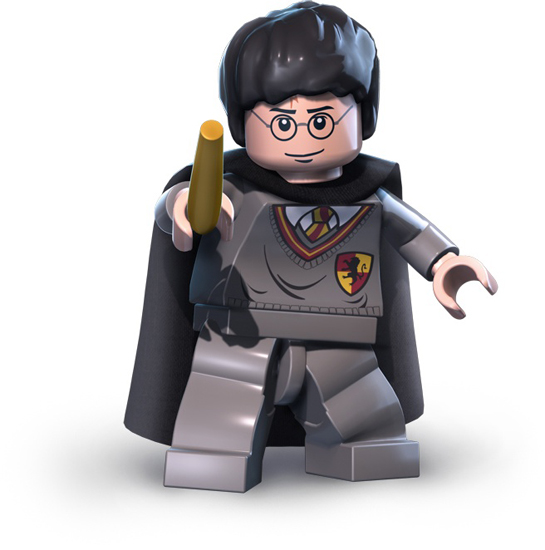
To be clear, this character belongs in the story. She’s even, maybe, integral to it. But far too often, things happen to her rather than the other way around. Kind of like how, in Twilight (and I apologize already for using a Twilight comparison), Bella watches events unfold for three freaking books before she actually does something (and even then, she’s only a small part of what the rest of the world, basically, is already doing without her), whereas Harry Potter grabs his wand and wizard hat (okay, wizards in HP don’t have pointy hats as a rule, but they should) and goes bumblingly about the business of saving the world. Things happen to Bella, whereas Harry Potter goes out and happens to things.

In my story? The character I thought was the protagonist gets plucked out of her own time and wants desperately to get back. And … that’s pretty much it. There are more capable and knowledgeable parties on all sides of her making things happen, and she’s just along for the ride. She helps out here and there, but she never leads the charge. She’s not dead weight, but she’s not slugging above her weight class either.

On the other hand, I’ve got another character who is also plucked out of her own time and also wants desperately to get back, but she fights like a demon against the people trying to help her because she doesn’t believe they’re actually out to help her. She befriends the evil gatekeepers because she doesn’t know well enough not to. Her worldview gets mucked about with more than that bowl full of stale pretzels at the hotel bar, and every time somebody dips their fingers in her sensibilities she fights back and goes in an entirely new direction.

She is, in short, much more interesting than the character I thought was the protagonist. Which means, like a second-string running back when the superstar goes down with an ACL injury, it’s time for her to step up into the bright lights. And sure, this will mean some pretty serious rewriting, but LOLOL I’m going to be rewriting this one for months after the fact already.

And it’s work worth doing, because the story will be better with her at the helm. It’ll be easier for an audience to care about this girl. She doesn’t simply accept the world as it is, she believes it to be better than it is. And when she learns that the world actually isn’t better, she will fight to make it better.

That’s what we want in stories. That’s why Twilight left me feeling empty when I read it. We want a protagonist who does things. We want a protagonist who takes the car out for a spin and yeah, maybe, wrecks it, rather than the salesperson who gets thrown out the window when the whole thing rolls over. We want the guy who grabs the gun and wades into the fray rather than the politician that voted to send him there.

My hero was the wrong hero.

But the real hero has revealed herself.

I can’t be the only one who writes this way. Surely your stories (the ones you’re writing, or the ones you’re living) have surprised you in the same way. Right?

(He shouted into the featureless void.)

Weekly Re-Motivator: Island Escape


I posted a few days ago about having a “down day”, and my wife pointed out that what I was feeling was a perfectly normal bout of depression caused by being locked in close quarters and basically chained at the wrist to two tiny humans without hope of respite for all of my waking hours and most of my non-waking ones.

In other words, this happens to stay-at-home parents. Apparently. And seeing as I’m a stay-at-home dad during the summer months, apparently it was an inevitability that I would be so stricken. But there is hope. Because this week, we’re heading out to a literal island for some much-needed time away.

Okay, so it’s maybe not an island like you think of island paradise. It’s just a barrier island in humble Georgia. But still, it’s a landmass surrounded by water, and we all know the therapeutic effects inherent to the open sea (something something waves, something something ocean breezes, something something sunset shattered and reflected millions of times in the soothing waters). Also, we’ll be just a stone’s throw from Savannah, so there will be lots of ghosts hanging about.

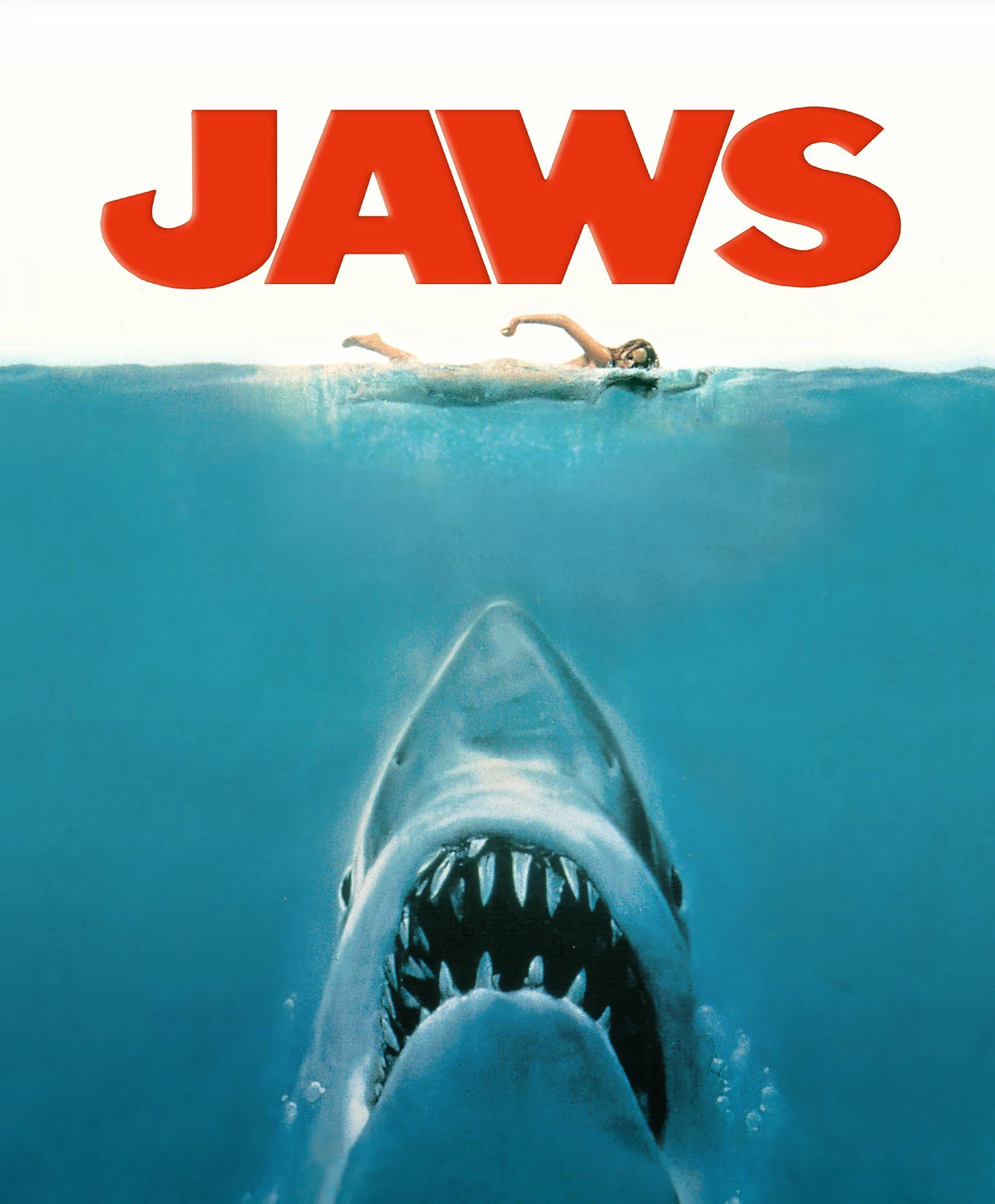
Also, sharks. If you’ve been watching the news, you’ll be well aware that there have been something like fifteen shark attacks on the Atlantic coast this summer. In fact, this morning’s news packages on the attacks bore so much similarity to the film Jaws I just had to shut the thing off. “All these attacks keep happening up and down the coast, and we’re coming up on the July 4th weekend… these beaches are going to be packed.” And all I can think of is a sleek dorsal fin gliding through the water with a harsh orchestral score behind it, and me fighting the urge to shout we’re gonna need a bigger boat.

But more important than avoiding becoming a sharky snack, I’m going to use the time to noodle a bunch on the project. Because despite my halfhearted jubilation and dutiful self-back-scratching over reaching the halfway mark, the project has some problems. Bugs in the batter that need picking out. Knots that need untying or cutting or being burned at both ends. Cracks in the mortar that need spackle or patching or that need to be opened right up with a jackhammer. And the only way to really come to a decision on problems like that — the only way to really see what’s functioning as intended and what’s fargoed beyond repair — is to take a step back, get a bird’s eye view, and take a good, long, look. Hike back out of the trees to get a look at the forest.

Image by Katerha @Flickr.

And while a week away won’t do that for me — the thing’s not even finished, so I can’t do a proper big-picture analysis — it’ll help. Just like every now and then on a road trip you have to pull over and check the map, when working on a big project like this you need to build in time to catch your breath from it, to let it sit and settle before you go back to work.

I don’t yet know if I’m going to work on the novel over the week away or not. Part of me says that the vacation is primo writing time, and I should take full advantage of it. Another part of me says that vacation is vacation is vacation, and maybe I shouldn’t even bring the laptop with me.

Well, maybe I’ll just bring it to write a blarg post or two and send up a few pictures of sunsets.

This weekly Re-Motivational post is part of Stream of Consciousness Saturday. Every Saturday, I use LindaGHill‘s prompt to refocus my efforts and evaluate my process, sometimes with productive results.