Writer Moments: The Hero is not the Hero


Funny things happen when you’re writing.

Writing isn’t building a parking deck, with schematics on file at the city office describing exactly how many steel girders go where, how many tons of concrete, how close to paint the lines, how exactly to best get that fresh pee smell in the elevators. Writing is more like surfing. You practice the mechanics, the balance, the paddling and the positioning, but it all means nothing until the right wave hits. But then, when the wave hits, all the preparation goes out the window and you ride what the ocean gives you. (And if that’s not what surfing is like, I apologize. I know as much about surfing as I do about effective lawn maintenance, which is to say, I know it’s a thing that some people who are not me are capable of doing, and I imagine there is some skill involved.)

I’ve learned a lot from writing my current novel, much more than I learned writing the first. The current story has changed so many times that the disassembled cadaver on my table looks more like the bodies of six or seven different deep-sea monstrosities whacked together with crazy glue and culinary twine. It’s either missing a head or it has two heads too many, depending on what angle the light strikes it at. And it’s still not finished. Soon, but not there yet.

And by finished, of course, I mean only the first draft; there is a long period of re-writing ahead of this one, considering all the narrative surgery to be conducted on those half-formed fish-beast parts.

But I am always learning new things about my writing, and a thing I learned today was that this story is about the entirely wrong things.

The chain of events is good. Maybe even exciting. But there was something wrong with my protagonist. I felt a niggling seed of doubt a month or so ago when I axed one of the major supporting characters who just wasn’t doing much. But I’ve been feeling a much fainter, though much more impossible to ignore, sensation at the same time; sort of like how, on a cruise ship, you can get used to the motion of the ocean and forget for a time that you’re bobbing around like a cork, but then a storm hits and you realize, with your entire life at a thirty degree angle, that things are a bit more off-kilter than you realized. And that sensation is that the protagonist of my story isn’t actually the protagonist of the story.

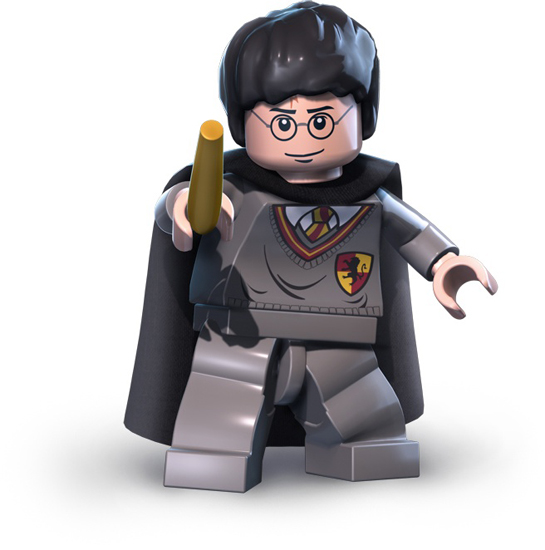
To be clear, this character belongs in the story. She’s even, maybe, integral to it. But far too often, things happen to her rather than the other way around. Kind of like how, in Twilight (and I apologize already for using a Twilight comparison), Bella watches events unfold for three freaking books before she actually does something (and even then, she’s only a small part of what the rest of the world, basically, is already doing without her), whereas Harry Potter grabs his wand and wizard hat (okay, wizards in HP don’t have pointy hats as a rule, but they should) and goes bumblingly about the business of saving the world. Things happen to Bella, whereas Harry Potter goes out and happens to things.
In my story? The character I thought was the protagonist gets plucked out of her own time and wants desperately to get back. And … that’s pretty much it. There are more capable and knowledgeable parties on all sides of her making things happen, and she’s just along for the ride. She helps out here and there, but she never leads the charge. She’s not dead weight, but she’s not slugging above her weight class either.

On the other hand, I’ve got another character who is also plucked out of her own time and also wants desperately to get back, but she fights like a demon against the people trying to help her because she doesn’t believe they’re actually out to help her. She befriends the evil gatekeepers because she doesn’t know well enough not to. Her worldview gets mucked about with more than that bowl full of stale pretzels at the hotel bar, and every time somebody dips their fingers in her sensibilities she fights back and goes in an entirely new direction.

She is, in short, much more interesting than the character I thought was the protagonist. Which means, like a second-string running back when the superstar goes down with an ACL injury, it’s time for her to step up into the bright lights. And sure, this will mean some pretty serious rewriting, but LOLOL I’m going to be rewriting this one for months after the fact already.

And it’s work worth doing, because the story will be better with her at the helm. It’ll be easier for an audience to care about this girl. She doesn’t simply accept the world as it is, she believes it to be better than it is. And when she learns that the world actually isn’t better, she will fight to make it better.

That’s what we want in stories. That’s why Twilight left me feeling empty when I read it. We want a protagonist who does things. We want a protagonist who takes the car out for a spin and yeah, maybe, wrecks it, rather than the salesperson who gets thrown out the window when the whole thing rolls over. We want the guy who grabs the gun and wades into the fray rather than the politician that voted to send him there.

My hero was the wrong hero.

But the real hero has revealed herself.

I can’t be the only one who writes this way. Surely your stories (the ones you’re writing, or the ones you’re living) have surprised you in the same way. Right?

(He shouted into the featureless void.)

The Weekly Re-Motivator: Mind Over Mind


I was sitting at work the other day, having just come back from one of several “important” meetings during my planning time, lamenting my general loss of productivity of late. It’s been an adjustment, getting back into the school routine: waking up earlier to get in my runs and workouts, bundling the sprouts off to germcare (sorry, daycare), putting in my time at school, coming home exhausted but still having to cook dinner and wind the sprouts down for the evening, and finally collapsing in a boneless heap to hope that the kids sleep through the night (they’re both in a bit of a midnight waking sort of phase right now, which is a real bummer).

As a result, I’ve lost some momentum on my writing front. I’ve dropped from writing about 800 words a day on my current WIP to 600 or so, and I’m down from five postings a week here at the blarg to three or four if I’m lucky. Which is frustrating. Toward the end of the school year, I was priding myself on those statistics.

Then again, when I think back on it, my workouts were suffering during that time. I was gaining momentum in one area at the expense of the other.

And then further still, I think back to the beginning of summer, when the routine of the workday disappeared and I fell into a funk and wasn’t accomplishing my workouts or the writing I wanted to. I did some, sure, but I just felt so wiped, so burnt out, so unmotivated. Did I need a bit of time to recuperate from the end of the school year? Probably. Did it merit the amount of down time that I took? Meh… I have a hard time justifying that.

And then, my brain flashed back to my time in college. This is a thing I tend to try to stop my brain from doing, because the results are rarely good. I loved my college days, but man oh man were some poor decisions made. And needless to say, the brain doesn’t flash back to the good things when it senses I need a good kick in the arse. No, it flashed back to a stretch of about a year and a half where I did little more than sit in my room and play video games for hours and even days on end. I failed a class, something I’d never done in my life. My other grades tanked. I packed on about fifteen pounds. I turned into a big old jerk (well, even more than normal). Why? I just lost the drive. I felt worthless so I was worthless. And in the depths of that toxic fog, a good friend of mine (who was somehow still my friend despite all my atmospheric jerkitude) came to me with a bit of advice: “The more you do, the more you can do.”

I don’t know if she plagiarized that, and I don’t care. Because it’s true. The mind is a weird organ. It believes what it wants to believe, often contrary to the empirical evidence all around it. That little aphorism led me to get back into my classes and write the first drafts of the play that would grow into Accidentally Inspired, the work that in no small way set the course for the next chapters of my life, and is still setting the course for me.

The more you do, the more you can do.

Momentum matters.

You pick yourself up out of the funk and do something — anything — take a walk around the block, scribble a few bits of dialogue on the page, bang out a few push-ups, chase your kid around the room a few times — and there’s pushback, sure. Your negative momentum holds you in place. But your brain also says to itself, “hey, that wasn’t so bad, we can do that again.” And if you’re smart, you do, and you do a little more next time.

If the me who heard my friend drop that little truth-bomb on me back in college could see what I’m up to these days — even in my current, slightly diminished and frustrated state — he’d have a heart attack. Married, two kids, full-time job, coaching soccer after school, working out five or six times a week, writing novels and short stories like it’s my job, operating a website… The me of the past didn’t believe he could do all that, so of course, he couldn’t. But little by little, he started to believe. Little by little, momentum grew. Little by little, his mind changed.

Were there setbacks along the way? No doubt. The road is neither straight nor level. But by taking on a little more at a time, slowly upping the ante, slowly turning up the burners, I was able to trick myself into becoming moderately productive.

Which reminds me, it’s time to take the kids out on a walk, and then come back and write…

tumblr_mg9p3wt2xu1rwir03o1_1280

This weekly Re-Motivational post is part of Stream of Consciousness Saturday. Every Saturday, I use LindaGHill‘s prompt to refocus my efforts and evaluate my process, sometimes with productive results.

The Weekly Re-Motivator: We Are Not Enthused


I’m a teacher, as I believe I may have mentioned before, and it’s back-to-school week in Atlanta. Which means, from one perspective, a brand new crop of impressionable young minds, ripe and ready for me to rain upon them a bounty of knowledge that will allow them to flourish and grow into the pillars of tomorrow’s society. From another perspective, it’s another motley crew of jaded, disinterested teenagers, just marking time in my class until they can graduate from high school, go out into the world, and infect society with their brand of poisonous, dull humor, ridiculous taste in music, and skewed views of entitlement and overconfidence in their abilities.

Either way, they’re in my class, and we’ve got several months of together time ahead, which means it’s time to be on my toes. Because if there’s one thing I’ve learned from five years teaching (wow, has it been that long?) it’s that if you want them to care about the material at all — outside of those rainbow-encircled few who have Ivy League dreams and would probably flay and flambe an elf at Christmas if I promised them an A — you have to find a way to make them care about the material. If they aren’t having at least a little bit of fun, then, well, neither will the teacher.

Which is a good reminder of the relationship between author and reader, actually. Because unlike my captive audience in the classroom, whose attendance I can count on if not their attention, the author has no hold at all over the reader. The vast majority of my students aren’t gonna walk out of the room if I fail to entertain them — they might check out, but they’ll suffer through, because they need my course to graduate. But a reader is a different animal. Not only does a reader not need my course to graduate, but a reader can choose from any of the myriad other teachers out there and take their class instead.

So a writer has a tougher job than a teacher, because a writer can’t really have an off day. If I lose focus or just don’t have energy one day or come in wearing a bad mood like an oversized, angry “fargo the police” shirt, I can put on a movie or give them a crossword puzzle or any number of distracting activities to give myself a break. The writer, on the other hand, who brings sub-par writing to the table, who leaves in his story those things that are boring, or nonsensical, or that just don’t move the story, loses his audience immediately.

And how does one keep an audience enthused? Well, I think a first step is to stay enthused oneself.

The middle of my current WIP has been sodding boring. It’s trudged along with its narrative feet in treacly mud, losing its boots and its socks and its gumption in the muck. Partially, that’s because I have been trying to figure out where the story wants to go next, and partially, it’s because after an actiony bit at the beginning, the narrative (I felt) needed a bit of time to breathe and relax before gearing up for more actiony bits toward the end. And that may be true — there may be a need to take the foot off the gas here and there — but perhaps most telling of all is the fact that while writing it, beyond the first 25,000 words or so, I haven’t been having much fun.

And if I, the guy writing and inventing the story, am not having any fun, how can I expect a reader to have any fun?

So I took that thought and poured it into a syringe the size of a blood sausage, and I injected it straight into the heart of my story. I axed a major character who was a ball-and-chain on the leg of the story, had the schemer stop scheming and start doing, and threw in a sneak attack from the villain who had been lying dormant for far too long. The result? The story lifted itself out of the water like a speedboat zipping along at full throttle. The writing became less like performing invasive dentistry on an angry shark and more like trying to keep your laptop bag dry in the rain (hey, writing is never easy, it’s only varying degrees of wish-I’d-never-started mixed with have-to-get-this-story-out-before-my-brain-explodes). And, big shocker here, but I was suddenly having fun with the story the way I haven’t since those first 25,000 words.

In other words, I was enthused, and I think and hope that a reader reading will be enthused at this point in the tale.

Now, first drafts are pretty much universally sharknado. Getting it right the first time is neither expected nor necessary. You can always fix it in post, and you can keep it in post for as long as you need to. But when you’re fixing up a first draft in the editing stage, it’s a lot easier to shape it into a sleek, aerodynamic sports car if it at least looks something like a car to begin with. That task is a lot harder if the first draft is an elephant braying as the tar pit sucks it slowly down.

So, when writing, have fun. Stay enthused. Or else you can’t be mad at readers for giving up on you.

This weekly Re-Motivational post is part of Stream of Consciousness Saturday. Every Saturday, I use LindaGHill‘s prompt to refocus my efforts and evaluate my process, sometimes with productive results.

The Narrative: Break It to Fix It


So the story is struggling along like a winged pigeon. It’s limping here, stopping to investigate this pile of birdseed, fleeing for its life with halting, awkward steps, trying occasionally to fly and only crashing back to the earth.

Something’s wrong with it, but you can’t put your finger on what it is. You like your premise. Your plot is fine. Characters are not bad either. But when you put it all together, it’s sort of like trying to reassemble the bits of a broken vase. In theory they add up to one complete thing, but in practice it just isn’t happening, and never will, because whatever broke the thing in the first place warped it before it broke.

Still, all the writing advice in the world tells you to keep writing even when the writing sucks, so you keep writing dutifully, pounding your face against the keys in the vain hopes that it won’t suck so bad the next time you come back to it, but each time it’s like you slip a little further down the well, you take another step into the unlit basement, you drift a little closer to the waterfall. Meanwhile you’re doubting yourself. The things you’re writing just don’t feel right, even above and beyond the standard-issue writerly self-doubt that affects all who practice the pen. If you’re writing crap, maybe you are crap, and maybe you should stop writing this really crappy crap and get back to the crap you could be doing that might not be total crap by the time you’re finished with it.

But then, a thought occurs to you, like a lone ray of sunshine piercing through a veil of clouds, or like a ping on the sonar detector you thought was dead when you crash-landed on the alien planet. The story isn’t broken, struggling toward its inevitable awful ending on legs that can barely carry it under the weight of its own suckitude. The story isn’t diseased, shambling forward with shaky, poxy steps while a fever of words burns it from the inside out. The story hasn’t died already, drawing flies to feast on its inkblood oozing out through the plot holes left by your incompetence.

It’s nothing so all-encompassing, so fatal as all that. No, there’s just that one thing wrong with it.

And that one thing is poisoning your entire story.

Maybe your protagonist rescued a bunny from hungry wolves in the first act, and that bunny has turned out to be a real pain in the narrative neck since your hero now has to haul it around to meetings and clean up after it. (I read that rabbit pee can actually corrode aluminum. What a jerk of an animal.) Maybe the plot twist you planted for later in the book is about as unexpected as a jab in the opening round of a boxing match, or a hot day in a Georgia summer.

Problem is, you’ve written the story so far with this one thing in mind, and now you see the thing for the insidious venom that it is, you see it scarring the veins of your precious story, burning the heart out with its slow acid drip. To press on, allowing the poison to remain, is madness; it’ll keep corroding the work, no matter how much you’re now aware of it. To double back, try to excise the poison and correct the damage is just as unthinkable: you can’t throw away the work you’ve done, the time you’ve spent, to begin the Sisyphean task of a massive edit before you’ve even finished a draft. What to do?

Cut off the diseased limb.

Writing the first draft is a combat landing. You parachute in with guns blazing, find a bit of cover and pray to god you can make the rendezvous before your head gets taken off by the shrapnel of an exploding real life obligation. You don’t get to go back and say, no, sorry, I borked the landing, let me get back on the plane and try again. The only way out is through. Got a problematic element? Damn the cannons and ditch the damn thing, then pick up your rifle and wade back into combat. Agonizing over the decision will get you shot, or worse, get you killed: you’ll bog down in the existential doubt over your work, and before you know it you just can’t make yourself pick up the pen today, or tomorrow for that matter, and gosh golly the weekend is coming up, and then you’re dead in the ditch with the thousands upon thousands of other would-be writers who just couldn’t do it because of this or that or the other.

The good news is that if you can survive the incursion — if you can finish a draft — you get as many chances as you like to go back and fix it. Make it less crappy. Take out the bits about boring business meetings and toss in more unicorn deathmatches instead. But you’ll never make it through the draft if your heart isn’t in it. Sure, when you get to the end, your draft might look like a civil war armory after a heavy shelling. It might be dripping with blood and bits of brain, it might be hanging together with the flimsiest of threads, it might be written on chicken bones rattling around in a voodoo medicine bag. But if you can finish it, you can fix it later. You have to pull a rotten tooth to put in an implant. You have to break the fractured bone again to set it properly. You have to break your story to fix it, shatter it into a million pieces and then start looking for the super glue when it’s all said and done.

So, what’s it going to be? Suck it up, tie a tourniquet around the poisoned arm and hack it off at the elbow so you can keep slaughtering zombies with your machete hand (Yeah, I’m mixing my metaphors pretty badly, but THERE’S NO STOPPING NOW)? Or throw your hands up, sit back and die while the poison eats you alive?

Tonight I made the decision to erase one of my three main characters from the story completely. Gone like he never existed. He was dead weight, slowing the story down instead of catapulting it forward, and he’s been poisoning the story since the first day I wrote his name down.

What’s poisoning your story? And how are you going to fix it?

Write Anyway


Some days, the writing sucks.

Like today. The kids were up way too early. The sun hasn’t come out all day, so it’s like the world never really woke up. It’s literally obscured by smoke that has blown in across the country from wildfires in Alaska. The house is a wreck and I have no drive to clean it.

In short, I feel like crap, though there’s nothing physically wrong with me.

When I got the kids down for a nap, all I wanted was to close the light-filtering curtains, crank up the white noise machine to drown out the noise of the cats crashing around in their midday shenanigans, and join them in dreamland for a blissful hour or so. I was feeling completely exhausted, bone-crushingly uninspired, will-sappingly unmotivated, and in short like a total waste of space. (I won’t call it Writer’s Block, because I firmly believe that Writer’s Block is just a fancy way of saying that I am not responsible for my creative ability. Writer’s Block can last for years. It’s a crutch. It’s a way of hiding from the work you really want to be doing. Fargo Writer’s Block.)

But I wrote anyway.

6281142155_cf33c5be64_z

And I felt better.

It damn sure wasn’t my best work, but upon reflection, it probably wasn’t my worst, either. And the house is still a mess, and my son is cranky because he peed the bed, and my daughter is clinging to me like a tick to the underside of a particularly furry dog because she fell asleep way too late. And there are dishes to do and toys to pick up, and the world still feels kinda sharknado-ey today.

But there are always these days. The kids are always going to find reasons to be cranky or jittery or whiny or loud or awful. The house is always going to be messy or in need of repair or stinky from last night’s dishes I didn’t wash or the trash I didn’t take out. There will always be days when the weather sucks, when my mood sucks, when the world itself seems to want you not to write. Or, you know, whatever your thing is. Life and the world will get in the way of your thing.

But today I wrote anyway, and I feel a little better.

Because I really want to be a writer. And if I’m not writing, then I’m not a writer.

Photo by Ramiro Ramirez @ Flickr.