Useless Measurements


Venturing once more into the realm of dumb things spotted in the retail world:

20160424_113538.jpg

Notice the little infographic in the top right.

I’m not sure if the fifteen refers to minutes or seconds — it could really be either based on the picture — but what I do know is that if you buy this thing based on its expected caloric burn, you are doing it completely wrong.

I mean, you either want a heavy calorie burn, in which case you’ll lift some serious weight, run some serious distance, or you know, carry a bunch of cinder blocks across a parking lot and back again, or you want to strengthen your … I’m looking at this thing and I’m trying to figure out what exactly it does … fingers? Individually?

But nobody. Seriously. Nobody has ever set out to strengthen their grip and wondered how many calories they were burning. And isn’t 45 calories like, one singular french fry? Or maybe an eighth of an M&M? Maybe it’s the candy shell.

Well, fifteen indeterminate increments of time squeezing this thing will allow you to burn that candy coating right off!

Saddest of all, though, is that for a fleeting moment, I entertained the notion of buying one. I could keep that on my desk. Squeeze it in between sentences.

Moron.

The Weekly Re-Motivator: Never Ask a Word Guy to Math Something


The prompt for the week is “no.” Not “no” as in, “no, don’t eat that piece of chalk” or “no, don’t dump milk all over your baby sister,” but “no.” as in short for number.

Which is a dangerous topic for me, because I’m like that guy who does a few oil changes on his own car and then decides he’s capable of fine-tuning the engine, or the one who successfully builds an IKEA side table and then tries to build his own back porch complete with gazebo. I know a little bit about numbers, and I’m kind of fascinated, but I haven’t taken any math classes since high school.

Mathematics, Formula, Physics, School, Mathematical

Nevertheless, you can count anything, right? And numbers matter, don’t they? There’s the old bit about needing ten thousand hours of experience to get “good” at something that I heard somewhere. If that’s true, how long should I expect to have to plug away at this writing thing?

MATH TIME.

I aim for an hour of writing a day. That’s theoretically 365 hours a year, which means it’s likely to take … ugh … something like 28 years to log 10,000 hours that way. But I only do my capital-W project-related writing on weekdays. So make it more like 37 years.

Sharknado.

But surely, I can count writing on the blarg toward those hours, too, yeah? Well, I’m not as regular there (needs me some blogging fiber, which is a joke that only somebody over thirty could appreciate), but maybe I can claim about two-three hours per week. Which reclaims the years I had to add to make up for the weekend. So we’re back at 28 years.

But wait, do those 10,000 hours have to be dedicated to becoming better at the thing, or can they just be hours spent doing the thing?

If it’s just the doing and not the actively trying to improve that matters, then I logged a heck of a lot of hours writing assignments in college and high school. Has to be enough to get that 28 years down to 26.

And then I wrote a cough-splutter fantasy novella in high school (180 pages in number-two pencil on college-ruled paper, now that was dedication), not to mention a bunch of crappy stories. (These are all lost to the mists of time now, which may in fact be evidence of a benevolent God.) Let’s be generous and give me another two years. 24.

Oh, and there were the plays I wrote a few years back. Hard to quantify that time because I worked when the mood struck me, but surely it’s good for another couple if not trio of years. I’m liking the optimistic feel here, so call it 21 years.

Which is maybe not so bad.

But wait again! With a mental task such as writing, surely time spent planning and plotting and pondering my stories counts. I think it’s safe, then, to double my time over the past two years and bump the timer down to 19 years.

And if time plotting and pondering counts, then surely time reading writing advice counts — that’s learning after all. But at that rate, if reading counts, it’s impossible to argue that reading stories that have inspired me to write wouldn’t count.

And then the floodgates open. Reading has got to be good for at least 5,000 hours of my life, and that’s a conservative estimate, to be sure. And that means I’m just a thousand hours or so short of Mastering Writing Forever.

Geometry, Mathematics, Cube, Hexahedron, Body

Which is nonsense, of course.

Measuring these things is a mug’s game. It’s like asking how many birds are in flight right this moment in the world. Surely it’s a question with an answer. A correct answer, even — one that could theoretically be measured. But it’s a nonsense question just the same, because the means for measuring such a thing simply don’t exist. And you can no more measure the actual productive time you’ve spent in an endeavor than you can measure all the people in the world whose eyes are closed. The information is there, but we can’t know it.

And that means we can’t live in fear or doubt or frustration at the information. There’s no finish line. There’s no ticker-tape parade when you reach 10,000 hours of practice, or 5,000, or 1,000, or five. All we can do is keep plugging away, keep practicing, keep doing.

Math may be an intrinsic part of everything, but these things we do are much, much bigger than math.

This weekly remotivational post is part of Stream of Consciousness Saturday. Every weekend, I use Linda G. Hill’s prompt to refocus my efforts and evaluate my process, sometimes with productive results.


Pegasus Intelligence


Beer, Beer Garden, Thirst, Glass Mug, Drink, Beer Glass“Ernie Collins.”

“The name doesn’t ring a bell. Then again, I’ve only been working here for six months or so.”

“Oh. Well. He’d have been here back in ’07.”

“I see.” Lana, feeling that the conversation had reached that inevitable point where things peter out and the bartender and patron go on with their individual existences, began polishing glassware, and only when she noticed Eddie gesturing at her did she realize that he had continued speaking.

“And from there, it’s on to Melbourne, to a little hole-in-the-wall joint called Dingo Lingo.”

She angled back into the conversation as best she could. “I’ve never heard of it.”

“Of course not. Very few people who haven’t cracked the top-10 bestseller list have.”

Lana squinted at him, still turning a glass in her hand. It was impossible to tell if he was putting her on. The crazy ones never seem crazy. “And you’re going there to …?”

“To drink it all in, man.”

“What, Dingo Lingo serves some proprietary drink?”

“No. What? No. Look.” Eddie pulled out his phone and opened his notes app. He tapped on a file, zoomed in on a maniacal-looking spider web diagram dotted with pictures of towns and bars and faces she didn’t recognize, clicked and zoomed and scrolled a few more times, and finally stopped and shoved the phone toward her. On the screen was a picture of an absolutely normal-looking guy. Slightly unshaven, slightly frumpy, a below-average intelligence gasping for help in his faraway stare as he sat at a Starbucks street table. “Because of him. Haven’t you been paying attention?”

“I fear I may have lost the thread.”

Eddie sighed. “He’s a Pegasus.”

“A what, now?”

Eddie sighed again, harder this time, to make clear that he was explaining something he shouldn’t have to explain. “In Greek myth, Pegasus was said to strike springs from the very ground where his hooves touched.” He smiled at Lana as if this should have meant something to her, but it obviously didn’t. “Pegasus was the personal transport for the muses. Like Uber, but, you know, a horse.”

Lana gave an ever-so-slight shake of her head. “Muses?”

“The Greek goddesses of inspiration.”

“Okay, and you want a drink from the bar because –”

“It’s a metaphor, man! It’s not a literal spring. Ernie Collins is not a goddamned winged horse. But he’s a Pegasus in spirit. He travels the world on his parents’ retirement fund, and every so often:” here Eddie rapped his fingers on the tabletop and made a clop-clop noise with his tongue. “Inspiration springs forth.”

“So you think,” Lana said, studying the freshly polished bar as if it might offer some insight on how to deal with a clearly deranged individual, which it did not, “that just by being in these places, you’ll … what, soak up some inspiration?”

“Exactly.” Eddie folded his arms and leaned back from the table as if he’d just solved a two-hundred item crossword puzzle. He raised his eyebrows at her, again, as if he expected her to be impressed.

“And that’s why you haven’t ordered anything but that one beer, then?” She tried to keep the edge out of her voice, but he’d been nursing the one drink for three hours. It wasn’t like she needed him to vacate the stool — it was a Tuesday night, after all — but principle dictated that a bar tab should at least exceed in dollars its length in hours.

“Nothing personal, you understand.” He picked nervously at the label which had already been thoroughly picked at. He came away with bits of glue under his fingernails. “But I’ve got quite the itinerary ahead. Atlanta. Seattle. Toronto. Melbourne. Tokyo. Gotta make every dollar count.”

“You can afford travel to all these places, but you can’t afford another drink?”

“I’ve got a GoFundMe page set up. I’ll move on when I can afford airfare.”

Won’t hold my breath for a decent tip, Lana thought. “You’re a writer, then?”

“Trying to be,” Eddie replied, a sort of self-satisfied smirk tugging at the corners of his mouth.

“What have you written?”

“Well.” He scratched the back of his neck. “Nothing yet.”

“Oh, a work in progress?” Lana returned to wiping glasses. “I had a roommate in college who always had about a dozen works in progress. Never did get published. Wrote like a demon, though.” She glanced sideways at Eddie. “Ordered more than one drink at happy hour, too.”

“Thing is, I don’t want to just write anything. When I actually sit down to write, I want it to be the best. Hence: following in the footsteps of Pegasus.”

Lana frowned thoughtfully. “I suppose there’s intelligence of a sort in that.” Then her thought caught up to her frown. “Wait. You mean to tell me you haven’t actually written anything yet?”

“Er.” More glue, more fingernails. “Not as such, no.”

“Not a draft, not an outline, nothing?”

Eddie shook his head.

“I mean, you at least know what you’re going to write about, though?”

“Well, kind of. I mean, I have some ideas.” He jabbed at his phone again, and showed her the picture of Ernie Collins. “Truth be told, that’s kind of what I was hoping this whole Pegasus thing would help me out with.”

“Let me make sure I understand clearly,” Lana said. She set her glass and rag down and leaned in close. “You want to be a writer, but you haven’t written anything. Instead, you’re going on a trip around the world, on the dime of internet strangers, hoping to sponge up some inspiration … from a man you feel is the embodiment of a winged horse?”

“To be honest, the GoFundMe only has fifteen dollars in it so far.” He eyed the last swig in the bottom of his bottle, felt the moment was right, and swallowed it. “From my mom. Actually –” he waggled the empty bottle — “how much did you say this was, again?”

######

Chuck’s challenge this week: The random title challenge. My title for the week was “Pegasus Intelligence,” which was the fanciest bit of nonsense I’d heard in a while. A little bit of research, though, led me to a place I didn’t entirely hate. It’s more of a vignette than a story, but, well, that’s life, innit?

Also, about halfway into the writing, I realized that I have here the seedling for a … not exactly a sequel to my first novel, but for another story in the same universe as that one. Dammit, Chuck. These short stories are supposed to let me vent pent-up creative energy, not spawn entire novels to go clanging around in my skull.


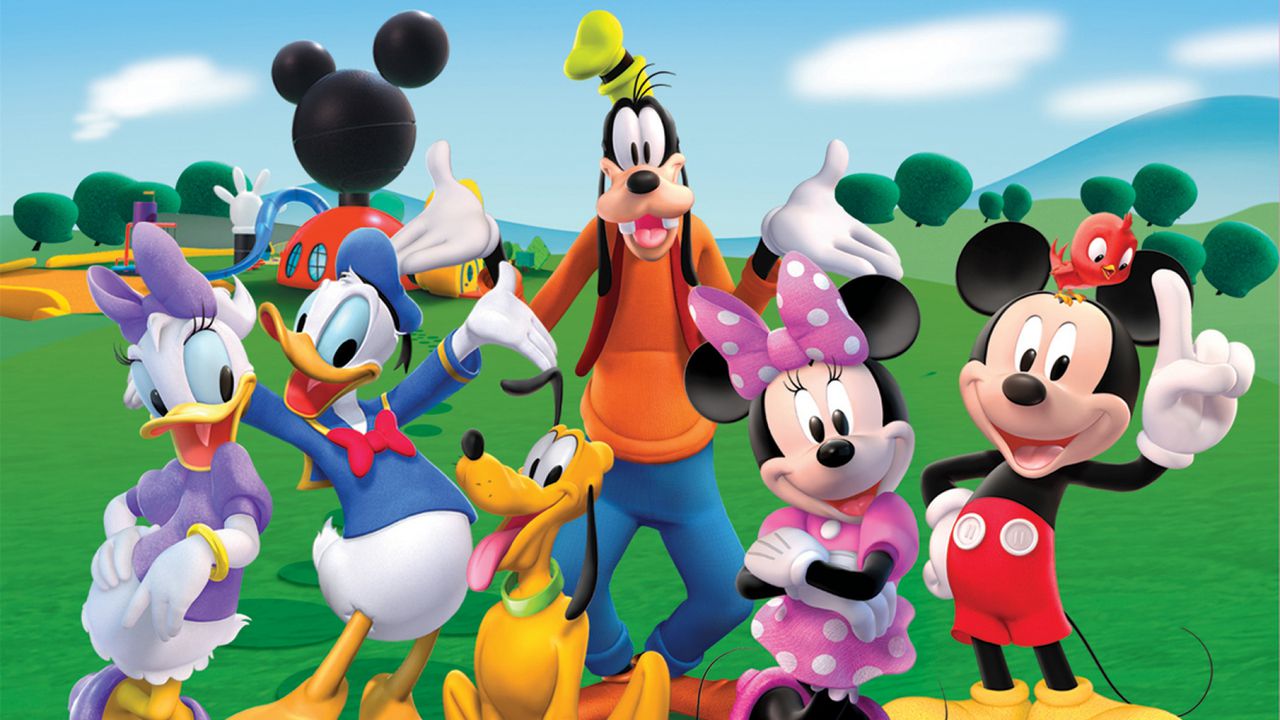
Why Mickey Mouse Clubhouse is the Worst Kids’ Show


Writing is a skill, much like any other. Sure, some of us are gifted in the art more than others, and acquisition of the art comes easier to some than to others. Nonetheless, it is a craft with techniques, maxims, principles and tropes. I like to think that I’m one of those who is to some extent “gifted” as a writer — it’s always come naturally to me and I’ve always enjoyed it — but I can still track my improvements, even markedly so, over the past couple of years. I can see where, when I started out, I was not particularly good at this or that aspect of storytelling, and where and when I learned how to tell my stories better.

But learning is a double-edged sword. When you’re oblivious to things, they don’t bother you; nobody in the dark ages gave a flying sharknado about whether the world revolved around the sun or whether an astronomical turtle carted it around the universe. They didn’t know any better, so they didn’t care. Meanwhile, in contemporary times, B.o.B. can scrap with Neil deGrasse Tyson on twitter over whether the earth is flat, and a fair contingent of people get rather reasonably upset with him. Once the knowledge of a thing is readily available to anybody (i.e., that the earth is round), it becomes your responsibility to know the thing or suffer the consequences (ex., ridicule in the public arena).

All this is to say that, once again, a little bit of knowledge has ruined me. Specifically, it’s made being a parent harder, because I can’t watch Mickey Mouse Clubhouse any more. (For the uninitiated, toddlers run in phases. One TV show, one movie, one character, will hold their focus for months at a time and then, like a fickle spring zephyr, the old stuff is on the garbage heap and it’s on to the new hotness. Well, it’s a Mickey Mouse Clubhouse hurricane season at our house right now, and avoiding it is nigh impossible.)

Sounds like an invented problem, you say. You don’t actually have to watch the shows with your kids, you rightly point out. Better yet, why let your kids watch TV at all? To which I say, “maybe,” “good point,” and “get off your damned high horse.”

But I think the underlying problem I have with this show is a lot more pervasive and insidious than “not liking it.” Rather, this show teaches poisonous lessons about life

So how has knowledge ruined me for this show?

My wife points out that it only takes having a brain to feel numbed by the show, and I’ll agree with that. The problem I have is that I can see the withered heart pumping the oily blood through its crumbling extremities. Which is to say, I know (a few things) about storytelling, so I recognize all the ways the show gives the finger to everything that humans love about stories.

In a nutshell, this is a kids’ show much like any other. A band of sillies get themselves into weird little dilemmas (we lost the magic thing! soandso has to prepare for something! there’s a journey to be taken!) and they solve their problems in a half hour.

Except there’s nothing satisfying in the way they solve problems, because all of their problems are solved by a floating deus ex machina that they call on every time something gets in their way. This deus ex machina is called “Toodles”, and at the outset of every episode, it girds itself with a handful of disparate items designed to help the characters out on their journey.

I feel like I’m not getting the full picture across. What we like about stories is seeing characters put to the test, seeing the unique ways they solve (or fail to solve) their problems, seeing how they grow as a result. But these characters don’t solve their own problems. They don’t bring a unique set of traits to bear on a problem, they don’t worry away at it like hamsters gnawing at corn cobs until a solution presents itself. They hit a barrier, they call on their magic problem solver, and he gives them something that lets them solve the problem immediately. It’s like you were playing Super Mario, and every time you came to a tough group of goombas, an invincibility star dropped out of the sky, or every time there was a tough series of jumps, a handful of platforms would suddenly appear for you to just walk across. Sure, you’d beat the game, but there’d be no point: nothing you did had an effect on the way the game played out.

But this isn’t a hallmark of kids’ shows. I’m not unfairly singling this one out. Blue’s Clues was a favorite around my house when my younger siblings were growing up, and that show works as a storytelling exercise. In every episode, the dog wants something, but the dog can’t talk to tell its master what he wants. So he marks a series of objects around the house with pawprints, and the master (with the help of the viewer) has to put those objects together to figure out what the dog wants. The dog uses its brain to find a way to solve its problem.

Then there’s the more contemporary Animal Mechanicals. My son loves this one, and I can’t stand it, but it still works as a story. You’ve got the usual band of sillies, but in this one, each character has a special ability: there’s the fast one, the stretchy one, the strong one, the one that’s got a swiss army knife implanted in his tail, etc. And those characters cooperate with each other, using their special abilities to overcome their problems.

But who gives a damn? I hear you ask. It’s just a kids’ show.

I’m not saying that kids’ programming should be the epitome of storytelling. But in just the way that a bicycle for a five-year old looks pretty much like an adult bike, just smaller, I think that stories for kids should parallel the stories we tell as adults. I mean, that’s part of why we tell stories, isn’t it — to vicariously experience the world, to teach ourselves ways to be (or ways not to be) and ways to solve problems?

That’s what the core of this rant is about, and that’s what really bugs me about the show. In literature, just like the world we actually walk around in, the world does not solve problems for you. All the world does is dream up more and more exquisite ways to challenge your abilities. But in Mickey Mouse Clubhouse, the storytellers solve all the characters’ problems for them before they even leave home.

Too Much Technology: Tableside


I was at the Olive Garden today and I saw the latest incursion of technology into daily life.

Image stolen from techcrunch.com.

Each table is outfitted with a tablet on which the patrons can browse the menu, order items off-the-cuff, request drink refills, even pay the check — without the need for a server to visit the table.

And I thought, wow, that’s cool, for about five seconds, before I realized, wait, that’s actually kind of messed up.

It isn’t hard to see what’s cool about it. And the server I asked about it was quick to sell me on the fancy features of it, all the neat and nifty things the customer can use it to do. Got kids whom you want to get a plate of food in front of, like, immediately when you sit down? Use this tablet for that. Had a rough day at work, and need a refill on your glass of wine right this instant? You can place the order yourself without waiting for the server to place it, then wait on the bartender, then run it to you. Movie’s about to start, and you need to pay your ticket right now if you hope to make it in time for the previews? Swipe your card right at the table.

Convenience! Ease of use! Instant response!

But. (There’s always a but, isn’t there?)

I quickly realized that I feel about this pretty much the same way I feel about self-checkout lines at the grocery store. Which is to say that the restaurant is now forcing me to do some of the work that I take as a given will be done for me as part of the social contract of visiting a place of business that, I thought, was in the business of serving the customer.

What I mean is, I have a job. I go to work for eight hours every weekday (and often eight hours is just the beginning) to earn my paycheck so that I can buy for my family the things we need. You know: roofs over our heads, clothes on our backs and shoes on our feets, little toys with a hundred detachable bits for me to step on in my bare feet at five in the morning when I sneak downstairs for a run. When we have a little left over, we like to splurge by going out to dinner.

And a not-at-all-insignificant part of the going out to dinner experience is the fact that we do it precisely to get a break from the reality wherein my wife and I have to do everything. Who’s cooking the meal? We are. Who’s filling the sippy cups and rushing to the sink to rinse off the toddler spoon that fell on the carpet and is now sporting a hunk of cat fur and carpet schmutz? We are. Who’s cleaning up the table afterward, doing the dishes, and in short doing everything that makes living unlike a band of complete savages possible? We are. We go out to eat to avoid all that.

And now this tablet. It pretends to be there for our convenience, but it’s not. Okay, maybe it kind of is … many are the times I can recall sitting at the table for minutes (entire minutes!) on end, waiting for the server to come round again for any one of the services outlined above. (Come to think of it, I think we get avoided more now that we have kids, but maybe that’s a post for another time.) But I have a sneaking suspicion that while this tablet pretends to serve the customer, it’s really to serve the restaurant, in that it cuts out the middle man. It eliminates a link in a chain, and any time you can shorten a chain, sheer probability dictates that you have less likelihood of encountering a weak link in that chain. And the weak link in this chain is … the server!

Far be it from me to say that servers are by definition weak links. I did my time waiting tables in many a restaurant, as did my wife. It’s a difficult job. Thankless. Much more complicated than a lot of people give credit for. Believe me, I have respect for the good servers out there (and we tip accordingly … none of that “your reward is waiting in heaven!” crap from my pocket). That said, there are some really garbage servers out there, and they can ruin the experience for the customer … and a customer who has had his experience ruined is likely to take it out on the restaurant vis-a-vis not coming to the restaurant anymore. So: install a tablet to take the place of a server descending on your table like a hummingbird every couple of minutes (or, maybe more like a migrant goose, every couple of months). Drinks are low? Need to pay and skedaddle? You don’t have to wait on another person to handle these things for you; just push a few buttons. In fact, with the tablet, you could really eliminate dedicated servers altogether and just staff the front of house with food runners and busboys (or busgirls, it’s the 21st century after all, although busgirls doesn’t sound quite right). I could sit down, tap up my drinks order, tap up my appetizer, and even tap up my entree (complete with preparation instructions that I now know will definitely make it to the kitchen — so when they serve me my chicken with fargoing mushrooms on it I’ll know it was the kitchen that screwed up and not my server). Why bring another person into the mix?

Monkey, Buttler, Operation, Waiter, Control

Because, as I said before, we go out to dinner so that we don’t have to do it all. I go out to dinner so that I can have a stranger kiss my butt a little, serve me with a smile, come around and fill up my water five or six times. I want them to do these things for me so that I don’t have to do these things myself. And yeah, this tablet means just pushing a few buttons to get these things done, but sharknado, if I wanted to push buttons and have it happen that way, I’d order online and bring the food home to eat. I like the interaction with a person. I like getting to boss somebody around for a little bit. And I will gladly pay for this service in the form of the gratuity we add on to the check at meal’s end.

Of course, as I said earlier, I don’t think this service is about me, the customer, at all; I think it’s much more to the benefit of the restaurant. No longer will I be able to complain: “well, I didn’t order that.” If I put the order in myself, then yes, I bloody well did order that. No longer will I be able to leave angry reviews on Yelp that we had to wait fifteen minutes for the server to collect and process our check: if I have the option to pay right there at the table, then it’s my fault I sat there like a dunce with my card in my hand and my elbow in a puddle of orange Crush that my toddler expelled through her nose. The tablet protects the restaurant from all these complaints you could theoretically level against a server, and it gives the customer more control over their dining experience.

Thing is, though?

I don’t think I actually want that much control over my dining experience. I want it to be good, but I want it to be good because it’s orchestrated by people that care enough about other people to make it good.

I dunno, man. The robot revolution is not that far enough. I know this is a road we’re going down sooner or later. Maybe I’m turning into a curmudgeon. But this feels like yet another thing we’re removing the human element from when, maybe, it ain’t quite time to cut people out of the picture just yet.

Am I wrong? Is this the wave of the future, or does this unsettle you a little bit?