Terrible Reviews: Natural Born Heroes


I’ll admit it, I’m a fan of Christopher McDougall.

I can’t say he’s the most artful of writers, but he spins a good yarn, and he has a way of taking subjects that could easily get very preachy, and packages them in a straightforward, simplistic, trust-your-gut kind of way that makes it all very believable.

McDougall is better known as the author of the incredibly popular Born to Run, which would most certainly crack my top five non-fiction books (not that I’ve actually made that list in my head or anything) and might crack my top five books period. When I saw he had a new book out that attempted to give mountain climbing, street fighting, parkour and other natural feats of strength the same treatment that he gave to distance running in Born to Run, I was sold immediately.
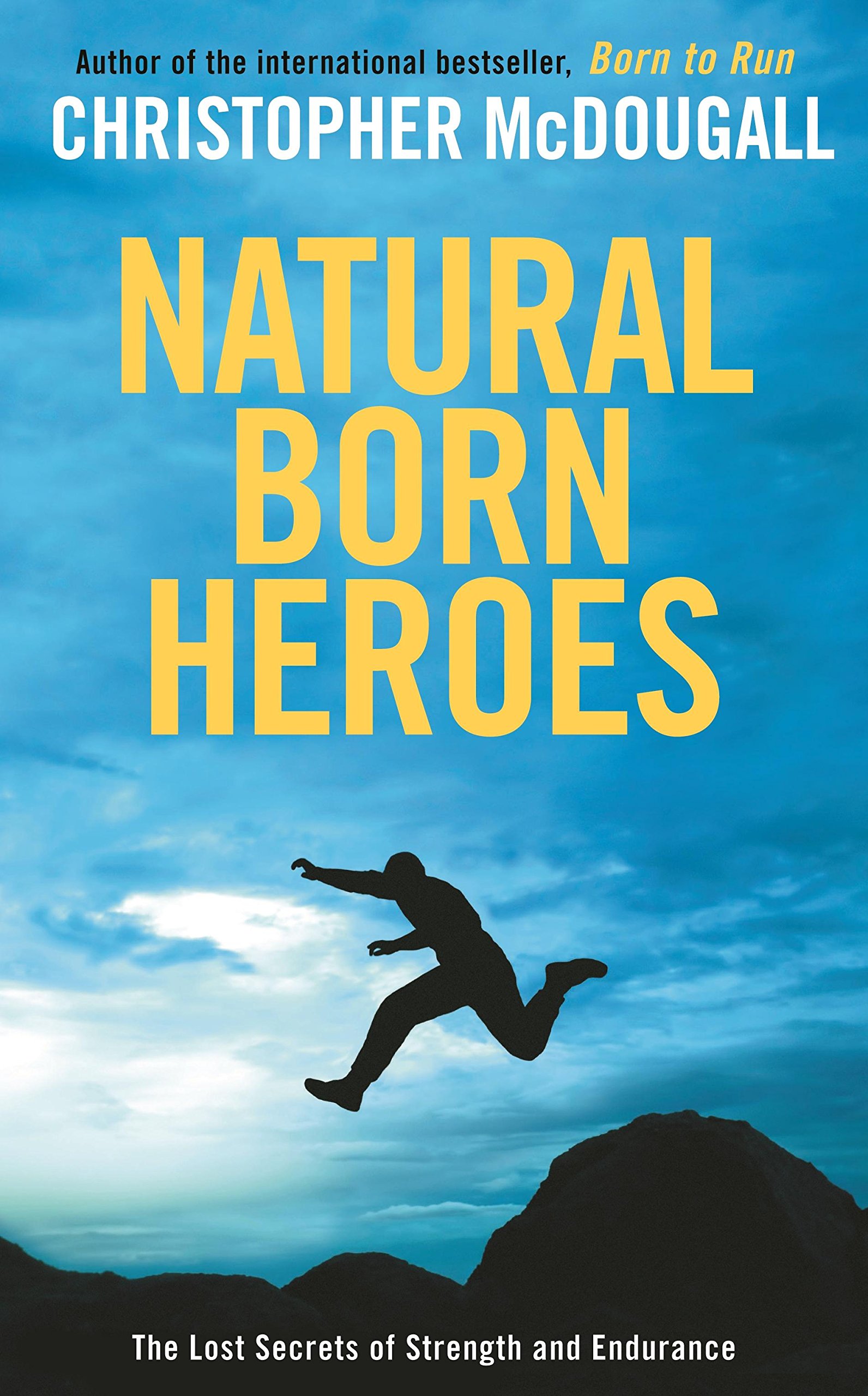
Natural Born Heroes is kind of two books in one. It’s the tale of a daring feat of espionage during World War II on the island of Crete, but it’s also a treatise on diet, exercise, and the virtually immeasurable limits of human strength and endurance. The author himself acknowledges in his notes that these two ideas have sort of been smashed together and run through the blender. While exploring the two ideas separately, he realized that there was quite a bit of overlap, and so: one book.

I liked it, but I think I might have liked it better if I hadn’t read Born to Run first. And maybe that’s my fault; it’s not entirely fair to judge a book based on other books, but in this case, it’s hard not to.

Let’s get down to some word salad (see, because in this book and in Born to Run, McDougall makes a big deal out of all the salad he eats):

The Good:

So, this book is two concepts, right? Those two concepts are excellent, and treated excellently.

I’m not much of a history guy, but the story of the kidnapping of a German general during World War II is fascinating. The tale is audacious from its inception, harrowing in its execution, and compelling from start to finish. Some of the characters bleed together a little bit (there are so bloody many of them, I felt overwhelmed at times), but on the whole the narrative portion of the book is cogent and satisfying.

Then the health and fitness part: this stuff is outstanding. I’m a little biased in this regard. In my recent stabs at fitness (in fact, let’s call them less stabs and more fumbling for light switches in a dark hotel room) I’ve come independently to many of the same conclusions that McDougall makes in this book. To wit: gyms are a waste of time, and natural, functional exercises and movements are not only more efficient but actually make you stronger and more useful in the world. (Think zombie apocalypse. Who do you want in your crew: the musclebound dudebro who can squat 500 lbs and squish your skull with his biceps, or the wiry guy who can scale walls, run for an hour at a decent clip, and deliver a knockout punch with little or no warning? On second thought, maybe you don’t want that guy; if things go sideways, he’d sucker-punch you and leave you as bait.) Further: Most diets are a load of hot garbage. Calorie counting and low-fat foods and all that are for the birds. Eat more vegetables. Eat protein. Stay away from processed sugars and carbs. Profit.

Person, Silhouette, Jump, Male, Young, Sky, Sunset, Joy

In short (too late!) the creamy center of the book is exactly as advertised, and it makes for really compelling reading (I highlighted and dog-eared the heck out of the book so I can go back through it and look up a bunch of the fitness concepts). It sent me scurrying to youtube more than once to look up things either directly or indirectly referenced by the books (like this and this, for example), which made for a neat experience while reading.

The Not-so-Good:

As much as I liked the two foci of this book, I have to quibble. Rather unlike peanuts and nougat, the narrative and the fitness informational do not mesh well on the palate. It feels more like jalapenos and chocolate. (Yeah, I know people eat that crap, but they shouldn’t.)

Maybe it’s because there’s such a broad focus on the fitness concepts (first it’s boxing and pankration and Wing Chun, then it’s parkour and mountain climbing, then it’s fascia and elastic motion, then it’s foraging for herbs in Central Park), or maybe it’s because there are so many damned characters and threads in the WWII story (The story follows mainly Paddy and Xan, the guys at the heart of this abduction attempt, but is also awfully concerned with a veritable host of people who pop in for a chapter to dispense a bit of knowledge and then are never seen again), but the book left my head spinning. It became downright hard to read, sometimes, which is basically a death knell for a novel. It’s a shame, too, because individually the two halves of the book are so strong, but together, like overlapping radio waves, each one interferes with the other’s signal.

For my money, if these two concepts were two separate books, then each of those books would have been stronger in its own right than the swirled mishmash they’ve become in this book.

Yarn, Colors, Tangle, Thread

I have another quibble with the fitness portion of the book, which is that it’s a shotgun blast of information: it hits hard up close, but it dissipates quickly and becomes useless the farther you get from your target. (I have never fired a gun. Thanks, first-person-shooter video games!) I came into the book … expecting isn’t quite the word, because I try not to read with too many expectations … but hoping to learn a lot about natural movement and the merits, strengths, and methods of some of the techniques described within. And … those things are there, but it’s barely a skimming of the surface.

I know, I know; this isn’t an instructional text. But I feel like with so many of the things discussed in this book, all that I can really say I know about them is: they exist. McDougall spends a lot of time talking about the ancient Greek art of pankration, for example, but the only technique he describes in any detail is a heel-kick (the “THIS IS SPARTA” one from 300). Even there, he talks about the force it delivers, but says little about how it’s achieved and how much practice is required to master it.

And for all the book has to say about diet, there’s very little said about the things which would be reasonable to eat. It’s not unusual for books that talk about diet to have … I dunno, an appendix listing, at the very least, a few easy-to-make meals, or a sample shopping list or something? I guess I wanted that portion of the book to be a little more actionable, though again, I may have been wanting too much.

The WTF:

As if the two halves of the book weren’t enough, there’s a third story thrown in there, which is a framing device for the one and connective tissue for the other. That story joins McDougall in his quest to follow in the footsteps of the abductors, and it is in the following of that thread that he learns about these fighting arts, practices parkour, and tracks down a dietary swami.

Of course, none of this is linear — how could it be? — spanning, as it does, several years of research across no less than three continents. So the book jumps from a moment in the abduction to McDougall’s firsthand experience with a rabid historian to a treatise on how the jagged rocks of Crete forced the ancient warriors and goatherds to adapt the way they moved and then back to the abduction and … see, that right there? That dizzy feeling you’re getting? The book does this to you every fifteen pages or so, and it’s disorienting as hell.

Greek God, Zeus, Mythology, Sculpture, Statue, Myth

Then, amidst all of this historical fiction and apparently well-researched fitness credo, there’s a ton of allusion to Greek myth and legend, up to and including the recent bastardization of those myths vis-a-vis the Percy Jackson series of books (which are fine for what they are, but they’re hardly canon and don’t really deserve a place next to the proper myths of Theseus and Odysseus, for example). These moments seem misplaced and not helpful when they crop up. In fact, they seem like remnants from an earlier draft when they might have been a more central focus of the book, but like a vestigial tail, no longer serve any particularly useful function.

The Verdict:

The book was frustrating at times, and took me longer than a book of its length would usually take me for that reason, so it’s hard to give it good marks. For all the natural movement sections left me wanting more, however, those sections had me riveted and kept me coming back. In fact, the movement focus of the book was interesting enough to make me care about the historical portion of the book, which is saying something in my case (the last time I did any extracurricular reading about historical events, outside of awesome freak occurrences like Tunguska, was … let’s see … yeah, never). So that’s something.

If you read Born to Run and enjoyed it, you may well enjoy this, though it will probably not leave you quite as satisfied. Born to Run is a far superior offering in many respects. It is focused where this novel is scattered, it gives depth where this novel dips its toes in the water. Still, this ain’t bad.

I give it three out of five bare footprints in the sand.

Sand, Footprint, Water, Beach, Coast

Terrible Reviews: Once A Runner


I feel a little silly putting up a review for a book that’s over thirty years old, but then again, if there’s a book that deserves to be on this site, which is primarily about writing and running, it’s this one: a book written by a runner about running.

No, not Born to Run. This is Once a Runner, by John L. Parker, Jr.

I had heard about this book several times over the last couple of years since I’ve started running. It’s been touted as one of the best books ever written about running by Runners’ World magazine. Other readers have said that the book changed their whole perception of running and runners.  And the accolades stretch out like miles on a dusty highway. So when a fellow runner — a race director at a local event I’ve run four times now — offered to loan me the book, I happily accepted. “I’ve bought this book five times,” he said, with a hint of admonition in his voice, “because nobody I’ve loaned it to has returned it.” Presumably, I figured, that’s because the book was so awesome that they kept it to read again and again.

I devoured the book in about five nights, which is pretty good for me. I do most of my reading right before bed, and I go as far as I can manage before I descend into the dreamland that can only come to a parent of two, which is to say, sleep comes on fast and hard.

So, let’s get into it.

The Good.

The book is an absolute joy to read.The prose is gorgeous, playing off the brain like a mountain stream wending its way across pebbles and fallen branches. The characters are larger than life, and seem ready to step off the page and into the real world. The book is fictional, but the characters feel like they must be caricatures of real people, owing to their completeness and strangeness.

The book also captures something which is pretty difficult to accurately convey — the simultaneous despair, pain, joy, and calm that a distance runner feels in the midst of a run long enough to make the average person’s eyes go glassy. Parker is a poet when it comes to this stuff:

Running to him was real; the way he did it the realest thing he knew. It was all joy and woe, hard as diamond; it made him weary beyond comprehension. But it also made him free.

And he somehow maintains that level of tone, that balance between philosophical meditation and gritty truth grinder, for the entire book.

The Bad.

It’s a good thing the book is such a joy to read, because narratively, I found it to be a mess. The primary conflict doesn’t begin until almost two-thirds of the way into the book. Instead, the first half and change of the book is given over to anecdotes of the track team and its follies and foibles. Now, those stories are good, and as I mentioned above, they are beautifully written, but as a contemporary reader, it’s incredibly frustrating, and by the third or fourth chapter, I found myself wondering just where the hell is this story going? I had to check the book jacket to see what the blurb said the book was all about: a collegiate runner who gets kicked off his school team and then returns to run the race of his life. Okay, great. But by the halfway point of the book, the main character is still on the team. When your inciting incident takes more than half the book to happen, that’s a problem, and it’s one that no amount of beautiful language can make me look past.

The Ugly.

Worse, the first half of the book doesn’t seem to connect in any meaningful way with the second, outside of introducing the characters. Parker spends enough time on five or six characters to make us believe they matter to the narrative, but ultimately only three do: Quenton, the protagonist and the same prodigal runner from the blurb above; Bruce, another runner and ultimately Quenton’s mentor; and Prigman, the hard-nosed athletic director who kicks Quenton off the team. Everybody else is just window dressing, alternately dispensing roadside philosophy or helping Quenton pull off pranks in the athletic dorms. It’s all amusing, even at times inspiring, but again, it’s all tangential to the main plot, and I ended up feeling cheated by having been forced to take stock in all these characters that came to nothing in the end. And if there’s one thing I hate as a reader, it’s having my time wasted.

The Verdict.

As I look back over my thoughts on this book, the word that jumps out at me the most is “frustrated.” That’s pretty telling. It’s been a while since I’ve been so conflicted about a book while reading it, and I’m still conflicted now, writing about it. Because I’m torn about it. Being a runner, I really wanted to enjoy it. And I did… but as a writer, I couldn’t get past the flaws in plot, structure, and pacing. Then again, I liked the book enough to burn through it in just a few days.

And as I ponder my own thoughts on the book, I read other reviews and see some people gushing over it, and others, like me, sort of holding their noses and suffering through it. On the whole, though, people seem to like it. So maybe I’m being too harsh, but I like to think that I’m holding the stories I read to a not-unreasonable standard of cohesion and unity.

What it comes down to, I think, is that if you like sports movies and sports books, you’ll probably enjoy this. The descriptions of running in general — Quenton’s tribulations in the “trial of miles” — are spot-on, and the race at the end of the book lives up to its hype.  Plus, the first half of the book has the great sense of hanging around in a locker room and swapping stories.

Outside of that, however, I’m afraid the book comes up a little flat-footed.

Terrible Review: The Girl On The Train


I don’t have a ton of time for reading. Does that shock anybody? So my wife and I have had this one on our shelves for several months. Meant to read it — something came up. Meant to read it — wanted to read something else first. Meant to read it — got distracted with a flashy app on the phone.

Well, I finally read it, and I’m mad at myself for putting it off so long.

Here’s the obligatory part of the post where I warn you that I’ve read the book, and it’s hard to talk about the book in depth without spoiling some aspects of it. So: Spoiler Alert. Within I’ll be speaking (not at length, and unspecifically when I can) about characters and developments within the book. If you’re a purist and want to be shocked by everything, this is probably the part where you should stop reading.

What’s Awesome about it?

  • The Buildup. The book starts off slow — almost too slow — but once the inciting incident happens, the tension ratchets up after just about every chapter and never really slackens. The end result is that I ended up reading the last hundred pages of the book in twenty-minute sessions stolen during the same twenty-four hour period. I just couldn’t wait to see what was going to happen next.
  • The Characters. The story revolves around the (not quite) alternating viewpoints of three women. None of these women is particularly likable, but each of them is undeniably recognizable. Their motivations, their hangups, their insecurities and their suspicions make perfect sense, and I found myself rifling through all sorts of feelings toward each of them. Sometimes I pity them. Sometimes I hate them. Sometimes I can’t believe how stupid they are. But always I’m compelled to see what they’re going to do next. That’s maybe the most important part of all this: each character has a very clear role in driving the story forward. Nobody is tacked on or just blowing in the wind like a useless confederate flag.
  • The Conflict. Something terrible happens and our central narrator (Rachel) fears that she may have been involved in it somehow. Problem is, she was blackout drunk the night in question and has no recollection of the events in question. This snarl adds another level to the mystery that’s already unfolding, and of course is a tremendous source of strife for the narrator. I’ll acknowledge that selective amnesia as a plot device would feel like a cop-out, but the blackouts aren’t present merely as a convenience: the narrator is as unreliable as they come. She’s a binge-drinker, and it becomes clear through the course of the story that the crucial blackout is not the only one in her life; rather, they happened to her several times in her life, and were also directly responsible for her shattered relationship (the falling apart of which is the backdrop to the whole story).
  • The Ending. I won’t spoil it, but the end sets you up for such a delightful one-two punch of betrayal and then vindication, it’s almost overwhelming. My wife was getting frustrated with me because I kept gasping and then exclaiming reading the last few pages while she was trying to work. I couldn’t help it. It was that good.

What’s Not-So-Awesome?

  • The Structure. Maybe it’s me, but the novel is awfully preoccupied with dates and I don’t know if it needs to be. Each chapter and sub-chapter is marked meticulously with the date and the time of day (August 13, 2013, Morning), a device which is certainly intended to build together a timeline of events. This becomes “necessary” since the narrative jumps around in time; we have the murdered woman telling swatches of her story after she has already died in the timelines of the other two narrators. Now, I understand that the dramatic tension and reveals achieved this way are a big payoff for the book, and I don’t have a problem with that. What I have a problem with is the fact that with all the dates heading each chapter, I feel like I should have been taking notes for a test at the end of the book. I don’t know that the events of the story — especially when viewed through the lens of a less-than-reliable, sort of drifting-aimlessly-through-life narrator — call for such specificity.  But maybe that’s just me. End result: I pretty much ignored the dates and I did just fine piecing together the story without them.
  • Red Herrings and Such. At its heart, the book is a mystery novel, so there have to be false leads, misinformation, overlooked clues, and all that. But the main suspect for much of the book is just so obviously not the guy. Over 150 pages are spent trying to convince us that he could be the guy, but he’s obviously not. It felt taxing after a while, to still be going through the motions of investigating this guy who was obviously not the guy. And then the guy who turns out to be the guy, well, it feels a little out of left field, a little too easy, a little too neat. But again, that might just be my cynicism acting up.

What’s Hard to Quantify?

  • There is no hero. Yeah, we’re in the age of the anti-hero, where the protagonist has to do horrible things to win the day. And while I’m not saying there’s nobody to root for — clearly we hope that Rachel manages to pull through her troubles — it’s hard to get behind any of them. Rachel’s a drunkard and a total sad-sack living in the shadow of a broken marriage. Anna’s an adulteress who’s overly hateful of the woman she wrecked home on, and becomes increasingly suspicious and distrustful of her adulterating husband. Megan’s perhaps the easiest one to like, until you find out that SPOILER ALERT she’s responsible for the death of her own child. I just find it hard to hope for good things for any of them, though it does get revealed that Rachel’s problems were not entirely of her own making (as she seems to believe toward the beginning of the book).
  • Moral Ambiguity. It’s hard to say if Rachel causes the events of the book or if she just blunders through them, but what’s clear is that the story wouldn’t have happened if the narrator had kept to herself. Since her own life is in the crapper, she lives vicariously through the anonymous people she sees on the train, and that’s what sets things in motion. Whether the novel suggests this is a good thing or not is unclear: the murder gets solved because she sticks her nose in, but she also causes a world of hurt (for herself and the other characters — up to and possibly including actually playing a role in the murder herself) by sticking her nose in. The moral of the story is, then, either get involved in the lives of those around you, or don’t. I think you could make a compelling argument either way.
  • Looking inside the heads of women. I would need to hear from female readers on this, but if women in real life think the way these women do, then it would benefit guys to read this book. Because wow. The way they draw connections between events, the way they read between the lines of everything that’s said, the way they think about the men in their lives… men are toddlers, living among evil geniuses.

Okay, so, this review is by no means exhaustive, and I don’t want to spoil the book any more than I have to, but suffice to say, I got through it in four days. That’s pretty fast for me, and it speaks to the readability of the book. The tension is there; it hooks you and yanks you along like a guppy on the line.

All that said, the book does a brilliant job of romanticizing the everyday. The book is centered around trips back and forth on a train — a more mundane premise you could not imagine. But what’s mundane, just like in real life, quickly transforms into something much bigger, much more consequential. Things, in other words, always mean things. It accomplishes all this, however, with very straightforward, unembellished language. No purple prose here, no artful application of metaphors and comparisons or allegories. The writing is simple and straightforward, which, again, makes it very easy to read.

I pointed out some good and some bad, but who am I kidding: I read the book in four days, which is almost unheard of for me. The bad stuff, I feel, is largely subjective, and what bothers me might not bother you. The book is solid. It’s surprising. It’s satisfying.

You should read it.