51%


I don’t update a whole lot about my projects on here anymore — I can only say the same things about authorial strife and creative doubt so many times before even I get tired of listening to myself — but the current project hit a milestone.

I was typing merrily along today, the words flying from me like so much projectile vomit from my one-year-old’s mouth (okay, that’s a lie, the words have been tooth-yankingly recalcitrant lately, springing forth only when I literally shackle myself to the desk and allow myself to do nothing but write), when I happened to glance at the progress bar.

Glancing at the progress bar is something best done rarely if at all. When you’re penning a 90,000 word novel that seems to be fighting your will to birth it into the world (sort of like, I imagine, the way a honey badger might be born), checking your overall progress is a little bit like watching paint dry. That is, if you left the paint in the can and just waited the long winter for it to congeal into a paint brick. It ticks away, slowly, resolutely, like an inchworm shimmying its way down Route 66, but I’m lucky to get 2% in a day. Some days, it doesn’t move at all, even after an hour’s slavish work in the word mines.

Nonetheless, today I checked it, my eye flopping inartfully across it like a cat falling off the arm of the sofa as it stretches for the fading noonday sun.

And it was at 51%.

Over halfway.

That’s shocking to me, because even though I know the time has been passing, and I’ve been dutifully plugging away on this project all the time, it just hasn’t had the same flow as my first project. If the first project was a traipse trough a neglected, overgrown garden — mostly clearing brambles and weeds but occasionally strolling through patches of still-blooming wildflowers — this project has been more like clear-cutting a path through the rainforest to make way for an interstate bypass. Using a hand axe. I feel every sluggish, seemingly ineffectual stroke of the axe-pen.

Still.

51% is a pretty good milestone. One worth bragging about, going into the weekend.

51% is like, I’ve rebuilt the shell of a classic Mustang in the garage, now all I have to do is put the engine back together, reassemble the transmission, rewire all of the electrics, replace the tires, and paint the thing.

51% is like, I’m making a pot luck dish for fifty of my co-workers and I’ve been to the grocery store, now all I have to do is prep the dish, cook it, portion it up neatly, wrap and seal it, and carry it in to work.

51% is like, I’ve cleaned one bathroom in the house, so I might as well clean the other bathroom, and the living room, and the kids’ bedrooms, and the garage, and maybe take down all the blinds that the cats tore up a year ago.

51% means the story is more written than not, and it would be a damn shame not to A) acknowledge that fact and B) really fling myself into the writing of it for this second half.

The pieces are all there. The characters are all there, and behaving as expected (or, if not as expected, at least teaching me how they would prefer to behave). The answers to the questions posed by the first half of the book are lurking in the mist like razor-sharp cliffs and rocks, shapes to be carefully navigated around as I search for the harbor.

Only 44,000 words to go.
Write Anyway


Some days, the writing sucks.

Like today. The kids were up way too early. The sun hasn’t come out all day, so it’s like the world never really woke up. It’s literally obscured by smoke that has blown in across the country from wildfires in Alaska. The house is a wreck and I have no drive to clean it.

In short, I feel like crap, though there’s nothing physically wrong with me.

When I got the kids down for a nap, all I wanted was to close the light-filtering curtains, crank up the white noise machine to drown out the noise of the cats crashing around in their midday shenanigans, and join them in dreamland for a blissful hour or so. I was feeling completely exhausted, bone-crushingly uninspired, will-sappingly unmotivated, and in short like a total waste of space. (I won’t call it Writer’s Block, because I firmly believe that Writer’s Block is just a fancy way of saying that I am not responsible for my creative ability. Writer’s Block can last for years. It’s a crutch. It’s a way of hiding from the work you really want to be doing. Fargo Writer’s Block.)

But I wrote anyway.

6281142155_cf33c5be64_z

And I felt better.

It damn sure wasn’t my best work, but upon reflection, it probably wasn’t my worst, either. And the house is still a mess, and my son is cranky because he peed the bed, and my daughter is clinging to me like a tick to the underside of a particularly furry dog because she fell asleep way too late. And there are dishes to do and toys to pick up, and the world still feels kinda sharknado-ey today.

But there are always these days. The kids are always going to find reasons to be cranky or jittery or whiny or loud or awful. The house is always going to be messy or in need of repair or stinky from last night’s dishes I didn’t wash or the trash I didn’t take out. There will always be days when the weather sucks, when my mood sucks, when the world itself seems to want you not to write. Or, you know, whatever your thing is. Life and the world will get in the way of your thing.

But today I wrote anyway, and I feel a little better.

Because I really want to be a writer. And if I’m not writing, then I’m not a writer.

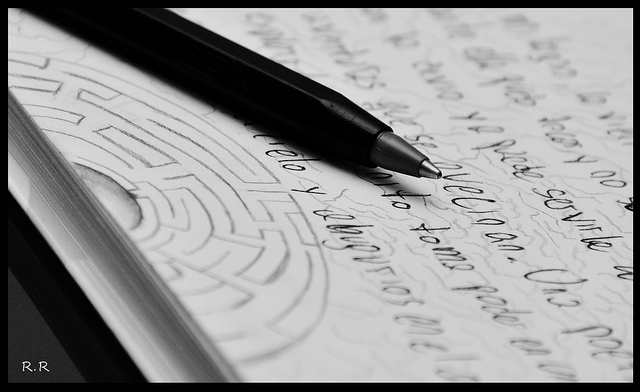
Photo by Ramiro Ramirez @ Flickr.

Every Single Night (A Broken Bedtime Routine)


Kids are smart, yeah?

My son is so smart, he’s running the house right now. He hates bedtime. Going up to his own little room while there is still life happening downstairs absolutely crushes him. He has crippling fear of missing out. And he has learned how to twist his fear to take advantage of ours.

See, his little sister goes to bed about an hour ahead of him, which he’s fine with. Her room is across the hall from his, and… well, let’s just say the walls are pretty thin. You can easily hear another person talking on the other side of any wall in the house, let alone screaming. So when we put him to bed, he screams.

We’ll come to what he’s screaming about in a moment, but the takeaway is, we feel incredibly hamstrung. Intellectually we know that giving him any sort of attention for the screaming only reinforces the behavior. On the other hand, every second we let him go on screaming is another second that might wake his 1-year-old sister, and coaxing the baby back to bed is a taller order than convincing the boy to do the same. (Also, if she doesn’t get enough sleep, she can seriously put the screws to us the next day.)

So, my wife is losing sleep, and I’m losing sleep, and bedtime is now one of the most stressful times of day. It takes upwards of an hour to get both of the bundles of joy down to sleep, and putting big brother down is a recursive process that seriously drives us to distraction every single night.

Which brings us to what he screams about. This is really best described as a series of steps:

  1. I announce bedtime. He screams because he doesn’t want to go to bed.
  2. I threaten to carry him upstairs to bed. (This works because he is at the age where he wants to do everything himself). He relents.
  3. I tell him to brush his teeth. He screams because he doesn’t want to brush his teeth.
  4. I say, fine, come get dressed for bed. (This works because he really does want to brush his teeth and he doesn’t want to miss out on an excuse to noodle around in the bathroom for five minutes.) He relents.
  5. We read a book. These days it’s a seek-n-find the differences between pictures book of all his favorites: Cars, Toy Story, that kind of thing, but whatever it is, he only wants to read this one book for weeks at a time. This makes him happy.
  6. We sing some bedtime songs in the rocking chair. This works, because he loves to sing.
  7. It’s bedtime. I crawl into bed with him, because this is what he demands, and tell him he can have the usual five minutes. For five minutes, there is peace.
  8. Time to go. I get up. He screams because he knows he’s about to be on his own, which he can’t stand. I tell him I’m not listening to this nonsense: it’s time for bed. I leave the room and listen to him scream for about five minutes or so, hoping to god he won’t wake the baby. He’s screaming about one of these things:
    1. He wants his door cracked.
    2. He wants a stuffed animal.
      1. But not the stuffed animal he has with him, a different one that’s across the room.
    3. He wants to read another book.
    4. He wants to rock some more.
    5. He wants his door closed.
    6. He wants me to lay down with him again (if mommy was the last one in the room).
    7. He wants mommy to rock him (if it was me putting him to bed).
  9. He might reuse and rotate these excuses, but he’ll use them liberally just to get my wife or myself back into the room. He’ll work his way down the list, strongarming us into coming back to his room three or four times over before he spots the inadvertent eye twitch or pulsing blood vessel in my forehead that tells him the gig is up.
  10. He asks for a kiss in the most pitiful way possible, gets it, and rolls over to go to sleep.

Again, I know that indulging him is the wrong thing to do, but I really think he’s figured out that we have to see to him to keep from waking up the baby.

The three-year-old has outsmarted the college-educated adults.

Dead Inside


Chuck’s challenge this week: Random Song Title.

My song was off of Muse’s latest album, titled “Dead Inside”. The story is not particularly based on the song, just the title.

Anyway…

Picture by zarrion101 @ flickr.com

Dead Inside

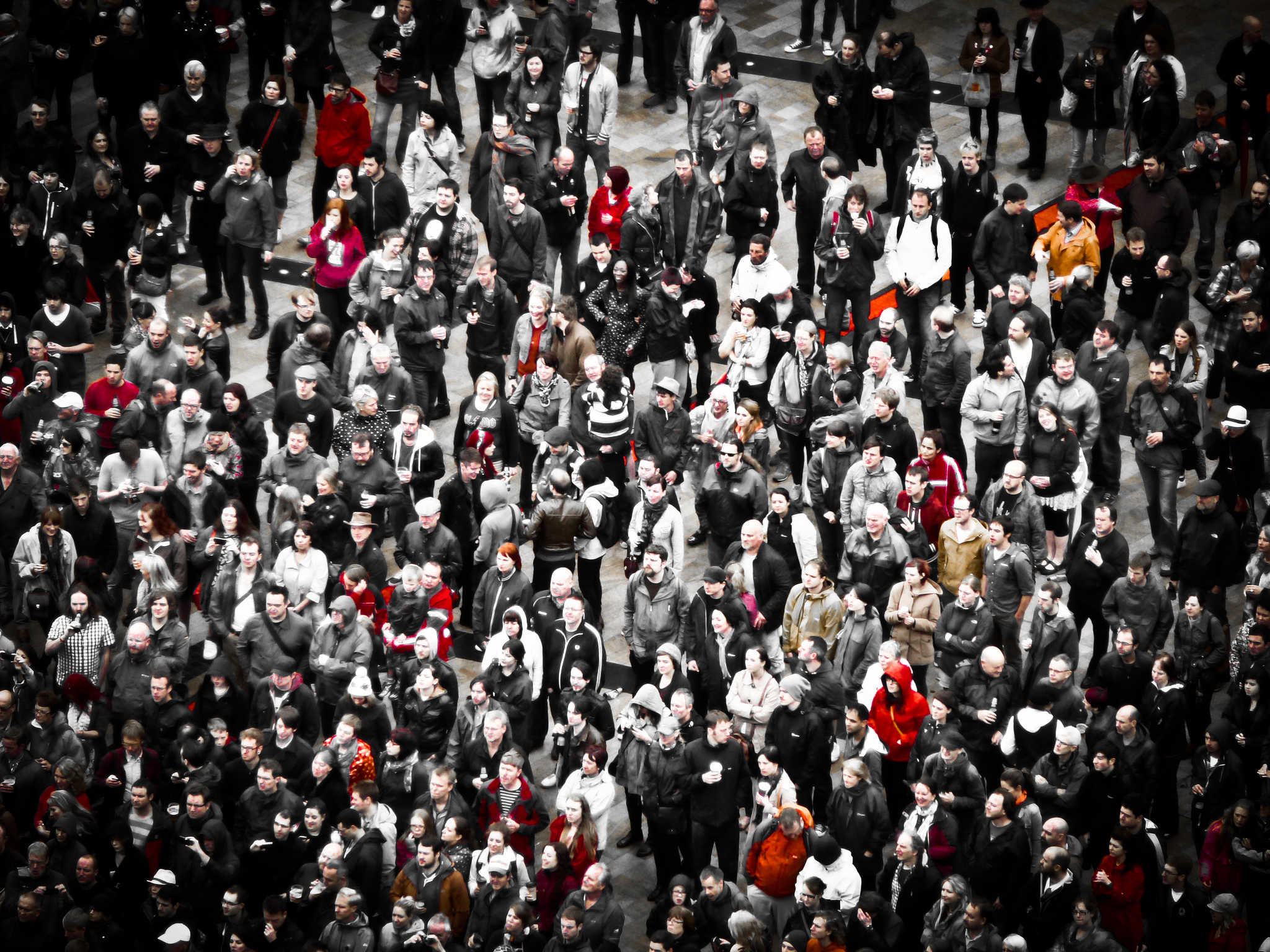
The sound of a million shuffling feet and untold thousands of voices clanged back and forth between the skyscrapers like the streets themselves were coming to life. Hundreds of strangers jockeying for position, shoulders nudging her this way and that, shoes coming down on her cold feet, soundless shouting in her ear.

It was enough to make Lara wish she were dead for real. Soon enough, she thought, and immediately pushed the thought out of her head. It wasn’t a foregone conclusion. She could survive today. She wasn’t even sure she was actually dead. The disease was still young in Lara: she had none of the usual symptoms, she even still had a heartbeat. The disease affected everybody differently, and — and this was the important part — it mutated quickly. There were over four hundred categorized variations of ZuF2 already, and another hundred projected already for the next week. It had sprung up so quickly, they didn’t even have a proper name for it. Who’s to say one of those variations might not be non-lethal? Who’s to say you couldn’t learn to live with it?

Spurred by the crowd, Lara inched forward, trying not to imagine the taste of the big, beefy shoulder in front of her. Shoving her appetite down into her feet was not easy; the man wore a tank-top, and in the ninety-degree sun a thin sheen of sweat glistened just there, so inviting she could practically feel her teeth sinking into it… but no, take a bite out of a human and she’d be dead within seconds, and probably kick off a riot besides. She could master the hunger. She might pass by the scanners undetected. She might be all right, as long as she could keep from eating anybody. And if they didn’t look too closely at her skin. The long-sleeved, high-necked shirt she’d put on was a gamble: it hid the shapes but it  would draw attention. Only the dead could walk around fully covered up in this heat and not sweat like sweltering hogs.

“Next.”

The beefy-shouldered man stepped to the side for his scan and the man in full tactical gear beckoned to Lara, reaching his hand out for hers with all the care and concern of a bus driver holding the door open for you at the end of a thirteen hour shift.

“Next. Come on, sister. Let’s go.” The crowd at Lara’s back began jeering too; ordinary, living and breathing folks, who wanted to get their negative scans and go back to their televisions and air conditioning. She felt hands shoving her forward, into the grasp of the guard. She did her best to stand up straight. As he was inspecting her left hand for signs of rot, she noticed a dark shape flit across the back of her right, a bubble dancing up through ice cubes in a cool glass of tea. She shook her hand briefly and then clapped it to the back of her neck.

“Hot, isn’t it?” Lara smiled at the man, who just glared at her through his visor filmed with sweat and condensation.

“Hands are clean. Eyes wide.” He held up the scanner, a forked device attached to a tiny touchscreen which he thrust toward her face.

Lara bit back a mouthful of vomit. A subconscious part of her had, just for an instant, meant to douse the man and everybody around her in bile, and had nearly succeeded. She told herself she had just felt repulsed by the scanner, and forced herself to keep her face neutral. It wasn’t difficult, actually. The bile hadn’t tasted of bile, but rather like a mouthful of sand: tasteless and irritating, but harmless. She wondered if that was a good sign or not.

Beep beep. The iridescent green flash from the console lit up the man’s visor, and he was already motioning for the next person in the throng. “Next.”

Lara was clean. She laughed out loud and threw her hands in the air, suddenly thankful for the sun on her skin, even if she couldn’t feel its warmth.

“What the hell is that?” A panicked, female voice cried from behind her.

Lara whirled to see the man who’d just scanned her advancing toward her, shouldering his rifle.

“What did you see?” He barked.

The girl was just a kid, fifteen or so, sweating through a loose purple-striped halter top, but she was pointing at Lara with unmitigated revulsion and terror in her eyes. “I don’t know, it was her arm… something moved!”

Lara’s heart stopped. She actually felt it beat its last beat. So she was dead, after all. The sleeves of her shirt had fallen to her elbows when she raised her arms toward the sun, and there, squirming like a mass of leeches, was a bundle of shadowy shapes beneath her skin.

“Infected.” The man whispered it to himself, then he shouted it. “Infected!”

Like the tide going out before a tsunami, the crowd withdrew from her: she was standing all alone as eyes of all shapes and colors and guns of all sizes trained themselves on her. “Wait. He just scanned me, I’m not –” But the first bullet came quickly, tearing through her upheld hand and entering her head just below the eye. Others, which she did not feel, riddled her body in the space of a heartbeat.

But she didn’t die. Rather, it was like her consciousness passed through a prism. She suddenly felt like she had split into thousands, and each facet of herself rushed toward an onlooker with all the haste of a hawk in a prey-dive.

The body of Lara exploded like a bag of beef stew, and out of the gristle and gore leapt thousands of tiny dark blobs, wingless, legless roaches on the wind. They splattered into the crowd, squirming into noses and eyes and mouths as gunfire erupted throughout the throng and previously civil people began trampling each other in a panic.

Lara was the last mutation of ZuF2. Or at least, the last one that mattered.

Weekly Re-Motivator: Summary Stew


I can’t stand the summary.

You know, you crack the book open, and on the inside fold or the back cover or wherever, you get the blurb that tells you in a nutshell what the story is all about.

Karl Wisenberg is a mild-mannered office worker hiding a secret: his radioactive toenails. But there’s something more sinister than glowing fungus afoot…

Alice Klepper sells jewelry by day and state secrets by night. But will an unexpected purchase by an eight foot tall stranger provide her with the biggest secret of all?

The summary is supposed to give you a taste for the story without spoiling it for you; it’s supposed to whet your appetite and get you to crack the book and keep on cracking it until the end.

And I hate it. Because it gives the impression that the story is all about plot, that the narrative is a simple math equation with all these different elements — character, setting, tension, conflict — that add up to something. But a story is more than the sum of its parts. Because holding it all together is a fumy glue all the stuff you can’t fit in the summary: the creeping sense of dread you get every time a character opens a door in the story, where you don’t really know whether behind the door will be a harmless delivery man or a hatchet-wielding trans-dimensional wasp-man. Or the biting irony that infuses every word, wherein you can feel the author’s arched eyebrow and hear the sardonic twist behind every turn of phrase.

You can’t get that in a summary, and that’s the most important part of the story, I think. Because really: whatever you’re writing, the story has been told before. No matter how unique, how original, how unexpected your twists and turns are, somebody, somewhere has twisted and turned down that road. The only difference, the only thing that makes your story unique, is the way you tell it, the specific blend of spices you drop into the mix, the character that you build the story into.

Because a story is a living thing. It’s not just a chain of events, one thing leading into another like a dull-witted chain-gang of tromping inevitability. The story itself, just like the characters, has a flavor; the narrative itself has a feel about it that is much more than just the things which happen in it. And that flavor is what makes the story unique, that flavor is the thing that sticks with you after you’ve finished the book and brings you back, like the unbelievable egg rolls at your favorite restaurant.

Which is what I’m struggling with in my current project. I’ve got a decent chain of events, I’ve got decent characters and reasonable tension and a good smattering of conflict. But I haven’t found the right flavor for the brew. And the story, and my motivation for working on the story, is suffering as a result. I haven’t found the right feel for the story, and the story feels wrong as a result. Feels bland, uninteresting. Luckily, writing isn’t like cooking. You want a good solid stew, you have to get all the spices in at just the right moment to release their flavor and bring out the best in the dish. In writing, though, you get as many chances as you need. Screw up the flavor and you can add more salt at the last minute, or strain out the bad spices and replace them with new ones, or even toss the whole dish and rebuild it from the ground up.

But the flavor will come. The thing with writing is to keep plugging away at it, keep working, keep creating. The more these characters simmer in the narrative stew I’ve created for them, the more the subtle notes will come out, the more I’ll be able to tell what flavor is right for this tale.

So, as you’re writing, don’t stress about the summary. Focus on the flavors, focus on the interplay between elements, focus on the parts between the “important” story elements, because those are what keep readers coming back for more.

Am I wrong? Is the summary more important than I give it credit for? What flavor do you most appreciate in a story?

This weekly Re-Motivational post is part of Stream of Consciousness Saturday. Every Saturday, I use LindaGHill‘s prompt to refocus my efforts and evaluate my process, sometimes with productive results.