I made a post — I want to say it was a month or so ago, when Christmas was right around the corner and we were staring down temperatures in the 70s here in Atlanta — complaining about the delightful weather we were having.
I found this funny at the time, because ha-ha, seasons are meaningless in this era of global warming, and isn’t it hilarious wearing tank tops in the dead of December?
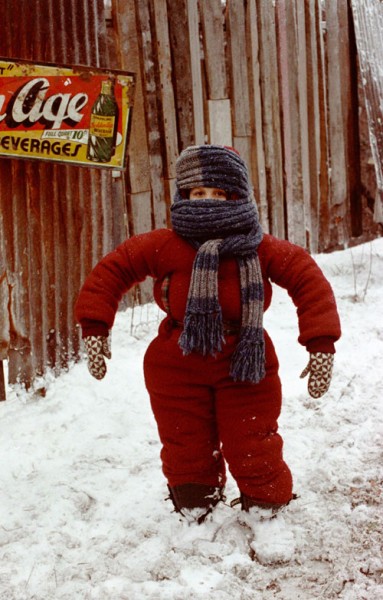
But I suited up for my 5 AM run yesterday morning in track pants, long sleeved shirt, jacket, skullcap, gloves, and mask for the 20-degree weather and … it wasn’t funny anymore.
And sure, you northerners can laugh at me. But I’m a child of the scorched southern summer, dammit. I’m a Cancer, born in the dead of the hottest season in the hottest, humidest part of the country.
I griped about the warm then, and yeah, I get to gripe about the cold now.
“I’ve never dated online before,” says Greg, fidgeting with his spotted hands on the linen tabletop. It’s a lie, but one he never gets called on.
Theresa, a silver-haired beauty, grins with downcast eyes at her silverware, her face flushing a little. “Me, either.”
She’s divorced, he’s widowed. Sidewalk cafe. Small talk, overpriced wine.
“Kids?”
“Two. You?”
“Four. Grandkids?”
“Eight. They’re like rabbits.” He laughs, and thank God, so does she. “You?”
“Just one.” She can’t help herself. She reaches for her phone and shows him a picture of the little angel, slumbering in that striped hospital blanket. “Two weeks old.”
“Ahh, it’s the best. You’ll see. Even better than having kids of your own.”
“So I’ve heard.”
She’s wonderful, really. Just like his wife in a lot of ways — same hairstyle, same easy way of talking. But then, she’s different too — quicker to laugh, with a nervous energy that keeps her looking around the room, knotting up her napkin. None of them are his wife, but there’s always something to like. She could be the one.
And then it’s over. Pleasant, but abrupt. She doesn’t look back as she walks away, doesn’t promise to call. Probably won’t call. They never call. He sighs and shoves his fork into his half-eaten portion of tilapia. Wishes he’d just ordered the burger he wanted. Stupid diet. Stupid doctor’s orders. A pigeon flutters up and lands in Theresa’s spot at the table, stabbing its beak at the rice pilaf she didn’t finish. He throws a spear of broccoli at it, and it flaps irritably away.
In his pocket, a newspaper clipping. Ragged at the edges, soft as feathers from all the times he’s handled it and not called the number. He frowns at the back of Theresa’s silvery head. He calls the number.
#
It arrives eight days later: a tiny brown box the size of his palm. Not what he was expecting. No flashy marketing inserts, no fancy designer packaging, only an unlabeled brown medicine vial with a dropper nestled in downy cotton packing. Beneath all that, a note: A few drops will make you irresistible to females! Use with caution!
No sense in waiting.
#
“Another first date, Greg?” Marcus, the waiter, grins at him as he pours him a seltzer.
Greg nods, almost giddy. He thumbs the vial in his pocket.
“I never see you here on any second dates. You take them someplace nicer?”
“Never been so lucky. But today’s different.”
“Oh?”
“Something special up my sleeve. That’s the secret with these older birds; you have to work a little harder.”
“I’ll keep that in mind.” Marcus flashes him another smile: perfect teeth against his dark skin.
Greg watches: Marcus turns the corner inside and gooses the pretty little waitress. She playfully swats his hand away, then plants a quick, affectionate kiss on his cheek. Young love. So easy, so effortless, like falling into a soft, downy mattress.
Maybe it’ll be that easy for me this time.
Linda’s due in ten minutes. He produces the tiny vial, looks around to make sure nobody’s looking, then squeezes out a few drops on his outstretched fingertip. It’s viscous and gritty, almost like birdlime, but it’s got this pungent aroma of … what? The sea? The sky?
Out of nowhere, a pigeon lights on the table right in front of him, staring at him with round, vacant eyes. It bobs its head a few times.
“Shoo.” He swats at it and it flies away, gurgling. The arc of its flight draws his gaze up toward the street, and he sees her — Linda. Pretty as her picture, red hair feathered and falling around her shoulders as she approaches. She hasn’t seen him yet. He dabs the oily stuff behind his ears. At an impulse, he squeezes out a few more drops, which he rubs into his hair.
Before their drinks arrive, another pigeon — or maybe the same one? — coasts lazily in and settles on the table opposite. By the time Marcus brings the appetizer, there’s a second bird perched there. They’re staring at him, like customers at a deli awaiting their turn. Linda doesn’t notice them, but Marcus does — with a languid wave of his hand, he scatters the critters, and Greg sighs his relief.
But by the time Greg sinks a fork into his seared trout, the two pigeons have returned and become four. They watch him implacably as Linda chirps on about the men she’s dated and divorced. More and more arrive. Another winged watcher lands as Greg picks up the check. Linda’s saying she’d really like to see him again, but Greg can’t focus on her at all for the dozen denizens of the sky sitting opposite. Then he notices she’s looking at him, waiting for a response. Oh. Turned down again. He forces a little smile, says he understands, wishes her luck in the future.
Linda’s face falls to pieces like an egg dropped from a nest. She stands, mumbling in disbelief, looking around, lost.
Her claim on Gary vacated, the birds descend. The first one swoops at her and she bats it away. Another tangles its claws in her hair. They chase her down the sidewalk in a flurry of flapping wings.
When Marcus arrives to take the bill, Greg has been swarmed. Pigeons roost on his shoulders, nuzzle at his knees and ankles, lightly bonk their heads against his fingers as he drums them on the tabletop. One nips lovingly at his thinning hair from its roost on his bald spot.
“Damn, Greg,” Marcus says. “Strike out again?”
“Take it from me, kid,” Greg sighs. “Women are for the birds.”
********
It’s been a little while since a Flash Fiction challenge. I really can’t apologize enough for the ending.
Anyway, this challenge comes as usual from Chuck Wendig: the random photography challenge. I found the photo above by Peter Meijer, and, well. He just looked so weary.
So the prompt for the week is “movie titles”, and the movie that’s front-of-mind right now is Die Hard. (Actually, who am I kidding; the movie is Star Wars VII, but I’ve talked that one to death around here of late… even I kinda want to lightsaber my own face if I bring it up at the moment.)
So, Die Hard. I hadn’t seen it until about a week ago.
I know. I know. I’m sorry. How I was ever carrying a man card before that, I don’t know. But it’s been remedied. Movie seen. Balance in the universe restored.
But my weekly re-motivator is about writing, right? So how is Die Hard about writing?
Maybe the better question is: how is it not?
McClane faces an impossible task: take down a squad of international terrorists. The writer faces many: stare down and overcome the impossibly intimidating blank page, stay focused and driven enough to finish his projects, and eventually, swim out into the open waters chummed with the manuscripts of his fallen comrades.
McClane is hamstrung (literally by his bare, and eventually, his ruined feet; metaphorically by an inept police chief and FBI agents who only make the situation worse), having to overcome obstacles that a normal person in his situation really shouldn’t have to. So, too, the writer: he must conquer his usually over-inflated sense of self-doubt about his abilities, his lingering and ever-present fear of rejection, even his lack of simple time in the day to do the thing he wants to do.
McClane is actually not trying to save the day for everybody; he’s trying to save his wife. (Disclosure: I’ve only seen the first two movies. I know. I’m working on it.) The thing everybody thinks he’s doing — defeating the terrorists, saving the civilians, foiling international intrigues — is secondary to the immediate need to save something that matters to him. Writers? I’ll posit that people think anybody trying to write is trying to become the next J.K. Rowling or whoever wrote Fifty Shades of Grey (shudder). In reality, though? Basically every writer I’ve come across — myself included — is a person who feels he must tell stories; who needs the creative outlet and the meditative focus that writing can bring like he needs oxygen. Not that we would eschew widespread acclaim (nor would McClane turn up his nose at saving buildings and planes full of people), but it’s not necessarily the primary goal.
And then, of course, just like action movies, writing is a thing best punctuated by the occasional bout of gratuitous explosions.
Nah, that’s not a metaphor; that one’s delightfully literal. Because every writer is a little bit of an action hero in his own mind, I think. John McClane saves the day because it’s just what he does. Writers write because that’s just what they do.
Write Hard.
This weekly remotivational post is part of Stream of Consciousness Saturday. Every weekend, I use Linda G. Hill’s prompt to refocus my efforts and evaluate my process, sometimes with productive results.
I’m starting another round of edits on my novel, and the pain just comes washing in.
With early edits, that pain was the raw, gnarly hurt of recognizing that I’d written a broken thing; a creature whose own limbs would pull it off balance if ever it tried to walk. The narrative was fragmented. Timelines didn’t add up. Characters would vanish for no apparent reason and reappear just as suddenly with no explanation. Look, no writer sits down and creates a perfect story out of nothingness in an afternoon. (Though, somehow, that’s certainly a misconception I’ve held, and I imagine others do too — that the greats just sit down and pour unicorns and fairy dust out of their heads and onto the page, and send it off for immediate publication.) But it’s a hard pill to swallow when you look at your own work and it’s so … let’s not say bad, let’s say, in need of improvement, the way a trauma victim with a sucking chest wound is in need of improvement.
With the latest edit, though, I’m feeling a different kind of pain. Not so much anymore the pain of oh god, what is this monstrosity I’ve created, but more the sharp sting of disappointment. That feeling you get when your kid tells you they did fingerpainting in kindergarten: you expect to see a painting that’s a little blotchy but still a reasonable facsimile of a house or a fish or a dog or a person, but in actuality all you get is a sad, mottled smear. It’s like, yes, you created something and that’s fantastic and adorable and isn’t it wonderful but at the same time, wow, I mean WOW, it’s obvious that you have no talent whatsoever. (Don’t lie and say you haven’t had that thought about your kid’s artwork. The only shining light is that he’s never done anything before, so he was basically guaranteed to suck … you were just holding out hope that maybe your kid was special but surprise, he isn’t!)
I’m about twenty pages in, and my fingers are aching from squeezing the pliers on all the rotted teeth; the blowtorch is sputtering, running out of fuel from searing off all the calamitous verbosity. (Calamitous Verbosity is totally the name of my new band.) I’m reading along and … man, I think the story’s good, but it’s just so cumbersome. So much junk language. So many rambling, do-nothing sentences. So much that’s vague or obvious filler or even worse, a ham-fisted attempt to sound poetic or clever or profound, like an NFL linebacker trying to dance in Swan Lake. It’s like, I can see what you’re going for there, but … no.
What freaks me out is that I already did a polishing pass at the end of my last edit. I read all this over several months back, thought, yep, that sounds like I want it to sound, and stamped it for approval. So now, I’m faced not with the regular, looming specter of self doubt that goes along with all writing, but with the deeper, insidious doubt of wondering whether I ever doubted myself enough in the first place. I once thought this thing was good, and I can now see it was not.
That’s a harsh pill to swallow. I feel like I’m flying in an airplane, and I can look out the window and clearly see the ground a few hundred feet below, but all the instrumentation is telling me I’m thousands of feet up.
Two ways, then, to look at this situation, I think:
My instrumentation is flawed and not to be trusted, ever.
My instrumentation is flawed but improving.
Maybe I got a bad reading before, but I’ve got a better reading now. Maybe when I did those first edits, I hadn’t allowed enough time to pass to get a real, solid, objective look at the thing.
Or, maybe (how dare I even dare to think it) I’ve gotten better in the interim, and I legitimately am looking back at the admittedly inferior work of a fledgling writer, having learned a few things, having a little bit stronger sensibility.
Or, further maybe still, maybe the thing really is just a steaming pile of sharknado.
There’s been a lot said about the new Star Wars movie. (Sidenote: Star Wars: TFA originally stood for Totally Fargoing Awesome) And, by the way, it’s been out in the ecosystem chomping down lesser films and records and pooping out money for almost three weeks, so, here’s your SPOILER ALERT: Go see the movie. There are spoilers below. Not big ones. But they exist. Seriously. See the movie.
I will happily place myself in the “loved it” category along with the millions of people out there who don’t have sticks up their butts about movies. Hell, I often have sticks (plural) up my butts (plural) about movies, and I still loved the movie. But, man oh man, the criticisms keep coming. And then the whiners. And then the haters. Even George Lucas has said he felt like he sold the film to “white slavers,” in a WTF moment that seriously just makes me want to sit down and wonder when the man was visited with an involuntary lobotomy. (The comment, of course, indicates that he does not approve of the new direction of SW7, which is fine, except that the mouth speaking the words is the mouth that gave us Jar-Jar, and … yep, sitting down.)
And look, critique is okay. It’s fine. Opinions are like funny uncles and all that. You’re entitled to dislike the movie! Rey’s too capable, too quickly. Poe isn’t featured enough. Starkiller Base is lame. Kylo Ren is too whiny. All this is fine, and maybe valid.
So much of the critique, however, takes on a different flavor than simple pro/con. Many critiques look far beyond what the film is and venture into the murky waters and unexplored jungles of what it could or should be. The plot is too derivative; it should have been more original. Star Wars has already shown us this father/son conflict, it needs to show us some totally new conflict instead. SW7 feels like a remake; we were expecting a sequel.
To any and all critiques in this vein, I say BOLLOCKS.
All thoughts in this vein share something in common: that is, they bring to bear the viewer’s expectations for the thing, and not just the thing itself. They presuppose that Star Wars, as a film franchise, as a part of their childhood experience, as a story in any shape whatsoever, OWES them something.
But Star Wars owes us nothing. It does not belong to us.
Sure, our experience with it belongs to us. My eight-year-old self, having just seen Empire, wanting an AT-AT walker of his very own to stomp across the neighborhood in was all well and good for me, but it doesn’t mean that George Lucas couldn’t, in Episode VI, drop an AT-AT into the middle of the forest for no goldfingered logical reason at all, just because he felt like doing so. (Seriously. How does that thing deal with trees at all? it corners slower than the Titanic.)
The creators of story are in no way beholden to their readers. We like to think they are, because stories matter to us. Stories which affected us, and especially stories which have aged with us, matter to us all the more. And sure, on some level, there’s a trust established between creator and audience; certain things are off-limits, whether due to constraints of the universe of the story, or out of fear of losing the audience. (We can all, after all, simply stop buying books and going to see Star Wars films.)
In short, the owners of Star Wars (and that’s now Disney, for better or for worse — though I’ll argue, especially with the prequels fading into distant memory, that it’s for the better) are free to do with it what they want.
Now, Disney wants to make money. It plans to achieve that goal through making media that draws people in, media that we want to consume over and over again and own tiny little pieces of. Well, just look at their box-office earnings: MISSION BLOODY ACCOMPLISHED.
But look a little deeper. Disney wasn’t in this just to make a film (or films — there will be two more, you know) to scratch the itch that fans have been picking at for thirty years. Why make a film just for the over-thirty crowd? They wanted to hook new viewers, too, while also keeping those older fans on the hook for a new series. Does it rehash old ideas, familiar tropes, well-visited themes of the original trilogy? No doubt. But it does so in a way that I found fresh and compelling, and that (and here I really apologize to any die-hard fan of the original trilogy) makes for a better film than ANY of the originals.
Seriously. Show any teenager Episode IV, and then show them Episode VII. We don’t even have to talk about which one they would enjoy more. Now, I’m not saying that a teenager is the best judge of a film’s quality (though, if you want to make money, teenagers are the ones to target). But a teenager is able to do something you and I can’t do: namely, view the original film(s) without the rose-colored rearview mirror of nostalgia.
I challenge you: go back and watch Episode IV, having recently seen Episode VII. (I did this when I posted about the similarities between the two films.) Cut the predecessor some slack for technology available at the time (notwithstanding the edits made in the 90s), and then — and this is the hard part! — strip out as much of your nostalgia as you can. What you’re left with is a very pretty action film about a whiny kid who goes on a space adventure. It starts off pretty good, but then the pacing drops out and doesn’t really get going again for about thirty or forty minutes. Then it’s fargoing excellent again until the ending, which features a repetitive and entirely-too-protracted battle in space and an abrupt-as-hell ending. On the other hand, you have Episode VII, which features two protagonists, both of whom have compelling backstories right from the gun (and they’re not white dudes, bonus for that), flung into a story which is paced like a chipmunk that’s been greased up and lit on fire. Sure, there’s a lame samey bit with a planet-sized space base that can blow up other planets. And maybe the last shot with Luke leaves a funny taste in your mouth. But there are multiple simultaneous plotlines. There’s a better, more deliberate sense of mystery. Even the villain is more relateable, whether you find him overly whiny or not — he shows weakness, he shows vulnerability, he has depth (and yeah, sure Vader has depth, but not in Episode IV).
I’ll argue that if you complete that exercise faithfully, you’ll find that SW7 is a better all-around movie than the original.
In my mind, the folks arguing about what SW7 should’ve or could’ve been are not so different from the blowhards railing against gay marriage (even after the book has been closed on it). You’ve got this nebulous thing which means something to you and which you probably feel strongly about, but the true meaning of which is flexing and adapting to fit the world we actually live in. The tide is inevitable. Star Wars owes you nothing, just as the institution of marriage owes you nothing. These things are just changing to stay viable for the times we live in. You can either go along for the ride or get trampled by the literal hordes of people getting on the ride without you.
Personally, I’m on board with the new Star Wars, and I can’t wait to see where it takes us … even if we’ve been there before.
Welcome. This is my page for sharing projects associated with my coursework in Media and Technology at the University of West Georgia. Assignments will be posted here as they are completed.



 Accidentally Inspired