The Toddler Wobbles (or, the Tripwire of Self-Doubt)


My daughter is this close to walking.

She’s been doing the “cruising” thing for about a month now, where she’ll grab the edge of a table, or the couch, or the leg of my shorts, and just sort of shimmy along, one shaky step after another; but of course, she can only go where whatever she’s clamped onto can take her. And she’s been walking assisted for several weeks beyond that, holding gleefully to the hands of whoever has the patience and the dorsal fortitude to bend over and escort her around the house. Again, of course, she can go only where her guide takes her.

There is an unmitigated joy about her as she does any of these things. Her little stumpy legs clomp along not unlike those of the imperial walkers in Star Wars, stable enough only if everything goes according to plan. She laughs, shrieks, smiles. Then tumbles.

But she won’t walk on her own.

And I know, I know. She’ll get it in time. But there’s something frustrating and heartbreaking in seeing her shuffling along, a wobbly snowman on stilts, and knowing that she could walk if she would only decide that she had the capability.

She’s done it before.

She’ll cruise along the table for a minute, then pick up a toy and turn and totter over to the sofa — a yawning gulf of two steps or so, but a moonshot in the scope of toddlers. I’ll stand her up in the floor across from her mother, and she’ll hold my hands until she’s within a step of her mother, then detach in time to fall forward into her mom’s loving embrace. She has the strength. She has the balance. What she doesn’t have is the knowledge that she’s perfectly capable.

Now, she can crawl with the best of them. In fact, she can muster so much speed on her hands and knees that it’s a little startling: she can cross a room in just a couple of seconds, and be sitting there angelic as ever when you come back in from getting a glass of water. This, paired with her propensity (and joy) for grabbing things and sticking them in her mouth is enough, almost, to keep you from leaving the room at all when she’s around (what if she pulls the TV over on herself, or what if she swallows the dog, or what if she goes into the garage, fires up the pneumatic hammer, and takes out the retaining wall?). An inability to walk isn’t, in other words, keeping her from getting around.

But when she starts walking, she’ll be so much better off — she’ll be faster, she’ll be able to take things with her, she’ll be able to reach her hands up and hug your knee when she walks by. She needs to walk. She just won’t.

I can’t say it’s fear, because she isn’t afraid of falling. She’ll gladly pitch herself sideways while my wife or I holds her, despite the five-foot drop to the ground that surely awaits if she manages to escape. It’s as if she simply doesn’t grasp the idea that walking instead of crawling might be a better way to do it. Like cave dwellers who won’t take the ipod that’s being proffered to them, believing instead that eating worms and running from daylight is better than the natural next phase in human evolution (selfies and social media, of course). She just doesn’t realize that she’s hamstringing herself by keeping to all fours, doesn’t understand that her muscles and her sense of balance are ready for her to walk, doesn’t get how much her world is going to open up for her when she begins to walk.

She’ll get it eventually. One day — maybe tomorrow, maybe next week — she’ll shuffle off on her own and then my wife and I will really be in trouble — but until then, she’s stuck crawling, cruising, and being escorted everywhere she goes. Which works, but when you consider the alternative, is a bit lousy.

But then it got me thinking. (As such things often do.)

If my baby has the capacity to walk, but lacks the knowledge of that capacity, what am I capable of that I just haven’t grasped yet? If she’s only holding off on taking her first steps because she doesn’t realize that she can, what am I keeping myself from just because I lack the belief in myself?

How much more could we be, if we could only believe we were capable?

Are you crawling, when you should be walking?

Comparison Shopping (or, Dirty Writer Secrets)


Writing is like running, I think. If you’re doing it, you’re winning.

Sounds cliche, but I believe it. For a couple of reasons.

First of all, there is no way to actually “win.” In running, the fastest person in the hundred-yard-dash won’t be able to hold a candle to a marathoner’s pace. And a marathoner won’t be able to touch the explosive energy of the sprinter. He who wins a marathon this year will get edged out next year. There is no “best.” So it is with writing. There are bestsellers, sure, but they rotate as quickly as the windmill blades on that damn mini-golf hole that you can never score less than seven strokes on. And there are popular writers within genres, but the question of who is “best” is always a matter of personal preference. So, in both endeavors, you win by simply doing the thing to the best of your ability.

Then, of course, there’s the fact that by and large, running is an individual activity. Okay, on race day you might meet up with 1000 of your closest friends to pound the pavement in your town, and maybe you run with a group on the weekend, but most of the time it’s just you and your shoes (if shoes are your thing). So, too, with writing. At some point you bring in readers, and if you’re at a certain point you might have editors or agents or reviewers, but most of the time it’s just you and the computer. Or typewriter. Or notebook. Or yellow snow.

And there’s really no point in comparing yourself to anybody else, right? I could compare myself with Meb Keflezighi (yep, I definitely had to google to see how to spell that), but what would be the point? He’s been running his whole life, and I will never perform at that level, so why beat myself up about the fact that I won’t be winning any marathons? Likewise, it’d be pointless to measure myself by such yardsticks as Stephen King, or Douglas Adams, or Jasper Fforde, or Neil Gaiman (and I’m just now recognizing that I need more female authors in my go-tos); I might as well be an ant shouting obscenities at the boot descending toward my segmented thorax.

So you run for you, and you write for you, and if you’re doing those things, and doing them well enough to feel good about what you’re doing, that should be good enough, right?

Well, that’s true. But there’s something else in us, I think, that makes it impossible for us not to compare ourselves to others. We may not mean to, we may actively try not to, but, come on — can you look at the person with a bestseller credit and not feel a little pang of, “man, maybe one day?” Can you watch Meb crossing the finish line and not think, “if only I could do that?”

I think the focus, in writing and in running, should be inwardly-focused. Your concern should be yourself and your improvement, and if you can say that what you did today was better than what you did yesterday, then you’re doing all right.

But. (There is always a but.)

I have a dirty secret. I like to compare myself to those lower on the ladder.

Right? Makes me feel good to see the people struggling with things I no longer have to struggle with.

Okay, so, when I drive around and see people out slogging it in the heat, running at a pace barely above a shuffle, I gloat a little inside. Poor sap, I think. Look how hard you’re working, for so little return. I think about how much faster I am, or how much farther I can go, and I feel better about me. I get a thrill if I pass another runner when I’m out on my own run, no matter what the situation, because in that moment, I’m better.

And I’m no different in writing. In fact, I’m worse in writing. I know a blogger/writer much in the same vein as myself, an aspiring novelist working to get his/her feet on the ground (or off it, choose your metaphor). I read his/her work semi-regularly. And he/she is just awful. Every story turns to over-the-top melodrama. Every character is an unjustified badass. Every turn is so heavy-handed and abrupt that I feel thrown into a narrative ditch while reading. The grammar errors could bleed an old typewriter dry. The spelling makes me want to punch kittens. (No, I won’t name the writer. Or link the blog. I am relatively sure he/she is not a regular reader of mine.) I read his/her work and I think, man, I’m so much better than that! And it makes me feel good about my little pile of turdlets I’ve amassed in my swampy corner of the internet.

I know I shouldn’t. I feel bad as soon as I catch myself doing it. But just like reaching for one more Nacho Cheese Dorito, I just can’t help myself. Because I want to feel like I’m making progress. I want to feel like I’m, if not the best, at least better than somebody.

And I think it’s worth remembering that, while it’s true that there will always be somebody out there who’s better than you, there will also always be somebody out there who’s worse than you. That goes for writing, running, filing your tax returns, animal husbandry, and crocheting. I am probably, for example, worse than you at crocheting.

So use me. Because I’m using you. If I think you’re better than me, I’m using you as motivation; I want to get what you’re getting. If I think I’m better than you, I’m using you as motivation; I want to make sure you don’t catch up to me, or worse, pass me. Because even though I may think I’m better than you, and you may think you’re better than me, we are all better than the folks who always say, “man, I would really like to take up running,” or “I want to write a novel someday,” but still haven’t gotten off their donks to actually try it.

I can’t be the only one that thinks like this. Come on. Admit it.

The Buzzing of Flydeas


I don’t always start my blargs by writing a title first, but when I do, I tend to immediately recognize the problems with the title. For example, I just titled this blarg “The Buzzing of Flydeas” (sticking with that, totally), and I realized that in that context, it might read more like Flydeas is a person perhaps of pseudo-Greek descent (Flid-E-es, or like Darth Sidious for you Star Wars berks out there) and not the mashup of flies and ideas (Fly-deas) that I intended. Incidentally, I’m setting aside “The Buzzing of Flydeas” (pseudo-Greek mythological hero) as a potential story idea. Trademarked, copyrighted, no takesy-backsies. If that’s even how you spell takesy-backsies. Takesie-backsies? Doesn’t feel right.

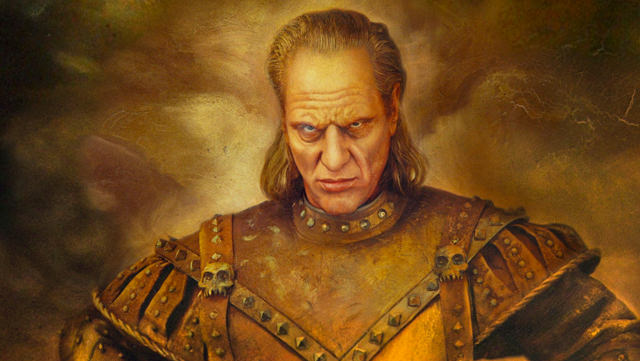
Anyway. I love Ghostbusters. Both of them. And one of my favorite moments of both movies is in the second film (is it pretentious to call Ghostbusters a “film”?) is when Yanosh (Janos? I dunno) is telling the ‘Busters, who have just busted up the museum and screwed up Lord Vigo’s resurrection attempt: “He is Vigo! You are like the buzzing of flies to him!” and he turns to see that Vigo has vanished completely. The confidence in his project that Yanosh has is so complete and inspiring, and then his despair when he sees that his master has (apparently) deserted him is priceless.

So, yeah. When I saw that the week’s SoCS prompt was “onomatopeia,” I thought immediately of Lord Vigo and the buzzing of flies. Here’s a guy with the power of the cosmos at his control. Survived multiple assassination attempts, harnessed the dark spirits of the underworld, bound his spirit into a painting so that he could come back from the dead in the new millenium, and rocked a freaking mullet. He had his sharknado together, even if his sharknado was all about building his throne of blood. And he was so focused on his sharknado that even the best resistance the world could muster against him (the Ghostbusters) was only as the buzzing of flies to him. So focused he saw his obstacles only as blurs in the side of his vision, tuned them out like static on the radio.

Where’s this metaphor going? Well, writing, of course. Because I’ve got the new novel on my mind in a big way. I started it with goals and portents in mind, but it’s been a bit of a slow start… I’m waffling on my protagonist a bit, I’ve agonized over the point of view, I’ve kvelled over the themes and tones and structures in the book. But this past week, that magic thing is happening; that thing where, like Frankenstein bunging a fork of lightning into the cerebellum of his reconstructed monster, the story flickers to life and starts to move of its own twisted accord. Characters have started doing things I didn’t expect. Unforeseen twists and deviations are sprouting up on all sides. The thing is getting seriously fun to write.

Which is awesome.

But. (There is always a but.)

The surge in creative energy (and creative determination: the writing is going well, so I’m more determined to get the writing done, which makes the writing go well, which…) has my head buzzing with ideas all the time. Some of them great for the story, lots of them not, scads of them completely unrelated to the story. Just a week ago I tossed off a really delightful (I felt) short story about a door-to-door salesman for vampires, and for whatever reason, it seemed to resonate with people. Whether it soaked up some of the creative juice from the novel or whether I just hit on something else good at the same time, it worked. And it worked so well, it got me thinking, “what if I extended it? Could this short about a solicitation by a wandering con man turn into a full short story rather than just a flash fiction? Could it grow into a novel?” And all of a sudden, I felt that story — that side tale, that deviation, the buzzing of flies — pulling me off my goal for the current novel.

The navicomputer was failing. I was drifting off target. (In much the same way I’m mixing my filmic metaphors now.)

But here’s the thing. When I’m in the flow, when I’m writing well and really enjoying the work, this kind of thing happens all the time. The ideas spew out like a pipe has burst in the wall: liquid inspiration pouring out of ceilings, drywall, light fixtures, electric sockets. Paradoxically, the project that generates the inspiration becomes really, really difficult to focus on for all the flydeas buzzing around (see, I finally got there). And it’s hard to say that this is a bad thing, because it gives me more material to think about for the Time that Comes After, that dread expanse of time after writing and editing the novel when it goes out for reading to various folks whose opinions matter when you have to start work on the next big thing.

Still, it gets frustrating dealing with all the buzzing of the flydeas when they’re all in your ear while you’re trying to get something done. What to do?

Make notes. I always keep note cards handy so that I can jot down any idea when it strikes me. I keep a notebook now, (one that I will not lose again, like I totally did about eight months ago) for more long form exploration of those ideas when I have a bit more time to sit with them. And I’ve started using Evernote, which is a fancy way to keep notes in a virtual space that’s accessible from any computer. Point is, if you’ve got all these flies buzzing around your head, ignoring them isn’t going to make your life any easier. You’ve got to either smash them (shut the idea down completely, which — just like swatting a fly — good freaking luck) or open the window and let them out (which means getting up from your work for a moment — stepping aside from the project for an instant to make a note — so that you can come back and resume your focus).

The Flydeas are a curse for pulling me off the project, but they’re a blessing too — they remind me that my creativity doesn’t live and die with the project I’m working on.

Let ’em keep buzzing. But they’ll do it in the tiny little jars I’ve trapped them in.

This post is part of Stream of Consciousness Saturday.

How do you deal with your off-topic ideas when they strike?

Baby Steps


Writing is a journey, yeah?

You start off uncertain whether the two words you just committed to the blank page even belong in the same zip code with one another, or whether, like tinfoil and microwave ovens, their relationship is doomed before the heat even gets turned up. But you press on, smashing words together with the blithe indifference of the LHC, watching for sparks, looking for anything that resonates, and before you know it, you have a thing.

Maybe it’s a novel. Or a screenplay. Or a short story. Or a poem. Or a lyric. But you have this thing, born from the unfathomable space between your ears, and it’s raw and wriggling and it may or may not have a chance in this world, but it’s yours.

And at first, it’s all: whoa. I did that. I created this thing from nothingness. And you float on that godlike feeling for a while. But it only lasts for so long, because we’re talking about literature of one caliber or another, here, and literature is only as important as its audience decides it is. And that means that, first and foremost, what it needs is an audience.

But it’s not ready for an audience yet. Too many rough edges, too many unshapen limbs, too many vestigial tails. You shape it, you trim it, you coddle it in some places and you axe its redundant bits in others, never really knowing if you’re helping it or dooming it, only trying your best to give it a chance to breathe the air of this strange and indifferent world. Like it or not, eventually that moment comes, when it must leave the nest and survive or die trying.

The second draft of my novel is out today to three beta readers. The first was my wife, and as much as I love and appreciate her for reading my drivel, I can’t trust her feedback alone. She’s more or less obligated to tell me it’s good, and that I haven’t been banging my head against the keyboards of various computers for the last seventeen months for nothing. And I value her feedback, I do — she’s a hell of a lot smarter than I am — but I’m (hopefully) writing for an audience that’s larger than just my wife. And I’m not ashamed to tell you, even though I know these beta readers personally, I am scared sharknadoless to get feedback from them.

It’s odd. I am hoping that they’ll be impartial enough to give me the feedback that I need to better the story, but I’m terrified of what that feedback will be.

Still, it’s a necessary step in the process. In order to grow, we must shed our skins, leave behind the old uses that threaten to keep us from becoming the new and future uses. (That’s “us”es, not “uses”.)

Of course, that doesn’t make it easy.

Goals and Sub-Goals


I sat down to write a blarg post tonight, and all I wanted to do was work on my capital “W” Writing projects.

So I did.

And it got me to thinking, for all the time I’ve spent working on those projects, it’s about time I did something with them. Publication is the sort of over-arching goal for the foreseeable future — of my novel, of course, but really of anything — so I need to start finding out whether anything I’ve written is worth, you know, actual money to somebody. Which means it’s time to get over my big fear and start sending some work out.

And if I’m going to send work out, it damn sure needs to be my best, or at least my best for right now. But as I know from oh, the past 34 years of my life, if I don’t have a deadline, it won’t get done.

So, some new goals:

Existing already: first draft of second novel completed by September.

Nebulous at present: get some more feedback on edited version of Accidentally Inspired over the summer.

New goal: Brush up and extend at least 3 short stories to about 3k words in length in preparation for submission by the end of June. That’s about 1 per week, which should be easy, given the number of old flash fiction ditties I have kicking around the cellar here.

Tonight I added about 500 words and spruced up the wording a bit in one of my favorites. Not a bad job on my day off from working on the novel.

So: for anybody reading, are any of you published, including novels or short fiction? What advice do you have for a guy taking his tentative first steps? What works, what doesn’t? How should I focus my time? What steps should I be taking?