Terrible Reviews: The Martian


I couldn’t put my finger on why, exactly, I was so excited to see this movie. I’m not a particularly big Matt Damon fan, though I like him well enough. I tend not to love “realistic” Sci-Fi — that is, science fiction stories that burden themselves overmuch with being “scientifically accurate”. (Give me The Matrix, give me Star Wars.) I was also a little dubious about the prospect of a film which was essentially Cast Away in space.

Still, I was pumped to see it. I heard good things, and there’s just SOMETHING ABOUT MARS this year; between the recent discovery of water (or water-like substances), the discussion of Mars One, and the recent announcements of NASA actually going for a Mars mission, I bought into the hype like your jerk of a brother buying up all the red spaces on Monopoly.

And man, oh man, does it deliver. The film is funny, intense, heartbreaking, funny, clever, sad, funny, and also, believe it or not in a science fiction movie, funny. The main character is an astronaut/botanist with a sardonic streak as wide and deep as the Marianas trench, and Matt Damon plays that up in hilarious deadpan to keep what could be a tedious or ultimately depressing movie … not exactly light and fluffy, but … let’s put it this way. The tension in this film is sharp enough to slice through steel. Yet, throughout much of the movie, I found myself smiling thanks to the levity provided by the main character.

Okay, let’s get into it…

The Good.

Pretty much everything.

No, seriously. The set design is brilliant: the surface of the alien planet is every bit as stark and hopeless as you could imagine; the living quarters on said planet as utilitarian and cramped as they would almost certainly have to be. The acting is superb: Matt Damon’s performance is of course top-notch, and I found myself swinging wildly between elation and despair right with him. There’s a particularly powerful moment when (no spoilers) he experiences a brutal setback, calmly approaches the terminal to log what has happened, utters a single syllable, and then the entire facade cracks and he flies into a paroxysm of rage and panic. An instant later, he recovers himself and gets back to work. It’s all believable and utterly sympathetic. Even the token unlikable bossman pulling the strings of the operation (Jeff Daniels, and what a turn he’s made from his Dumb and Dumber days, by the way) becomes sympathetic along the way, despite being at odds with most of his team for most of the film.

Also, for a sci-fi movie, the film does a remarkably good job of steering away from the science. You know, obviously, that a tremendous amount of science is happening offscreen, but you never feel inundated with it or hamstrung by your inability to comprehend it (I’m looking at you, Apollo 13, with your 02 stirrers and your gimbals and your other such witch science). It’s almost as if the science is a pleasant rose garden in front of a mansion — you can stop and appreciate it if you like, but the real action is the house itself.

And finally, the moment (SERIOUS spoilers here, jump ahead if you’re in doubt) when Watney blasts off from the alien surface to rendezvous with the passing rescue ship… I’ve been invested in stories and characters before, but it has been a long time since my heart has pounded like that during the climax of a film. There are too many things to count which could go wrong, and each try-fail cycle dovetails with the next like the tightening of the screws on a torture victim. There’s a perilous launch, which Watney might not survive. He does, but he blacks out. He escapes the planet’s gravity, but is nowhere near high enough for the rescue ship to catch him. They manage to lower their altitude, but only at the expense of blowing up part of their ship. And on and on and on. Masterful.

The Bad.

Um… maybe… science?

Okay, so there are some scientific faux pas present in the film. Making it not 100% scientifically accurate. The (SPOILERS OMG LOOK AWAY) dust storm on the planet’s surface, for example, wouldn’t happen, at least not with the effects that it has in the film. There’s the problem of cosmic radiation frying anybody who’s exposed for any significant period of time. There’s the frankly laughable (SPOILER HELP) plastic tarp covering the hole in the side of the habitation unit on Mars after the explosion.

But these are, with the exception of the tarp, easy to overlook. Without the dust storm, and without a magical nonexistent solution for the radiation, you don’t have a movie. The tarp … well. I guess every good film gets a pass on one or two ridiculous contrivances. The truth is, I’m having a hard time finding anything bad to say about this movie.

The Head-Scratch Worthy.
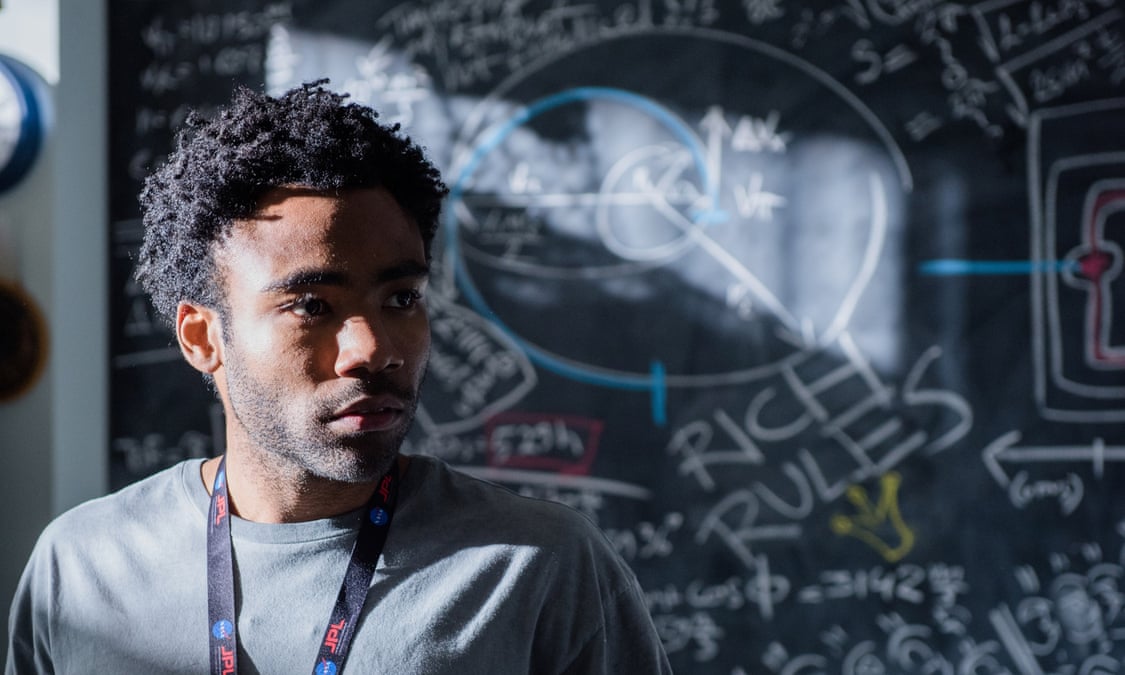
Maybe this is just me, but from the halfway point of the film onward, there’s a real head-scratcher. A previously unknown character basically comes up with the day-saving maneuver that sends the Martian astronauts back out to collect Watney, and this he concocts in a half-asleep daze while receiving a brief from one of his superiors. He goes in, pitches it to the head of NASA, and suddenly he’s like the lead mathematician on the project.

It’s not a bad device, but it feels like a stretch. We’re supposed to believe that despite the (presumably) well-staffed teams of experts at NASA working overtime trying to find ways to bring Watney home, none of them had this kid’s idea first? And, given the crew’s decision to basically mutiny toward the end of the film, why not let one of them come up with the idea? Again, maybe it’s me overthinking the elements of story, but it felt like a somewhat hollow method to drum up another character.

That said, at least they didn’t get another white guy to play this part. Yay for diversity!

The Verdict.

The truth is, I only wrote a couple of paragraphs for the other two categories because I could have gone on and on and on about what was good in this movie, and I wanted to give the illusion of parity. The fact is, this movie was fantastic. Think Apollo 13 meets Cast Away but without all the technical jargon of the former and without the knocking-your-own-rotted-tooth-out-with-an-ice-skate squickiness of the latter, not that either of those two things kept either of those two films from being excellent movies. This movie is awesome if you’re a science aficionado like myself, and it was good enough for my wife, who hates sci-fi, to enjoy as well.

The only thing that remains to be seen is how prophetic it is, which might — might! — happen in my lifetime.

If you haven’t seen it, go see it.

You will never look at poop or potatoes the same way again.

All images are obviously not my property. To the best of my knowledge, they are owned by 20th Century Fox.

Terrible Reviews: Welcome to Limetown


There’s this thing I’ve been looking for for a long time.

It’s something missing in contemporary media.

We have fantastic books, mind-blowing films, life-encompassing television shows, soul-consuming video games. The literature and stories are awesome. But one medium has fallen by the wayside: media for the ear.

Storytelling has become more and more visual as cameras and the ability to broadcast have become accessible for any berk with a smartphone and internet access. And that’s a good thing, awesome even. But for years before the television came around, it was stories for the ear that captivated audiences; stories where only the actors’ voices, soundtrack, and sound effects told the story. It’s hard to believe that we could be so captivated these days. But that’s what I’ve been waiting for.

Podcasts are taking us back in that direction — just look at the success of Serial to see that. And I loved Serial. But, at its heart, Serial was a detached look into a cold case twenty years gone; an examination of facts and places and names and events, kept at a journalist’s clinical distance.

But I wanted something that went one step further. Something that would tell a story that would suck me in, a story where I could care about the characters, where there was a lingering behind-the-scenes mystery, where there’s that unease and tension that can only be crafted by a master storyteller.

Well, it’s here.

I discovered Limetown yesterday while my wife and I were looking for something to listen to on the drive out to Grandma’s house. Today, I listened to the second episode.

And I am hurting. HURTING. For the next episode.

From their website, Limetown Stories:

Ten years ago, over three hundred men, women and children disappeared from a small town in Tennessee, never to be heard from again.

In this seven-part podcast, American Public Radio host Lia Haddock asks the question once more, “What happened to the people of Limetown?”

The show begins in that clinical sense that Serial and This American Life use, but by the end of the first and carrying on over into the second episode, the show takes a hard left and the story comes to life. I won’t be sharing spoilers here, because you really owe it to yourself to go and have a listen. But this is that thing I’ve been looking for.

It’s masterfully crafted. It’s believably voiced. It’s beautifully soundtracked. It’s science fiction, thriller, suspense, human interest, all in one. And it has its hooks in me something fierce. It’s like This American Life meets Welcome to Night ValeSerial meets The X-Files. Your local nightly news broadcast meets Fringe. If you like science fiction, if you like the unexplained and the inexplicable, you’ll love this. If you enjoy the fiction I post up here, Limetown is right up your alley.

There are only two episodes out so far, with another five slated for the coming months, and they cannot get here soon enough.

If you are listening to podcasts, you need to be listening to Limetown. Seriously. Go get it.

Terrible Reviews: Once A Runner


I feel a little silly putting up a review for a book that’s over thirty years old, but then again, if there’s a book that deserves to be on this site, which is primarily about writing and running, it’s this one: a book written by a runner about running.

No, not Born to Run. This is Once a Runner, by John L. Parker, Jr.

I had heard about this book several times over the last couple of years since I’ve started running. It’s been touted as one of the best books ever written about running by Runners’ World magazine. Other readers have said that the book changed their whole perception of running and runners.  And the accolades stretch out like miles on a dusty highway. So when a fellow runner — a race director at a local event I’ve run four times now — offered to loan me the book, I happily accepted. “I’ve bought this book five times,” he said, with a hint of admonition in his voice, “because nobody I’ve loaned it to has returned it.” Presumably, I figured, that’s because the book was so awesome that they kept it to read again and again.

I devoured the book in about five nights, which is pretty good for me. I do most of my reading right before bed, and I go as far as I can manage before I descend into the dreamland that can only come to a parent of two, which is to say, sleep comes on fast and hard.

So, let’s get into it.

The Good.

The book is an absolute joy to read.The prose is gorgeous, playing off the brain like a mountain stream wending its way across pebbles and fallen branches. The characters are larger than life, and seem ready to step off the page and into the real world. The book is fictional, but the characters feel like they must be caricatures of real people, owing to their completeness and strangeness.

The book also captures something which is pretty difficult to accurately convey — the simultaneous despair, pain, joy, and calm that a distance runner feels in the midst of a run long enough to make the average person’s eyes go glassy. Parker is a poet when it comes to this stuff:

Running to him was real; the way he did it the realest thing he knew. It was all joy and woe, hard as diamond; it made him weary beyond comprehension. But it also made him free.

And he somehow maintains that level of tone, that balance between philosophical meditation and gritty truth grinder, for the entire book.

The Bad.

It’s a good thing the book is such a joy to read, because narratively, I found it to be a mess. The primary conflict doesn’t begin until almost two-thirds of the way into the book. Instead, the first half and change of the book is given over to anecdotes of the track team and its follies and foibles. Now, those stories are good, and as I mentioned above, they are beautifully written, but as a contemporary reader, it’s incredibly frustrating, and by the third or fourth chapter, I found myself wondering just where the hell is this story going? I had to check the book jacket to see what the blurb said the book was all about: a collegiate runner who gets kicked off his school team and then returns to run the race of his life. Okay, great. But by the halfway point of the book, the main character is still on the team. When your inciting incident takes more than half the book to happen, that’s a problem, and it’s one that no amount of beautiful language can make me look past.

The Ugly.

Worse, the first half of the book doesn’t seem to connect in any meaningful way with the second, outside of introducing the characters. Parker spends enough time on five or six characters to make us believe they matter to the narrative, but ultimately only three do: Quenton, the protagonist and the same prodigal runner from the blurb above; Bruce, another runner and ultimately Quenton’s mentor; and Prigman, the hard-nosed athletic director who kicks Quenton off the team. Everybody else is just window dressing, alternately dispensing roadside philosophy or helping Quenton pull off pranks in the athletic dorms. It’s all amusing, even at times inspiring, but again, it’s all tangential to the main plot, and I ended up feeling cheated by having been forced to take stock in all these characters that came to nothing in the end. And if there’s one thing I hate as a reader, it’s having my time wasted.

The Verdict.

As I look back over my thoughts on this book, the word that jumps out at me the most is “frustrated.” That’s pretty telling. It’s been a while since I’ve been so conflicted about a book while reading it, and I’m still conflicted now, writing about it. Because I’m torn about it. Being a runner, I really wanted to enjoy it. And I did… but as a writer, I couldn’t get past the flaws in plot, structure, and pacing. Then again, I liked the book enough to burn through it in just a few days.

And as I ponder my own thoughts on the book, I read other reviews and see some people gushing over it, and others, like me, sort of holding their noses and suffering through it. On the whole, though, people seem to like it. So maybe I’m being too harsh, but I like to think that I’m holding the stories I read to a not-unreasonable standard of cohesion and unity.

What it comes down to, I think, is that if you like sports movies and sports books, you’ll probably enjoy this. The descriptions of running in general — Quenton’s tribulations in the “trial of miles” — are spot-on, and the race at the end of the book lives up to its hype.  Plus, the first half of the book has the great sense of hanging around in a locker room and swapping stories.

Outside of that, however, I’m afraid the book comes up a little flat-footed.

Terrible Review: Jurassic World


Who doesn’t love a good monster movie? I’m a bit late to the party with this one, but I hope you’ll forgive me. Finding childcare to go to the movies while my wife is working full-time is not the easiest of tasks, but we finally did it, and got the chance to sneak away and see the film we’ve been dying to see all summer.

Jurassic Park 3 v. 1.2: THIS TIME IT’S PERSONAL

Er, I mean, Jurassic World.

This is the part where I’d usually say something like “there be spoilers ahead”, but seeing as the movie has been out for, what, like six weeks now? It’s on you if you are trying to stay unspoiled and ended up here. Instead, this is me being extremely upfront about NOT saying “spoiler alert.” Totally not saying it.

Let me say upfront that I had mixed feelings about going to see this film from the first trailer. I mean, I saw this promotional image:

And my first thought was, so the raptors are allowing Starlord to ride a bike within scenting distance — hell, within shredding distance — and they haven’t served him up with a side of motorcycle tires? How am I supposed to take this seriously? But then I remembered that I was going to a blockbuster summer film, and “taking it seriously” was the last thing I should be doing. It’s got Chris Pratt, and that one girl from that one movie (Zero Dark Thirty, right?) (I’m kidding, I know she isn’t Jessica Chastain) (but only because I leaned over to my wife during the film and made a joke about how she might find Osama in one of the dinosaur caves, and she was all like “you know that’s not Jessica Chastain, right?). I loved Jurassic Park the first, I didn’t mind Jurassic Park the second, and I don’t even remember Jurassic Park the third (it had pterodactyls or something, maybe), so this one was guaranteed to at least hold my interest for the space of an afternoon.

Well, buckle up, and spray yourself down with anti-raptor juice. You didn’t bring your anti-raptor juice? Oh. Well… just stand downwind, I guess.

What’s Awesome?

  • The special effects. No, really. Perhaps the computer-generated Indominus Rex and its less invented-name kin lack some of the magic of the practical robots and puppets from the original, but things have come a long way from the pseudo-lizard CGI monstrosity sloppily hacked into the streets of San Diego in The Lost World. The only moment I had where I thought, boy, that looked fake was toward the opening, where they had an extreme close-up of a hatchling busting out of an egg. Aside from that, everything looked really well done, and more importantly, was edited smoothly into the scene and cleanly acted by the cast to give it all a seamless appearance.
  • The Top-Billed Cast. Chris Pratt’s performance is charming and charismatic as ever, while disparate enough from his showing in Guardians of the Galaxy to show some range, which is nice. Bryce Dallas Howard and her high heels started off obnoxious but then sort of grew on me not unlike a series of barnacles on a moored ship, and I’m not sure if that’s a result of the writing or the actress. Either way, a pleasant surprise. I also felt that their inevitable love connection, while obligatory by dint of their presence in said summer blockbuster franchise, had its share of chemistry. I didn’t hate them together, is what I’m saying, not that I went to see this film looking for the love story angle.
  • The Showdown. This film, perhaps more than the others, follows the Big Bad construct — the one major villain that everybody must band together to stand against. For comparison, the first film was kind of about the danger of dinosaurs as a whole (the raptors had some kills, the T-Rex had some kills, and that one thing with the umbrella on its head got to eat Newman); the second film had a lot of human antagonists (the bald guy trying to up the wow-factor by opening a park in San Diego… and screwing it up by unleashing the T-Rex on the city, and don’t forget bumbling paleontologist Julianne Moore who seriously makes every mistake ever); and the third film was… god, who even remembers? Pterodactyls, right? …Anyway, everything in this film is tied to the Indominus Rex, a genetic invention that (of course) gets loose and wreaks hell on the park. The film ends with not just humans banding together, but the other dinosaurs on the island getting a piece as well. Believable? Fargo, no. But fun as hell.
  • The Comic Relief. Some might argue that there was too much of it, but I found myself laughing out loud just when tension reached a high point due to what I felt was some brilliant comic relief. The bit parts played by Jake Johnson (of New Girl fame) and Lauren Lapkus (of Orange is the New Black) were glittering gems of giggles for me, but Pratt and Howard had their moments too. The director struck a nice balance between showing just how fargoed the park was and not taking himself too seriously to have a good time.

What’s Not So Awesome?

  • The supporting cast. Outside of the two leads, name a character and they’re pretty awful. The kids? Wanted to shoot them. The military dude trying to subvert the project and turn dinosaurs into a weapon? Completely one dimensional and boring; he might as well have been twirling an oiled mustache rather than lugging around his ridiculous gut. The parents outside the park? Snore. I can’t even figure out why these characters are present. There’s a subplot about the parents getting divorced, but really, who gives a sharknado? I can barely bring myself to care about the obligatory romance between Generic Male Lead and Generic Female Lead, I can’t be bothered with an offscreen relationship on the rocks.
  • The gimmicks. Okay, remember a while ago when I said you can’t take a film like this seriously precisely because it’s a big summer blockbuster? Yeah, that only goes so far, because a film still has to maintain its audience’s willful suspension of disbelief. This film takes that and chucks it out the goldfingered window.
    • The gyrosphere.Nope, uh-uh, no way. A free-rolling, user-operated pinball amongst dinosaurs that are probably better than five tons? Forget it. They take this thing under the feet of (what I think were) brontosauri, five stories tall. The liability would be crushing. Not to mention how inefficient it seems for the sheer number of visitors to the park. And all it takes is a few beers (don’t pretend they aren’t selling alcoholic beverages at the park) and you’ve got a couple of drunk rednecks playing Atlasphere with these things. Oh, you don’t remember Atlasphere?
    • Kayaks. Down the river. Again, around the feet of dinosaurs who, if spooked or upset or even simply careless, could crush a person like godzilla crushes cars. I don’t care how neat the idea is, it would never, ever, ever happen.
    • Raptors in formation with the motorcycle. I mentioned it already, and yeah, I get it; they’re trained, he’s the Alpha, and it’s that eye-catching WOW moment from the preview. But, sorry, no. Ask Siegfried and Roy how things go when you get ONE well-trained animal in a semi-controlled environment, and then ask them if they’d take a platoon of somewhat-trained flesh-eaters out on a HUNTING MISSION. By all means, send the raptors, but if I’m the trainer I’ll be leading the hunt from an armored vehicle, thanks very much.
  • The mini-reversal. Toward the end of the film, while the raptors are out on the hunt for the big game, they track it down, move in for the kill, and … suddenly they start talking to it — in dinosaur chirps and clicks, mind you — before they turn on their human caretakers. Because the Big Bad “had some raptor in him.” Look — the Indominus was enough of a stretch to begin with: Camouflage? Check. Ability to control its body temperature to fool thermal cameras? Check. Mental capacity to stage an elaborate prison break? Check. More teeth than an alligator with dental implants? Check. And I know that things have to go “from bad to worse”, but by that point, the park is a smoldering ruin, the body count is in the hundreds, and the movie is already at the hour and a half mark. You just don’t need the raptors joining up with the Big Bad. And to make it even dumber, THEY TURN RIGHT BACK after they dispatch the military guys because of course they do.

What’s Hard to Quantify?

  • The science. This is a sticking point for lots of critics of the film. I don’t think it is for me. Because if you start with the premise of reanimating dinosaurs after millions of years of extinction, nothing is too much of a stretch. (Splice them with frog DNA? Lizard DNA? Potato DNA? Why not?) For me, I think every film in the franchise is monster flick first, science-fiction imaginarium second, but some don’t see it that way, and would like to see the film being more scientifically sound. Bollocks, I say. Who cares if raptors were nowhere near the size they are in the film, or if a lizard the size of Indominus would never be able to support its own weight? THEM DINOSAWRZ ARE SCARY IN THE MOVIE.
  • The kids. Why does the franchise keep involving kids in the movies? The only time the kids didn’t suck bowling-ball sized eggs was in the first film. (I still laugh my donk off seeing the little blond kid get blasted off the high-voltage fence.) Since then, what have we had? An adopted gymnast whose gymnastic training allows her to best a raptor in hand-to-hand combat? Shenanigans! Some kid who managed to survive in the wilderness with dinosaurs for several weeks using… what, his charm? (Seriously, I don’t remember the third movie at all.) And now this film, with the nerdy kid whose encyclopedic knowledge of dinosaurs helps him NONE, and the goofy-looking older brother who shamelessly makes eyes at every teenage female within groping distance despite his girlfriend at home who totally loves him?Seriously, we know this isn’t the kind of movie where they’re going to let a dinosaur eat the younger-than-adult familial relations of one of the lead characters, so why are they even here? Just to get traumatized and make me want to stab their eyes? Maybe this kind of stakes-raising works for some in the audience, but not me. The only way they do work is by making Claire scramble and find her inner high-heel wearing badass to save them, but even that’s kind of a cop-out. I think it’d be more compelling if she just released the beast without having family members thrown into a fridge first.

The Verdict:

Shortcomings aside, this film was easily the most fun I’ve had at the cinema since the raw we’re-having-fun-in-here-and-you-can-either-come-with-us-or-gtfo-who-cares-if-it-makes-sense whimsy of Guardians of the Galaxy. I hate to compare this film to that; it feels lazy seeing as they share the same star. But summer movies should be, above all else, enjoyable and action-packed and visually impressive, and Jurassic World fits the bill on all counts.

And you don’t even have to have seen the prior films to understand anything going on with this one. But honestly, who hasn’t seen the prior films, or at least the original Jurassic Park? Sidenote: I recently learned that my own father, who is responsible for much of my education in blockbuster film, hasn’t seen it. So… yeah. Seriously, just go see it.

All images are property of Universal Pictures. Except for that one from American Gladiators, which is property of MGM Worldwide.

Terrible Review: The Girl On The Train


I don’t have a ton of time for reading. Does that shock anybody? So my wife and I have had this one on our shelves for several months. Meant to read it — something came up. Meant to read it — wanted to read something else first. Meant to read it — got distracted with a flashy app on the phone.

Well, I finally read it, and I’m mad at myself for putting it off so long.

Here’s the obligatory part of the post where I warn you that I’ve read the book, and it’s hard to talk about the book in depth without spoiling some aspects of it. So: Spoiler Alert. Within I’ll be speaking (not at length, and unspecifically when I can) about characters and developments within the book. If you’re a purist and want to be shocked by everything, this is probably the part where you should stop reading.

What’s Awesome about it?

  • The Buildup. The book starts off slow — almost too slow — but once the inciting incident happens, the tension ratchets up after just about every chapter and never really slackens. The end result is that I ended up reading the last hundred pages of the book in twenty-minute sessions stolen during the same twenty-four hour period. I just couldn’t wait to see what was going to happen next.
  • The Characters. The story revolves around the (not quite) alternating viewpoints of three women. None of these women is particularly likable, but each of them is undeniably recognizable. Their motivations, their hangups, their insecurities and their suspicions make perfect sense, and I found myself rifling through all sorts of feelings toward each of them. Sometimes I pity them. Sometimes I hate them. Sometimes I can’t believe how stupid they are. But always I’m compelled to see what they’re going to do next. That’s maybe the most important part of all this: each character has a very clear role in driving the story forward. Nobody is tacked on or just blowing in the wind like a useless confederate flag.
  • The Conflict. Something terrible happens and our central narrator (Rachel) fears that she may have been involved in it somehow. Problem is, she was blackout drunk the night in question and has no recollection of the events in question. This snarl adds another level to the mystery that’s already unfolding, and of course is a tremendous source of strife for the narrator. I’ll acknowledge that selective amnesia as a plot device would feel like a cop-out, but the blackouts aren’t present merely as a convenience: the narrator is as unreliable as they come. She’s a binge-drinker, and it becomes clear through the course of the story that the crucial blackout is not the only one in her life; rather, they happened to her several times in her life, and were also directly responsible for her shattered relationship (the falling apart of which is the backdrop to the whole story).
  • The Ending. I won’t spoil it, but the end sets you up for such a delightful one-two punch of betrayal and then vindication, it’s almost overwhelming. My wife was getting frustrated with me because I kept gasping and then exclaiming reading the last few pages while she was trying to work. I couldn’t help it. It was that good.

What’s Not-So-Awesome?

  • The Structure. Maybe it’s me, but the novel is awfully preoccupied with dates and I don’t know if it needs to be. Each chapter and sub-chapter is marked meticulously with the date and the time of day (August 13, 2013, Morning), a device which is certainly intended to build together a timeline of events. This becomes “necessary” since the narrative jumps around in time; we have the murdered woman telling swatches of her story after she has already died in the timelines of the other two narrators. Now, I understand that the dramatic tension and reveals achieved this way are a big payoff for the book, and I don’t have a problem with that. What I have a problem with is the fact that with all the dates heading each chapter, I feel like I should have been taking notes for a test at the end of the book. I don’t know that the events of the story — especially when viewed through the lens of a less-than-reliable, sort of drifting-aimlessly-through-life narrator — call for such specificity.  But maybe that’s just me. End result: I pretty much ignored the dates and I did just fine piecing together the story without them.
  • Red Herrings and Such. At its heart, the book is a mystery novel, so there have to be false leads, misinformation, overlooked clues, and all that. But the main suspect for much of the book is just so obviously not the guy. Over 150 pages are spent trying to convince us that he could be the guy, but he’s obviously not. It felt taxing after a while, to still be going through the motions of investigating this guy who was obviously not the guy. And then the guy who turns out to be the guy, well, it feels a little out of left field, a little too easy, a little too neat. But again, that might just be my cynicism acting up.

What’s Hard to Quantify?

  • There is no hero. Yeah, we’re in the age of the anti-hero, where the protagonist has to do horrible things to win the day. And while I’m not saying there’s nobody to root for — clearly we hope that Rachel manages to pull through her troubles — it’s hard to get behind any of them. Rachel’s a drunkard and a total sad-sack living in the shadow of a broken marriage. Anna’s an adulteress who’s overly hateful of the woman she wrecked home on, and becomes increasingly suspicious and distrustful of her adulterating husband. Megan’s perhaps the easiest one to like, until you find out that SPOILER ALERT she’s responsible for the death of her own child. I just find it hard to hope for good things for any of them, though it does get revealed that Rachel’s problems were not entirely of her own making (as she seems to believe toward the beginning of the book).
  • Moral Ambiguity. It’s hard to say if Rachel causes the events of the book or if she just blunders through them, but what’s clear is that the story wouldn’t have happened if the narrator had kept to herself. Since her own life is in the crapper, she lives vicariously through the anonymous people she sees on the train, and that’s what sets things in motion. Whether the novel suggests this is a good thing or not is unclear: the murder gets solved because she sticks her nose in, but she also causes a world of hurt (for herself and the other characters — up to and possibly including actually playing a role in the murder herself) by sticking her nose in. The moral of the story is, then, either get involved in the lives of those around you, or don’t. I think you could make a compelling argument either way.
  • Looking inside the heads of women. I would need to hear from female readers on this, but if women in real life think the way these women do, then it would benefit guys to read this book. Because wow. The way they draw connections between events, the way they read between the lines of everything that’s said, the way they think about the men in their lives… men are toddlers, living among evil geniuses.

Okay, so, this review is by no means exhaustive, and I don’t want to spoil the book any more than I have to, but suffice to say, I got through it in four days. That’s pretty fast for me, and it speaks to the readability of the book. The tension is there; it hooks you and yanks you along like a guppy on the line.

All that said, the book does a brilliant job of romanticizing the everyday. The book is centered around trips back and forth on a train — a more mundane premise you could not imagine. But what’s mundane, just like in real life, quickly transforms into something much bigger, much more consequential. Things, in other words, always mean things. It accomplishes all this, however, with very straightforward, unembellished language. No purple prose here, no artful application of metaphors and comparisons or allegories. The writing is simple and straightforward, which, again, makes it very easy to read.

I pointed out some good and some bad, but who am I kidding: I read the book in four days, which is almost unheard of for me. The bad stuff, I feel, is largely subjective, and what bothers me might not bother you. The book is solid. It’s surprising. It’s satisfying.

You should read it.