Terrible Reviews: Otherworld


Here’s a book with a concept you’ve heard before: *a video game that’s realer than real life.* Do Jason Segel and Kirsten Miller freshen it up or drag its corpse behind the jalopy for a few cheap miles? Let’s find out!
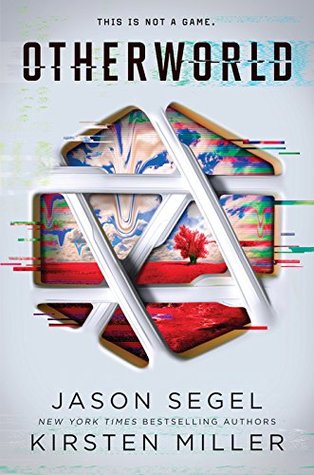
Otherworld (Otherworld, #1)

Summary:

We’ve got this immersive VR world created by a shadowy company literally called “The Company” (which is an attempt at a joke every bit as disappointing as it seems) and piloted by this Elon Musk-ish figure. Owing to recent advances in technology, the game — which was failing monetarily — is rebranded and re-opened as a virtual reality world-substitute — an “other world,” GET IT? — for people suffering from disabilities who are otherwise unable to function in the real world. Of course, to open such a venture on the large stage requires lots of beta testing, and since living, breathing human test subjects are difficult to come by and legally problematic (the technology might-or-might-not kill people in the real world when their avatars die in the game world), The Company opts to make its own human subjects by staging accidents that send hapless victims into comas, and then administering chemical cocktails to keep them locked-in.

(If that sounds a bit mustache-twirling and far-fetched, well, just buckle in.)

The novel centers on Simon, a protagonist you’re going to hate, but not, I think, in that love-to-hate-them way. (More on that in a moment.) He’s enchanted with the idea of the Otherworld game but becomes obsessed with it when his kind-of-but-not-really girlfriend, Kat, becomes one of The Company’s victims and finds herself trapped in the game. His quest to save her and blow the lid off The Company’s secrets leads him through the immense and twisted Otherworld.

Critique (not exactly constructive):

I’ll keep my spoilers vague, since this book is fairly new, but much like my other recent read (Stephen and Owen King’s Sleeping Beauties), the overwhelming feeling I’m left with is: meh. Otherworld is a softer take on The Matrix, a harder take on Tron, and it wants to be a gamer-geek’s take on The Hunger Games. The setup is fine, the premise is good; it just never seems to deliver in any satisfying way.

The biggest problem: the characters are a let down. The protagonist, Simon, is a jerk of the highest order. Not a jerk that you love to hate, a la House or Frank Underwood or Loki, but a jerk who you really wish would just go away. He’s rude to absolutely everybody he encounters in the real world with the exception of Kat, the girl who makes the mistake of giving him some attention (naturally, he’s completely in love with her). And there’s no good explanation for this ball of hate rolling around in his guts; he’s the child of fabulously wealthy parents whose only complaint is that his parents don’t pay attention to him. So he goes out sunbathing on his lawn in the nude to make his neighbors angry, knowing they’ll call his mother at work (…really?) to kick up a fuss. The authors want him to be an anti-hero, but he’s really just an a-hole.

His love interest, Kat, seems at first like this tough, troubled girl — you know, that elusive Strong Female Character type — but after the first third of the book, she’s relegated to the damsel in distress. Simon chases her into Otherworld, but there she’s just a mirage; always just out of reach, just out of sight. Further, upon reflection, I’m not sure we see a genuine interaction between her and another character in the book. She hangs around with some people Simon hates (yeah, I know, that narrows it down exactly zero) and seems like she might be dating some deadbeat (when she could have Simon, the … not deadbeat?), but don’t worry — she’s playing a long con, and they spend the final fifth of the book kissing every chance they get. Often when it’s totally inappropriate. (It’s gross.)

Their love story, by the way, is as ludicrous as you could hope. Never mind the ridiculous flippance and disdain Simon flings at everybody else he meets or the fact that Simon tells us, again and again, that he’d destroy all of Otherworld and everybody (real people, too!) living in it for her. They’re literally driven apart by an evil stepfather. I just … yeah. I’m moving on.

The continuity is suspect. Simon and his crew flit from one locale to another with no explanation of how they did it or how long it took. Sure, they’re in a video game so the rules could be bent, but there’s also very much the sense of — much like your average video game — okay, here’s the ice level, here’s the desert level, here’s the jungle level. At one point, Simon gets whipped away from his companions and beamed, Star Trek-style, to the other side of the world to die. But before long, one of his companions finds him. How? Don’t ask, she just does; and just in time to save him from certain death, besides. How fortuitous!

And of course, there’s the issue that most of the book takes place in the game world. Well, what about your body in the real world? To its credit, the book deals with this issue on the one hand — every time our hero wakes up in the real world, he finds he’s soiled himself and he’s starving. (Somebody in the real world even gives him diapers to help himself with this problem, which is actually pretty funny. But because he’s a class-A jerk, he doesn’t bother using them so that he can deliberately run around smelling of urine and feces.) But at the same time, he is somehow able to dip in and out of the game for days at a time, and his physical body is never found, never disturbed. This beggars belief.

Then, there’s the ending. Without spoiling it, the ending is a non-ending; a straight cliffhanger leading into the next book (as yet unreleased). Not a resolution to the conflicts opened by this book, but a continuation of them. Wholly unsatisfying.

Finally, I don’t know who the book is really aimed at. The premise and execution have a decidedly YA flair to them — Simon is of high school age, after all, going on a grand (virtual) adventure so save the (virtual) world. But the tone of the book is not at all YA. The main character’s thoughts and speech are littered with profanity, and it’s regularly intimated (and here and there outright stated) that Otherworld is a haven for orgies and all manner of devilish perversions. Not that I have a problem with that stuff, but I’m not sure a YA novel is the right place for it.

Verdict:

So — is the book any good? Well, despite my laundry list of complaints, I didn’t hate it. To be fair, I don’t think I liked it all that much, though it did tickle my geek-bone well enough to keep me turning the pages. And this concept alone is entertaining enough to me that I’m willing to dip my toes in just about any waters that explore the idea. The novel does try to explore some themes about the dark side of human nature. But it’s a bit like tossing frogs into boiling water rather than trying to cook them properly. There’s no wading in, there’s no gradual transition; we just find ourselves in the midst of cannibals and gladiators. The end result is less “oh, wow, that’s deep” and more “what the hell am I reading?”

Still, I can’t help feeling like *Otherworld* is trying to ride on the coattails of some other recent successes *cough Ready Player One cough* rather than trying to forge its own way. It’s a decent enough bit of escapist literature (and goodness knows we need that these days), but that’s about all it is.

The verdict: Two out of five smelly, peed-in pants legs.

Terrible Reviews: Sleeping Beauties


Here’s a novel that’s the literary equivalent of a totally rebuilt, souped-up, cherry red vintage Mustang that stays locked up in the garage, never to be driven. This is Cameron Frye’s dad’s car, slaved over, worshipped, revered, and eventually driven backwards through a plate glass window. It’s Thelma and Louise leading the entire police squad on a mad chase right up to the edge of the ravine, then stomping on the brakes, turning around, and going home — and the cops let them go.

I loved this book and hated it. To clarify, I wanted to hate this book, but couldn’t stop loving it; I wanted to love this book, but I couldn’t stop hating it.

Feck. Let’s get to it.

As with all Terrible Reviews, spoilers ahead.

SK

Sleeping Beauties, by Stephen and Owen King, is the story of a parallel reality in which women start falling asleep. Once asleep, they become cocooned and unresponsive, and if awakened, they become (to quote the book’s excellent inside flap) feral and spectacularly violent. While they sleep, the women travel to another world unsullied by men.

Sounds freakin’ awesome, right? Social commentary! Gender issues! Horror!

So, as more and more of the world’s female population falls asleep, an otherworldly woman — who sleeps and wakes as usual but who has a habit of levitating above her mattress — appears in a small town in rural Appalachia. She (her name is Eve, *wink wink nudge nudge*) kills some meth-heads and allows herself to be taken into custody, and as word of her ability spreads, tension spreads and before long, a battle for the future of womankind breaks out.

Holy sharknado! I can’t wait to read this book!

That’s the setup. And it’s bloody fantastic. But then, once the pieces are all strategically positioned across the board, everybody — and I do mean everybody, from the characters themselves to the authors behind them — loses their nerve. The men, fighting each other with literal rocket launchers, stop short of their goal of killing Eve. The women, faced with the prospect of an idyllic world free of the strife that men bring (translation: ALL of the strife) decide nope, actually, we’ll go back to the world we had. And the god (demigod? Trickster spirit? Psychic rando?) sent to witness the whole thing gives up her quest and goes home with her tail between her legs.

Did I mention it’s 700 pages. Which is about 400 pages more than it needs to be.

*gesticulates wildly*

*attempts to tear hair out*

*has no hair*

*gibbers and dances into the yard*

The Good

The concept. It’s drool-worthy; just reading the inside flap was enough to get me to leave off the other book I was reading (and enjoying!) to pick this one up. And the book itself doesn’t disappoint — there’s great characters from start to finish. Thrilling action sequences. Stomach-turning gore (this is King, after all). Despite all my frustrations with the novel, I couldn’t stop reading it; I churned through all 700 pages of it in just two weeks. Unheard of for me lately. I was reaching for the novel while cooking, during commercial breaks in This is Us, staying up way past bedtime to read just a few more pages.

The characters are deep and well-developed and flawed and rich. They fight for the things that matter to them, they have agency, and they drive the plot. (They just drive it at forty miles per hour when they should be at interstate speeds.)

In short, the writing is spectacular. (Again, this is King.) The prose is lovely and crisp, and the tension has this inevitable build that’s hard to do well. (The problem is what it’s building to, which is a giant pile of meh. Which brings us to…)

The Bad

I can’t say that what I would want for any reader of any book I might write is for that reader to reach the end of said book, close the cover, and think, well, that was a waste of time. But I can’t help feeling exactly that about Sleeping Beauties. To wit: the novel ends basically the way it began. There is no great change in the world, no great revelations on the part of the characters, no great payoff to the supernatural plot that’s driving the whole story. The only difference between the world at the start of the story and the end of the story is that there are a lot of buildings on fire and a whole bunch of dead people. And some of the men have vowed to be nicer to their wives. (But the book is sure to undercut even that, pointing out how abusers make these promises all the time, go to therapy for a few months, and then go back to their old ways.)

The problem with the ending is not only that it’s anticlimactic (though it’s most assuredly that. Which is fine. The real world is most often anticlimactic, but one would argue, if you’re reading a Stephen King novel, you’re not reading it for a bath in the soothing waters of the real world). The problem is I don’t buy it. (Here, again, your spoiler warning. Bridge is out ahead.) The Kings spend a lot of words setting up what feels like an inevitable conflict at the end of the novel — this book is 700 pages, to reiterate — and in the last fifty pages, all that conflict just melts away like a sad Atlanta snowflake:

  • The men, who have just mowed down handfuls of people in a shootout at a prison trying to get to the (supposed) progenitor of the curse, come face-to-face with said progenitor. They literally have her at the point of a rifle, undefended. And they lose their nerve when she puts on a display of her supernatural power. Which is great, except that they already thought she was supernatural, given that she caused the curse. But they throw down their guns and let her walk.
  • The women, who, having fallen asleep in the real world, wake up in an alternate universe without men, are faced with a choice immortalized by The Clash: should we stay or should we go? Catch is, their decision must be unanimous. (Why must they be unanimous? Because go Fargo yourself for asking, the authors seem to say say — but more on that in a minute.) Their new world is near perfect. They learn quickly that babies can be born there just fine (though one wonders, if a baby is born in the alternate universe, is it also born in the real world? Women who die in the real world vanish from the alternate world, but the book is mum on this), so there’s no problem with living there forever. They miss their husbands and fathers and sons, but they almost all agree that the new place is better in practically every way. So when they have to make their choice, of course they vote to stay. Except they don’t. Somehow they unanimously agree to go back to the crapsack world they knew, with the justification that “she missed her husband too much” or “the new world was too good to be true” or “a sense of duty.” And, yeah, okay, fine. I can see that for some. Maybe even most. One theory the novel posits, after all, is that women are the glue that keeps this ramshackle world from going to pieces to begin with. But for every single woman? Not a chance. Nope, sorry, not buying it, especially when the authors go out of their way to craft characters who Definitely Do Not Need Men In Their Lives. But no, they give up actual paradise for a world that’s literally on fire.
  • Eve’s entire arc isn’t a bad thing, per se, but rather a confusing thing. We’ll come back to her…

But really, the root of the problem is that the book is 700 pages long, and it should really be half that, if that. There are too many characters to keep track of. (When the book actually has a list of the characters in the front pages to help you keep them straight — and that list is longer than a single page — there are too many characters. When you have the thought, while reading: “maybe I should take notes,” there are too many characters. When you’re introducing brand-new, never-previously-spoken-of characters on page 530 of a 700 page book, there are too many characters.) And because there are too many characters, entirely too many of the book’s too-many-to-begin-with pages are given over to backstory for those characters. I just don’t have the time!*

The WTF

A lot could be said here, so rather than deep dives, I’m gonna scattershot it.

First of all, Eve:

  • What is she, even? She’s clearly supernatural. She wanders around naked and speaks in riddles and nonsense and occasionally sprouts vines and leaves or turns green. Other characters call her “goddess” and “witch” but she never identifies herself.
  • What is she doing? She claims to be a “witness” and claims to have been “sent” to Dooling. But sent by whom? We never get even a whiff of a hint. And for a “witness,” she does a lot of interfering. Is she responsible for the strange events? We never find out.

Then, the “disease” itself. The cocoons are awesome, but what is their source? Is it a sickness? A mass-hysteria event? A parasite or insect infestation? Again, the answer to these questions seems to be “Fargo you for asking,” because we never know, and never get close to knowing. The cocoons burn with an odd spherical flame that, when it goes out, becomes moths but the farthest we go down that rabbit hole is a plastic surgeon saying “well, that’s obviously supernatural,” and never speaking of it again.

These weird moths hang around a lot, and Eve uses them as eyes or something, but that particular point is never fleshed out beyond being weird and slightly creepy.

And, not to go all lit teacher, but … what’s the theme of this thing? Empowerment of women, maybe? Yeah, there are great female characters here, but the most powerful one of all — Eve — just flounces around and then FedExes herself back to heaven or whatever when things don’t go her way. And yeah, the women found their own Utopian society, but then they give it up under a pretty dubious pretense. That men are pigs? There are all sorts of jerko men running around doing jerko things, but for a novel called Sleeping Beauties to be focused on the men (And I’m just gonna ballpark it and say that no less than half of the book is about men rather than women) feels like a bait-and-switch. That the human race is doomed to mundanity even in the face of truly miraculous events? Well, maybe, but then, also, why a story this long and involved to boil down to such a cynical premise?

The Verdict

I just don’t know what to make of Sleeping Beauties.*

The characters are great, but there are too many of them.

The concept is out of this world, but it fizzles out like a dud firecracker.

The writing is lovely, but again, there’s 700 pages of it, which is kind of like eating nothing but whipped cream for weeks.

To compare it to another King work, it’s very like The Stand: strange disease wipes out most of the people on earth, survivors have to rebuild society and war with each other as they do so. Less nuclear threat and religious overtones here, but the same general concept. The Stand is even longer, but it’s also significantly better, and I don’t really know how to square that except to guess that maybe Owen King isn’t quite the writer his father is, and he’s muddying the waters here.

All that said, here’s the footnote:

*Despite this, I devoured the book like a starving man in a cake factory.

Could I recommend it? That’s a tough one.

Looking back from the end, it’s far from the best thing I’ve read, or even the best thing I’ve read in recent history. If you want a post-apocalyptic story like this, King has better works on offer. On the other hand, while I was in it, I couldn’t put the story down, despite my mounting frustrations with it. And that, that unputdownableness, has to go for something, and a pretty significant something at that.

I just keep waffling.

So for all that waffling, I guess I have to give this one two and a half out of five overcooked waffles drowning in syrup.

Actually, make that a full three. Because it’s good to be King.

Terrible Reviews: End of Watch


I’ve just finished Stephen King’s End of Watch, the final installment of his Mr. Mercedes series. And I want to say I enjoyed it. Well — I did enjoy it, but I’m also really, really confused and kinda disappointed by it.

Spoilers below, but the novel is like two years old, so… you know …

The entire premise of the novel is a head-scratcher — Brady Hartsfield, the psycho killer from the first novel, has woken up from his coma with psychic abilities thanks to experimental drugs administered by a fame-chasing doctor. (That’s the One Big Lie — if you can swallow that, the book is fine!) Now, he’s reaching out through mind-control to induce suicide on a massive scale.

Which … okay. It’s a fascinating idea. And a horrific one. It’s a great idea for a Stephen King novel, in fact. Problem is — there hasn’t been a speck of the supernatural at work in either of the first two novels in the series. And all of a sudden, the big bad can do incredible things with his mind and a little game boy device and — everybody in the story just buys it. They just do!

It’s just a bizarre turn in a series that didn’t need a woo-woo bent. What was King thinking?

And the end is an absolute bummer. Hodges, the lovable grouch, succumbs — not to the attacks leveled by Brady, but to the cruel whim of cancer. And not moments after securing the dispatch of the big bad, but several months later. With no fanfare. He dies “off camera”, as it were, with King showing us an upbeat Hodges at his birthday party in the treatment center, upbeat and fighting, and then cutting to almost a year later at his funeral.

Again — wtf?

It may be true-to-life, and maybe that’s the point — but crikey. We read detective novels not to live in the real world of mundane (if horrible) cancer deaths, but to live vicariously by the seat of our pants. I’d have been happier if Hodges and Hartsfield managed to off each other in the end, or even if Hodges succumbed a few days or weeks later. But months? He finishes the baddie and looks ready to give cancer a run — but nope, surprise, he’s dead anyway?

Mr. Mercedes is a detective story — the finding of clues, the glimpses into the mind of a psycho, the inevitable pursuit and capture. King is great at those things, and all three novels tell a great detective story. But this final chapter is just laden with so much else.

Again, it’s not a problem with the content. I don’t mind the story of an aging protagonist struggling with cancer. I don’t mind the concept of a murderer using mind control to commit his crimes. In fact, that’s kind of awesome! But you can’t shoehorn those things into an established story world just for sharknados and giggles.

I whole-heartedly recommend Mr. Mercedes, the first book in the series. As for the later installations?

What was he thinking?

Verdict: Two and a half out of five daisies pushing through the fresh-tilled earth.

This terrible review is part of Stream-of-Consciousness Saturday.

Terrible Reviews: A Dog’s Purpose (or, I’m not crying, YOU’RE crying)


No, that’s not rain outside your window. My wife and I are just watching A Dog’s Purpose, and, well, let’s just say Noah didn’t see my flood of tears coming.

I haven’t wept like this since I first grasped mortality at the age of six.

Normally, I’d write a lot more, but we’ve been packing for three days straight; I’m exhausted and ninety percent brain dead. Verdict on the movie? If you want to walk around red-eyed and snot-nosed for the weekend, you know, maybe check it out.

Watch your step on the way out. My wife walked through bawling and I haven’t had the chance to get the mop. Mostly because I’m bawling myself.

This mini-post is part of Stream of Consciousness Saturday.

Pareidolia, Foie Gras, and Guardians of the Galaxy 2: A (sort of) Terrible Review


Have you ever been in the midst of a dream, and then realized that you were dreaming? You’re there, and you’re standing naked in front of the class, or you’re taking the stage and you’ve forgotten your lines, or you’re soaring in the sky with psychedelic dolphins or whatever, and it clicks: this isn’t real. It can’t be real. The world doesn’t work this way.

Suddenly, the dream is a lot less convincing. Probably you wake up. Or maybe you turn into Neo and you’re able to change the dream to suit your whims or something. Either way, it’s like one of those pareidolia images of faces in everyday objects: once you see it, there’s no unseeing it. You can’t ignore it and go back to believing that the dream was real.

pew-pew-pew

What’s all this about, then? Well, the wife and I saw Guardians of the Galaxy 2 last night. And about halfway through the film, like Neo in The Matrix, I woke up. Not that I had fallen asleep — no, as is Marvel’s wont, the action is cranked to eleven in this offering. Rather, I looked around. Noticed the seams on the walls, the jagged edges at the periphery, the hidden patterns in the carpet. And the spell was broken. I wasn’t just watching a movie anymore, I was in a world that I knew had been crafted deliberately, created to work surreptitiously on my subconscious.

(Spoiler note: This isn’t exactly a review, and there’s nothing explicitly spoiler-ific here. But if you’re planning on seeing it, and want to be able to immerse yourself fully, you might want to don your peril-sensitive sunglasses now.)

Now, sure, movies are designed to do this to you anyway. Hell, so are stories. Creators craft these things to manipulate your brain from top to bottom: telegraphing some story elements to invite you to make predictions. Playing to well-known tropes to help you find your footing in a strange world.

And GotG2 does that. But this isn’t that. I wasn’t discerning the hand of the creator in the brush strokes. Rather, I was discerning the hands of the studio execs molding the story externally as it was crafted. A whole new matrix within the matrix.

Here’s what I mean: Marvel’s using a pretty simple formula these days. Stories get bigger and bigger. Crazier, wilder villains (see: Doctor Strange doing battle with a god). Savvier, snarkier self-satirizing heroes (see: the entirety of Deadpool). And a sequel is always measured against the yardstick of the original.

And how do you make a sequel better than the original? Easy, you take the same characers, craft an entirely new storyline that plays to their developing relationships and strengths that tests them in all new ways, encouraging more growth, more development, more feels from the audience. Right? HA HA HA no. The way you make a sequel that plays as well as an original is you take everything the original does well and you do it more.

Don’t sweat the storyline so much: you’ve already got viewers baked-in. Just ratchet up the things they loved about the first movie. Give the funny characters more funny. Make the romantic tension a little more taut. Make the explosions even more explodey.

What made GotG1 so much fun — what audiences loved about it — were a few things. The old-school music soundtrack laid over a futuristic world. The irreverence. The niche-ifying of every character (there’s the snarky central guy, the badass no-nonsense chick, the brick-joke, doesn’t understand sarcasm or interactions in general dude, the jerk-store a-hole raccoon, the mute monster with a heart of gold. See also: Five-Man Band.)

And about halfway through the film, I realized that this film wasn’t actually doing what a sequel should do. There was very little new development. Not much added to the larger universe of which this story is a part. Instead, this movie was focus-grouped to make me want to watch it by giving me more of what I liked about the first one.

Let me not drive this into the ground: a few examples will prove the point.

Musclebound Drax, whose brick humor was the cornerstone of his character development (what, again, does he actually contribute to the team?) is tossing out even more deadpan sarcasm-proof jokes here, at what felt like a ratio of twelve-to-one over the original.

Angry little ball of sentient fur Rocket, in GotG1, made his place by throwing out sarcasm and lashing out when people called him a raccoon and just general dickery. His character development here: he’s a total a-hole to everybody, with at least two characters specifically pointing the fact out to him along the way.

And of course, the soundtrack is just as jarring in its strange setting, but there feels like even more of it, and it even becomes a focal point of the story itself: the central villain spins one of the songs into a metaphor for his own development. It’s well done, mind you. What at first seems like this big, romantic yen about wanderlust morphs into a twisted, sociopathic rejection of humanity (and all lifeforms in the galaxy, actually — readers of The Hitchhiker’s Guide to the Galaxy will hear echoes of the denizens of Krikkit in the villain’s desire to wipe out everything in the universe that isn’t him).

There’s nothing wrong with any of the above. But once you hear the voice in your head — the voice that says “OH YOU ENJOYED THIS THING ABOUT THE ORIGINAL MOVIE? HERE HAVE MORE OF THAT THING” — you see it everywhere in this movie. Douglas Adams wrote brilliantly about humor that what makes it so lovely is its rarity. In the midst of a hot summer, you run out into a surprise thundershower for the joy of splashing around in the puddles, for the sprinkle of the rain on your face, because these things are rare and not happening every day. But when humor is everywhere — when it’s been raining for weeks and weeks, each day like the last, with no hint of the sun — the rain is a little less magical. GotG2 is like that: it’s a week-long deluge when what I really want is the surprise afternoon shower.

Put another way: they make foie gras by force-feeding geese until their stomachs explode. Having watched GotG2, it feels that I’ve been force-fed in the single aim of extracting more dollars from my wallet. And my stomach is near to bursting.

I say all that to say this: GotG2 is good fun. It’s perfect summer fare — lighthearted, action-packed. If you liked the first one, well, you’ll probably like the second one; not least of which for the reasons I’m talking about here. But if you miss the movie? Well, you’re not missing much.