The Weekly Re-Motivator: Soldiering On


A short SOCS post today, because I’m totally fried from this murderous week at work.

I’m back in the swing of my novel this week, despite the crazy hours at work. I got probably about 2400 words written — not quite what I aim for, but considering the loss of planning time and how scattered I’ve been, I’ll take it. But I’m not here to kvetch about word count (or lack thereof).

See, a few weeks ago I suffered what I could only, at the time, call a catastrophic setback: the loss of my un-backed-up flash drive, and hence the loss of a good twenty- to twenty-five thousand words on my latest project. That’s about two months worth of words, if you’re counting, AND I CERTAINLY WAS.

And, after the storm and the swearing and the self-abuse subsided, what was there left to do? Either quit the project, accepting the loss as too great to recoup, or soldier on and keep writing on the project anyway. And considering that this novel just happens to be one I’ve wanted to write for about three years, throwing in the towel was not a thing I was willing to swallow (argh, too many cliches).

So I took a day to outline the story I had written so far from memory, and then I started fresh with a blank page.

And man, that first day sucked, because returning to what was an essentially blank page was intimidating as hell (the perfect white expanse of the unblemished page — or, okay, word-processor window — is a thing you can only screw up with your first draft word-vomit). But a few days in, the momentum kicked in again, and all of a sudden I was churning along just like before I shot my foot off.

And the weird thing is? I actually feel really liberated. Losing the old project has allowed me to divorce myself from some of the preconceived notions and lame patterns that had cropped up in the writing. Now I can not only pretend they didn’t exist; they actually, literally don’t exist any more. I’m messing with new POVs, experimenting more with the narrative sequence, and generally having a lot more fun with the project than I had been for a while.

What’s that thing they say about relationships? Sometimes you have to lose something to learn what you really had? Maybe that’s a little too trite for the current situation, but one way or another, the project is moving ahead at a healthy clip again, and that’s damned encouraging.

Tomorrow: a third and final entry to the October horror flash-fiction challenge that’s kicking around over at Terrible Minds. (I hope.)

This weekly remotivational post is part of Stream of Consciousness Saturday. Every weekend, I use Linda G. Hill’s prompt to refocus my efforts and evaluate my process, sometimes with productive results.

The Weekly Re-Motivator: Awkwardity


I’ve always been pretty awkward.

That might come as a shock, given my background in theater and my career choice as a teacher and the way I prattle on at length about any- and everything around here, but there it is.

Socially awkward. I’ve even gone so far to consider myself socially retarded. I’m often the quiet guy in the room, not because I don’t want to take part in conversations (well, sometimes), but because I just don’t know what to say. But then, what feels like a comfortable silence to me will turn into an uncomfortable silence in the room, and then I sit there thinking I should really say something, but then the words come out like cow vomit.

I think a lot of people struggle with this, but I also think I maybe have it more than most. (Then again, maybe that’s the old Dunning-Kruger effect talking — that thing that makes you overestimate your experience when you don’t have much. Americans, it turns out, suffer from Dunning-Kruger than most other nationalities.) Like, I know that some people feel awkward sometimes. There are hashtags about it. But for me, it feels like it’s all the time.

And I think that’s part of what compels me to write. Because I screw up these social interactions every day, so I get another crack at them when I create these alternate realities in my own head. And again, I think we all do that — we all play the I shoulda said THIS game — but for a writer, it’s different. When I tell a story, I get to get it right, and (hopefully!) readers get to see me get it right.

They say you should write what you know, and while I think that advice can be overly limiting (if we kept to it, we’d never have science fiction), it’s also pretty impossible to avoid. All writers, I think, write themselves into their stories. And in looking at the stories I’ve written, the characters I’ve spent the most time with… well, it’s safe to say that they’re pretty socially awkward like me.

First novel: A struggling writer battles through his self-doubt with the help of a muse. His only real friend is the one who is financially obligated to spend time with him. Hmm!

Second novel: A girl who is socially segregated because of the role that’s been selected for her by the community. She doesn’t have friends because she will, for all intents and purposed, be “killed” when she comes of age, and everybody knows it. Hmm, hmm!

Third novel: A kid born to superhero parents has no superpowers, but falls in with the superheroes anyway — so that he can learn to exploit them. He trusts none of his “classmates,” and in return they ridicule and fear him. Hmm, hmm, hmm!

So authors write themselves into their stories; this is a trope we’re all familiar with, and I certainly seem to be doing it. But is it a thing we can avoid? Well, with novel #2, the protagonist I described was not actually the protagonist for 80% of the first draft; she was a supporting character who I realized was a lot more compelling than the protagonist I was trying to write. That person was popular, and fit in effortlessly with his social group and with somebody beyond it — and he rang hollow to me for most of the writing. So it can be done, but not without its pitfalls.

Pitfalls. If there’s an apt metaphor for the writing process, it’s a field littered with pitfalls. Because as you build this story for your characters (the ones who are totally yourself), you have to place pitfalls in their path, try to trip them up at every step. But you have to watch out for your own pitfalls, the gaps and the traps that threaten to snag you in the midst of your process. It’s a delicate dance.

And dancing is something we awkward types don’t really do so much.

This weekly remotivational post is part of Stream of Consciousness Saturday. Every weekend, I use Linda G. Hill’s prompt to refocus my efforts and evaluate my process, sometimes with productive results.
 

The Weekly Re-Motivator: To Business


If I could go back and give my previous self any advice about this whole writing thing, it’d be: treat your writing like a business.

See, I always thought I was the creative sort. And I guess I was, but for pretty much my entire twenties, I thought that creativity was this gift; this mystical, un-pin-down-able thing that I was just lucky to have. Now, I still believe that’s true — to a point — but I’m learning that there’s a lot more to creativity than the occasional kiss from the muse.

Because the problem with thinking that creativity is magic — that some people “just have it”, and others “just don’t” — is that one of two things happen. One: you don’t appreciate it, because, like a pile of cash from a wealthy uncle, it just fell in your lap, so you don’t really know its worth. Or two: if (but actually, when) it deserts you, you have no idea how to get it back. And while the muse may in fact carry a cell phone (she does in my as-yet-unpublished first novel), she certainly doesn’t give out her number.

But creativity isn’t magic. Or at least, it isn’t all magic. Creativity is like that kid who wanders around the neighborhood looking for other kids to play with. He doesn’t call in advance. He doesn’t send you a note to say he’s coming around. He just tools around on his bike looking for places to play and people to hang out with. And if you happen to be out in your yard playing when he shows up? Well, you’ll have the craziest afternoon of playing space baseball and ninja cowboys and Calvinball, until the kid has to go home and you have to go in to eat dinner. But if you aren’t out in your yard? That kid rolls right on by. He won’t knock on your door, he won’t peek in the window to see if you’re waiting for him — he’s got places to be and hell to raise with the other kids who are already outside.

Which is why, if you want to encourage him to visit, you have to spend some time playing in the yard, even when he’s not around.

This seems counter-intuitive. There’s no point playing in the yard by yourself, after all. The fun is in playing with a friend, in tapping into your collective imaginations and adventuring together through the boundless reaches of the imaginations of little kids. Playing by yourself is boring; what’s the fun in doing a backflip off a tree branch if nobody else is around to see it, or in throwing a ball over the house if you have to walk around the back to retrieve it?

But if the neighborhood kid doesn’t see you out there playing already, he isn’t taking time out of his day to see if you want to play. And creativity is just like that: if it doesn’t see you already working, already flexing your creative muscle, it’s not going to waste its time knocking on your brain to see if you want to make something awesome. The muse has places to be, novels and poems and stories and paintings and interpretive dances to inspire.

And that’s why we have to treat writing like a business.

mrw hd galaxy guide hitchhikers

You don’t do business when you feel like it: business needs doing with consistency, and pretty much all the time, or else the business dries up. When you treat writing like a business, you make time for it every day. You set aside time for it, and you protect that time like a mother bear protecting her young. You do the writing even when you don’t really feel like it, because if you don’t handle your business even when you don’t feel like it, you lose your business.

The unfortunate fact is, we don’t always feel creative. And it can be hard to force ourselves out into the yard to play when we’re just not feeling it.

But if this is a thing that matters — and I would argue that if you’re writing at all, or thinking about writing, then it matters to you at least a little bit — then we have to get out there anyway.

Because if we don’t? Well, the muse has plenty of other house calls she can make.

This weekly remotivational post is part of Stream of Consciousness Saturday. Every weekend, I use Linda G. Hill’s prompt to refocus my efforts and evaluate my process, sometimes with productive results.

The Weekly Re-Motivator:


Linda’s prompt for Stream-of-Consciousness Saturday this week is “-est”. Usually I like to find a single word or phrase using the prompt, but this week, when I plopped down to think of an -est word, the unusual happened.

Normally, I take the prompt and one of two things happens: either a single word hits me right away and, like the moon drifting across the face of the sun, immediately eclipses any other ideas, or a different moon drifts across the same sun and blocks out everything, and I sit there, unable to think of a single way to interpret the prompt, for hours. But not today. Today my brain is a slowly-spreading pile of gasoline, and the prompt is the casually-tossed cigarette of a black-clad action hero.

Too many words to choose from, so I’m gonna use as many as I can.

Our creativity, like the heavens, is inestimable, full of wonders we can hardly imagine, if we only have the courage to explore it — unfortunately, so many of us never do.

Our forebears in America were compelled to go west; partially out of a dissatisfaction with the way things were, partially for the promise that the unexplored country held. The artist needs more than a little bit of that wanderlust, of that westward yearning; the artist satisfied with where he’s at is an artist who stops pushing his boundaries.

Pushing the boundaries, though? When it goes well, it’s a(n) euphoric love fest. The ideas come fast and fresh, blowing through your hair (or in my case, across your dome) like the top’s down in your mid-life-crisis-mobile. But there’s no guarantee it goes well, as any writer will attest; and when it does go poorly, as inevitably it will, the whole affair can feel like the universe’s cruel jest. Every idea falls flat, every word feels forced; some days it’s all you can do to keep putting one word after the other.

But because it matters to you, you persist. And maybe you ingest some liquid courage or some chemical inspiration to kickstart the process, but one way or another, you keep on pushing your Sisyphesian boulder along. (Lest we forget, momentum matters.) Because you know that if you stop moving, if you bog down and leave the work for another day, one day quickly turns into another, which turns into another, and then, like a fetid pool, your creativity begins to fester, and even the stuff that looked good a few weeks ago begins to rot.

Still, the brain is a muscle much like any other, and a little rest brings it back to full functionality. Invest in a day off here and there, and somehow or other, the muses will wander their way back to the dark corners of your mind and drive your storytelling anew for a few more days. But it’s a foolish artist who relies on the muse too much: her magic is intoxicating and enticing as a desert mirage and just as fleeting.

The better way — the safe way — the only way, in fact, that works for more than a few weeks — is to establish the habit. Work for it. You don’t eat an elephant all in one sitting, you do it a little bit at a time, working day after day, checking your westward expansion by the stars overhead, the words on the page, the story twisting in your gut. Gestating. Improving, getting stronger with time, even if you can’t always tell quite how at the time. You keep writing. You keep pushing. And eventually, maybe, you bring your creation, squalling and covered in phlegm and gore, into the world.

Is this the best way to do it?

Hell if I know.

Writing is nothing if not an experimental flight in an experimental aircraft with an experimental pilot. Each and every element is a test.

But it feels good when it’s working.

Image result for just keep writing

This weekly remotivational post is part of Stream of Consciousness Saturday. Every weekend, I use Linda G. Hill’s prompt to refocus my efforts and evaluate my process, sometimes with productive results.

The Weekly Re-Motivator:An Accumulation of Oddities


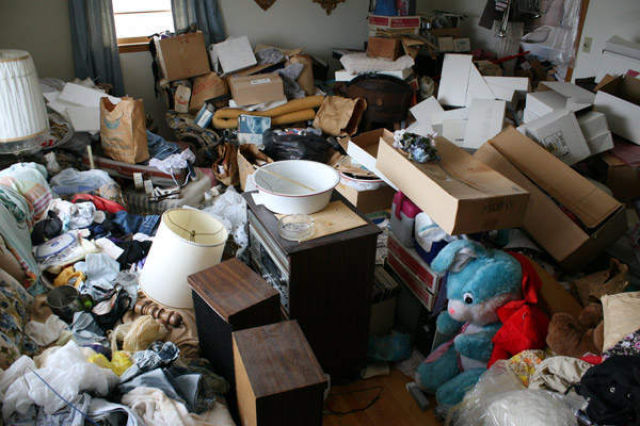
If your house is anything like mine, the stuff just sort of seems to accumulate. (Doubly or maybe exponentially true if you have kids, and doubly exponentially if those kids are particularly young.) You see this or that shiny doodad, and you think, gosh,the kids would just love that, and because we live in America we buy the thing. Or a loving and well-meaning grandparent will make a gift of some battery-powered monstrosity that belches out Christmas music if it detects movement within a square mile. Or the kids themselves will bring home toys covered in foreign guck and another kid’s nose slime. (How do they get these toys away from other kids, I wonder? My kids can sense it — and immediately pitch a fit — if I so much as touch a stray eye from a long-lost mister Potato head doll.)

But even without kids, it happens. You’re at the mall for some reason, and you think, that’s a nice looking shirt. I wear shirts. Let me give some of my money for that thing. Even though you need another shirt like your kids need another toy. Or you pick up another fancy running gizmo or some inspirational book of quotes or an odd lamp you like the look of.

And it just adds up. It’s not a bad thing, per se. But with so much stuff, it becomes easy to lose track of things. Easy to take things for granted.

hoarders

And if you’re not careful, the same thing can happen to your stories. For me, this usually comes in the form of a sentence, half-formed in my mind, that goes something like: wouldn’t it be cool if…

this minor inconvenience character turned out to be related to the main villain?

…the bad guys stole the thing that the good guys need to make their lives work?

…the mentor character’s cat starts phasing forward and backward in time?

All of which are fine and interesting and may well reach the final cut. Unfortunately, the mind, like the house cat that indiscriminately murders local fauna and deposits them on the doorstep, also drops off less-inspired idea corpses like…

There should totally be a paper-and-pen motif in this chapter.

Maybe the villain should have an electric puppy.

Feathers. Feathers everywhere.

Problem is, in the heat of a daily word-count grinding session, the gems are indistinguishable from the crystallized turds. You see them float past on the shelf of consciousness, think, oh, sure, that works for my story, and into the story sausage they go.

And again, that’s not a bad thing per se.

But just like the stuff that piles up in your house, this crap accumulates and chokes off a good story. Before you know it, you’re struggling to pick a clean path through your story, its every spare passageway littered with the half-formed iterations of these little oddities that, like the snot-caked stormtrooper my kid brought home the other day, you have no idea where they came from.

The little curiosities are a powerful spice, fascinating and interesting in moderation, overpowering and inedible if overused. Which means that, just like every now and then you have to go through the house and purge all the junk that no longer brings you joy, so, too, does a story in subsequent drafts need a brutal bit of spring cleaning.

The tricky thing, of course, is making sure you don’t accidentally put a priceless heirloom out on the curb by mistake.

This weekly remotivational post is part of Stream of Consciousness Saturday. Every weekend, I use Linda G. Hill’s prompt to refocus my efforts and evaluate my process, sometimes with productive results.