The Weekly Re-Motivator: Video Game Endings and the Writer


Writing the end of a novel is something like the last stage of a video game.

A really long video game, that you’re playing through for the first time. And you find yourself in the last level — the final dungeon, the Temple that Houses the Big Bad — and all of a sudden, there’s that rush. It’s all been building up to this. There’s that moment of doubt: did I collect enough ammunition? Are all my magic spells charged? Did I re-forge my +9 sword of nerditude in preparation for this? But before you know it, the monster is upon you, and you’re in a fight for your life.

He looks familiar — he’s been hinted at throughout the whole game to this point, after all — but he’s got some entirely unexpected tricks up his sleeve, too, and within a few moments, you’re in the fight of your life. With reckless abandon, you reach again and again into the bag of goodies you’ve been collecting all along: plasma grenades, portable portals, chicken legs that somehow restore your health, hypodermic needles full of spirit energy. One after another, you deploy your best gambits, and one after another, they seem to have a tiny effect but they keep coming up short.

And, ultimately, you probably screw it up. Screw it up badly. You probably don’t do much more than leave a bloody stain on the boss’s knuckles after he beats you down; leave a greasy smear of your DNA on the walls of the temple.

So it is with writing.

You’ve laid the groundwork, you’ve brought your hero(es) to some grand, lofty conclusion, ready to face off with the demons (literal or figurative) that have hounded their every step. They’ve learned some things along the way. The story has built in a certain direction. And the ending you envision is right there, just at the end of the next few days’ worth of writing.

And holy crap, do you screw it up. The resolution to the conflict comes flying out of left field like a meteor, solving the problems but opening up all new ones. Or you realize that the conflict you’ve been building to all along is the wrong one. Or that the conflict is right, but your hero has changed along the way and no longer wants the ending you thought she wanted all the way through.

Luckily, the video game, just like writing, has a reset button. When you get to the end and find that you didn’t pack nearly enough rockets, well, you can just reset to an earlier level, stock up on rockets, and come around to the boss temple again, better equipped to deal with the monster awaiting you. With writing, you can re-write the story as many times as you need to to get it right. No judgment, no shame; you just go back and recreate your story, from the ground up, if necessary.

Point is, I know I’ve felt, at the end of my first novel and again at the end of this one, that I somehow had to stick the landing on the first try. That the ending I wrote would be somehow etched in stone, unchangeable. But nothing is unchangeable. That’s why writing is even better than video games. In the game, there’s only one path to the boss, one ending to shoot for. In writing, the end is whatever you want it to be.

The first time I made it to the last level in Bioshock, I spent nearly five minutes just running from the boss, trying to figure out how I could even find a window in his attacks to do something as simple as aim a gun in his direction. I didn’t want to screw it up, so I simply dropped into survival mode and ran for it. Then I remembered it doesn’t matter if you die in a game, and I turned and threw myself at him with everything I had. And yeah, I died a few times, but I learned the patterns and soon I was able to handle him without even taking a spot of damage.

So here, I find myself in the closing chapters of novel #2, and I’m feeling that same pressure: the ending has to be perfect, I can’t screw it up, I’ll ruin everything if it isn’t all rainbows and dancing unicorns. But to quote Marty McFly, “I’ve got a time machine, I’ve got all the time I want!” Which is doubly relevant, since my story features a time machine rather prominently. So, enough doubting, enough stressing, enough worrying. Time to go screw up this ending so that I can reset and fix it.

This weekly Re-Motivational post is part of Stream of Consciousness Saturday. Every Saturday, I use LindaGHill‘s prompt to refocus my efforts and evaluate my process, sometimes with productive results.


The Last 10,000


The novel is down to the last ten thousand words.

It’s a bizarre feeling. If my first novel was written in a flurry of inspiration, stolen minutes and creeping inevitability, this novel has been written via a series of well-placed skull strikes against the keyboard. Or maybe not so well-placed. The narrative of this one hasn’t flowed as well as the first. The path was never so clear. The words more reluctant. The voice, nonexistent.

Still, I’m almost there, and the proverbial light is shining at the proverbial end of the proverbial tunnel. It ain’t far off now, which means I’m too close to even think about packing it all in. I should be done within the month, which is startlingly enough true to the (unofficial) deadline I set for myself back in … whenever the fargo I began writing it. It seems so long ago now as to be hardly worth pondering, but I want to say it was maybe February? March?

It’s taken longer than the first novel, pushing out this newest squalling bundle of joy, but that’s because I realized that the breakneck pace I set back then (1200 words a day was my goal) was a bit too much for other areas of my life to bear. I backed the daily requirement back to 600 (though I really do aim for 900 most days), which has of course made the project stretch out, but has also given me more time to assess as I go.

And I’m not sure if that’s been a good thing or not. With the first novel I plowed ahead full force, writing the story as it occurred to me, hardly pausing for breath or to check my bearings at all as I scrambled for the finish. With this project, I’m constantly evaluating how things are going, second-guessing my decisions, agonizing over each new turn. As a result, the thing has been reshaped so many times along the way it’s as if I started off building a replica of the Iron Throne and ended up with a misshapen ashtray made from discarded banana peels. And then sat on it. Eww slimy.

It’s gonna require major rewrites. Months of work. And I can’t help wondering if by taking my time a little bit more I hamstrung myself by allowing things to settle. If instead of spinning the whole tale out like a blown glass bottle, the thing is hardening and solidifying fit to break when I start to apply pressure to it.

But those are concerns for future me.

Now that I can see the end, I can feel that restless energy seeping in, that urge to push for the finish.

For the moment, it’s time to focus on those last 10,000 words, and the feeling over the last few days is that they’re going to go fast. I can feel the frenetic pacing from my first novel creeping in. I can feel myself reaching for Chekhov’s Guns that weren’t written yet, weapons that materialize under my fingers as the story demands them. The time will come when I can go back and invent the methods of their inception. Right now, the story is full steam ahead, and if a character needs a robotic limb in order to break out of their holographic jail cell, then by god, that character has what she needs. The details will come later, for now it’s time to find an ending for this thing, even if that means steering its smoldering wreckage into the side of a mountain.

So.

Deep breath.

Head down.

Time to write.

A Plague of Excuses


Usually I like to use the SOCS prompt to write about my writing process, but given that the prompt for the week is “four-letter words”, there’s only really one thing I can think about.

Plague.

No, wait. Disease.

No, sorry. Too fancy.

Sick.

We’re all sick. Everybody in my the house. Sprout the first is sniffling and snuffling and coughing his brains out. Sprout the second has a perpetual river of snot running down her face. Poor wife has been snagged by the grasping claws of the sore throat that I shook off a couple of days ago, and I’ve got the stuffy-headed feeling of a skull stuffed full of mucus. So, we’re all a little bit miserable.

And maybe that’s why this week seemed to stretch out for eternity, as my wife and I both agreed it did. In addition to the regular tribulations of the day, we had to come home to runny noses and coughing fits and the general bad humor of little kids suffering from sickness. Which is enough to take the wind out of anybody’s sails.

And as much as I like to find an inspirational or motivational spin to put on any hurdle to writing, it’s hard to think of much that’s positive to say about this one. There’s no positive to mopping snot off faces and having millions of germs coughed into your face holes by kids who haven’t got the motor control or consideration to even conceive of covering their mouths.

So writing on the project has been at a bare minimum this week. Posts here on the blarg have been next to non-existent. The plague going around the house has taken the mustard right out of my sails. And for all I write about powering through the crap days, writing even when you don’t feel like it, and embracing the work for its own sake for its therapeutic and uplifting properties, even I recognize that there are some days when that just isn’t the case. When you’re sick — really afflicted with something nasty, something physical or chemical that’s keeping you from firing on any of your cylinders, let alone all of them — the only thing to do is to hunker down, chug back a bottle of Nyquil or Pepto or whatever, and wait for the storm to pass.

Luckily, it feels like the storm might be breaking. I feel much better today than in the past couple of days, Sprout the Second’s face is not nearly so crusty this morning, and Sprout the First… well, he’s still coughing fit to serve as the percussion backbeat to a dubstep track.

Guess you can’t win ’em all.

Luckily, for that, they have Dayquil.

Writer Moments: The Hero is not the Hero


Funny things happen when you’re writing.

Writing isn’t building a parking deck, with schematics on file at the city office describing exactly how many steel girders go where, how many tons of concrete, how close to paint the lines, how exactly to best get that fresh pee smell in the elevators. Writing is more like surfing. You practice the mechanics, the balance, the paddling and the positioning, but it all means nothing until the right wave hits. But then, when the wave hits, all the preparation goes out the window and you ride what the ocean gives you. (And if that’s not what surfing is like, I apologize. I know as much about surfing as I do about effective lawn maintenance, which is to say, I know it’s a thing that some people who are not me are capable of doing, and I imagine there is some skill involved.)

I’ve learned a lot from writing my current novel, much more than I learned writing the first. The current story has changed so many times that the disassembled cadaver on my table looks more like the bodies of six or seven different deep-sea monstrosities whacked together with crazy glue and culinary twine. It’s either missing a head or it has two heads too many, depending on what angle the light strikes it at. And it’s still not finished. Soon, but not there yet.

And by finished, of course, I mean only the first draft; there is a long period of re-writing ahead of this one, considering all the narrative surgery to be conducted on those half-formed fish-beast parts.

But I am always learning new things about my writing, and a thing I learned today was that this story is about the entirely wrong things.

The chain of events is good. Maybe even exciting. But there was something wrong with my protagonist. I felt a niggling seed of doubt a month or so ago when I axed one of the major supporting characters who just wasn’t doing much. But I’ve been feeling a much fainter, though much more impossible to ignore, sensation at the same time; sort of like how, on a cruise ship, you can get used to the motion of the ocean and forget for a time that you’re bobbing around like a cork, but then a storm hits and you realize, with your entire life at a thirty degree angle, that things are a bit more off-kilter than you realized. And that sensation is that the protagonist of my story isn’t actually the protagonist of the story.

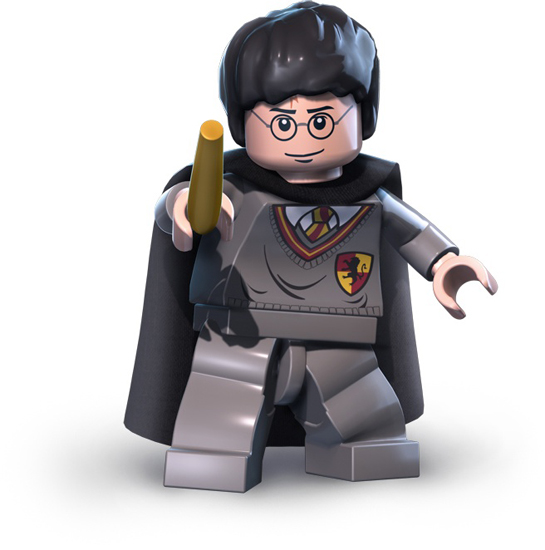
To be clear, this character belongs in the story. She’s even, maybe, integral to it. But far too often, things happen to her rather than the other way around. Kind of like how, in Twilight (and I apologize already for using a Twilight comparison), Bella watches events unfold for three freaking books before she actually does something (and even then, she’s only a small part of what the rest of the world, basically, is already doing without her), whereas Harry Potter grabs his wand and wizard hat (okay, wizards in HP don’t have pointy hats as a rule, but they should) and goes bumblingly about the business of saving the world. Things happen to Bella, whereas Harry Potter goes out and happens to things.

In my story? The character I thought was the protagonist gets plucked out of her own time and wants desperately to get back. And … that’s pretty much it. There are more capable and knowledgeable parties on all sides of her making things happen, and she’s just along for the ride. She helps out here and there, but she never leads the charge. She’s not dead weight, but she’s not slugging above her weight class either.

On the other hand, I’ve got another character who is also plucked out of her own time and also wants desperately to get back, but she fights like a demon against the people trying to help her because she doesn’t believe they’re actually out to help her. She befriends the evil gatekeepers because she doesn’t know well enough not to. Her worldview gets mucked about with more than that bowl full of stale pretzels at the hotel bar, and every time somebody dips their fingers in her sensibilities she fights back and goes in an entirely new direction.

She is, in short, much more interesting than the character I thought was the protagonist. Which means, like a second-string running back when the superstar goes down with an ACL injury, it’s time for her to step up into the bright lights. And sure, this will mean some pretty serious rewriting, but LOLOL I’m going to be rewriting this one for months after the fact already.

And it’s work worth doing, because the story will be better with her at the helm. It’ll be easier for an audience to care about this girl. She doesn’t simply accept the world as it is, she believes it to be better than it is. And when she learns that the world actually isn’t better, she will fight to make it better.

That’s what we want in stories. That’s why Twilight left me feeling empty when I read it. We want a protagonist who does things. We want a protagonist who takes the car out for a spin and yeah, maybe, wrecks it, rather than the salesperson who gets thrown out the window when the whole thing rolls over. We want the guy who grabs the gun and wades into the fray rather than the politician that voted to send him there.

My hero was the wrong hero.

But the real hero has revealed herself.

I can’t be the only one who writes this way. Surely your stories (the ones you’re writing, or the ones you’re living) have surprised you in the same way. Right?

(He shouted into the featureless void.)

How to Write an Ending Like a Boss: Ask Pixar


So you wanna write a great ending. Look at the classics, right? Well…

Disney Pixar animated GIF

It may or may not surprise you to learn that we watch a lot of kids’ movies at our house. Rather, it might be more correct to say that we watch a few kids movies a hell of a lot. Now, I love a good kids’ movie. In top rotation at our house are Frozen, Cars, Toy Story, The Lego Movie, The Little Mermaid, and an occasional Despicable Me or Aladdin (which the kids will suffer through only when my wife and I can’t stand another iteration of the first string). Now, those are all, in their own right, pretty good movies. Check their Rotten Tomatoes scores for that. But what I didn’t realize was just how good these kids movies were at endings.

Think about it. How many stories have you read, movies you’ve watched, TV series you’ve slogged through, only to get to the end and say “what a let down”? Fantastic premises can take you only so far. A good ending ties a bow on the story and sends you walking out of the theater or running out to buy the next book in the series buzzing with excitement.

As a general rule, any writer will tell you that you should never solve a conflict without a cost. For every step the protagonists take toward their goal, either the target should move or the zombies should snap at their heels. As a result, the story becomes a series of “Yes, but”s: Do the space pirates find the lost treasure of Kala-Zeron? Yes, but the ruins of the ship are filled with moon-vampires; or “No, and”s: Can the star-crossed zombie lovers find each other before the survivors hiding in the mall blow their brains out? No, and also, each of them is losing limbs at an alarming rate.

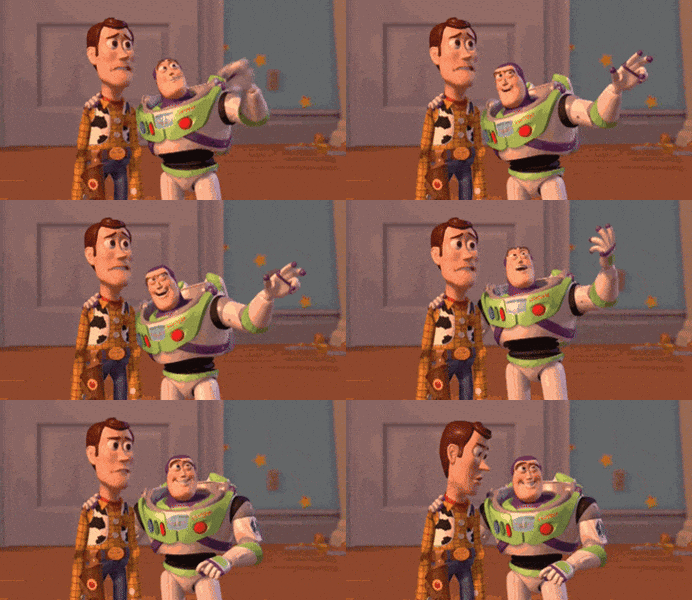
It’s not hard to find this pattern in any story. Good stories do this effortlessly, but what I’ve noticed is that not only is the entire plot of Toy Story set up this way, but the last ten minutes not only sticks to the formula, but cranks it up to eleven.

These go to eleven.
These go to eleven.

The characters go from ALL IS SAVED to ALL IS LOST again and again, and each setback is worse than the last.

Take a look at the last ten minutes of Toy Story to see what a roller coaster ride a good ending can be, and bear in mind that all of what happens below passes after the big bad has been dispatched.

Woody and Buzz and Sid’s toys best Sid in time to make it to Andy’s car before he leaves on his move across town. ALL IS SAVED! But Buzz, with Sid’s ridiculously oversized rocket still strapped to his back, can’t fit through the fence. ALL IS LOST.

Woody jumps off of the car to help free Buzz from the fence. ALL IS SAVED! Buzz is loose, but the car drives off just as they reach for it. ALL IS LOST.

Luckily, the gate strap on the moving truck hangs really low, and as it drives over them, they realize they can grab hold of it and get onto the truck. ALL IS SAVED! They catch the moving truck, but Sid’s dog (who was let out of the house earlier in their scheme) chomps onto Woody’s leg and he can’t get on the truck. ALL IS LOST.

Buzz is no slouch, and saving people in need is his jam. Just as Woody did for him, Buzz sacrifices his ride to launch a suicide attack on the dog, who immediately lets go of Woody. ALL IS SAVED! But, now, Buzz is in a tangle for his life with the dog. The dog whips him around and he skitters to rest under a car as the truck drives off. ALL IS LOST.

Woody is safe on the truck, but is now more determined than ever to bring Buzz home with him. He opens the back of the truck, quickly finds his buddy RC car, and kicks him out onto the street to go scoop up Buzz. ALL IS SAVED! But the other toys, distrustful of Woody after knocking Buzz out of Andy’s window in the first place, think he’s just tried to murder another of their friends. They toss him out of the back of the truck. ALL IS LOST.

Buzz, still on a crash course with the truck from Woody’s driving, plows into Woody and scoops him up. Now they race after the truck together on the remote controlled car (now driven not so remotely by Woody). ALL IS SAVED!

They catch up to the truck through some smooth driving, but they can’t quite make it onto the platform dragging behind the truck. ALL IS LOST.

Slinky Dog extends himself as a lifeline to pull them in. They catch hold of Slinky Dog, and it looks like they’ll make it into the truck after all. ALL IS SAVED! But all of a sudden, the car’s batteries start to die, and as the car slows to a halt, Slinky slips out of their hands and goes recoiling into the back of the truck. ALL IS LOST, for real this time.

This time, it really looks dire. RC is dead weight, and the truck has sped off into the distance. All seems lost, but then they realize that Buzz is still wearing the rocket, and Woody still has a match to light it. ALL IS SAVED!

Woody lights the match, but a passing car blows it out. ALL IS LOST.

Woody prostrates himself on the ground in sorrow. The light from the sun refracts through Buzz’s bubble helmet and begins to cook Woody’s hand. Woody, having earlier been roasted under a magnifying glass, has a revelation; Buzz’s helmet can function as a focusing lens. They can light the rocket. ALL IS SAVED!

They light the rocket, remembering an instant too late that rockets explode. But there’s nothing for it; the rocket ignites and sends them screaming after the truck.Their breakneck speed causes them to lift off as they close on the truck. Woody tosses RC car back into the truck with the other toys as the rocket carries Woody and Buzz soaring into the air.

It looks like they are well and truly fargoed. Either the rocket will blow them to bits, or they will smash themselves to pieces as they fall back to earth. Woody says his goodbyes, but Buzz extends his wings, shearing the tape. The rocket explodes in dramatic fashion as Buzz and Woody sail away on Buzz’s previously-thought-useless wings.

They sail through the air with the greatest of ease, passing the truck entirely. The ride ends as Buzz and Woody drop through the sunroof into the very car they were trying to get into in the first place.

Tracking the ups and downs is enough to give you whiplash, not to mention the callbacks to previously established arcs (Buzz’s determination to fly, Woody’s redemption in saving Buzz, Sid trying to blow up Buzz but giving him the means to save himself and Woody). This is a truly masterful ending. Now, if only I could get a fraction of that many twists and turns into my upcoming ending…

All screencaps are courtesy of Disney Screencaps dot com. Toy Story is property of Disney / Pixar.