Hirsute Spheroids, née Hairy Balls, and Your Story


I’m a bit of a physics nerd, by which I mean I love physics oddities and learning macro concepts about how the universe works without actually getting my hands dirty in any of the intractible numbers involved. That fascination often leads me down rabbit holes on youtube, whence I arrive hours later, head buzzing with cosmic understanding or mind shattered from inability to process.

Today’s SOCS prompt is “hair”, and while it’d be easy for me to write again about my lack thereof, my mind immediately leapt to the hairy ball theorem (which is, if nothing else, a perfect example of how badly scientists need help naming things — the “hirsute spheroid theorem” would prompt no more than 1/5th the giggles). In short, the theorem states that if you have a hairy ball (*snicker*), there is no way to comb it in such a way that all the hair lays flat. (And there’s nothing worse than a hairy ball with a cowlick.) The math proves this, though I don’t care too much about the math (that’s the department of my sister and her husband, both Georgia Tech grads who do the rest of us the favor of making sure that the numbers support the buildings that stand up around us and the rockets that put our fancy things up in the air or shoot other countries’ fancy things out of it). What I care about is concept. Hairy ball. Can’t comb it flat.

Here’s a brief explanation of the theorem, if you want a better explanation of it (and Minute Physics is worth the subscribe, by the way):

But this is a writing blog, not a maths blog, so why the hockey sticks am I blerping around, getting all hot and bothered about a physics conundrum?

Because writing stories is a bit like the hirsute spheroid theorem. (Nope, still makes me giggle, if only 1/5 as much.) Stories are these weird little hairy balls. The ball (giggle, snort) is the world of the story, where the characters frolic and screw up and alternately threaten the safety of the world or rescue it from deep-sea humanoid squid monsters. The hair (chortle, cackle) is the characters and their frolics. And like the follicular matter in the hirsute spheroid theorem, there’s no way to have those frolics or those characters line up perfectly. Like a lump in the carpet or, well, like the hair on a ball (okay, seriously, I’m done laughing at that), when you flatten it down in one spot,  it springs up anew somewhere else. Lay a perfect plotline that neatly traverses the entire surface and you arrive back at the beginning to find a bizarre cowlick sticking up.

For a writer, this seems like a problem, but it’s not. Note that the hairy ball theorem is stated as a theorem, not a problem. An observation of reality, not a lament of the way reality ought to be. It’s only a problem if you assume that your hirsute spheroid must somehow attain a measure of perfection, which it never will anyway — the perfect being the enemy of the good, as it is.

Stories have flaws, in other words, and it’s a fool’s errand thinking we can iron them all out. Instead, embrace the flaws, iron out what you can, and accept the odd fact: bed-head is, for some reason, in style.

Image result for bed head

Also, a note: careful with your googling if you go searching the hairy ball theorem. Also, just for the lolz, the Wikipedia entry for the hairy ball theorem cheerily points out that, on Wikipedia at least, “‘hairy balls’ redirects here.”

This weekly remotivational post is part of Stream of Consciousness Saturday. Every weekend, I use Linda G. Hill’s prompt to refocus my efforts and evaluate my process, sometimes with productive results.

Carved Outta Wood


A guy who came to Fight Club for the first time, his ass was a wad of cookie dough. After a few weeks, he was carved out of wood.

jacks-boredom

That’s a line from Fight Club, which, since I saw it early in college, has sat comfortably in my top five all-time favorite films. I love it mostly because I’m a man and RAH RAGE VIOLENCE BLOOD FARGO THE SYSTEM. Well, not really. There is that, but mostly I love it because it’s about a guy in a rut who pulls himself out of a rut in catastrophic fashion. No half-measures; the characters in this film go all-out for the things they want, and for the things they don’t even know they want.

The narrator and Tyler Durden get into a fight in Fight Club, not because they hate each other or because they disagree, but because they’ve never done it. Then other people join up and start fighting for the same reason, and soon Fight Club has evolved into Project Mayhem, with multiple chapters around the country and designs against the very pillars of society. These guys (well, spoiler alert, this guy) starts a thing for the hell of it, and like the proverbial snowball rolling down the hill, it gains a momentum of its own. Then it all goes sideways, of course. Great movie.

But the quote above, in particular, sticks out to me, because it’s at the core of the movie, but like all good movies and all good quotes, it’s really about life. Getting in a fight, handling one’s self mano-a-mano against another human, is the sort of thing that most people probably think they could do reasonably well at. I know I’m guilty of thinking I could handle myself if it came to it, not that I ever expect it to ever come to it (insert obligatory I’m a writer not a fighter cliche here!). But a fight has the immediate power to rectify your worldview by dint of the other guy’s boot crashing into the side of your skull. Training aside, athleticism aside, general awareness and savvy aside, there’s no substitute for stepping into the arena and facing the blows. However prepared you might be, however capable and willing, you can’t know how it’ll go until you actually get in the ring. The only thing that really teaches you is the trial.

Which is, I think, why there are so many would-be novelists out there, and why gym memberships spike in January but the gyms themselves empty out before February dawns. It’s why instead of trying the thing that intrigues and frightens us, we head for the couch and the reruns of Law and Order. It’s why instead of getting up with the early alarm and braving the cold to work out, we retreat to the warm, fluffy confines of our beds. The couch  and the bed are easy on our cookie dough asses. It’s easy to sit back and talk about how we could do the thing if we decided we wanted it. Just not today.

But that’s why I do get up and run before the sun, when it’s freezing outside and I’d rather be asleep. It’s why I park myself in front of the blank screen every day and pour the words forth, even when it feels like it doesn’t mean anything. Because my ass feels a little too much like cookie dough, and I’d rather be carved outta wood.

Of course, to get carved, you have to take the leap. You have to hold your breath and plunge into the icy water. Take off your shoes and walk across the coals. Jump out of the airplane.

self-ko

And yeah, sure. You’ll get knocked on your ass. Maybe more often than not.

But if you can master the fear and get used to giving yourself the lumps, day in and day out? And then stepping up to the bar and asking for just one more? Maybe you’ll actually stand up to the task when the real world comes calling.

Or, you know. You could just sit back and cookie-dough-ify yourself.

This weekly remotivational post is part of Stream of Consciousness Saturday. Every weekend, I use Linda G. Hill’s prompt to refocus my efforts and evaluate my process, sometimes with productive results.
Pitiful Excuses


Pitiful excuses for the week: I’ve got a few. Not that every week doesn’t come with a few excuses, but some are more pitiful than others.

Of course, this week’s big pitiful excuse is bigger than the average pitiful excuse, which is: a stomach bug tore through our house like a honey badger (I almost wrote an angry honey badger, but then that’s redundant, innit) on peyote. First my daughter had it (barfing all over my wife, which she enjoyed about as much as you’d expect, my wife being something of a germophobe the way our new president is something of a Twitter user), then my son had it, then I had it, and finally, my wife has it.

So it’s been a stressful, and kind of miserable, week. Add in a couple of snow days* to the mix, and the beginning of rehearsals for our school’s upcoming musical, and the fact that the new semester is starting so new students are popping into and out of my class like quantum particles winking in and out of existence, and it makes sense why my productivity would take a hit.

Which it did. I missed a run day Wednesday, and I missed two days’ work on the novel, not to mention posting absolutely nothing around here (which is hardly an obligation, but it does keep the juices flowing). Missing days sucks. Even five years into a running habit and three years into a writing habit, I can still feel the black hole of slothitude and couch-lump-syndrome tugging at me with its unflagging gravity. While I know a day here or there isn’t going to knock me into that black hole, the lost productivity is a sharp reminder that the hole is there. Lurking. Waiting. The black hole doesn’t just swallow you up one day; it doesn’t have to. Time is on its side. One missed day turns into two, turns into three, turns into a week, and somewhere along the line you cross the event horizon between taking a break and giving up.

Of course, the reminder that the black hole is there, waiting to swallow you, is good enough motivation to kick me right out of my funk.Even though the week started off decidedly poorly, I still ended up with about 1800 words and a good bit of outlining for the end of the novel, and a nice little mini-arc of action to write that will start me off next week. The writing always goes easier when you know what you want to write before you sit down to write it (would that I always knew when I sat down!).

In summary: kind of a crap week, salvaged. But that’s what you do with crap weeks, innit?

Next week can only be better.

This weekly remotivational post is part of Stream of Consciousness Saturday. Every weekend, I use Linda G. Hill’s prompt to refocus my efforts and evaluate my process, sometimes with productive results.

Finish What You Start; Start What You Can Finish


This is about the time of year when I post a big rant about New Year’s Resolutions. But not this year. This year? I’ve got enough of my own sharknado going on to worry about starting in on anybody else, let alone myself. You want to make a resolution? Go ahead. You want to be one of the throng that’s overwhelming every gym in the country during the month of January? Do you.

The only thing I’m going to say about resolutions this year is: finish what you start.

It’s simple advice, but I forget it myself from time to time, and there’s sure as hell a lot of unfinished business in the world to testify for it.

Finish what you start.

This is the year you decide to start doing the thing? Great. Be real specific about what that thing is. Make sure it’s a thing you actually can finish, and then start doing it with the goal in mind.

You’re going to take up running? Nah, that’s not specific enough. Decide instead that you’re going to run a 5k. Then, instead of going out on Jan. 1 (or, okay, Jan. 2 if you’re hung over), padding around in the cold a bit and deciding this whole “running” thing isn’t for you, you start down a path. You go out, run a bit, and it sucks, but you’ve still got that 5k distance looming, and you’re not there yet. Probably won’t be for some time. So the next day, you’re compelled to lace up again and try a little harder, until you can finish what you start.

Taking up writing? Super. Put a goal on it. If it’s a blog, make it a post a week, or a post every three days, or a post every time Saturn is in the house of whatever bullshirt astrology thing tickles your toes. If it’s a novel, well, then, it’s a novel; that means 50,000 words on a conservative estimate. If it’s just “writing”, nebulous and dreamlike, well, technically, you write an e-mail every couple of days, right? Or a shopping list? Or a note to yourself in the fog of the shower mirror? And that’s real easy to do, except that’s not what you meant by “writing”, and you know it. Writing 500 words a day, every day, until you have 50,000 words? That’s 100 days. That’s an accomplishment. That’s a thing that, when it’s finished, will feel solid in the hands, like a participation trophy or the trunk of the neighbor’s tree that hangs over your yard when you finally cut it down.

Me? I’ve got a handful of things that I’ve started, but I haven’t yet finished. Chief among them are several writing projects, but I’m not worried about that, because even though I’m in a lull right now (man, it’s hard maintaining a daily word count when you’re a teacher on holiday break) (make that nigh impossible) (okay fine I took a week off from my project, are you happy now??), I know I have the momentum to finish anyway.

Not because writing novels, or short stories, or even blog posts is easy. It isn’t. But I can write 500 words a day. (Okay, FINE, I can write 500 words a day when I’m not on vacation.) And when I’m in those 500 words, I finish what I start.

Then, the next day, I start again.

Then again.

By the end of a month, I’ve started and finished over twenty 500-word sessions, and that goes a long way toward finishing the 80,000-word first draft I started some five or six months ago. Two more months should just about do it. Two more months to finish what I started in the middle of last year, even though the end of that particular road wasn’t even visible from the starting line.

Manageable, achievable goals. Baby steps. Small successes lead to big successes.

This is why you won’t find me vowing to write and publish three novels next year, or resolving to cut all the carbs out of my diet, or promising myself that I’m really going to keep in touch with my friends this year. Those aren’t things I can reasonably finish.

But I can finish this draft I’m in.

Starting a project and finishing one actually feel very much alike. Lots of confused looking around, waiting and hoping for directions from on high, for the disembodied voice of god or the angels or your conscience to say, “look, this is what you need to be doing, so just get to it”. The blank page is disorienting in its perfection, its vastness. The completed page is disorienting as well, in that you’re suddenly untethered from this thing you’ve been attached to. There’s a lostness.

But if you never get lost, you never feel the high of finding yourself again.

This weekly remotivational post is part of Stream of Consciousness Saturday. Every weekend, I use Linda G. Hill’s prompt to refocus my efforts and evaluate my process, sometimes with productive results.

Hardly Moot


The prompt for this week’s SOCS post is “moot,” a funny-sounding word which is one of those weirdly connotated things that no longer means what it actually means. Like literally. (Though internet outrage has kind of fixed the rampant misuse of “literally”.)

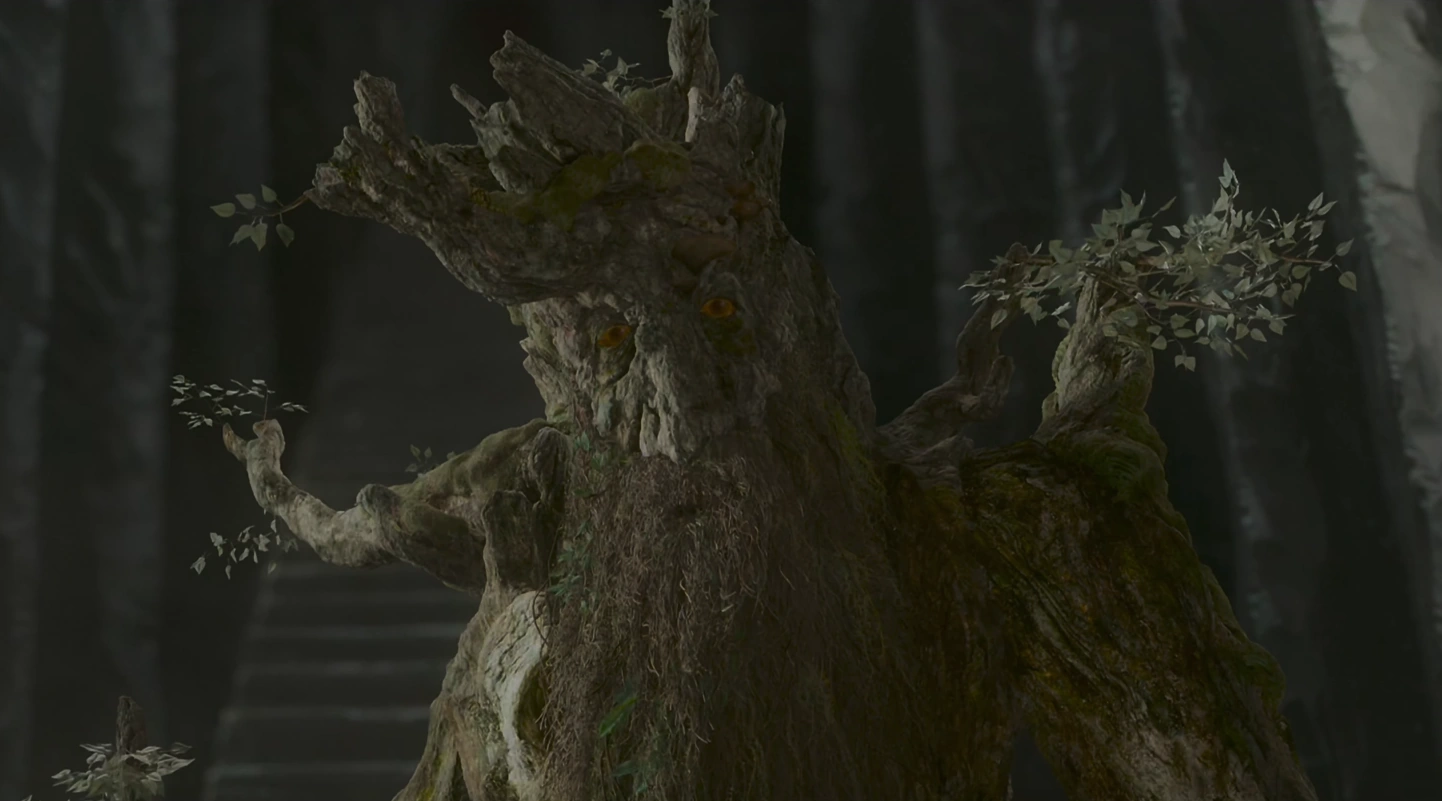
About the only way you see “moot” anymore is in the phrase “moot point,” a phrase that comes out of mock trials which essentially means meaningless or without consequence. But I can’t hear the word “moot” without thinking about this:

Image result for lotr treebeard

The mothertrucking entmoot from LOTR.

“Moot” means meeting, and in the second book (and, yeah, okay, the second movie), the ents — the living, sentient trees — hold an entmoot to determine the fate of their forest. The problem? The ents hold this moot in their native tree language, which is “a lovely language, but it takes a very long time saying anything in it, because we do not say anything in it, unless it is worth taking a long time to say.” (Which could, in fact, be the subtitle for this blog, given how I like to go on and on. The worthiness of the things I talk about to be talked about at length is, of course, another matter.)

Long story short (too late), the ents meet for several days before they decide that they will not meddle in the affairs of men, much to the chagrin of the hobbits who have petitioned them for aid. The world is going to sharknado all around them, the hobbits protest, and ents will be affected eventually even if nothing happens to them right away. But the ents take the isolationist path, pointing out that the trees will outlast whatever squabbles the creatures of the earth busy themselves with.

Then, of course, they learn that actually, the forces of darkness are chewing up the forest to fuel their war machine, and well, that’s that. The trees uproot themselves and wreck shop all over Isengard, because nothing motivates you like the threat of imminent destruction.

(I could point out that this is a pretty thinly-veiled dig at politics and politicians with their endless pontificating bureaucracies, but that’s not the point of this post.)

All that’s interesting and fascinating (though maybe just for me), but ultimately, well, moot in the contemporary sense, because the simple, understood definition of “moot” is that it doesn’t matter. The origins of the word are well and good, but these days it means this, so really, who cares?

And speaking of moot points, the problem is perspective and scope. Much of what we do in life, creatively or otherwise, is moot. Pancakes for breakfast, or cold cereal, or skip breakfast entirely? Doesn’t really matter. Take the long way to work or the quick way? As long as you get there on time, who cares? Read the Game of Thrones series so that you can claim superiority over the people who just watch the TV show, or don’t? Outside of the odd water cooler conversation, there really is very little difference in your life.

Put it on a bigger scale. There will be very little difference on a national level, or even a state level, over the life of one person, even a highly influential one. Things take the course they take, and not much will change it. A bigger scale still: consider, for example, Paris. Unless I have some readers in France I’m unaware of, I really am completely removed from anything happening in Paris. My entire existence, as far as Paris is concerned, is moot. Let alone the world.

But go even bigger. In our own solar system, humans have got some manned missions done in our neck of the woods, and we’ve sent a fair few probes out to the far reaches, but for the most part, all the accomplishments of humans are represented by a tiny speck of light in the night sky. A moot exercise, you might say, as we’ll never have that perspective — but astronauts get that perspective all the time. It’s called the Overview Effect (a thing I literally learned just now!)

If you zoom out far enough, everything becomes moot. And if you’re prone to Nihilistic thinking (cough, cough), the maw of that realization yawns wide beneath your feet at just about any moment. Why bother creating — it’ll all be lost to time and the void eventually. Why bother doing anything?

But taking the long view, while it’s probably good for planning your retirement and your diet, is maybe not the best thing to do in cases like this. Any story I could possibly tell is statistically unlikely to disturb the waters very much, even if it becomes profoundly popular. Those waters are thoroughly saturated already, if you’ll pardon the pun. But that doesn’t mean that, for a narrow slice, the stories aren’t worth writing (or reading!). In a lot of ways, the writer’s self-affirmation is not unlike the teacher’s: if I can reach just ONE student…

The truth is, I don’t think I even need to reach a single reader. It’d be nice if I do, of course — and better than nice if I could reach more than one. But when I create, I’m creating for me. It brings me tiny little pangs of joy to make up characters and bounce them around in the snow globes of my creation. On a global scale, or a national one, or even a local one, that might very well be moot.

But given that this life is the only one we get, it only makes sense to fill it with as much joy as we can.

This weekly remotivational post is part of Stream of Consciousness Saturday. Every weekend, I use Linda G. Hill’s prompt to refocus my efforts and evaluate my process, sometimes with productive results.