The Weekly Re-Motivator: Awkwardity


I’ve always been pretty awkward.

That might come as a shock, given my background in theater and my career choice as a teacher and the way I prattle on at length about any- and everything around here, but there it is.

Socially awkward. I’ve even gone so far to consider myself socially retarded. I’m often the quiet guy in the room, not because I don’t want to take part in conversations (well, sometimes), but because I just don’t know what to say. But then, what feels like a comfortable silence to me will turn into an uncomfortable silence in the room, and then I sit there thinking I should really say something, but then the words come out like cow vomit.

I think a lot of people struggle with this, but I also think I maybe have it more than most. (Then again, maybe that’s the old Dunning-Kruger effect talking — that thing that makes you overestimate your experience when you don’t have much. Americans, it turns out, suffer from Dunning-Kruger than most other nationalities.) Like, I know that some people feel awkward sometimes. There are hashtags about it. But for me, it feels like it’s all the time.

And I think that’s part of what compels me to write. Because I screw up these social interactions every day, so I get another crack at them when I create these alternate realities in my own head. And again, I think we all do that — we all play the I shoulda said THIS game — but for a writer, it’s different. When I tell a story, I get to get it right, and (hopefully!) readers get to see me get it right.

They say you should write what you know, and while I think that advice can be overly limiting (if we kept to it, we’d never have science fiction), it’s also pretty impossible to avoid. All writers, I think, write themselves into their stories. And in looking at the stories I’ve written, the characters I’ve spent the most time with… well, it’s safe to say that they’re pretty socially awkward like me.

First novel: A struggling writer battles through his self-doubt with the help of a muse. His only real friend is the one who is financially obligated to spend time with him. Hmm!

Second novel: A girl who is socially segregated because of the role that’s been selected for her by the community. She doesn’t have friends because she will, for all intents and purposed, be “killed” when she comes of age, and everybody knows it. Hmm, hmm!

Third novel: A kid born to superhero parents has no superpowers, but falls in with the superheroes anyway — so that he can learn to exploit them. He trusts none of his “classmates,” and in return they ridicule and fear him. Hmm, hmm, hmm!

So authors write themselves into their stories; this is a trope we’re all familiar with, and I certainly seem to be doing it. But is it a thing we can avoid? Well, with novel #2, the protagonist I described was not actually the protagonist for 80% of the first draft; she was a supporting character who I realized was a lot more compelling than the protagonist I was trying to write. That person was popular, and fit in effortlessly with his social group and with somebody beyond it — and he rang hollow to me for most of the writing. So it can be done, but not without its pitfalls.

Pitfalls. If there’s an apt metaphor for the writing process, it’s a field littered with pitfalls. Because as you build this story for your characters (the ones who are totally yourself), you have to place pitfalls in their path, try to trip them up at every step. But you have to watch out for your own pitfalls, the gaps and the traps that threaten to snag you in the midst of your process. It’s a delicate dance.

And dancing is something we awkward types don’t really do so much.

This weekly remotivational post is part of Stream of Consciousness Saturday. Every weekend, I use Linda G. Hill’s prompt to refocus my efforts and evaluate my process, sometimes with productive results.
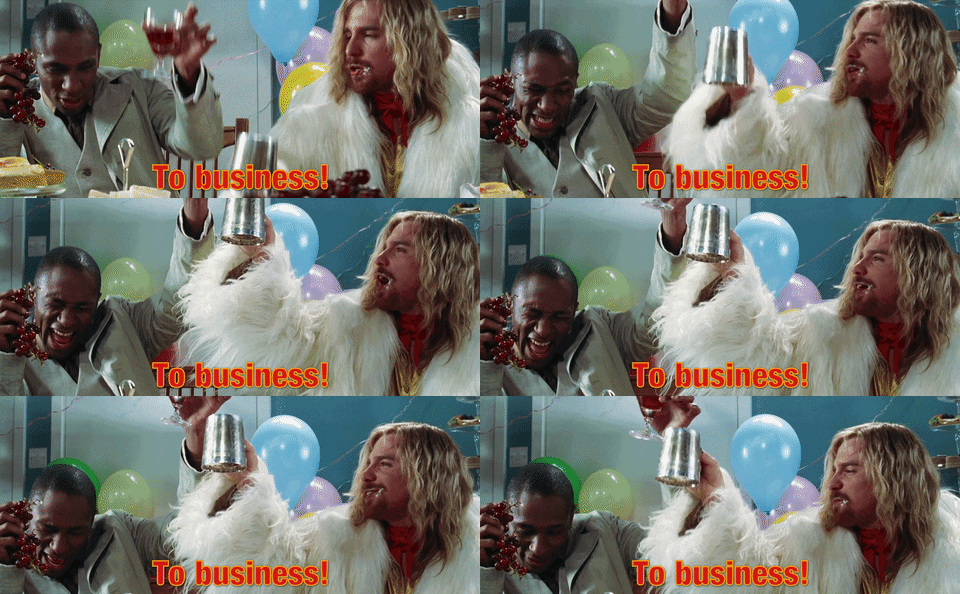
 

The Weekly Re-Motivator: To Business


If I could go back and give my previous self any advice about this whole writing thing, it’d be: treat your writing like a business.

See, I always thought I was the creative sort. And I guess I was, but for pretty much my entire twenties, I thought that creativity was this gift; this mystical, un-pin-down-able thing that I was just lucky to have. Now, I still believe that’s true — to a point — but I’m learning that there’s a lot more to creativity than the occasional kiss from the muse.

Because the problem with thinking that creativity is magic — that some people “just have it”, and others “just don’t” — is that one of two things happen. One: you don’t appreciate it, because, like a pile of cash from a wealthy uncle, it just fell in your lap, so you don’t really know its worth. Or two: if (but actually, when) it deserts you, you have no idea how to get it back. And while the muse may in fact carry a cell phone (she does in my as-yet-unpublished first novel), she certainly doesn’t give out her number.

But creativity isn’t magic. Or at least, it isn’t all magic. Creativity is like that kid who wanders around the neighborhood looking for other kids to play with. He doesn’t call in advance. He doesn’t send you a note to say he’s coming around. He just tools around on his bike looking for places to play and people to hang out with. And if you happen to be out in your yard playing when he shows up? Well, you’ll have the craziest afternoon of playing space baseball and ninja cowboys and Calvinball, until the kid has to go home and you have to go in to eat dinner. But if you aren’t out in your yard? That kid rolls right on by. He won’t knock on your door, he won’t peek in the window to see if you’re waiting for him — he’s got places to be and hell to raise with the other kids who are already outside.

Which is why, if you want to encourage him to visit, you have to spend some time playing in the yard, even when he’s not around.

This seems counter-intuitive. There’s no point playing in the yard by yourself, after all. The fun is in playing with a friend, in tapping into your collective imaginations and adventuring together through the boundless reaches of the imaginations of little kids. Playing by yourself is boring; what’s the fun in doing a backflip off a tree branch if nobody else is around to see it, or in throwing a ball over the house if you have to walk around the back to retrieve it?

But if the neighborhood kid doesn’t see you out there playing already, he isn’t taking time out of his day to see if you want to play. And creativity is just like that: if it doesn’t see you already working, already flexing your creative muscle, it’s not going to waste its time knocking on your brain to see if you want to make something awesome. The muse has places to be, novels and poems and stories and paintings and interpretive dances to inspire.

And that’s why we have to treat writing like a business.

mrw hd galaxy guide hitchhikers

You don’t do business when you feel like it: business needs doing with consistency, and pretty much all the time, or else the business dries up. When you treat writing like a business, you make time for it every day. You set aside time for it, and you protect that time like a mother bear protecting her young. You do the writing even when you don’t really feel like it, because if you don’t handle your business even when you don’t feel like it, you lose your business.

The unfortunate fact is, we don’t always feel creative. And it can be hard to force ourselves out into the yard to play when we’re just not feeling it.

But if this is a thing that matters — and I would argue that if you’re writing at all, or thinking about writing, then it matters to you at least a little bit — then we have to get out there anyway.

Because if we don’t? Well, the muse has plenty of other house calls she can make.

This weekly remotivational post is part of Stream of Consciousness Saturday. Every weekend, I use Linda G. Hill’s prompt to refocus my efforts and evaluate my process, sometimes with productive results.

The Weekly Re-Motivator:An Accumulation of Oddities


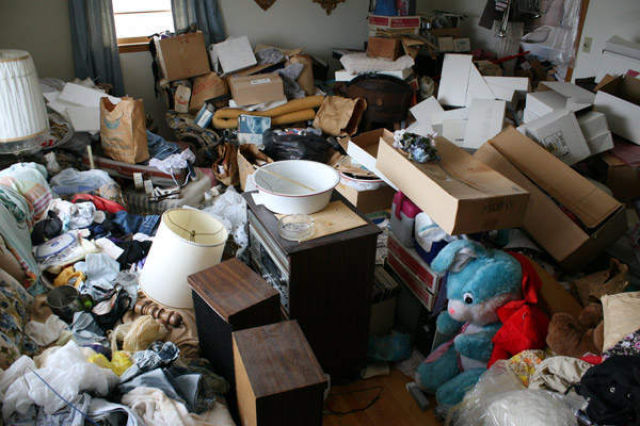
If your house is anything like mine, the stuff just sort of seems to accumulate. (Doubly or maybe exponentially true if you have kids, and doubly exponentially if those kids are particularly young.) You see this or that shiny doodad, and you think, gosh,the kids would just love that, and because we live in America we buy the thing. Or a loving and well-meaning grandparent will make a gift of some battery-powered monstrosity that belches out Christmas music if it detects movement within a square mile. Or the kids themselves will bring home toys covered in foreign guck and another kid’s nose slime. (How do they get these toys away from other kids, I wonder? My kids can sense it — and immediately pitch a fit — if I so much as touch a stray eye from a long-lost mister Potato head doll.)

But even without kids, it happens. You’re at the mall for some reason, and you think, that’s a nice looking shirt. I wear shirts. Let me give some of my money for that thing. Even though you need another shirt like your kids need another toy. Or you pick up another fancy running gizmo or some inspirational book of quotes or an odd lamp you like the look of.

And it just adds up. It’s not a bad thing, per se. But with so much stuff, it becomes easy to lose track of things. Easy to take things for granted.

hoarders

And if you’re not careful, the same thing can happen to your stories. For me, this usually comes in the form of a sentence, half-formed in my mind, that goes something like: wouldn’t it be cool if…

this minor inconvenience character turned out to be related to the main villain?

…the bad guys stole the thing that the good guys need to make their lives work?

…the mentor character’s cat starts phasing forward and backward in time?

All of which are fine and interesting and may well reach the final cut. Unfortunately, the mind, like the house cat that indiscriminately murders local fauna and deposits them on the doorstep, also drops off less-inspired idea corpses like…

There should totally be a paper-and-pen motif in this chapter.

Maybe the villain should have an electric puppy.

Feathers. Feathers everywhere.

Problem is, in the heat of a daily word-count grinding session, the gems are indistinguishable from the crystallized turds. You see them float past on the shelf of consciousness, think, oh, sure, that works for my story, and into the story sausage they go.

And again, that’s not a bad thing per se.

But just like the stuff that piles up in your house, this crap accumulates and chokes off a good story. Before you know it, you’re struggling to pick a clean path through your story, its every spare passageway littered with the half-formed iterations of these little oddities that, like the snot-caked stormtrooper my kid brought home the other day, you have no idea where they came from.

The little curiosities are a powerful spice, fascinating and interesting in moderation, overpowering and inedible if overused. Which means that, just like every now and then you have to go through the house and purge all the junk that no longer brings you joy, so, too, does a story in subsequent drafts need a brutal bit of spring cleaning.

The tricky thing, of course, is making sure you don’t accidentally put a priceless heirloom out on the curb by mistake.

This weekly remotivational post is part of Stream of Consciousness Saturday. Every weekend, I use Linda G. Hill’s prompt to refocus my efforts and evaluate my process, sometimes with productive results.

The Weekly Re-Motivator: Press Your Luck


There was this show, pretty big-time in the 80s, called Press Your Luck. My dad absolutely loved this show, and so did I: it was basically a run-of-the-mill pure luck-based game where you spin a wheel to win cash and prizes. No skill involved as I remember (except for that one guy who memorized the pattern of the game board and won literally tens of thousands of dollars before they booted him). Just push your button and take your chances.

In retrospect, I’m not sure why we loved this show so much, except for one thing: the Whammies. Every game show of the era had its way to rob you of everything you had won in a moment’s bad luck — the bankrupt slice on the Wheel of Fortune, the wager-what-you-will spots on the Jeopardy board. Press Your Luck had the Whammy. Now, the Whammy took your money, but it was worse than that. The Whammy was this little turd-looking gnomelet in a banana-colored superhero cape who, when you hit the wrong square on the board, would swoop in and take your money. Not because he was a thief, but because he was an idiotic asshole. He’d drive a car in, lose control, and wipe out, taking your cash with him. He’d fly in from the sky, come in too hot, and punch a hole through the ground, and your cash would drain out.

But there was no great equalizer to this game. You couldn’t rely on trivia knowledge to save you from the Whammy. No amount of literary or linguistic savvy would ward him off. (Come to think of it, the show had female Whammies, too — which was actually rather gender-conscious of them for the time, though having a female turdlet character is a dubious gain for the women’s movement). If you wanted to win, you had to brave the Whammy.

I never realized what a perfect metaphor for life this show was. As prepared as you might be, if you want to achieve anything, you have to brave the Whammy. You could write the best book, be the most talented actor, paint the best picture, or, to quote a certain presidential hopeful, “have the best words,” and no small part of your success is still going to hinge on luck.

The Whammy of the real world might not take your money, but he (or she!) might very well take your dignity, your hope, your self-esteem, your dreams.

Luckily, the real world is not Press Your Luck, and we have our pockets literally bulging with free spins and re-spins — if we only have the guts to press the button.


This weekly remotivational post is part of Stream of Consciousness Saturday. Every weekend, I use Linda G. Hill’s prompt to refocus my efforts and evaluate my process, sometimes with productive results.

The Weekly Re-Motivator: Expiration Date


Consider a tree. Nourished and nurtured and planted in fertile soil, it can flourish and tower and bear remarkable fruits. Neglected and sheltered and forgotten about, it withers and crumbles and gets overrun with ivy or tree cancer or tree-eating beetles or something horrifying like that.

Just so with the creative brain. Given room to grow, freedom of expression, and a steady diet of inspirational art, the brain grows stronger, desires to create for itself, and spawns incredible creations. Left to fester, the brain shuts down, gives up, stops trying.

Creativity must be tended, just like a tree, or that crappy vegetable garden my wife and I tried to plant a few years ago. We didn’t know anything about anything when it came to growing actual food, and figured, you know, the human race has been handling this gardening thing for millennia; how hard can it be, right? Bloody hard, as it turns out; not to mention the fact that neither of us actually has the patience or the drive to actually maintain the thing. What, you mean it takes more than a sunny spot, a few holes in the ground, and some foolish optimism to grow food in your backyard? To hell with that!

But of course it does. You’ve got to monitor that crap. Track the pH levels in the dirt. measure the amount of water in the soil. Pull weeds. You know. Effing work at it.

And if not tended properly? Those fruits wither on the vine, or worse, they shrivel up and die before their tiny little seeds can even germinate.

And so it is with creativity. Ask any writer or artist or whatever where their ideas come from, and their answer will probably be something like: it’s not finding the ideas that’s hard, it’s deciding which ones are worth my time that’s difficult. I’m not even that much of a writer, and still the thought will cross my mind at least once a week — sometimes once a day! — hey, I should write a story about this or that would make a really cool turn in my novel or man, I wish I’d had that idea three months ago on that other project.

But these ideas are like the produce at Aldi: they have an expiration date measured in hours, not days. Your brain serves them up from wherever ideas come from. (The black hole in the back of your brain? The quantum tunnel that connects your brain to every other brain in the world? Narnia?) They land on the shelf where your conscious mind peers at and ponders over them like an aging bachelorette on a diet. And whichever ideas don’t get put in the cart? Whichever ones don’t get spun pretty quickly into tonight’s dinner or slapped into the deep-freeze of your ever-expanding Evernote file? They go brown, they turn spotty, and they end up in the dumpster out back.

Age, Bacteria, Bio, Biology, Bread, Breakfast, Bug

Which is fine and natural (not the exorbitant amount of food waste in our country, of course — but the life cycle of ideas). A few bananas go bad — it’s no big deal, the grocery store knows it’s gonna sell more bananas. But those kiwis? Those mangoes that look so good but taste so bad? The more they rot, the less the store wants to put them on the shelf.

But your brain works the same way. It serves up these fantastic ideas day after day, week after week, and the more you don’t do anything with them? The more they expire, unused, on the shelf?

The less your brain is going to serve them up.

This is why I try to write, at least a little bit, every single day. The more I write, the more I notice my good ideas when they crop up — and the more, it seems, I have to choose from.

Your creativity — your good ideas — they have an expiration date.

Waste not, want not.

This weekly remotivational post is part of Stream of Consciousness Saturday. Every weekend, I use Linda G. Hill’s prompt to refocus my efforts and evaluate my process, sometimes with productive results.