Hirsute Spheroids, née Hairy Balls, and Your Story


I’m a bit of a physics nerd, by which I mean I love physics oddities and learning macro concepts about how the universe works without actually getting my hands dirty in any of the intractible numbers involved. That fascination often leads me down rabbit holes on youtube, whence I arrive hours later, head buzzing with cosmic understanding or mind shattered from inability to process.

Today’s SOCS prompt is “hair”, and while it’d be easy for me to write again about my lack thereof, my mind immediately leapt to the hairy ball theorem (which is, if nothing else, a perfect example of how badly scientists need help naming things — the “hirsute spheroid theorem” would prompt no more than 1/5th the giggles). In short, the theorem states that if you have a hairy ball (*snicker*), there is no way to comb it in such a way that all the hair lays flat. (And there’s nothing worse than a hairy ball with a cowlick.) The math proves this, though I don’t care too much about the math (that’s the department of my sister and her husband, both Georgia Tech grads who do the rest of us the favor of making sure that the numbers support the buildings that stand up around us and the rockets that put our fancy things up in the air or shoot other countries’ fancy things out of it). What I care about is concept. Hairy ball. Can’t comb it flat.

Here’s a brief explanation of the theorem, if you want a better explanation of it (and Minute Physics is worth the subscribe, by the way):

But this is a writing blog, not a maths blog, so why the hockey sticks am I blerping around, getting all hot and bothered about a physics conundrum?

Because writing stories is a bit like the hirsute spheroid theorem. (Nope, still makes me giggle, if only 1/5 as much.) Stories are these weird little hairy balls. The ball (giggle, snort) is the world of the story, where the characters frolic and screw up and alternately threaten the safety of the world or rescue it from deep-sea humanoid squid monsters. The hair (chortle, cackle) is the characters and their frolics. And like the follicular matter in the hirsute spheroid theorem, there’s no way to have those frolics or those characters line up perfectly. Like a lump in the carpet or, well, like the hair on a ball (okay, seriously, I’m done laughing at that), when you flatten it down in one spot,  it springs up anew somewhere else. Lay a perfect plotline that neatly traverses the entire surface and you arrive back at the beginning to find a bizarre cowlick sticking up.

For a writer, this seems like a problem, but it’s not. Note that the hairy ball theorem is stated as a theorem, not a problem. An observation of reality, not a lament of the way reality ought to be. It’s only a problem if you assume that your hirsute spheroid must somehow attain a measure of perfection, which it never will anyway — the perfect being the enemy of the good, as it is.

Stories have flaws, in other words, and it’s a fool’s errand thinking we can iron them all out. Instead, embrace the flaws, iron out what you can, and accept the odd fact: bed-head is, for some reason, in style.

Image result for bed head

Also, a note: careful with your googling if you go searching the hairy ball theorem. Also, just for the lolz, the Wikipedia entry for the hairy ball theorem cheerily points out that, on Wikipedia at least, “‘hairy balls’ redirects here.”

This weekly remotivational post is part of Stream of Consciousness Saturday. Every weekend, I use Linda G. Hill’s prompt to refocus my efforts and evaluate my process, sometimes with productive results.
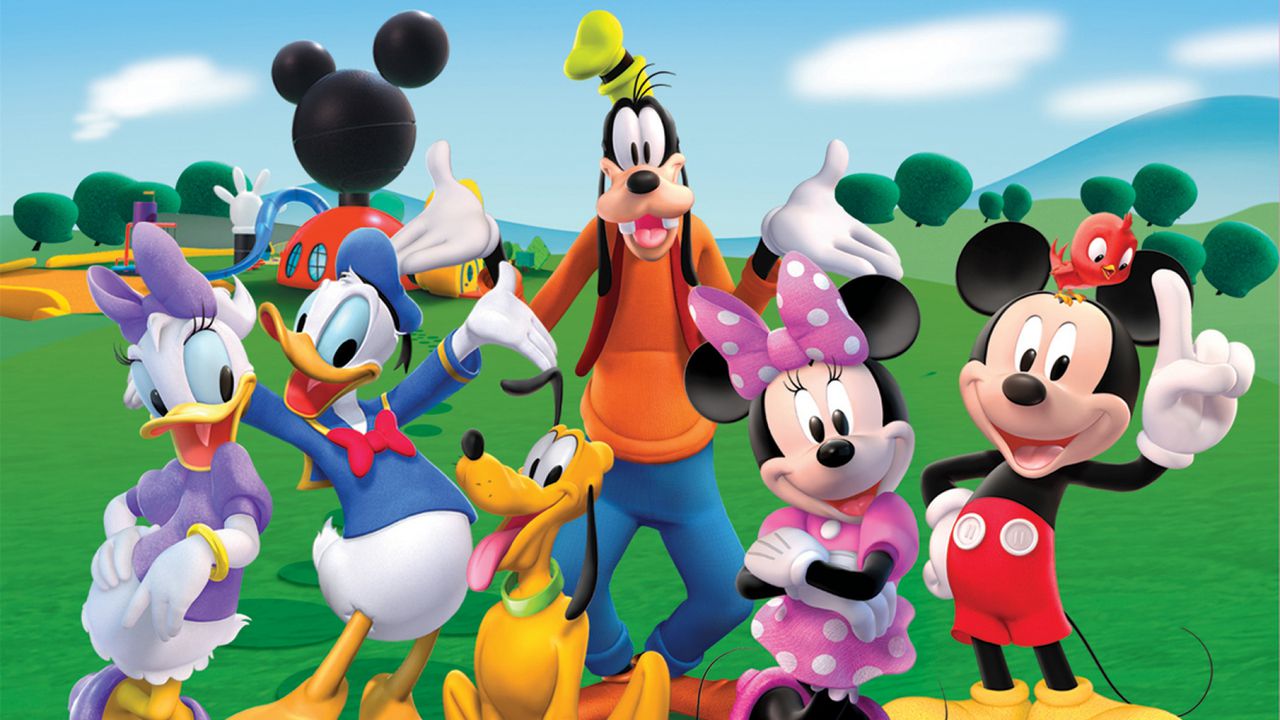
Why Mickey Mouse Clubhouse is the Worst Kids’ Show


Writing is a skill, much like any other. Sure, some of us are gifted in the art more than others, and acquisition of the art comes easier to some than to others. Nonetheless, it is a craft with techniques, maxims, principles and tropes. I like to think that I’m one of those who is to some extent “gifted” as a writer — it’s always come naturally to me and I’ve always enjoyed it — but I can still track my improvements, even markedly so, over the past couple of years. I can see where, when I started out, I was not particularly good at this or that aspect of storytelling, and where and when I learned how to tell my stories better.

But learning is a double-edged sword. When you’re oblivious to things, they don’t bother you; nobody in the dark ages gave a flying sharknado about whether the world revolved around the sun or whether an astronomical turtle carted it around the universe. They didn’t know any better, so they didn’t care. Meanwhile, in contemporary times, B.o.B. can scrap with Neil deGrasse Tyson on twitter over whether the earth is flat, and a fair contingent of people get rather reasonably upset with him. Once the knowledge of a thing is readily available to anybody (i.e., that the earth is round), it becomes your responsibility to know the thing or suffer the consequences (ex., ridicule in the public arena).

All this is to say that, once again, a little bit of knowledge has ruined me. Specifically, it’s made being a parent harder, because I can’t watch Mickey Mouse Clubhouse any more. (For the uninitiated, toddlers run in phases. One TV show, one movie, one character, will hold their focus for months at a time and then, like a fickle spring zephyr, the old stuff is on the garbage heap and it’s on to the new hotness. Well, it’s a Mickey Mouse Clubhouse hurricane season at our house right now, and avoiding it is nigh impossible.)

Sounds like an invented problem, you say. You don’t actually have to watch the shows with your kids, you rightly point out. Better yet, why let your kids watch TV at all? To which I say, “maybe,” “good point,” and “get off your damned high horse.”

But I think the underlying problem I have with this show is a lot more pervasive and insidious than “not liking it.” Rather, this show teaches poisonous lessons about life

So how has knowledge ruined me for this show?

My wife points out that it only takes having a brain to feel numbed by the show, and I’ll agree with that. The problem I have is that I can see the withered heart pumping the oily blood through its crumbling extremities. Which is to say, I know (a few things) about storytelling, so I recognize all the ways the show gives the finger to everything that humans love about stories.

In a nutshell, this is a kids’ show much like any other. A band of sillies get themselves into weird little dilemmas (we lost the magic thing! soandso has to prepare for something! there’s a journey to be taken!) and they solve their problems in a half hour.

Except there’s nothing satisfying in the way they solve problems, because all of their problems are solved by a floating deus ex machina that they call on every time something gets in their way. This deus ex machina is called “Toodles”, and at the outset of every episode, it girds itself with a handful of disparate items designed to help the characters out on their journey.

I feel like I’m not getting the full picture across. What we like about stories is seeing characters put to the test, seeing the unique ways they solve (or fail to solve) their problems, seeing how they grow as a result. But these characters don’t solve their own problems. They don’t bring a unique set of traits to bear on a problem, they don’t worry away at it like hamsters gnawing at corn cobs until a solution presents itself. They hit a barrier, they call on their magic problem solver, and he gives them something that lets them solve the problem immediately. It’s like you were playing Super Mario, and every time you came to a tough group of goombas, an invincibility star dropped out of the sky, or every time there was a tough series of jumps, a handful of platforms would suddenly appear for you to just walk across. Sure, you’d beat the game, but there’d be no point: nothing you did had an effect on the way the game played out.

But this isn’t a hallmark of kids’ shows. I’m not unfairly singling this one out. Blue’s Clues was a favorite around my house when my younger siblings were growing up, and that show works as a storytelling exercise. In every episode, the dog wants something, but the dog can’t talk to tell its master what he wants. So he marks a series of objects around the house with pawprints, and the master (with the help of the viewer) has to put those objects together to figure out what the dog wants. The dog uses its brain to find a way to solve its problem.

Then there’s the more contemporary Animal Mechanicals. My son loves this one, and I can’t stand it, but it still works as a story. You’ve got the usual band of sillies, but in this one, each character has a special ability: there’s the fast one, the stretchy one, the strong one, the one that’s got a swiss army knife implanted in his tail, etc. And those characters cooperate with each other, using their special abilities to overcome their problems.

But who gives a damn? I hear you ask. It’s just a kids’ show.

I’m not saying that kids’ programming should be the epitome of storytelling. But in just the way that a bicycle for a five-year old looks pretty much like an adult bike, just smaller, I think that stories for kids should parallel the stories we tell as adults. I mean, that’s part of why we tell stories, isn’t it — to vicariously experience the world, to teach ourselves ways to be (or ways not to be) and ways to solve problems?

That’s what the core of this rant is about, and that’s what really bugs me about the show. In literature, just like the world we actually walk around in, the world does not solve problems for you. All the world does is dream up more and more exquisite ways to challenge your abilities. But in Mickey Mouse Clubhouse, the storytellers solve all the characters’ problems for them before they even leave home.

The Weekly Re-Motivator: The Fickle Finger of Fate


We are all touched.

The fickle finger of fate bestows on us through random chance a series of affinities, of likes and dislikes, of urges, of callings. I’m going to wager that, if you’re reading this, you’re called in some way to write, to tell stories. And that’s magical.

Michelangelo, Abstract, Boy, Child, Adult, Background

Not everybody has such a calling. Most people don’t. Everybody thinks they can write a novel, or a screenplay, or a memoir about their “amazing” life, but they can’t. Or, more importantly, they won’t. Writing is a lot of work, after all, and pretty thankless work at that (and that’s coming from a high school English teacher … I’m an authority on thankless work). And without the spark, without the calling, without the need in your bones to work at your writing, to learn how to tell a story, to sit in front of the screen for hours and days and months on end, writing becomes as impossible as flying a manned mission to Jupiter.

The calling makes it sufferable. The calling makes it possible to grind out the time in solitude, knowing that writing is not just something we do to pass the time; it’s an investment, if not in future windfalls and book deals and legions of adoring fans, then in the self. The writer is at peace when he writes; perhaps not outwardly (because some writers certainly do suffer with their product, and I’m no exception), but some small piece of the writer’s soul is only quiet when he practices his craft. Some ever-screaming facet of the self will only cease its torment when it’s given rein and allowed to stretch its legs once in a while.

Problem is, we don’t want to believe the calling. It’s all too easy to think I shouldn’t be doing this, or this is a waste of my time, or somebody else could do this so much better than me. And the subproblem is that on some level, those doubts are true. There are probably more immediately productive things we could be doing. It may, in fact, be a waste of our time. There are almost certainly others doing what we’re doing better than we’re doing it. That’s how the Howler Monkey of Doubt works — it takes something that’s true in one way and screeches at us until we believe it’s true in all ways.

wpid-scragz.jpg

But the fact is, we should be doing this. There are seven billion people in the world, and they need to hear our stories — that’s why we invented language, after all. This isn’t a waste of our time — on the contrary, writing makes us better people. We learn more thoroughly what we truly think about things, we exorcise the demons of doubt and exercise our grey matter. And, sure, okay, somebody else might be better at doing what we do than we are — but that’s true for all disciplines, and it only changes if we work at what we do.

The truth is that the world needs storytellers, even if we think it’s saturated with them. If we have stories to tell, the world has audiences waiting to hear them — my crappy little middle-of-nowhere blog is a perfect example. Here I do nothing but blather on about whatever’s in my head, and somehow I’ve attracted almost 400 followers, and I even have some who read my work (and I even laugh at calling it “work”) almost every day. This makes me confident that when my novel is finished, though the likelihood is that it will land with a whimper rather than a mushroom cloud, it will find readers. It’ll find fans. The story I’m telling is the perfect one for somebody out there; for somebody, it’s exactly the story they need to hear.

Fate’s fickle finger touches us all differently. (Yeah, that sounded wrong.)

To embrace what the finger gives us (did it again) is to embrace who we are.

tumblr_mg9p3wt2xu1rwir03o1_1280

This weekly remotivational post is part of Stream of Consciousness Saturday. Every weekend, I use Linda G. Hill’s prompt to refocus my efforts and evaluate my process, sometimes with productive results.

Follow Me Over This Cliff (Or, Six Degrees of Kevin Bacon’s Fading Star)


Last time I did this was fun.  Let’s have another terrible review of a terrible entertainment option.  Today’s target?

The Following.

Spoiler Alert, etc, etc.  Here I’ll be talking about the show, its characters, its plotlines, up through the current episode.  If that’s troubling to you, this is the point at which you should turn off your computer and rethink your life, because if you’re able to be significantly upset by prematurely learning some vague details about a show that you’re watching after the party, perhaps the decisions that brought you to this point were not the best ones.  (Though if you’re still watching the show, I doubt if there’s much I could spoil for you, as the show spoils itself by virtue of running headlong into virtually every cliche in the suspense/crime procedural/gritty hero/criminal mastermind genre simultaneously.)  That said, if you don’t watch The Following, there probably isn’t very much here for you.

Read More »