The Floodgates of New Ideas


It always happens like this, dunnit?

I’m plugging away at my current project, having what I wish I could say was a trying time with it but which, if I’m honest, is giving me serious existential doubt not just about this particular project but about my entire experiment as a writer. (Seriously, I’m in the murky expanses of the mushy middle, wherein all the conflicts are established and now I have to go about finding ways to begin resolving them without bogging down the book in the taffy-like quicksand of extended exposition.)

Then I’m out for a run this morning.

Nothing special about this run except that I don’t have the sprouts in the stroller with me, so I’m running a little lighter than usual. I also don’t have to respond to the constant stream of three-year-old-out-in-the-world babble (what’s that? where’s that bird going? where’s mommy? can we go to the playground? how does that car move? i need to go potty. daddy, are you running? WHAT IS THE MEANING OF LIFE?), so for the first time in a while, I got to run with a podcast. I get to think. (For the record, it’s The Skeptic’s Guide to the Universe.)

So I’m listening and I’m running, which is a great way to pass the miles, when all of a sudden, they mention something off the cuff, and it plows through my ear canal and smashes into my cerebellum like a six-mile meteor. It claws its way across my grey matter, sinks its glistening fangs in, and burrows in like a microscopic tick.

This is how ideas strike me.

I don’t think of a character and invent whole backstories and weird relationships and quirky mannerisms. I don’t fixate on places and ambience. I get a little snippet of something strange, something unexpected and quirky and strange, and I train the Max-Gro Overinflating Laser on it. What would the world be like if… and before I know it I’ve created, not individual characters, not even a central conflict, but a whole city, a whole society, a whole world wherein everything is colored, changed, tainted by the exponential possible implications of this tiny little seedling that just glanced off my consciousness.

And now it’s all I can think about.

I’m considering the characters that a world like this should be primarily focused on. I’m exploring a conflict that is possible in the real world but intensified by this new thing. In short, the idea is growing across my brain like kudzu across the side of my house, sinking its leafy tendrils into all the cracks and crevices, splitting open the siding, choking out the flowers I’m trying to cultivate for the project I’m, you know, trying to work on.

So I spent the fifteen minutes after my run, sweat still pouring from my everywhere (gotta love that humid Georgia weather), jotting down ideas and impressions, possible characters and conflicts, and every implication that I can think of for a world that includes this one little difference.

But I can’t abandon the current idea in favor of this one.

Because if I do that, then it’ll happen again; I’ll get halfway into writing the new novel and another new idea will strike, tempting and consuming, and I’ll abandon the new idea for the next big thing.

So this one goes on the pile for now. (The pile of potential projects I want to write is now… what… about four or five deep? And that’s ideas I’ve spent a good bit of time thinking about, considering whether they’d actually make for a good story, and determining that they would. This says nothing for the landfill of seedlings that strike and get immediately discarded, which are innumerable as lost rings in the ocean.)

It’ll be there waiting, when this one is done.

But the neat thing about this is, it has primed my creativity for the day, and I can’t wait to work on my current project now.

Creativity is weird like that.

The First Draft: The Shape-Shifting Target


Writing, as I think I’ve mentioned before, is an exercise in futility.

You work so hard to craft a story, to chisel characters from the soft stone of imagination and breathe life into their formless husks. You try to communicate themes, to send messages, to tie up loose ends, to suggest ideologies, but it’s all a mug’s game, really. I was reading the other day another blogger’s dismay that her father refused to read the Lord of the Rings series, or watch the movies, on the grounds that it was “satanic”. For all the work that you put into a story, all that matters at the end of the day is what other people make of it.

Which is kind of a bummer, because you can only involve other people so much in the writing of it, which is to say, you can hardly involve them at all. I mean, research aside, 99% of the writing of a story is completed by the author himself, probably in a dark room with no windows, certainly removed from most human contact, except for the plate of gruel that gets pushed through the slot in the door a couple of times a day.

So you try to write a story for other people, but that’s a mug’s game, too, because you simply can’t control the headspace that another person lives in, you can’t sit there over their shoulder to tell them this character is blowing up the village because she really wants everybody to love her. You can’t be there on-call to answer questions your readers have. They make their own meaning, and that’s that, so there’s not much point in trying to steer their interpretations — the best thing you can do is write the story you want to write, and write it as best you can.

But even that’s next to impossible, it seems, because a story has a life of its own. You set out to write a science-fiction thriller and end up writing a teen angst comedy. You set out to write a romance and end up with a twisted love-hate psycho-suspense novel like Gone Girl. My current project has changed from the seedling I started with so many times, I can’t even keep track. It’s a post-apocalyptic horror book. No, wait, it’s a sci-fi mystery. No, never mind, it’s a YA coming-of-age.

It doesn’t stop there. My protagonist is a nerdy guy who has never lived anywhere for more than three months. No, she’s a photography student with a project from a whimsical art teacher on deadline. No, I have three protagonists. And there’s a wild-eyed scientist who may or may not be directly responsible for the apocalypse that we’re living in post of. But he’s really a good guy. No, he’s really a bad guy. No, he’s really a bad guy who pretends to be a good guy. No, wait, he’s just this guy who really doesn’t care about the protagonists, and concepts like good and bad are a little bit like asking whether I want chocolate or vanilla ice cream for dessert, because the answer is inevitably “yes please, a little of both.”

There’s a time machine. No, there are time portals scattered around. There’s an evil robot. No, there are lots of evil robots. There’s a robot that gets captured and reprogrammed to allow the heroes to thwart the system. There are no robots at all, but everybody has biological implants that make them act like robots.

My first draft contains elements of ALL OF THE ABOVE, thrown together and mangled like the lump of junkyard metal that used to be my ’99 Chevy Malibu (god rest that train wreck of a car).

Because the story keeps changing on me, the target keeps moving. Not only does it move, it changes shape and size and color and even, in this case, blinks in and out of existence as it dances through different dimensions of my unsettled imagination.

And there are two ways to feel about that.

Way number the first: get incredibly frustrated. You start a story with a certain idea in mind, you should stick to that idea. Deviations from the path are a waste of time and counter-productive. Bang your head against the wall until the poisonous ideas go away and you find your way back to the one true path that you started with, no matter how long it takes.

Way number the second: Fargo the target. Write what feels good, allow the story to change and shift its shape, allow it to tangle itself up in knots and to contradict its own existence, until it figures out just what the hell it wants to be, anyway.

I feel like I should feel the first way, because that would make me feel more powerful as a writer. You set out to write a story and you end up with pretty much that story, plus or minus a few unexpected elements along the way.

But I’m starting to feel okay about the fact that, deep down, I really feel the second way. Because it’s a lot less stressful writing when you allow yourself not to make perfect sense, when you allow yourself to make mistakes and detour down all the dark, twisting paths in the maze.

Because writing is one of those rare things that you don’t have to get perfect the first time. You get a second bite at the apple, and a third, and a fourth, and in fact you can get a whole other apple after you’ve chewed the first one to bits, because until you’re published, it doesn’t matter if the apple is green or red or golden or filled with worms or made of plastic.

I think it’s okay if you set out to build a tree house and end up building a coffee table instead. Maybe that’s your subconscious telling you that what you really needed, deep down, was a place to put your coffee cups. And magazines. And remote controls. And dirty diapers.

Okay, things got too real there for a moment. Point is, if the target is moving, maybe it’s not the target moving at all.

Maybe it’s you.

And you can argue against it and rail against it, or you can accept that the picture has changed, take aim, and keep shooting.

The Weekly Re-Motivator: Rings of Power


I lost my wedding ring a few weeks ago, and in the process of replacing it I found something I should have found a long time ago: a replica of the One Ring.

You know, the one forged in the heart of Mordor, found by a hobbit, and carried back to Mordor to be destroyed in only the most epic, totally-not-gay-at-all story of a cadre of talented, powerful, sweaty men working together to overcome obstacles and discovering an undying respect for one another despite their racial and cultural differences in the process.

There are two reasons I love owning a replica of this ring. First and foremost, the LOTR series is for all intents and purposes my bible. It’s an enormous book, introduced to me by my father, that I wasted great swathes of my life reading and re-reading and eventually basing my life decisions on (try it sometime: ask yourself, What Would Legolas Do?). Second, having it there on my finger is a great though subtle way to let my geek flag fly basically all the time. Weird, maybe, but I find it brings joy to my life bearing this little symbol, entertaining the foolish hope that somebody will spot it, recognize it, and nod subtly to me from across the room.

As I mentioned before, my dad introduced me to the books, and I discovered the ring just around Father’s Day, so I got him one, too. This past week, we went on vacation, and he lost it.

He lost it in the ocean: he had parked himself on the sand to spend some time watching and playing with my daughter, and stuck his hand into the muddy, flowing surf. When he drew his hand out a moment later, the ring was gone.

We searched frantically for it: digging into the thick sand, filtering it through our fingers. I walked a ways down the beach, hoping to catch it tumbling along in the surf, glinting in the sun. But no avail: the ring was gone.

Dad and I both agreed that losing the ring was sad, but kind of awesome. We pictured another LOTR fan walking along the beach, stumbling upon the ring, and having a quiet conniption as he realized what he held in his hand. (If you’ve seen the movies or read the books, you know that this is how the ring works — it’s sentient, by the way — it presents itself to somebody, uses that person for a while, then leaves that person and finds its way to another bearer on its way back to its Master.)

And this is where I connect this little anecdote back to writing: because that’s how inspiration works, innit? It seizes upon us, lends us its magic for a while, and then it leaves us. Maybe we carry it for a year, maybe for a day, but if we listen, we can feel its power and influence, and we can accomplish great things with it. But one thing you can count on: it won’t last forever. Eventually, it runs its course with us and it goes off to serve another master.

Just as keenly as we feel the creative surge of inspiration’s influence, perhaps we feel even more keenly the gaping wound of its absence when it does move on. On days that inspiration carries you, the road you walk feels smooth and clear, and the wind itself bears you along. On days without, the road is a jagged, barely-there footpath up the side of a wind-blasted mountain. An ever-lengthening expanse of sun-baked desert, all cracked earth and tumbling weeds.

The fortunate thing is that, unlike the One Ring, which serves only one master and cannot be commanded, inspiration is plentiful in the world. There are many rings of power. And just as inspiration can abandon us without warning, it can just as easily and just as quickly fling itself into our path again.

The road to writing, then, is one you have to learn to walk whether you’re carrying the Ring or not. It’s all too easy to say, I only write when the Muse strikes, or I haven’t written lately because I don’t have any good ideas, or I gave up on writing because I just wasn’t inspired, but that’s nonsense. When Frodo and Sam left with the ring, the rest of the Fellowship kept on working toward the goal. They found other things they could do to help in the quest. So must writers keep fighting the good fight, keep putting words on the page, even if they are not feeling the “magic” that inspiration brings.

Blaming inspiration, blaming the muse for lost productivity is tempting, because it’s an excuse that everybody recognizes and accepts. But it’s a lie. Frodo always had it in him to make the great journey, to become a hero; the ring just revealed that potential and set him on the path. The sooner we can realize that the same potential is in us — inspired or not — the sooner we can get on with our own quests, without worrying about being shackled to such a silly thing as “inspiration”.

the lord of the rings animated GIF

This weekly Re-Motivational post is part of Stream of Consciousness Saturday. Every Saturday, I use LindaGHill‘s prompt to refocus my efforts and evaluate my process, sometimes with productive results.

Weekly Re-Motivator: Island Escape


I posted a few days ago about having a “down day”, and my wife pointed out that what I was feeling was a perfectly normal bout of depression caused by being locked in close quarters and basically chained at the wrist to two tiny humans without hope of respite for all of my waking hours and most of my non-waking ones.

In other words, this happens to stay-at-home parents. Apparently. And seeing as I’m a stay-at-home dad during the summer months, apparently it was an inevitability that I would be so stricken. But there is hope. Because this week, we’re heading out to a literal island for some much-needed time away.

Okay, so it’s maybe not an island like you think of island paradise. It’s just a barrier island in humble Georgia. But still, it’s a landmass surrounded by water, and we all know the therapeutic effects inherent to the open sea (something something waves, something something ocean breezes, something something sunset shattered and reflected millions of times in the soothing waters). Also, we’ll be just a stone’s throw from Savannah, so there will be lots of ghosts hanging about.

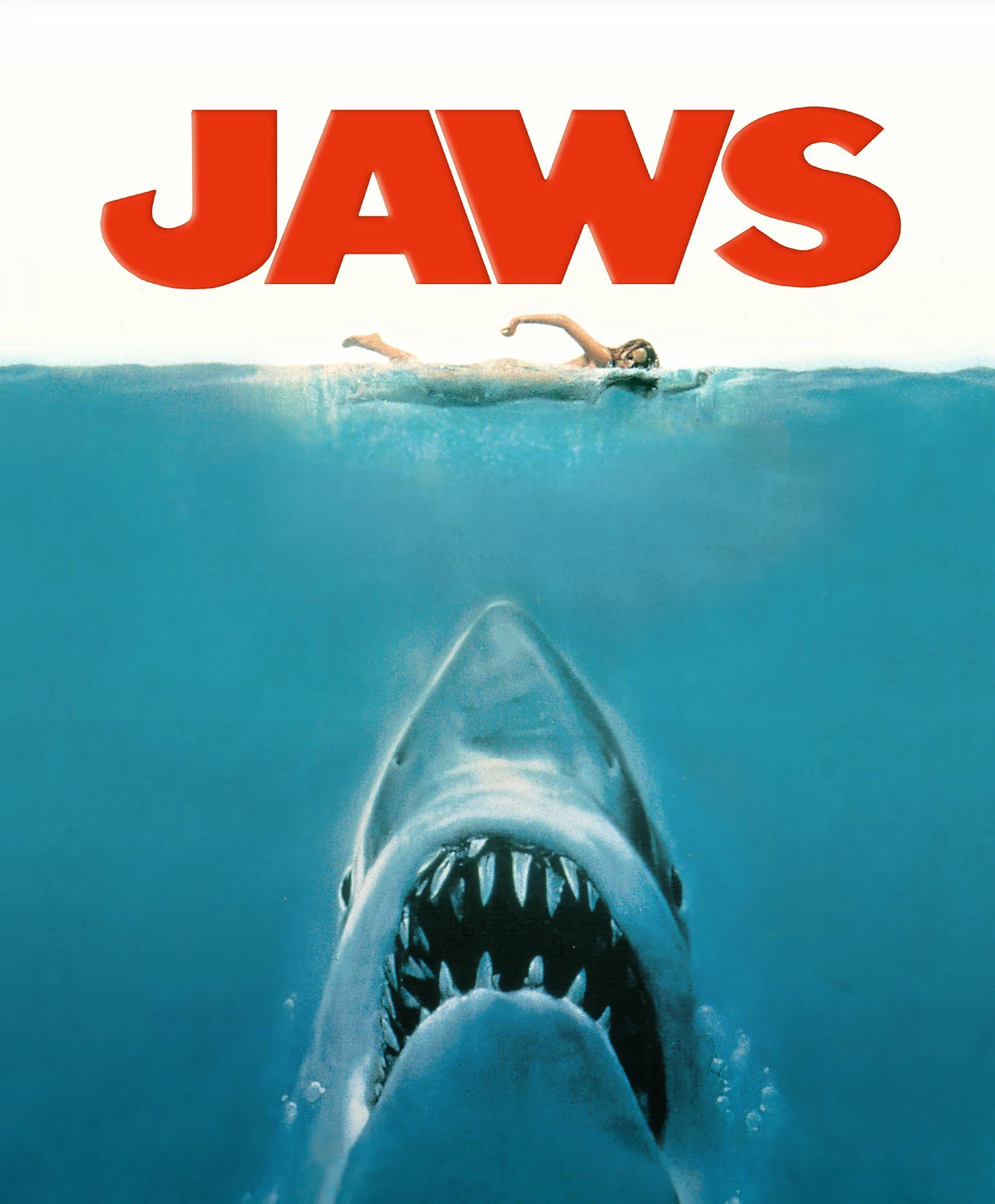
Also, sharks. If you’ve been watching the news, you’ll be well aware that there have been something like fifteen shark attacks on the Atlantic coast this summer. In fact, this morning’s news packages on the attacks bore so much similarity to the film Jaws I just had to shut the thing off. “All these attacks keep happening up and down the coast, and we’re coming up on the July 4th weekend… these beaches are going to be packed.” And all I can think of is a sleek dorsal fin gliding through the water with a harsh orchestral score behind it, and me fighting the urge to shout we’re gonna need a bigger boat.

But more important than avoiding becoming a sharky snack, I’m going to use the time to noodle a bunch on the project. Because despite my halfhearted jubilation and dutiful self-back-scratching over reaching the halfway mark, the project has some problems. Bugs in the batter that need picking out. Knots that need untying or cutting or being burned at both ends. Cracks in the mortar that need spackle or patching or that need to be opened right up with a jackhammer. And the only way to really come to a decision on problems like that — the only way to really see what’s functioning as intended and what’s fargoed beyond repair — is to take a step back, get a bird’s eye view, and take a good, long, look. Hike back out of the trees to get a look at the forest.

Image by Katerha @Flickr.

And while a week away won’t do that for me — the thing’s not even finished, so I can’t do a proper big-picture analysis — it’ll help. Just like every now and then on a road trip you have to pull over and check the map, when working on a big project like this you need to build in time to catch your breath from it, to let it sit and settle before you go back to work.

I don’t yet know if I’m going to work on the novel over the week away or not. Part of me says that the vacation is primo writing time, and I should take full advantage of it. Another part of me says that vacation is vacation is vacation, and maybe I shouldn’t even bring the laptop with me.

Well, maybe I’ll just bring it to write a blarg post or two and send up a few pictures of sunsets.

This weekly Re-Motivational post is part of Stream of Consciousness Saturday. Every Saturday, I use LindaGHill‘s prompt to refocus my efforts and evaluate my process, sometimes with productive results.

51%


I don’t update a whole lot about my projects on here anymore — I can only say the same things about authorial strife and creative doubt so many times before even I get tired of listening to myself — but the current project hit a milestone.

I was typing merrily along today, the words flying from me like so much projectile vomit from my one-year-old’s mouth (okay, that’s a lie, the words have been tooth-yankingly recalcitrant lately, springing forth only when I literally shackle myself to the desk and allow myself to do nothing but write), when I happened to glance at the progress bar.

Glancing at the progress bar is something best done rarely if at all. When you’re penning a 90,000 word novel that seems to be fighting your will to birth it into the world (sort of like, I imagine, the way a honey badger might be born), checking your overall progress is a little bit like watching paint dry. That is, if you left the paint in the can and just waited the long winter for it to congeal into a paint brick. It ticks away, slowly, resolutely, like an inchworm shimmying its way down Route 66, but I’m lucky to get 2% in a day. Some days, it doesn’t move at all, even after an hour’s slavish work in the word mines.

Nonetheless, today I checked it, my eye flopping inartfully across it like a cat falling off the arm of the sofa as it stretches for the fading noonday sun.

And it was at 51%.

Over halfway.

That’s shocking to me, because even though I know the time has been passing, and I’ve been dutifully plugging away on this project all the time, it just hasn’t had the same flow as my first project. If the first project was a traipse trough a neglected, overgrown garden — mostly clearing brambles and weeds but occasionally strolling through patches of still-blooming wildflowers — this project has been more like clear-cutting a path through the rainforest to make way for an interstate bypass. Using a hand axe. I feel every sluggish, seemingly ineffectual stroke of the axe-pen.

Still.

51% is a pretty good milestone. One worth bragging about, going into the weekend.

51% is like, I’ve rebuilt the shell of a classic Mustang in the garage, now all I have to do is put the engine back together, reassemble the transmission, rewire all of the electrics, replace the tires, and paint the thing.

51% is like, I’m making a pot luck dish for fifty of my co-workers and I’ve been to the grocery store, now all I have to do is prep the dish, cook it, portion it up neatly, wrap and seal it, and carry it in to work.

51% is like, I’ve cleaned one bathroom in the house, so I might as well clean the other bathroom, and the living room, and the kids’ bedrooms, and the garage, and maybe take down all the blinds that the cats tore up a year ago.

51% means the story is more written than not, and it would be a damn shame not to A) acknowledge that fact and B) really fling myself into the writing of it for this second half.

The pieces are all there. The characters are all there, and behaving as expected (or, if not as expected, at least teaching me how they would prefer to behave). The answers to the questions posed by the first half of the book are lurking in the mist like razor-sharp cliffs and rocks, shapes to be carefully navigated around as I search for the harbor.

Only 44,000 words to go.