The Weekly Re-Motivator:


Linda’s prompt for Stream-of-Consciousness Saturday this week is “-est”. Usually I like to find a single word or phrase using the prompt, but this week, when I plopped down to think of an -est word, the unusual happened.

Normally, I take the prompt and one of two things happens: either a single word hits me right away and, like the moon drifting across the face of the sun, immediately eclipses any other ideas, or a different moon drifts across the same sun and blocks out everything, and I sit there, unable to think of a single way to interpret the prompt, for hours. But not today. Today my brain is a slowly-spreading pile of gasoline, and the prompt is the casually-tossed cigarette of a black-clad action hero.

Too many words to choose from, so I’m gonna use as many as I can.

Our creativity, like the heavens, is inestimable, full of wonders we can hardly imagine, if we only have the courage to explore it — unfortunately, so many of us never do.

Our forebears in America were compelled to go west; partially out of a dissatisfaction with the way things were, partially for the promise that the unexplored country held. The artist needs more than a little bit of that wanderlust, of that westward yearning; the artist satisfied with where he’s at is an artist who stops pushing his boundaries.

Pushing the boundaries, though? When it goes well, it’s a(n) euphoric love fest. The ideas come fast and fresh, blowing through your hair (or in my case, across your dome) like the top’s down in your mid-life-crisis-mobile. But there’s no guarantee it goes well, as any writer will attest; and when it does go poorly, as inevitably it will, the whole affair can feel like the universe’s cruel jest. Every idea falls flat, every word feels forced; some days it’s all you can do to keep putting one word after the other.

But because it matters to you, you persist. And maybe you ingest some liquid courage or some chemical inspiration to kickstart the process, but one way or another, you keep on pushing your Sisyphesian boulder along. (Lest we forget, momentum matters.) Because you know that if you stop moving, if you bog down and leave the work for another day, one day quickly turns into another, which turns into another, and then, like a fetid pool, your creativity begins to fester, and even the stuff that looked good a few weeks ago begins to rot.

Still, the brain is a muscle much like any other, and a little rest brings it back to full functionality. Invest in a day off here and there, and somehow or other, the muses will wander their way back to the dark corners of your mind and drive your storytelling anew for a few more days. But it’s a foolish artist who relies on the muse too much: her magic is intoxicating and enticing as a desert mirage and just as fleeting.

The better way — the safe way — the only way, in fact, that works for more than a few weeks — is to establish the habit. Work for it. You don’t eat an elephant all in one sitting, you do it a little bit at a time, working day after day, checking your westward expansion by the stars overhead, the words on the page, the story twisting in your gut. Gestating. Improving, getting stronger with time, even if you can’t always tell quite how at the time. You keep writing. You keep pushing. And eventually, maybe, you bring your creation, squalling and covered in phlegm and gore, into the world.

Is this the best way to do it?

Hell if I know.

Writing is nothing if not an experimental flight in an experimental aircraft with an experimental pilot. Each and every element is a test.

But it feels good when it’s working.

Image result for just keep writing

This weekly remotivational post is part of Stream of Consciousness Saturday. Every weekend, I use Linda G. Hill’s prompt to refocus my efforts and evaluate my process, sometimes with productive results.
Fly Away


I’ve had to kill more than a few flies over the past few days.

Part of it, I think, is that the little buggers feel the end of summer coming on, and they’re trying to get indoors before the cooler weather comes. And part of it, of course, owes to the fact that the building I now work in was built in the 70s and shows every sign of it, down to the poor ventilation and the likely hundreds of nests and colonies in the walls. My room is always host to some six-legged creature or other, and this week, it’s been flies.

Which are the hardest things to deal with, it turns out. Mosquitoes you can catch in a closed fist. Bees drone along and then hover in space. But not flies. Flies catapult themselves through the air like UFOs powered by technology that shatters physics.

I remember reading once upon a time that flies have all kinds of extra sensory organs — from their tiny little antennae to the hair-like structures on their legs and body to their 800-faceted eyes — which make them one of nature’s most talented getaway artists. They end up with the reflexes of a cat that can see into the future, so that you’re always just a snap too slow, you always seem to strike the air just behind them. It’s almost as if they can sense that you’re about to swat them, and they leap out of the way.

Turns out, the actual air pressure created by your rapidly descending hands is sufficient to push the little critters out of the way; in other words, the act itself of swatting at the fly increases the fly’s odds of escape. The only way to counteract this is to anticipate where the fly is going to jump to and try clapping your hands at that spot, rather than aiming at the fly itself.

Which is a mug’s game, right? You can’t predict which way a fly is going to jump, any more than you can predict which way a flipped coin will land or which face a tossed die will fall on.

Still, guessing — even guessing wrong — gives you better odds than striking straight at the thing itself.

And there’s metaphors here, aren’t there? Life is a moving target, and all that. And by the time you think you’ve drawn a good bead on something, it’s moved along and you’re swiping at the empty air.

Sure feels like that lately, anyway. Working on this new story, it feels like the real thing — the good stuff, the soft, nougaty center of this idea — is buzzing around my head, lighting here on a bookcase, there on a lamp, occasionally on the skin of my scalp. But every time I try to nail the thing down, it flits away effortlessly, and I can almost hear its tiny, incessant insectoid laughter. And I bang my head away against some weak facsimile of the story I want to write and curse the muse for not dropping any of her glittery inspiration turdlets in my direction.

But then I strike off in a totally new direction; rather than trying to write the story I thought I was writing, I make a hard left and take the story in a new direction, and for a few blessed days at least, I get to bottle the lightning. I trap the fly between my hands and work gleefully while it bangs itself silly trying to escape.

And of course, it does. It escapes again. You can’t hold onto these things any more than you can hold on to a fistful of the ocean.

But you keep grabbing onto it all the same, as long as the story cries out to be told.

So if you’ll excuse me, I’ll be flailing around like an insane person trying to swat this storyfly.

The Weekly Re-Motivator:An Accumulation of Oddities


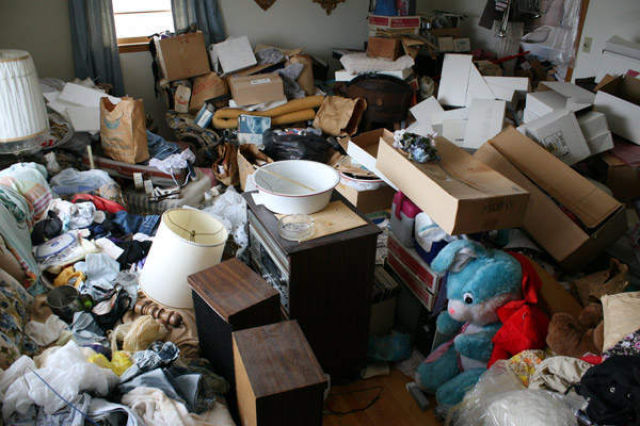
If your house is anything like mine, the stuff just sort of seems to accumulate. (Doubly or maybe exponentially true if you have kids, and doubly exponentially if those kids are particularly young.) You see this or that shiny doodad, and you think, gosh,the kids would just love that, and because we live in America we buy the thing. Or a loving and well-meaning grandparent will make a gift of some battery-powered monstrosity that belches out Christmas music if it detects movement within a square mile. Or the kids themselves will bring home toys covered in foreign guck and another kid’s nose slime. (How do they get these toys away from other kids, I wonder? My kids can sense it — and immediately pitch a fit — if I so much as touch a stray eye from a long-lost mister Potato head doll.)

But even without kids, it happens. You’re at the mall for some reason, and you think, that’s a nice looking shirt. I wear shirts. Let me give some of my money for that thing. Even though you need another shirt like your kids need another toy. Or you pick up another fancy running gizmo or some inspirational book of quotes or an odd lamp you like the look of.

And it just adds up. It’s not a bad thing, per se. But with so much stuff, it becomes easy to lose track of things. Easy to take things for granted.

hoarders

And if you’re not careful, the same thing can happen to your stories. For me, this usually comes in the form of a sentence, half-formed in my mind, that goes something like: wouldn’t it be cool if…

this minor inconvenience character turned out to be related to the main villain?

…the bad guys stole the thing that the good guys need to make their lives work?

…the mentor character’s cat starts phasing forward and backward in time?

All of which are fine and interesting and may well reach the final cut. Unfortunately, the mind, like the house cat that indiscriminately murders local fauna and deposits them on the doorstep, also drops off less-inspired idea corpses like…

There should totally be a paper-and-pen motif in this chapter.

Maybe the villain should have an electric puppy.

Feathers. Feathers everywhere.

Problem is, in the heat of a daily word-count grinding session, the gems are indistinguishable from the crystallized turds. You see them float past on the shelf of consciousness, think, oh, sure, that works for my story, and into the story sausage they go.

And again, that’s not a bad thing per se.

But just like the stuff that piles up in your house, this crap accumulates and chokes off a good story. Before you know it, you’re struggling to pick a clean path through your story, its every spare passageway littered with the half-formed iterations of these little oddities that, like the snot-caked stormtrooper my kid brought home the other day, you have no idea where they came from.

The little curiosities are a powerful spice, fascinating and interesting in moderation, overpowering and inedible if overused. Which means that, just like every now and then you have to go through the house and purge all the junk that no longer brings you joy, so, too, does a story in subsequent drafts need a brutal bit of spring cleaning.

The tricky thing, of course, is making sure you don’t accidentally put a priceless heirloom out on the curb by mistake.

This weekly remotivational post is part of Stream of Consciousness Saturday. Every weekend, I use Linda G. Hill’s prompt to refocus my efforts and evaluate my process, sometimes with productive results.

The Weekly Re-Motivator: Press Your Luck


There was this show, pretty big-time in the 80s, called Press Your Luck. My dad absolutely loved this show, and so did I: it was basically a run-of-the-mill pure luck-based game where you spin a wheel to win cash and prizes. No skill involved as I remember (except for that one guy who memorized the pattern of the game board and won literally tens of thousands of dollars before they booted him). Just push your button and take your chances.

In retrospect, I’m not sure why we loved this show so much, except for one thing: the Whammies. Every game show of the era had its way to rob you of everything you had won in a moment’s bad luck — the bankrupt slice on the Wheel of Fortune, the wager-what-you-will spots on the Jeopardy board. Press Your Luck had the Whammy. Now, the Whammy took your money, but it was worse than that. The Whammy was this little turd-looking gnomelet in a banana-colored superhero cape who, when you hit the wrong square on the board, would swoop in and take your money. Not because he was a thief, but because he was an idiotic asshole. He’d drive a car in, lose control, and wipe out, taking your cash with him. He’d fly in from the sky, come in too hot, and punch a hole through the ground, and your cash would drain out.

But there was no great equalizer to this game. You couldn’t rely on trivia knowledge to save you from the Whammy. No amount of literary or linguistic savvy would ward him off. (Come to think of it, the show had female Whammies, too — which was actually rather gender-conscious of them for the time, though having a female turdlet character is a dubious gain for the women’s movement). If you wanted to win, you had to brave the Whammy.

I never realized what a perfect metaphor for life this show was. As prepared as you might be, if you want to achieve anything, you have to brave the Whammy. You could write the best book, be the most talented actor, paint the best picture, or, to quote a certain presidential hopeful, “have the best words,” and no small part of your success is still going to hinge on luck.

The Whammy of the real world might not take your money, but he (or she!) might very well take your dignity, your hope, your self-esteem, your dreams.

Luckily, the real world is not Press Your Luck, and we have our pockets literally bulging with free spins and re-spins — if we only have the guts to press the button.


This weekly remotivational post is part of Stream of Consciousness Saturday. Every weekend, I use Linda G. Hill’s prompt to refocus my efforts and evaluate my process, sometimes with productive results.

The Weekly Re-Motivator: Expiration Date


Consider a tree. Nourished and nurtured and planted in fertile soil, it can flourish and tower and bear remarkable fruits. Neglected and sheltered and forgotten about, it withers and crumbles and gets overrun with ivy or tree cancer or tree-eating beetles or something horrifying like that.

Just so with the creative brain. Given room to grow, freedom of expression, and a steady diet of inspirational art, the brain grows stronger, desires to create for itself, and spawns incredible creations. Left to fester, the brain shuts down, gives up, stops trying.

Creativity must be tended, just like a tree, or that crappy vegetable garden my wife and I tried to plant a few years ago. We didn’t know anything about anything when it came to growing actual food, and figured, you know, the human race has been handling this gardening thing for millennia; how hard can it be, right? Bloody hard, as it turns out; not to mention the fact that neither of us actually has the patience or the drive to actually maintain the thing. What, you mean it takes more than a sunny spot, a few holes in the ground, and some foolish optimism to grow food in your backyard? To hell with that!

But of course it does. You’ve got to monitor that crap. Track the pH levels in the dirt. measure the amount of water in the soil. Pull weeds. You know. Effing work at it.

And if not tended properly? Those fruits wither on the vine, or worse, they shrivel up and die before their tiny little seeds can even germinate.

And so it is with creativity. Ask any writer or artist or whatever where their ideas come from, and their answer will probably be something like: it’s not finding the ideas that’s hard, it’s deciding which ones are worth my time that’s difficult. I’m not even that much of a writer, and still the thought will cross my mind at least once a week — sometimes once a day! — hey, I should write a story about this or that would make a really cool turn in my novel or man, I wish I’d had that idea three months ago on that other project.

But these ideas are like the produce at Aldi: they have an expiration date measured in hours, not days. Your brain serves them up from wherever ideas come from. (The black hole in the back of your brain? The quantum tunnel that connects your brain to every other brain in the world? Narnia?) They land on the shelf where your conscious mind peers at and ponders over them like an aging bachelorette on a diet. And whichever ideas don’t get put in the cart? Whichever ones don’t get spun pretty quickly into tonight’s dinner or slapped into the deep-freeze of your ever-expanding Evernote file? They go brown, they turn spotty, and they end up in the dumpster out back.

Age, Bacteria, Bio, Biology, Bread, Breakfast, Bug

Which is fine and natural (not the exorbitant amount of food waste in our country, of course — but the life cycle of ideas). A few bananas go bad — it’s no big deal, the grocery store knows it’s gonna sell more bananas. But those kiwis? Those mangoes that look so good but taste so bad? The more they rot, the less the store wants to put them on the shelf.

But your brain works the same way. It serves up these fantastic ideas day after day, week after week, and the more you don’t do anything with them? The more they expire, unused, on the shelf?

The less your brain is going to serve them up.

This is why I try to write, at least a little bit, every single day. The more I write, the more I notice my good ideas when they crop up — and the more, it seems, I have to choose from.

Your creativity — your good ideas — they have an expiration date.

Waste not, want not.

This weekly remotivational post is part of Stream of Consciousness Saturday. Every weekend, I use Linda G. Hill’s prompt to refocus my efforts and evaluate my process, sometimes with productive results.