Pitiful Excuses


Pitiful excuses for the week: I’ve got a few. Not that every week doesn’t come with a few excuses, but some are more pitiful than others.

Of course, this week’s big pitiful excuse is bigger than the average pitiful excuse, which is: a stomach bug tore through our house like a honey badger (I almost wrote an angry honey badger, but then that’s redundant, innit) on peyote. First my daughter had it (barfing all over my wife, which she enjoyed about as much as you’d expect, my wife being something of a germophobe the way our new president is something of a Twitter user), then my son had it, then I had it, and finally, my wife has it.

So it’s been a stressful, and kind of miserable, week. Add in a couple of snow days* to the mix, and the beginning of rehearsals for our school’s upcoming musical, and the fact that the new semester is starting so new students are popping into and out of my class like quantum particles winking in and out of existence, and it makes sense why my productivity would take a hit.

Which it did. I missed a run day Wednesday, and I missed two days’ work on the novel, not to mention posting absolutely nothing around here (which is hardly an obligation, but it does keep the juices flowing). Missing days sucks. Even five years into a running habit and three years into a writing habit, I can still feel the black hole of slothitude and couch-lump-syndrome tugging at me with its unflagging gravity. While I know a day here or there isn’t going to knock me into that black hole, the lost productivity is a sharp reminder that the hole is there. Lurking. Waiting. The black hole doesn’t just swallow you up one day; it doesn’t have to. Time is on its side. One missed day turns into two, turns into three, turns into a week, and somewhere along the line you cross the event horizon between taking a break and giving up.

Of course, the reminder that the black hole is there, waiting to swallow you, is good enough motivation to kick me right out of my funk.Even though the week started off decidedly poorly, I still ended up with about 1800 words and a good bit of outlining for the end of the novel, and a nice little mini-arc of action to write that will start me off next week. The writing always goes easier when you know what you want to write before you sit down to write it (would that I always knew when I sat down!).

In summary: kind of a crap week, salvaged. But that’s what you do with crap weeks, innit?

Next week can only be better.

This weekly remotivational post is part of Stream of Consciousness Saturday. Every weekend, I use Linda G. Hill’s prompt to refocus my efforts and evaluate my process, sometimes with productive results.

Finish What You Start; Start What You Can Finish


This is about the time of year when I post a big rant about New Year’s Resolutions. But not this year. This year? I’ve got enough of my own sharknado going on to worry about starting in on anybody else, let alone myself. You want to make a resolution? Go ahead. You want to be one of the throng that’s overwhelming every gym in the country during the month of January? Do you.

The only thing I’m going to say about resolutions this year is: finish what you start.

It’s simple advice, but I forget it myself from time to time, and there’s sure as hell a lot of unfinished business in the world to testify for it.

Finish what you start.

This is the year you decide to start doing the thing? Great. Be real specific about what that thing is. Make sure it’s a thing you actually can finish, and then start doing it with the goal in mind.

You’re going to take up running? Nah, that’s not specific enough. Decide instead that you’re going to run a 5k. Then, instead of going out on Jan. 1 (or, okay, Jan. 2 if you’re hung over), padding around in the cold a bit and deciding this whole “running” thing isn’t for you, you start down a path. You go out, run a bit, and it sucks, but you’ve still got that 5k distance looming, and you’re not there yet. Probably won’t be for some time. So the next day, you’re compelled to lace up again and try a little harder, until you can finish what you start.

Taking up writing? Super. Put a goal on it. If it’s a blog, make it a post a week, or a post every three days, or a post every time Saturn is in the house of whatever bullshirt astrology thing tickles your toes. If it’s a novel, well, then, it’s a novel; that means 50,000 words on a conservative estimate. If it’s just “writing”, nebulous and dreamlike, well, technically, you write an e-mail every couple of days, right? Or a shopping list? Or a note to yourself in the fog of the shower mirror? And that’s real easy to do, except that’s not what you meant by “writing”, and you know it. Writing 500 words a day, every day, until you have 50,000 words? That’s 100 days. That’s an accomplishment. That’s a thing that, when it’s finished, will feel solid in the hands, like a participation trophy or the trunk of the neighbor’s tree that hangs over your yard when you finally cut it down.

Me? I’ve got a handful of things that I’ve started, but I haven’t yet finished. Chief among them are several writing projects, but I’m not worried about that, because even though I’m in a lull right now (man, it’s hard maintaining a daily word count when you’re a teacher on holiday break) (make that nigh impossible) (okay fine I took a week off from my project, are you happy now??), I know I have the momentum to finish anyway.

Not because writing novels, or short stories, or even blog posts is easy. It isn’t. But I can write 500 words a day. (Okay, FINE, I can write 500 words a day when I’m not on vacation.) And when I’m in those 500 words, I finish what I start.

Then, the next day, I start again.

Then again.

By the end of a month, I’ve started and finished over twenty 500-word sessions, and that goes a long way toward finishing the 80,000-word first draft I started some five or six months ago. Two more months should just about do it. Two more months to finish what I started in the middle of last year, even though the end of that particular road wasn’t even visible from the starting line.

Manageable, achievable goals. Baby steps. Small successes lead to big successes.

This is why you won’t find me vowing to write and publish three novels next year, or resolving to cut all the carbs out of my diet, or promising myself that I’m really going to keep in touch with my friends this year. Those aren’t things I can reasonably finish.

But I can finish this draft I’m in.

Starting a project and finishing one actually feel very much alike. Lots of confused looking around, waiting and hoping for directions from on high, for the disembodied voice of god or the angels or your conscience to say, “look, this is what you need to be doing, so just get to it”. The blank page is disorienting in its perfection, its vastness. The completed page is disorienting as well, in that you’re suddenly untethered from this thing you’ve been attached to. There’s a lostness.

But if you never get lost, you never feel the high of finding yourself again.

This weekly remotivational post is part of Stream of Consciousness Saturday. Every weekend, I use Linda G. Hill’s prompt to refocus my efforts and evaluate my process, sometimes with productive results.

2016 in Review


*peeks out of his apocalypse-proof bunker*

*looks both ways for passing trains, heart attacks, or plagues*

So, uh, 2016, huh? Been a bit of a treacherous road, hannit? I mean, we say that at the end of every year, and certainly every year has its share of ups and downs, celebrity deaths, breakthroughs and disappointments. But it’s hard to deny that 2016 feels different, especially owing to the recent spate of deaths.

Image may contain: 9 people, people smiling, text

Not least among them of course is Carrie Fisher, whose passing hit me harder than any this year. Probably because I’ve been a Star Wars kid for the entirety of my functional memory (all I can really remember before I was 14 or so is locking myself in a locker at the high school while my dad — a teacher at the time — was playing basketball, shooting the light bulb in my bedroom with a squirt gun until the bulb exploded [it didn’t take long at all], and watching Star Wars and Back to the Future about a hundred times).

Then there’s Trump getting elected, which fills me with more despair than I care to even think about, so I’m just going to bury my head in the sand and forget I even mentioned it today, lest I fall down another diatribe rabbit hole around here, and NONE OF US WANTS THAT.

Point is, the last few months especially have been rough, so it only makes sense for the rest of us to keep our heads down until 2016 has run its course.

Of course, the end of the year isn’t just for turtling up inside our shells, it’s a time to reflect on what we’ve accomplished, and I’m happy to say that 2016 was a decent year for me personally. I overcame my nerves and self-doubt and finally got my first novel submitted and out in the world. (No leads yet, but that’s okay.) I lost my mind and ran my first obstacle course race, which was awesome and I’m already registered to repeat in April (thanks to my wife, who is ever-indulgent of such dalliances). I started my new job, which, while a little more taxing than my old job — and more demanding of my time outside standard working hours — is also a lot more creatively fulfilling.

Running-wise, I haven’t looked at my metrics in a while, but the nice part about running with gadgetry is that I don’t have to think all that much about how much I’m running — the technology tracks it all for me. Apparently, I’ve run 596 miles this year, up from 460 last year. I’m pleased with that — the number could be higher, but I was lucky enough to spend most of this year not dealing with injuries. Most of those miles have been comfortable and pain-free, so to get almost 600 there is encouraging.

Writing-wise, I finished up the first draft of novel #2, completed a third edit on novel #1 (and finally started submitting it) and have completed about 60,000 words of novel #3. That’s somewhere in the range of 8,000-10,000 words a month, minus a month’s worth for those edits; call it 90,000 words. For a guy like me with a full-time job and two full-time kids … well, I was going to say that’s respectable, but seeing as that’s a sliding scale, I’ll content myself with saying it makes me happy, at least.

Then there’s the blarg, here. I’ve not been quite as prolific as in years past, but I still get about three posts a week, for anywhere from 500-1100 words on average, with the odd outlier (*COUGH* Force Awakens Review) pushing 2000. Wordpress tells me I have 172 posts this year, and if the average is, let’s be conservative and say, 600? That gives … damn. 103,200 words. On the one hand I feel bad about that; it seems to recommend that I’m more productive here than in my capital “W” Writing, and I can’t say I’m pleased about that. Then again, a thing I read over and over is that all writing is good writing — it all sharpens the iron, as it were — so in that case, any productivity is good productivity.

All that is to say that I’ve produced something like 200,000 written words this year, run about six hundred miles, and taken some real, concrete steps to actually getting my writing out there in the world. None of which is a small thing; altogether, it’s pretty damn encouraging. Furthermore, if a guy like me can do it, then literally anybody can do it, and given that resolution season is upon us, what more motivation do you need?

Next up: a review of some of the year’s top posts.

Hardly Moot


The prompt for this week’s SOCS post is “moot,” a funny-sounding word which is one of those weirdly connotated things that no longer means what it actually means. Like literally. (Though internet outrage has kind of fixed the rampant misuse of “literally”.)

About the only way you see “moot” anymore is in the phrase “moot point,” a phrase that comes out of mock trials which essentially means meaningless or without consequence. But I can’t hear the word “moot” without thinking about this:
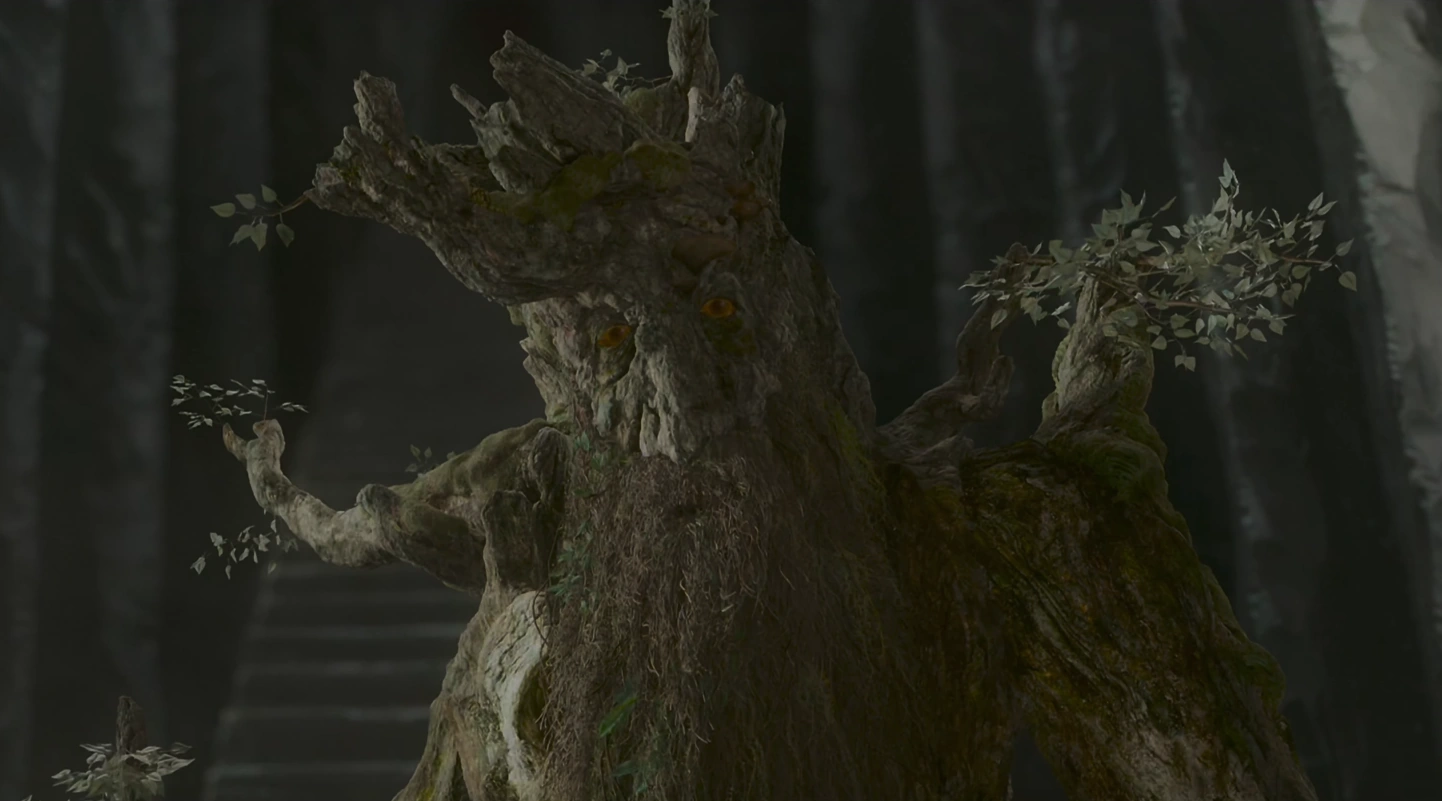
Image result for lotr treebeard

The mothertrucking entmoot from LOTR.

“Moot” means meeting, and in the second book (and, yeah, okay, the second movie), the ents — the living, sentient trees — hold an entmoot to determine the fate of their forest. The problem? The ents hold this moot in their native tree language, which is “a lovely language, but it takes a very long time saying anything in it, because we do not say anything in it, unless it is worth taking a long time to say.” (Which could, in fact, be the subtitle for this blog, given how I like to go on and on. The worthiness of the things I talk about to be talked about at length is, of course, another matter.)

Long story short (too late), the ents meet for several days before they decide that they will not meddle in the affairs of men, much to the chagrin of the hobbits who have petitioned them for aid. The world is going to sharknado all around them, the hobbits protest, and ents will be affected eventually even if nothing happens to them right away. But the ents take the isolationist path, pointing out that the trees will outlast whatever squabbles the creatures of the earth busy themselves with.

Then, of course, they learn that actually, the forces of darkness are chewing up the forest to fuel their war machine, and well, that’s that. The trees uproot themselves and wreck shop all over Isengard, because nothing motivates you like the threat of imminent destruction.

(I could point out that this is a pretty thinly-veiled dig at politics and politicians with their endless pontificating bureaucracies, but that’s not the point of this post.)

All that’s interesting and fascinating (though maybe just for me), but ultimately, well, moot in the contemporary sense, because the simple, understood definition of “moot” is that it doesn’t matter. The origins of the word are well and good, but these days it means this, so really, who cares?

And speaking of moot points, the problem is perspective and scope. Much of what we do in life, creatively or otherwise, is moot. Pancakes for breakfast, or cold cereal, or skip breakfast entirely? Doesn’t really matter. Take the long way to work or the quick way? As long as you get there on time, who cares? Read the Game of Thrones series so that you can claim superiority over the people who just watch the TV show, or don’t? Outside of the odd water cooler conversation, there really is very little difference in your life.

Put it on a bigger scale. There will be very little difference on a national level, or even a state level, over the life of one person, even a highly influential one. Things take the course they take, and not much will change it. A bigger scale still: consider, for example, Paris. Unless I have some readers in France I’m unaware of, I really am completely removed from anything happening in Paris. My entire existence, as far as Paris is concerned, is moot. Let alone the world.

But go even bigger. In our own solar system, humans have got some manned missions done in our neck of the woods, and we’ve sent a fair few probes out to the far reaches, but for the most part, all the accomplishments of humans are represented by a tiny speck of light in the night sky. A moot exercise, you might say, as we’ll never have that perspective — but astronauts get that perspective all the time. It’s called the Overview Effect (a thing I literally learned just now!)

If you zoom out far enough, everything becomes moot. And if you’re prone to Nihilistic thinking (cough, cough), the maw of that realization yawns wide beneath your feet at just about any moment. Why bother creating — it’ll all be lost to time and the void eventually. Why bother doing anything?

But taking the long view, while it’s probably good for planning your retirement and your diet, is maybe not the best thing to do in cases like this. Any story I could possibly tell is statistically unlikely to disturb the waters very much, even if it becomes profoundly popular. Those waters are thoroughly saturated already, if you’ll pardon the pun. But that doesn’t mean that, for a narrow slice, the stories aren’t worth writing (or reading!). In a lot of ways, the writer’s self-affirmation is not unlike the teacher’s: if I can reach just ONE student…

The truth is, I don’t think I even need to reach a single reader. It’d be nice if I do, of course — and better than nice if I could reach more than one. But when I create, I’m creating for me. It brings me tiny little pangs of joy to make up characters and bounce them around in the snow globes of my creation. On a global scale, or a national one, or even a local one, that might very well be moot.

But given that this life is the only one we get, it only makes sense to fill it with as much joy as we can.

This weekly remotivational post is part of Stream of Consciousness Saturday. Every weekend, I use Linda G. Hill’s prompt to refocus my efforts and evaluate my process, sometimes with productive results.

The Weekly Re-Motivator: Shooting into the Dark


I wrote a few weeks back about how I’m teaching improv in my classes, and drew some comparisons between that practice and writing. Well, I’m teaching it again (different levels and all), so it’s front of mind again.

Writing — drafting, at least — is like improv. Virtually just like improv, as it turns out. The blank page is like the first moments stepping out onto the blank stage, not knowing what you’re going to do or how it’s going to go over.

Then, you just start shooting into the dark. I mean, you know there are targets out there: good ideas tucked in the rubbery folds of your brain, lines and ideas and expectations that might resonate with an audience. But from where you stand at the start, you can’t see sharknado. You just fire away and hope you hit something.

And maybe you hit something right away. If so, great, awesome, train on that spot and keep shooting. If not (which is almost laughably more likely), well, what? Give up? Slink off the stage and give up? Hell,no. You aim elsewhere in the dark, reload, and let loose again.

See, improv teaches us not just to allow mistakes — improv encourages mistakes. The mistakes are where the learning happens. And if you aren’t drawing a few sideways glances or jolting some uncomfortable hiccups of laughter from the crowd, well, you’re not doing it right. If you’re not drawing reactions, you’re playing it safe, and playing it safe in improv is the equivalent of skydiving from the second floor: it can be done, but really, what’s the point?

And so it is with writing. Sure, you can play it safe. But what’s the point? Much better to see if you can surprise your audience — which, in the drafting stage, is only yourself — than to sit there boring yourself to death, playing it safe and staying in your tiny little circle of torchlight.

Screw that.

When I teach improv, I tell my students to think of it like a flowchart. You try a thing. Does it work? Does it feel good? Does it excite you? If so, continue down that path. Does it bore you? Does it feel “dead”? Does your partner look lost? If so, abandon that path and try something totally different. Then do it again. Does this work, or does this suck? Readjust, and press on. Readjust, and press on.

Reload, and shoot into the dark again.

The blank page is no different. If anything, it’s easier: you have the infinite safety net of as many drafts as you need to get it right. The absolute worst thing you can do in an improv is to give up and stop trying, and so it is with writing. And yet, that’s exactly what too many would-be writers do. It’s what I did for the past decade: sat back thinking how much I’d like to be a writer, but lived in fear of actually doing it.

Again, screw that.

Load up your word-cannon and shoot into the dark.

Worst that can happen is you miss. (Actually the worst that can happen is you hit a bystander, but y’know — if that happens, just aim away from the screams and try again.)

But as long as you keep shooting, you can’t miss forever.

This weekly remotivational post is part of Stream of Consciousness Saturday. Every weekend, I use Linda G. Hill’s prompt to refocus my efforts and evaluate my process, sometimes with productive results.