A Day of Shoeburyness and Lawn-Care Mutterings


If you have ever wanted to cut off your own piece of the bleeding edge of American literary greatness, this is your chance.

My house is for sale. The culmination of what feels like (and, by now, I guess actually is) months of cleaning and fixing and tearing down walls and repairing pipes and hauling off trash and more than once considering simply setting fire to the whole thing. But of course, the work isn’t over. Now that we have it clean and “show ready”, we have to keep it that way, which has us doing all sorts of things we would never do ordinarily, though my wife insists that normal people do these things all the time.

Taking the trash out once a day. Keeping the sink clear of dishes. Vacuuming the floors every day. Keeping laundry out of the floor. Mowing the yard at 8pm on a Friday because it’s literally the only chance we’ll have to do it.

Madness. My wife, somehow, has a reservoir of patience and sense for this sort of thing. I do not. While circling my yard with the mower last night, thoughts of murder circled in my head like swarming crows. What the hell am I doing out here? It’s getting dark, for crissakes. Primeval man survived for tens of thousands of years without mowing the damned grass. It’s all gonna grow back when global warming wipes us all out, and the kudzu will consume the country. Why fight it?
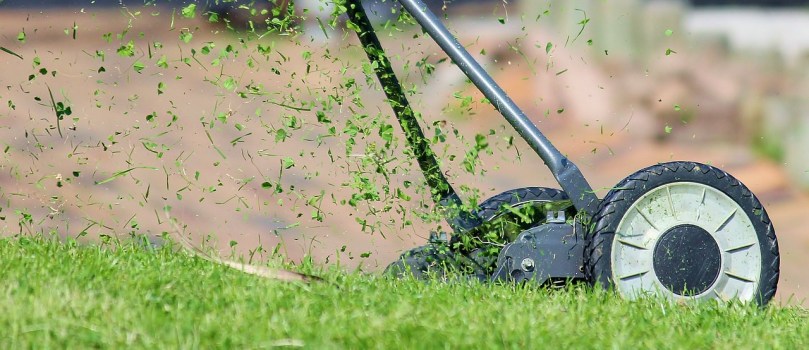
lawn-mower-938555_1280

I may have mentioned, here or there, that yard work is a dirty word with me. I’m not exaggerating. My mind goes to some dark places when I’m holding garden tools.

But it has to be done to keep the house show-ready, so mow I did. Just part of the deal of trying to sell the place.

Also part of selling the place? A sensation that I don’t have a word for: The vaguely disconcerting , slightly unsettling feeling of knowing there have been total strangers tromping through your house, peeking in your closets, judging your choices in counter-toppery.

Douglas Adams once wrote a book full of words like this, and I’m sorry to say that I have not yet read this book — The Meaning of Liff. But from the liner notes and offhanded comments found in The Salmon of Doubt, I know that within that text is a word that comes close: Shoeburyness, the uncomfortable feeling you get when sitting on a seat that is still warm from somebody else’s bottom.

This is stronger than that, but less extreme than the real discomfort and terror that, for example, my sister-in-law is experiencing, having been the recent victim of a break-in that did not apparently result in any theft — somebody just broke in and skulked around.

It’s somewhere in between those two extremes. Odd. Definitely not pleasant. But not actually disruptive or traumatic in any way.

Again: nothing to be done about it. Just part of the process. And, hopefully, the beginning of the end of the all-consuming task that selling our house has become. I don’t quite see the light at the end of the tunnel yet, but I can’t see the light from where we entered either at this point. There’s a comfort in that — in seeing how far we’ve come — even though this mushy middle part is bleak.

At least I’m writing again. Words on the page. The concrete evidence of progress.

The light at the end of the tunnel has to be up there, somewhere.

This weekly remotivational post is part of Stream of Consciousness Saturday. Every weekend, I use Linda G. Hill’s prompt to refocus my efforts and evaluate my process, sometimes with productive results.
Why Live Theatre is like Plinko


Working on a live show isn’t like working on a novel or a school project, outside of the fact that you break your back and your brain working to make it happen. The novel? The project? When they’re done, they’re done. You ship it out the door or turn it in, and it is what it is — nothing has the potential to change it, really.

A live show? Sure, we’re done working on it, but that doesn’t mean it’s finished. It’s never finished. It’s a living, breathing organism, powered by living, breathing humans susceptible to the nerves and emotions and follies and foibles that all humans — to say nothing of high school teenagers — are vulnerable to.

Every show will be different: new highs, new lows, new notes in the solos, new dead spots marking the missed cues, new pauses for laughter you weren’t expecting, new silence when you were expecting laughter.

When I was a kid, and I’d visit my grandmother’s house, we’d always watch the Price is Right together. Old school: the Bob Barker days. It was her daily ritual and my novelty: I think she loved vicariously watching a schmo from Lubbocksville, Nowhere go up on stage, win a game of skill and/or chance, and win a car or a vacation or a toaster. I just loved watching the colorful games, especially the one where the mountain climber hiked up the side of the mountain (and if the contestants overbid, he’d fall right off the side… man, it still brings a smile to my face!).

I still watch every now and then, though these days my greatest pleasure is watching the cynical, smarmy a-holes who, when they think everybody else has overbid, will smugly bid $1. (Even better, when that card gets played too early, the doubly cynical, triply smarmy SOB that bids $2.)

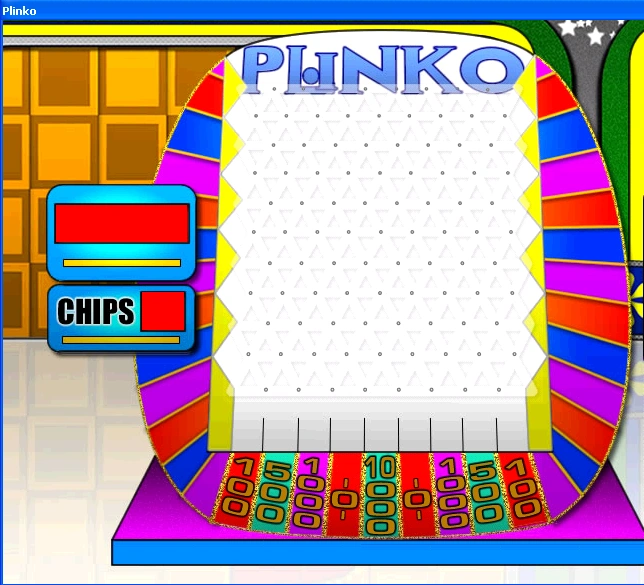
But my favorite game back then, without a doubt and bar none, was Plinko.

Image result for plinko board

I don’t know why. Of all the games on the show there was no game like it. All the other games either required some consumer savvy (which item costs more?), some physical ability (they had a minigolf game that I adored, because once upon a time I thought golf was cool, a misconception I am happy my life and my distaste for the pastimes of the especially affluent has cured me of), or some combination of the two, but not Plinko.

Here’s a game that gives you a handful of chips and says “good luck,” like a roulette wheel with a bad attitude. The goal is to get your chip to land in the $10,000 spot down there, or maybe the $1000 slot — and notice that the only way to win nothing is to almost win the big prize. So: the contestant climbs up the stairs to stand behind the board, agonizes deeply about where to place their chip, as if strategy would help them in the least, and then — lets it go.

Plink, plink, plink. The chip bounces down the board like that guy in Titanic who falls off the capsizing ship and clangs off a rail before spinning, spine shattered, into the deep. Sometimes it swerves this way and that, dancing a mad jig across the board before settling at the bottom; sometimes it beelines, as if guided by a nervy surgeon’s hands, to its destination. Sometimes the chip seems to hit every single peg on the board as it clatters home, sometimes it seems to get home without a single disruption.

Then the game is over, and the player goes home with either her winnings or her idiotic regret that she should’ve placed that last chip one slot to the left.

But it’s not the board’s fault, and it’s not the player’s fault, if the chip doesn’t land where you expect — it’s simply chance. (And air currents, and the microscopic imperfections in the surfaces of the chip and the peg, and the rotational forces you imparted when you dropped it, and the residual oil on your fingers, and the quantum particles that jumped in or out of existence on the plains of Africa while your chip was dancing madly toward the bottom.) The moment the chip leaves your hand, in other words, all you can do is watch and hope.

And a live show is like that. You do all the preparing you can, you hem and you haw over the minutiae — should that actor stand here or there as he delivers that line, should that set piece maybe be angled a bit more steeply, should I abandon the whole thing and go raise goats in New Zealand? — and then you make like Elsa and let it go.

And it’ll plink plink plink its way to the bottom, with wholly unexpected twists and turns some nights, and seemingly divine guidance on others, until it inevitably reaches the end of the line.

All you can do is hope to avoid the goose egg.

In other (possibly related) news, it’s show week — AKA hell week — for our musical. See you on the other side.

Parents Who Hate Their Kids, Ch. 1


My son has a classmate named Taylor.

But not “Taylor.” It’s pronounced “Taylor,” but it’s spelled “Taeler.” Nothing against the name — I have a new niece named Taylor (and I hope I spelled it right, as I haven’t seen it in print yet, and HOO BOY am I about to make things awkward at Thanksgiving if I guessed wrong) — but this strikes me as a problem. Not because I don’t know whether Taylor is a boy or a girl; there are plenty of those names these days and that’s cool and trendy and whatever. But because poor Taeler’s parents have doomed her (or him) to a lifetime of interactions that begin with “actually, it’s spelled T-A-E-…”

Isn’t life hard enough?

Then there are C’Niyah and Zaniya. Pronounced the same, just starting with an “s” sound or a “z” sound. So is the apostrophe required? Or the “A”? How about the “H” on the end? Or are all of these things just flopping around like vestigial tails? And when it’s time to learn about capitalization, I pity poor C’Niyah — she (or he?) has to do it twice in her own name! How confusing is that?

In my own classes — this year alone! — I’ve got Michaela, Mikayla, Mikayela, McKayla, and Macayla. And maybe Mikaela. All pronounced the same. I’m pretty sure one of them has an “H” on the end as well, but does it even matter at this point? C’s, K’s, Y’s, E’s, H’s … they’re all flying around like cows in a tornado (RIP Bill Paxton), and there’s no telling where they’ll end up, or why. These poor girls (because there are plenty of other Michaelas, Mikaylas, etc enrolled) must ever clarify their identity by adding their last name, and have given up hope of ever having a teacher spell their name correctly — I personally couldn’t properly tell you which spelling goes with which girl with the first degree of confidence. These, too, might as well have the middle name “actually, it’s spelled …”

To say nothing of Caila, Kayla, and Kaela, whom I taught last year. Guess which one was pronounced “Ky-la”. You can’t, because there are no rules when it comes to names.

Here’s a fun one. How do you spell the name that’s pronounced “Jay-len”?

Trick question. I’ve seen it dozens of ways. Jalen, Jaelan, Jaylen, Jaelen, Ja-len, Ja’lin, Jalynn … I could go on. The possibilities are almost endless, because you can apparently capitalize whatever letters you like and throw around punctuation like you’re mixing salad with the SlapChop.

Image result for slap chop

Point is, none of these spellings for any of these names is “correct”, because there is no “correct” spelling when it comes to names. Which means — wait for it — ALL these spellings are INCORRECT! That’s just logic.

As a teacher, I dread meeting these kids for the first time, because inevitably, my first question will not be something insightful like “how was your summer” or something easygoing like that. No, the first thing I’ll have to say to them is “…spell that, please.”

And I know, I know. We want our kids to be unique, and we want them to stand out from the crowd because they are our delicate little snowflakes. But having been a teacher now for seven years (if that doesn’t make me the grizzled elder waving a yardstick around and get-off-my-lawn-ing), I can tell you that these names don’t uniquely identify a student to us, and certainly not in a positive way. Rather, these students are more likely than others to be frustrated with school, and people in general, because nobody can pronounce or spell their name! (Take it from a guy with a last name that’s vaguely eastern-European. I’ve heard so many different pronunciations I could start my own alphabet.)

If you want your kid to stand out, the way to do it is to bring them up to be a decent human being. One that seeks out learning and opportunities for their own sake. One that treats people with respect as a baseline. One who greets the world with positivity and optimism and effort.

You don’t do that by telling a child that they’re special all the time (and make no mistake, spelling your kid’s name “Taeler” when it’s pronounced “Taylor” only sets her — or him! — up to think that she’s special, that she’s different). That only confuses them when the world doesn’t back up that belief, and then they get mad at the world.

No, you make your child stand out by teaching them humility. Yes, to me you are special, but to the world, you are just another person like everybody else, and you have to earn what you want. In our new, technologic, me-centric world, it’s the person who actually lives in the real world, who pays attention to the people around them, who acts with compassion and good will instead of out of attention-seeking, who really stands out.

This post brought to you by M’ahtT, because apparently I can spell it any way I like.

Shop Vac


Things accomplished today:

  1. Odd-colored patch under the light fixture we replaced in the kitchen: painted.
  2. Peeling ceiling paint in the bathroom: scraped and re-painted.
  3. Warping and de-laminating bathroom door: liquid-nails’ed back into shape.
  4. Slow drain in upstairs bathroom: de-slowified.

Things I learned:

  1. Popcorn ceiling is terrible, in that it’s basically impossible to match an old application with a new one, and thus, if it ever needs to be repaired in any way, you almost have to re-paint the entire ceiling in that room.
  2. Popcorn ceiling is kind of awesome, in that it hides imperfections in the underlying surface, so the previous ceiling paint I didn’t entirely scrape off just kinda disappears.
  3. How have I lived 36 years without knowing about liquid nails? That stuff could fix the holes in the Titanic, I’m pretty sure. Never going to be without some in the house again.
  4. Kids will stuff anything down an open drain, just for the curiosity of it.

Things I may or may not have shop-vac’d out of the kids’ (and my!) bathtub drain:

  1. Seven pounds of hair (interesting as I don’t have any)
  2. Two matchbox cars
  3. A collection of bathtub markers
  4. One missing cat (alive)
  5. One missing cat (deceased)
  6. A previously undiscovered Dead Sea Scroll
  7. Five dollars

Fixer of Things


There is no satisfaction like the satisfaction you gain from taking on a task entirely foreign to you and mastering it.

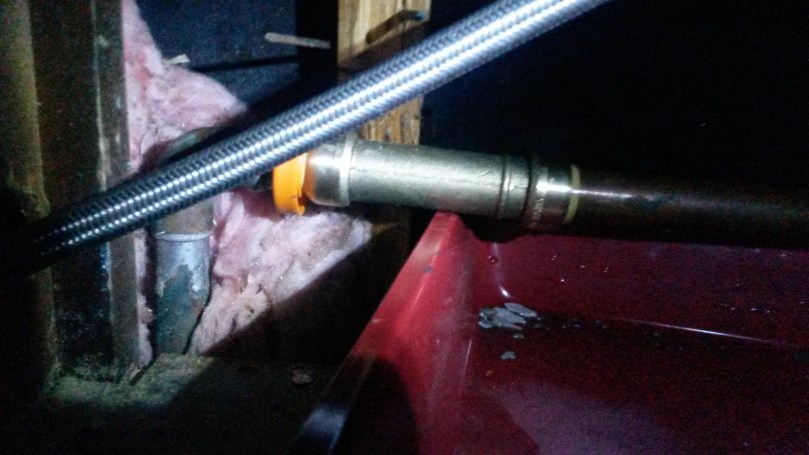
Yesterday, found a leak under our sink. Today, it’s fixed. Not by a contractor, not by an expertly licensed and trained plumber with a truck full of tools and a belt that never quite seems to keep his pants up. By me.

So what if it took three hours and two trips to the Home Depot?

So what if my kitchen currently looks like a disaster area?

So what if I had to buy and learn to use two brand new tools that I may never use again?

So what if my face is going to be broken out for weeks from rubbing my mug against the underside of the sink?

So what if my back and shoulders may never be the same after cramming them into that tiny space?

I fixed a thing. And instead of the $300 it likely would have cost to call a “professional,” I’m out only $25, a few hours of work, and a small portion of my dignity (apparently the belt doesn’t hold my pants up on the job either).

20170322_195004.jpg

See that? That’s what a pipe looks like when it’s not leaking anymore. (Sidenote: I worked harder than I should have to get this picture, and it still looks like unmollified hell.)

Victory!