Ashore (Flash Fiction Horror pt. 2)


Chuck’s challenge this week is a continuation of last week’s project. Last week we wrote a 1000-word beginning to a story; this week, we continue somebody else’s story with another 1000 words.

I ran with a story begun by Nate F at Line Meets Sand. His work begins at the 1; mine takes over at the 2. His piece was untitled, and seeing as we’re not sure how it turns out yet, I’ll just title my piece: “Ashore.”

Enjoy!

**************************

1.

Finally some real rain—a decisive, if not delinquent, increase in ferocity compared to the drizzle that had hung suspended, noncommittal in the air for days.  Water dripped from his longcoat as Josiah Leech lifted the last of the fancy trunks not yet aboard.  His jaw tightened as he turned to make his way back to the Trinity.  Whatever was locked in this particular trunk made it heavier than the others by far.

“Mud.

“That’s what April showers bring.

“And so do March showers.  And May showers. And June showers.

“Mud.  Mud.  Fuckin’ mud,” he murmured as he trudged on, stubbornly wrenching his boots from the mire with each soggy step until, at last, he reached the docks.

Josiah’s stride narrowed to cross the thin, roughhewn board that connected the old galleon to the dock, but his pace never slowed.  Just short of his destination, Josiah’s muddy right boot lost grip of the wood and he staggered forward, hands forsaking the trunk in order to grab the railing and prevent the Thames from claiming him.  As he pulled himself back to his feet and onto the main deck, he watched the trunk hit slide to a stop next to the deckhouse.  At least he had propelled it forward.  Through rotten teeth, crows in the riggings laughed down at him.

“You’ll be payin’ recompense for damages caused by your imbecility,” said Bernard Ambrose.  Without so much as a glance up from the manifest, the ship’s quartermaster addressed the nearest deck hand.  “Master Clement, after securing the gangplank, do help Mr. Leach locate that trunk within Mr. Lambert’s stateroom.  The grandiosity of it is clearly too much for but one man to bear.”

“Aye.”  Francis Clement’s mouth spoke agreement as his eyes told Josiah something else.  He too would rather be hoisting the normal cargo of woolen cloth instead of these thirty five haughty aristocrats and their weighty accoutrements.  But in this rare moment of restraint, Francis held his tongue until they were below deck.  “Gents will be the end of us.  Had you slipped but one step further back, you’d been crushed between hull and wall.  They know naught of what the sea brings yet they talk of hunting beasts and savages in uncharted lands.  Worse, they’ve steered Captain Hore and Mr. Ambrose to folly. We’ve too many these trunks and too few stores.”

Josiah gave a single nod in agreement as he wondered from which gossiper the lad had stolen the words.  They were too keen for Francis’ own mind, having been with him for only two voyages.   “Aye, Francis.  Let’s get this done and get to our stations.”

The pair carried the trunk through a narrow passageway formed by planks that had been hastily thrown up in the aft hold as a means to create apartments for their esteemed passengers.  They rounded the last corner and dropped the trunk just inside the door of Mr. Lambert’s room.  A heavy thud spread across the deck, shaking the makeshift walls.

“Reckon we should open it?” Francis asked.  “Just to see.”  Josiah paused, unsure if he saw inquisitiveness or fear lurking in Francis’ eyes.  “Not to steal nothing.  Christ, Josiah.  I ain’t no thief.”

“That’ll be quite enough lads.”  The steady voice came from somewhere inside the dark room.  Francis was so overcome with fright that his clumsy escape made Josiah think of a rat thrown overboard, contorting its body frantically in search of land isn’t there.  “You may be excused,” the voice continued.  Josiah left with a nod, never having seen its owner.

Josiah approached the aft hatch and found clogged with sailors looking onto the main deck.  “What delays?” he asked, pushing through.  “I’m due at the wheel.”

“The passengers,” responded the originally named Mr. Cook.  “They’re lined up at the rails like a boarding party of pirates.  Yet instead of bearing muskets, they stand in the pouring rain, waving to all of London as if to the Queen herself.”

“Who do they suppose will dry their clothes and fancy hats?” asked Josiah, continuing to elbow through.

“We could hang ‘em from the foremast,” said the cook.

“The linens or the gentlemen?” Josiah asked as a matter of practicality.

***

During the voyage, the voyagers encountered storms typical of the North Atlantic and a few near collisions with icebergs hidden by fog.  Nevertheless, most days were smooth and uneventful, even if the crew did keep below deck more so than usual.  They weren’t so instructed.  They preferred it to watching the highborns preen and puke.

Francis, or whoever he had parroted, was right about the stores; the crew had been on reduced rations for weeks when they finally spotted the New World.  Strangely, the passengers didn’t seem nearly as distraught about this as the crew would have expected.    Especially when repeated forays into the wilderness yielded nothing but hard roots and poultry herbs.

***

“Ho, landing party ahoy.” The announcement came from the crow’s nest.  Josiah turned and gripped the railing with anticipation.  The gentlemen cared little for the daily chores, yet they seemed to relish the opportunity to take landing parties ashore in pursuit of food.

“Mr. Lambert, what good news gives those with you cause to smile?”  Captain Hore greeted the men with hope in his eyes.

Grins now absent, five of the six who left a day ago climbed back aboard as Mr. Lambert responded.  “Not by Christ’s mercy, Captain.  This is a terrible place.  An awful creature came in the night and snatched young Mr. Clement.  He wailed with terrible fright as it carried him into the wood.”

“Did you see the beast?  Could it sustain us, just for a little while, if we return and overtake it?” asked Captain Hore in desperation.

“Nay, Captain.  To be true, none saw this demon outright.  The good Mr. Cook, for he was the one lying closest to poor Mr. Clement, did say that he felt a terrible shiver preceding the snatch.  I fear that no good can come of another sortie.  We must press on.”

#

2. Ashore

Five days passed before Hore ordered another landfall. The rations were all but exhausted. The crew had grown gaunt and haunted-looking, and even the gentry aboard had tightened their belts. On the favorable side, the ship’s complement of rats had been dramatically reduced.

But when time came for a landing party to scout the shore, Lambert’s men refused. Like a plague, the legend of the monster on the shore had consumed the ship.

“The demon stalks us by night, and hides in the shadows by day,” said one.

“Eyes like moons in the wood, it has, and teeth like to pierce God’s own arse,” said another.

Cook, still shaken by the loss of Clement, bothered not with excuses. “I won’t go, and that’s that. I’d sooner walk the plank than go ashore with that hellspawn.”

In the darkest hour of the sixth night since the first landfall, Josiah wakened in a sweat.

As he shuffled onto the deck, bleary with exhaustion and hunger, he nearly bumped into a young woman, apparently out for a look at the stars. Somehow, she had not wasted away like the rest of the souls aboard; her cheeks were full and radiant, her eyes bright and deep. At first he thought she was a hallucination, lovely as she was, but the warmth of her was real enough.

His gaze drifted to other parts of her, which were similarly unblemished — Josiah had been many months at sea, after all — but meeting her eyes again, propriety seized him, and Josiah snatched his hat off his head. “Ma’am.”

“Mister Leech.” Her voice was full and warm, the purr of a pampered cat. “I need to go ashore.”

Josiah’s jaw worked without effect for a moment before his words found him. “Pardon me, miss, but nobody’s goin’ ashore until we send a landing party, and, well …”

“The monster, yes.”

Of course, she knew, but she said it with the off-handed impatience reserved for childish complaints. He felt silly, suddenly, and shuffled his feet on the water-swollen boards. “Right. And seein’ as nobody wants to volunteer, I reckon we’re all stuck aboard until –”

“Until the rats have been exhausted and we’re forced to eat each other? You know as well as I do, Mister Leech, that something must be done.”

The moon cast an unearthly pall across her bare shoulders. Josiah tugged his threadbare coat tighter, tried not to stare, but the cold of the night seemed to affect her as much as the starlight. But she was right — something had to be done. He nodded.

“I knew you’d see reason.”

“Beg pardon, miss –” he didn’t know her name, and he paused, but she did not offer it — “but even if I were to help you, the captain would never allow me to take one such as yourself off this ship.”

“Hore and his men,” she sneered with contempt, “are dead men walking.” She flicked her gaze up toward the crows’ nest; there, the watchman sagged in a heavy sleep. “We’ll not be spotted under the cover of the night.”

Sweat broke on Josiah’s lip and his scalp, cold and prickling. “Why me?”

She smiled, warm and terrible. “Because you know where my trunk is.”

And that’s when he knew. Hers was the voice in Lambert’s room.

#

The noise should have waked the dead. It would have, Josiah figured, but the sickness settled upon the Trinity had left them all somewhere between life and death, untroubled by bumps in the night.

He found the trunk in Lambert’s room, and under the watchful eyes of the lady, Josiah dragged it away. Lambert slumbered not a few meters away, but never batted an eye. The trunk was every bit as heavy as he remembered — more so, perhaps, or maybe that was just his own weakness — but the lady’s presence drove him like a lash.

Driven first by the fear of being caught, but more and more by the lady’s impatience, he hauled the trunk up from the cabins and onto the deck. It banged and scraped something terrible, but not a footstep nor a quickened snore rose in response.

With tremendous heaving and contortion, Josiah worked the bulky thing into a lifeboat. The ropes creaked their complaint, and he licked another sheen of sweat off his lips.

“Miss, pardon me for saying so, but I don’t know if –”

“It will hold,” she said, and that was an end of that. Josiah offered her a hand into the vessel — her touch sent a chill through him, but the night breeze more than explained that — then climbed in himself and began the laborious work of lowering the craft into the waves.

The Trinity shrank to a black speck amidst the riot of starlight behind them as Josiah rowed, the only sound the wet slap of the waves against the boat. Most highborns get green on a tiny craft like this, but the lady was unmoved. She stared past Josiah at the shore, one hand resting lightly on the trunk, the way a mother rests her hand on her sleeping child’s back.

The instant their tiny craft scraped the sand of the shore, a soul-rending shriek erupted from the treeline. A powder keg caught fire in Josiah’s chest. What had he done? Brought this lady and himself to their deaths upon this shore, and why? He didn’t even know why.

He stumbled out of the boat, into the freezing waves, and looked toward the land. It coalesced like a fog, a black shape blotting out the edges of the trees behind, great white orbs for eyes floating twenty — no, thirty — feet above the ground, a horrible maw of teeth and talons gleaming dully in the moonlight.

The demon.

Josiah’s blood turned to ice, his thoughts and his sense deserted him. But out of the corner of his eye, he saw the lady, striding through the waves like an angel advancing against the devil himself, arms outstretched toward the creature.

“Josiah,” she cried, her voice like a crashing wave, “open the trunk.”
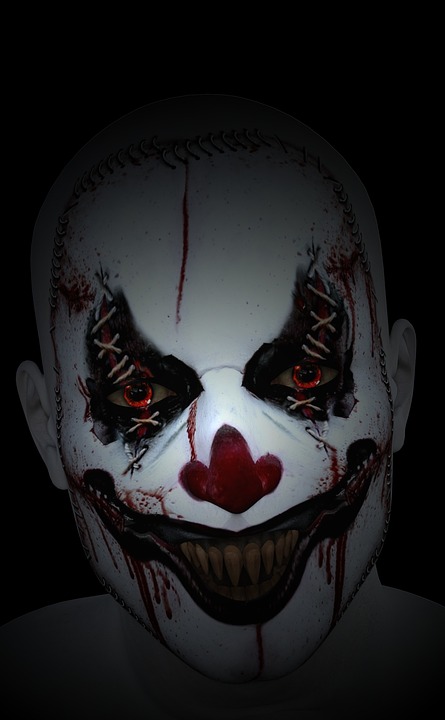
A Laughing Matter


Scowling through the mirror at Earl is a face as twisted as the ones in his nightmares.

One hand tightens on the brown bottle, the other on the glass. The cubes swirl and clink as he pours a drink too many and tosses it back.

“You’re just not making them laugh like you used to, big guy.” Max had given him a sorry grin, like a dog who’s eaten your dinner but who knows you’re not going to do a damned thing about it. “Nothing personal.”

And just like that, here he is, cleaning his crap out of the dressing room for the last time. Over the monitor, Earl can hear the trite jokes from some new kid on the circuit — name of Zamir, of all things, riffing on his foreign parents — to what sounds like an ocean of raucous laughter.

A sound Earl’s only ever from backstage; never in person.

The glass flies from his hand and shatters the mirror, and now it’s not a single scowling mask that looks back at him, but a dozen. Earl stares himself down for a good, hard minute, then grabs his jacket, frayed elbows and all, and beats it.

There’s a storm rolling in. The first fat drops are just starting to fall, but the real action’s a long way off, yet. A couple of drunks are hanging out, grinning at each other in that half-lidded, glassy-eyed way that you only see at one in the morning outside a comedy club. One of them recognizes Earl, and it begins.

“Hey, it’s the comedian.”

Earl knows what’s coming. He pulls up his collar and tries to walk by, but the guy’s in front of him, a hand on his chest, fruity, watered-down vodka on his breath. “You weren’t funny.”

“Sorry you didn’t like it.” Earl sighs. Tries to be contrite. “Look, talk to Max. Tell him Earl said to give you a few free passes for next week.” Max will never give this guy anything, but vodka breath doesn’t know that.

“What, so we can hear more lame jokes about your mother-in-law?”

Vodka-breath’s buddy thinks this is really funny. He bursts out in a laugh that sounds like a choking horse. Again, the sound of laughter that isn’t for him burns away at Earl worse than the bourbon burning through his guts.

Everybody thinks they know what funny is, but they don’t, not really. They don’t laugh at Earl’s jokes. But they’ll laugh at their idiot friends making fun of Earl’s jokes, sure, no problem.

Earl stares at horse-laugh long enough for it to get real uncomfortable. “You think that’s funny? How about a knife in your spleen, think that’d be funny?”

A low rumble of thunder punctuates this, and the drunks back away real slow, watching Earl like he’s rabid.

“Thought not,” Earl mutters, and shoves his way past, making sure to give vodka-breath an elbow to the gut as he goes.

“Asshole.”

Then a bottle hits him in the back of the head, and everything goes dark to the sound of shattering glass.

#

Earl comes to — he’s not sure how much later — choking on the rainwater that’s puddling around him. His head hurts like hell; he rubs at it and his hand comes away hot and bloody. Lightning lights up the deluge that’s falling now, and the thunder rattles his skull.

The club is dark. Max. Probably saw Earl lying there when he left and didn’t do a damned thing to help him.

It’s the last straw.

#

Blue-lipped and shivering, Earl almost knocks the door to his cramped, moldy apartment off its hinges. He brushes past a sink full of dishes and a table covered with slowly decomposing takeout Chinese and makes for the bathroom.

It’s no mistake that his bathroom is set up like a green room; the apartment may be a shithole, but this is a shrine. His shaving kit, immaculately laid out by the sink. A couple of freshly-pressed towels hung on the rack. The bright lights overhead make him blink when he turns them on. Worn, curling pictures and newspaper clippings — over a dozen of each — are sandwiched between the frame and the mirror. Earl catches glimpses of himself in between as he looks back and forth. His father, his uncles, grandfathers and greats.

Down one side, he sees Samuel, the foppish Auguste in a frilled collar and big red nose. Randolph, a simple Whiteface in an oversized suit with white gloves. Freddy, the bumbling Tramp with a chewed-up derby and stippled-on stubble. All grinning in that carefree, gleeful way that clowns have, like even behind all the paint and the makeup and the oversized shoes, they find the whole world funny.

You could say it’s a family business. One that Earl’s tried to avoid. “Cheap laughs,” he always called it. But clowning is in his blood, he knows that, now, as he sees his eyes reflected in the pale masks.

But the other side of the mirror is in his blood, too. Tri-Cities Terror. Seaside Strangler. The Knife in the Night. They’re Earl’s family, too, and their mugshots stare back at him with the same clownish grin as the others, minus the makeup.

If psychology were a thing Earl’s family ever bothered with, they might have made something of the checkered legacy he has inherited. All Earl knows as the storm pounds on the windows is that he tried, he really did. He only wanted to kill them with laughter.

Now, he thinks as he reaches for the greasepaint, he’s just going to kill them.

clown-1537543_960_720

***************************

Holy carp, how long has it been since I turned in a flash fiction?

Well, this one’s not complete, but that’s by design: Chuck’s challenge this week is to start off a horror story that somebody else will (hopefully) pick up and run with. I figured, hey, clowns are topical right now, right?

Anyway. Sorry to the clown-phobes in attendance. Guess I shoulda put a trigger warning up top, huh?

Overtaken


Running, Sprint, Athlete, Run, Athletic, Race, Sports

10 P.M.

The line blurs as I toe it. To my left, Skarsgaard, who ran like a goddamn gazelle to beat me in Boston, wearing the white and blue and these ridiculous bug-eyed sunglasses. He looks like a mosquito with his lanky neck and those big bubbles on his face. To my right, Ellersen, a hotshot kid who came out of nowhere and shot up the charts at trials. He’s shorter, stockier, more beetle than mosquito, but he’s got a closing kick like nobody’s seen. Don’t let him get in front of you.

Behind me, a host of nobodies. Fastest in the world they may be, but I won’t know it because they won’t pass me today. Bring what you will in qualifiers, but all that matters is what you can do on the day.

We wait for the gun, crammed in like cattle, restless as dogs still on the leash scenting a jackrabbit.

Crack.

#

11 P.M.

Fog rests on the track like whipped cream on a slice of pumpkin pie. Won’t burn off until breakfast time, which isn’t for another three hours.

Metronome in my head. Left-right-left-right. The track flies underfoot, the crisscross of dashes and hash marks seeming to paint some ethereal pattern that I could discern, if only I could slow down. Shapes emerge out of the soup and glide past me. Bleachers. Hurdle stack. Coach Cross.

“Nice finish,” she says. “Two seconds ahead of last time.”

Not good enough. I lower my head and tear into another lap as the fog swallows her up behind me.

#

12 A.M.

Skarsgaard matches me stride-for-stride on the left, but we’ve left that little hotshot Ellersen behind. We’re at the end of the first leg, and there’s a nasty hill up ahead, like a ramp that could send a rocket car into orbit. Skarsgaard and his mosquito legs blast off up the hill, but I hang back. A glob of Russians splits and reforms in front of me, and I clip along at their heels as we trudge up the hill.

#

1 A.M.

“The hell’s all that about, then?” Cross barks when I finally stop, three more laps on.

She gave up on calling me in and waited in the bleachers until I stopped. It was the dizziness that got me. I felt like a drunken giraffe on the last lap, my knees buckling under me like a couple of rickety umbrellas.

I raspberry the sweat off my lips and nose and shrug, not really looking at her. “If I’m going to qualify, I’ve got to work harder.”

“You stick to the plan or you’ll burn out.” She thrusts a bottle of water into my chest. “And I don’t coach burnouts.”

#

2 A.M.

The hill feels like it could go on for miles, but we finally top it and the valley spreads out below us: a tiny model city just waiting for Godzilla to trample it. And I feel absolutely radioactive.

I lean into the hill and flow past the Russians like greased goose shit through a flowing stream. They exclaim to one another in their curt, clipped tongue, but their voices are fast drowned out by the whistling wind in my ears. In moments I come up on Skarsgaard, wheezing and panting like my old Chevy. He’s hit the wall, I can tell by the hunch of his shoulders, the shuffle of his feet, the downward cast of those weird bug eyes.

I smack him on the ass as I pass. “At least you took Boston!”

If he’s got a response for that, I’m not waiting around to hear it.

#

3 A.M.

Another workout without Coach Cross. No more chirping in my ear on every pass to “back off,” “be smart,” “hold your pace.” Just me and my watch and the blistering July heat. It’s muggy and still and I can look backwards over my shoulder and see the grass trimmings off the track swirling in my wake.

I sail across the line and check my watch: another second off my last lap. I brush the sweat out of my eyes and laugh to myself.

#

4 A.M.

I top the last of the foothills and see a smooth downgrade leading into the last straightaway, like a red carpet leading straight to heaven. The only footsteps I hear are my own. Far behind are Skarsgaard and the Russians and everybody else. I can feel the medal around my neck already, its heavy weight dragging my shoulders down, the glare of the sun off my chest blinding the spectators in the home stretch. Their cries even overtake the hammering of the blood in my ears, but something’s wrong. They aren’t screaming my name.

“El-ler-sen! El-ler-sen!”

I feel him as I turn, and in my dream, he’s monstrous, leering, a hungry wolf staring down a broken-legged sheep. The shock of seeing him — in perfect lock-step with me, I never even heard him closing in — makes me jump. I stumble. Fall. Like a toddler’s block tower in a slow collapse to the ground. Knees, elbows, chin smash against the blacktop.

Swish. Ellersen blurs past me, moving like lightning in slow motion.

Swish-swish-swish. Three other nobodies right on his heels.

The medal evaporates from my neck. The podium dissolves in smoke. Ellersen’s slightly squashed face looms large, cackling, swallowing me up as I lay on the pavement, bleeding and spent.

#

5 A.M.

I can’t lie here another minute.

I kick off the covers. Ignore my phone. I don’t need all my friends and teammates asking me what happened. I don’t need anything except that medal that goddamn Ellerson’s wearing instead of me.

Which means I need to make a phone call.

Of course she’s awake already. She doesn’t even say hello. “Ready to get to work?”

Yes, I am.

*****************************


Been a while since I partook, but this one comes to you courtesy of Chuck Wendig’s Flash Fiction Friday challenge. This week’s challenge: Insomnia. Inspired by the upcoming Olympics, and a documentary I just watched: Fittest on Earth.

Touch Will Come Second


Door, Entry, Hospital, Passage, Red, HandleAlistair Van der Berg opens what he thinks are his eyes and looks up into blinding white lights. Into his field of vision swim three dark blurs in silhouette that resolve, like hardening acrylic, into androgynous shapes.

“Mr. Van der Berg?” says one of the shapes.

“Yes?” Alistair’s voice comes out stronger than he expects.

“Please hold still. We have to check a few things.”

Alistair turns his head and glances down toward his body, concealed under a grey sheet. Lumps and points in all the right places, but he can’t feel any of it. The sheet shifts and moves like a sackful of kittens, but his arms and legs are restrained. “What’s happening?”

“Alistair,” says another of the shapes. “Calm down.”

Alistair looks around the room in a panic. By the door, a sign. Synthetics testing.

It’s happened, he realizes. I died. I’m back. I’m alive again. My brain in a plastic body. “What year is it?”

The shapes have resolved into murky faces that exchange glances with one another. “What year do you think it is?”

“How did I die?”

“One thing at a time, Mr. Van der Berg.”

“Don’t give me that. I’m back from the dead, and I want to know what’s –” He stops as his eyes drift sideways and catch the mirror against the far wall. Not a mirror. One-way glass. Instinctively he points toward it, but his arm only rattles in a restraint he can’t see or feel. “Who’s in there? Is it my children? My grandchildren?”

“Easy, Mr. V –”

“NO!” He reaches out for the voice, and this time, there’s a squealing, shearing sound as the restraint gives way and he swats the androgynous figure aside with a fleshy thwack. He stares at his hand; pale and perfectly manicured, manacled at the wrist. A torn hinge dangles lamely down his arm. He jerks his other arm free of its restraint, then yanks his legs toward him with an awful tearing noise, and he’s free.

There are sounds of squabbling behind him as the other attendants rush to the one he’s injured. Alistair ignores them and goes to the mirror — or tries to. As he swings his legs out of the bed, they tangle in the hospital gown he can’t feel, scrabble for purchase on the cold tile floor, buckle, bend and collapse. He goes down in a heap of pain and confusion.

A voice crackles from above. “What’s wrong with it?The voice is familiar, but he can’t say why.

An androgynous one replies: “Touch receptors aren’t working. He won’t be able to walk or move effectively yet. Photo and audio receptors are online for this primary test, along with speech protocols. Touch will come second.”

The lights go on behind the mirror, and suddenly Alistair is looking past the crumpled wreck of his body at himself standing behind the glass. An older version of himself. Stern. Thoughtful. But alive. And unpitying.

The voice he now recognizes as his own crackles through the speaker again. “Shut it down.”

A tiny electro-dart buries itself in Alistair’s neck, but he doesn’t feel it. His processors drone off into silence and his servos go limp.

**********************

Chuck’s challenge this week was a random title. Mine? The Touch Will Come Second. For artistic reasons I dropped the “the,” and not only because I wanted a reason to say “the the” in my explanation.


Pegasus Intelligence


Beer, Beer Garden, Thirst, Glass Mug, Drink, Beer Glass“Ernie Collins.”

“The name doesn’t ring a bell. Then again, I’ve only been working here for six months or so.”

“Oh. Well. He’d have been here back in ’07.”

“I see.” Lana, feeling that the conversation had reached that inevitable point where things peter out and the bartender and patron go on with their individual existences, began polishing glassware, and only when she noticed Eddie gesturing at her did she realize that he had continued speaking.

“And from there, it’s on to Melbourne, to a little hole-in-the-wall joint called Dingo Lingo.”

She angled back into the conversation as best she could. “I’ve never heard of it.”

“Of course not. Very few people who haven’t cracked the top-10 bestseller list have.”

Lana squinted at him, still turning a glass in her hand. It was impossible to tell if he was putting her on. The crazy ones never seem crazy. “And you’re going there to …?”

“To drink it all in, man.”

“What, Dingo Lingo serves some proprietary drink?”

“No. What? No. Look.” Eddie pulled out his phone and opened his notes app. He tapped on a file, zoomed in on a maniacal-looking spider web diagram dotted with pictures of towns and bars and faces she didn’t recognize, clicked and zoomed and scrolled a few more times, and finally stopped and shoved the phone toward her. On the screen was a picture of an absolutely normal-looking guy. Slightly unshaven, slightly frumpy, a below-average intelligence gasping for help in his faraway stare as he sat at a Starbucks street table. “Because of him. Haven’t you been paying attention?”

“I fear I may have lost the thread.”

Eddie sighed. “He’s a Pegasus.”

“A what, now?”

Eddie sighed again, harder this time, to make clear that he was explaining something he shouldn’t have to explain. “In Greek myth, Pegasus was said to strike springs from the very ground where his hooves touched.” He smiled at Lana as if this should have meant something to her, but it obviously didn’t. “Pegasus was the personal transport for the muses. Like Uber, but, you know, a horse.”

Lana gave an ever-so-slight shake of her head. “Muses?”

“The Greek goddesses of inspiration.”

“Okay, and you want a drink from the bar because –”

“It’s a metaphor, man! It’s not a literal spring. Ernie Collins is not a goddamned winged horse. But he’s a Pegasus in spirit. He travels the world on his parents’ retirement fund, and every so often:” here Eddie rapped his fingers on the tabletop and made a clop-clop noise with his tongue. “Inspiration springs forth.”

“So you think,” Lana said, studying the freshly polished bar as if it might offer some insight on how to deal with a clearly deranged individual, which it did not, “that just by being in these places, you’ll … what, soak up some inspiration?”

“Exactly.” Eddie folded his arms and leaned back from the table as if he’d just solved a two-hundred item crossword puzzle. He raised his eyebrows at her, again, as if he expected her to be impressed.

“And that’s why you haven’t ordered anything but that one beer, then?” She tried to keep the edge out of her voice, but he’d been nursing the one drink for three hours. It wasn’t like she needed him to vacate the stool — it was a Tuesday night, after all — but principle dictated that a bar tab should at least exceed in dollars its length in hours.

“Nothing personal, you understand.” He picked nervously at the label which had already been thoroughly picked at. He came away with bits of glue under his fingernails. “But I’ve got quite the itinerary ahead. Atlanta. Seattle. Toronto. Melbourne. Tokyo. Gotta make every dollar count.”

“You can afford travel to all these places, but you can’t afford another drink?”

“I’ve got a GoFundMe page set up. I’ll move on when I can afford airfare.”

Won’t hold my breath for a decent tip, Lana thought. “You’re a writer, then?”

“Trying to be,” Eddie replied, a sort of self-satisfied smirk tugging at the corners of his mouth.

“What have you written?”

“Well.” He scratched the back of his neck. “Nothing yet.”

“Oh, a work in progress?” Lana returned to wiping glasses. “I had a roommate in college who always had about a dozen works in progress. Never did get published. Wrote like a demon, though.” She glanced sideways at Eddie. “Ordered more than one drink at happy hour, too.”

“Thing is, I don’t want to just write anything. When I actually sit down to write, I want it to be the best. Hence: following in the footsteps of Pegasus.”

Lana frowned thoughtfully. “I suppose there’s intelligence of a sort in that.” Then her thought caught up to her frown. “Wait. You mean to tell me you haven’t actually written anything yet?”

“Er.” More glue, more fingernails. “Not as such, no.”

“Not a draft, not an outline, nothing?”

Eddie shook his head.

“I mean, you at least know what you’re going to write about, though?”

“Well, kind of. I mean, I have some ideas.” He jabbed at his phone again, and showed her the picture of Ernie Collins. “Truth be told, that’s kind of what I was hoping this whole Pegasus thing would help me out with.”

“Let me make sure I understand clearly,” Lana said. She set her glass and rag down and leaned in close. “You want to be a writer, but you haven’t written anything. Instead, you’re going on a trip around the world, on the dime of internet strangers, hoping to sponge up some inspiration … from a man you feel is the embodiment of a winged horse?”

“To be honest, the GoFundMe only has fifteen dollars in it so far.” He eyed the last swig in the bottom of his bottle, felt the moment was right, and swallowed it. “From my mom. Actually –” he waggled the empty bottle — “how much did you say this was, again?”

######

Chuck’s challenge this week: The random title challenge. My title for the week was “Pegasus Intelligence,” which was the fanciest bit of nonsense I’d heard in a while. A little bit of research, though, led me to a place I didn’t entirely hate. It’s more of a vignette than a story, but, well, that’s life, innit?

Also, about halfway into the writing, I realized that I have here the seedling for a … not exactly a sequel to my first novel, but for another story in the same universe as that one. Dammit, Chuck. These short stories are supposed to let me vent pent-up creative energy, not spawn entire novels to go clanging around in my skull.