Scrub Up and Slice In


The revision process for a novel has a series of steps associated with it, much like the stages of grief.

First, you’re kind of enchanted with this thing you wrote, and you spend a lot of time patting yourself on the back: hey look at that neat character I wrote back then, boy that twist was kind of clever, and wow this might not actually be that bad to edit. (See also: my posts from about six weeks ago when I started the current edit.)

Then you begin to hate the thing you wrote, because the more flaws you come across, the more glaring they become and the more likely you are to see more flaws. A snowball rolling downhill, collecting more snow and branches and dead moose until it flattens a town.

Then, resignation: the thing is what it is, and no amount of unicorn-chasing denial or grizzly-bear-wrestling self-hate is going to change it, so with steely resolve, you go to work on it. Narrative Surgery. With no training, no qualifications, and no idea what you’re even supposed to be doing, you scrub up and dive in.

The problem is, like an insane spider’s web, every part of the thing is interconnected. There is no such thing as a “minor correction.” The hip-bone is connected to the leg-bone, but in this metaphor, it’s also connected to the patellar tendon, the lower intestines, one and a half lungs and the eye on the non-heart side (which — surprise! — is not the side you thought it was).

You go to make your incision, to correct that one little nagging issue in the third chapter, and blood starts leaking out of the character resolution in chapter eighteen. You try to tamp that down with a little narrative pressure, but that causes a backup in the side conflict while also necessitating the introduction of brand-new tissue in the opening chapters. You set to work rectifying all this, but because you also have a full-time job and for god’s sake you’re only human, your rectifications themselves are flawed and not as focused as they maybe should be because oh my god there’s inkblood everywhere.

surgery-676375_1280
Did I drop my keys in there? I think I dropped my keys in there.

Now you’ve got internal bleeding and contusions popping up under the skin all over the place, and you’re not actually any closer to fixing the problem you set out to fix in the first place, you’re just playing Whack-a-Mole with the fallout from your “fixes.” Worse still, you’re starting to see that the big problem you ignored in the first draft — the one you just stuck a post-it note to your future self on that read YOU DEAL WITH THIS ONE, GOOD LUCK (an actual comment I left for myself around the 1/3 mark of this particular draft) — has metastasized out of control. A broken bone repaired by interweaving itself with all the surrounding tissue. The hive in Aliens that has swollen and spilled over, and now threatens to consume the entire ship. Every blood vessel, every nerve ending, every plot line, every narrative thread seems to run through this one spot, this one tangle of viscera and scar tissue.

And you don’t want to do it. To go to work on this thing will throw the entire project into limbo. The bleeding will be massive, the repair work intensive, the recovery extensive. But that angry little knot, interspersing its evil tentacles through the heart and every extremity of your story, pulses defiantly. Taunting you. And that’s when you realize that you do want to do it, that despite the trauma and triage, despite the emotional and psychological fallout that will surely result, this thing can be saved. It can be made clean again.

So you slice into it.

And as the first gout of narrative blood stain your scrubs, you glance just a little bit further down the chest cavity… and you see another tumor.

Ahem.

So, you know. The edit’s going fine … just fine.

*screams internally*

*dies inside*

*animates self with a straight shot of caffeine to the pleasure center and sheer force of will*

*zombie self continues writing*

This weekly remotivational post is part of Stream of Consciousness Saturday. Every weekend, I use Linda G. Hill’s prompt to refocus my efforts and evaluate my process, sometimes with productive results.
Kicking Myself (Working as Intended)


I thought things were going to calm down in the wake of the musical, but no, life is still zipping along like that length of chain hanging off the back of a semi going down the freeway, striking sparks and scaring the hell out of everybody in the vicinity.

The house is up for sale, and every now and then we have to drop what we’re doing and go somewhere else for a half hour at a time.

I’m back to work on the novel project, which comes with its own particular well of all-consuming gravity.

Then there’s standard end-of-the-school-year stuff: meetings and grading and panicked students banging on your door and the parade of deadlines and activities leading up to summer.

And, oh yeah, let’s not forget the unceasing face-palmery of the current scene in politics, from which there is no hiding, only the sweet release of occasional naps.

It’s the perfect storm of Things To Keep Me From Doing Things Tedious And Easy To Forget, which is exactly what I’ve been doing. Luckily, a few months ago, I created a tool to give myself a good kick in the donk every now and then: my Story Submission Spreadsheet.

There I was, checking my e-mail and firing up the ol’ computer for a perusal of the day’s events ahead of a thirty-minute work session on the novel (that’s about all I can muster these days, alas — and I have to defend it with the wrath of a cornered honey badger), when my spreadsheet automatically opened in my second tab. And there, in bright, glaring red font, was a badge of shame — the day count since my last submission. 36 days. Over a month.

Yuck.

I grimaced and bit my tongue and made to close the browser window … then didn’t. Instead, I reached for my 2017 Guide to Literary Agents.

A quick dive into the listings later, and I’ve got another query out there in the world, another chance for my work to see the light of day, another chance to share some of my blather with some unsuspecting reader somewhere else in the country.

Which is exactly what I intended the tool to do. Shame me into action.

Last time life piled up like this, I went for, oh, I dunno, maybe six months before it occurred to me that my novel was gathering dust waiting to be submitted again … which shields me from rejection letters, sure, but which definitely isn’t moving me any closer to where I want to be.

So. For once, planning ahead and sinking in a bit of time on the front end pulled my back end out of a slump.

Now if I could simply get struck with a bolt of inspiration to help me untie the knots in this chapter of my novel, things would be … well, not great, but maybe a little less stressful.

A Day of Shoeburyness and Lawn-Care Mutterings


If you have ever wanted to cut off your own piece of the bleeding edge of American literary greatness, this is your chance.

My house is for sale. The culmination of what feels like (and, by now, I guess actually is) months of cleaning and fixing and tearing down walls and repairing pipes and hauling off trash and more than once considering simply setting fire to the whole thing. But of course, the work isn’t over. Now that we have it clean and “show ready”, we have to keep it that way, which has us doing all sorts of things we would never do ordinarily, though my wife insists that normal people do these things all the time.

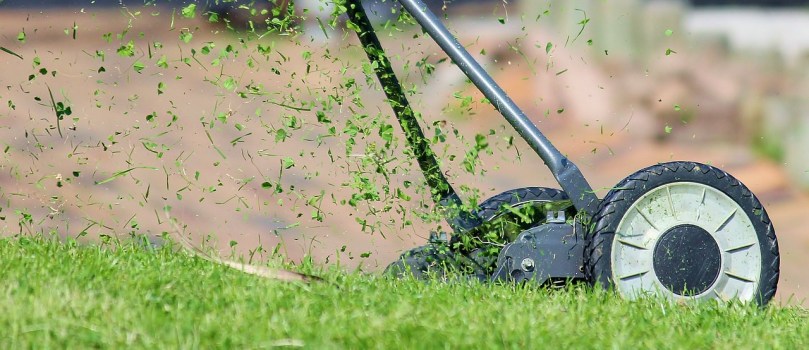
Taking the trash out once a day. Keeping the sink clear of dishes. Vacuuming the floors every day. Keeping laundry out of the floor. Mowing the yard at 8pm on a Friday because it’s literally the only chance we’ll have to do it.

Madness. My wife, somehow, has a reservoir of patience and sense for this sort of thing. I do not. While circling my yard with the mower last night, thoughts of murder circled in my head like swarming crows. What the hell am I doing out here? It’s getting dark, for crissakes. Primeval man survived for tens of thousands of years without mowing the damned grass. It’s all gonna grow back when global warming wipes us all out, and the kudzu will consume the country. Why fight it?

lawn-mower-938555_1280

I may have mentioned, here or there, that yard work is a dirty word with me. I’m not exaggerating. My mind goes to some dark places when I’m holding garden tools.

But it has to be done to keep the house show-ready, so mow I did. Just part of the deal of trying to sell the place.

Also part of selling the place? A sensation that I don’t have a word for: The vaguely disconcerting , slightly unsettling feeling of knowing there have been total strangers tromping through your house, peeking in your closets, judging your choices in counter-toppery.

Douglas Adams once wrote a book full of words like this, and I’m sorry to say that I have not yet read this book — The Meaning of Liff. But from the liner notes and offhanded comments found in The Salmon of Doubt, I know that within that text is a word that comes close: Shoeburyness, the uncomfortable feeling you get when sitting on a seat that is still warm from somebody else’s bottom.

This is stronger than that, but less extreme than the real discomfort and terror that, for example, my sister-in-law is experiencing, having been the recent victim of a break-in that did not apparently result in any theft — somebody just broke in and skulked around.

It’s somewhere in between those two extremes. Odd. Definitely not pleasant. But not actually disruptive or traumatic in any way.

Again: nothing to be done about it. Just part of the process. And, hopefully, the beginning of the end of the all-consuming task that selling our house has become. I don’t quite see the light at the end of the tunnel yet, but I can’t see the light from where we entered either at this point. There’s a comfort in that — in seeing how far we’ve come — even though this mushy middle part is bleak.

At least I’m writing again. Words on the page. The concrete evidence of progress.

The light at the end of the tunnel has to be up there, somewhere.

This weekly remotivational post is part of Stream of Consciousness Saturday. Every weekend, I use Linda G. Hill’s prompt to refocus my efforts and evaluate my process, sometimes with productive results.

A Day of Spiders and Fire


*Tries the door*

*Rust flakes off the stuck knob*

*Lowers a shoulder*

*A cascade of spiders from within*

*Returns with fire*

Well. It’s been a minute, hannit?

The show is over, and after a few-days’ refractory period, it seems like there’s very little left to do but return to normalcy around here, whatever that is.

Time to pick up that dusty manuscript that, despite my sincerest hopes and prayers (and you know what they say — nothing fails like prayer), has decidedly not edited itself in the meantime. Well, let’s just see where I left off heRRARGH

Ahem.

Turns out that even my computer files are full of spiders after two weeks away. Webs all over everything. Know what’s worse than getting spiderwebs caught in your hair? Getting them draped across your bald head. *shudders violently*

And, of all days, I picked a Friday to come back to life and get back to work. A Friday! As if to symbolize and cast in bronze the truism that there is absolutely no rest for the wicked, I bend my shoulder and descend into the word mines again, on a Friday.

A payday, even. When my thoughts should, as any proper teacher’s do, turn toward happy hour margaritas and a dogged denial of the looming parade of bills coming due.

Nope. I’m going back to work on the novel.

Why? Because it’s time.

It’s been almost two weeks since I wrote a creative word, and the stagnation of that clings heavy to me, like the funk of a ten-mile dead-of-summer run, a funk that permeates everything in the house. A dead squirrel going sour in the attic. Pipes dripping away in the walls, turning the drywall into sweetly rotten pudding. No escaping the stink, only denial that it’s there — a denial that feels pretty ridiculous when your eyes are watering from the smell. It just won’t dissipate until you burn out whatever’s causing it. Offer it up to the old, eternal gods of destruction and smoke.

And if I don’t buckle down and return to it today, then I’m not just missing one more day, I’m missing three — because I’m darn sure not going to be able to focus on it over the weekend — my first weekend without work in almost a month.

Nope. Momentum matters, and it’s time to break the cobwebs off this thing and get it rolling again. Lest it become a haven for spiders til the sun swallows the planet. Wish me luck.

No, don’t wish me luck. Just arm me with fire.

For the spiders.

Why Live Theatre is like Plinko


Working on a live show isn’t like working on a novel or a school project, outside of the fact that you break your back and your brain working to make it happen. The novel? The project? When they’re done, they’re done. You ship it out the door or turn it in, and it is what it is — nothing has the potential to change it, really.

A live show? Sure, we’re done working on it, but that doesn’t mean it’s finished. It’s never finished. It’s a living, breathing organism, powered by living, breathing humans susceptible to the nerves and emotions and follies and foibles that all humans — to say nothing of high school teenagers — are vulnerable to.

Every show will be different: new highs, new lows, new notes in the solos, new dead spots marking the missed cues, new pauses for laughter you weren’t expecting, new silence when you were expecting laughter.

When I was a kid, and I’d visit my grandmother’s house, we’d always watch the Price is Right together. Old school: the Bob Barker days. It was her daily ritual and my novelty: I think she loved vicariously watching a schmo from Lubbocksville, Nowhere go up on stage, win a game of skill and/or chance, and win a car or a vacation or a toaster. I just loved watching the colorful games, especially the one where the mountain climber hiked up the side of the mountain (and if the contestants overbid, he’d fall right off the side… man, it still brings a smile to my face!).

I still watch every now and then, though these days my greatest pleasure is watching the cynical, smarmy a-holes who, when they think everybody else has overbid, will smugly bid $1. (Even better, when that card gets played too early, the doubly cynical, triply smarmy SOB that bids $2.)

But my favorite game back then, without a doubt and bar none, was Plinko.

Image result for plinko board

I don’t know why. Of all the games on the show there was no game like it. All the other games either required some consumer savvy (which item costs more?), some physical ability (they had a minigolf game that I adored, because once upon a time I thought golf was cool, a misconception I am happy my life and my distaste for the pastimes of the especially affluent has cured me of), or some combination of the two, but not Plinko.

Here’s a game that gives you a handful of chips and says “good luck,” like a roulette wheel with a bad attitude. The goal is to get your chip to land in the $10,000 spot down there, or maybe the $1000 slot — and notice that the only way to win nothing is to almost win the big prize. So: the contestant climbs up the stairs to stand behind the board, agonizes deeply about where to place their chip, as if strategy would help them in the least, and then — lets it go.

Plink, plink, plink. The chip bounces down the board like that guy in Titanic who falls off the capsizing ship and clangs off a rail before spinning, spine shattered, into the deep. Sometimes it swerves this way and that, dancing a mad jig across the board before settling at the bottom; sometimes it beelines, as if guided by a nervy surgeon’s hands, to its destination. Sometimes the chip seems to hit every single peg on the board as it clatters home, sometimes it seems to get home without a single disruption.

Then the game is over, and the player goes home with either her winnings or her idiotic regret that she should’ve placed that last chip one slot to the left.

But it’s not the board’s fault, and it’s not the player’s fault, if the chip doesn’t land where you expect — it’s simply chance. (And air currents, and the microscopic imperfections in the surfaces of the chip and the peg, and the rotational forces you imparted when you dropped it, and the residual oil on your fingers, and the quantum particles that jumped in or out of existence on the plains of Africa while your chip was dancing madly toward the bottom.) The moment the chip leaves your hand, in other words, all you can do is watch and hope.

And a live show is like that. You do all the preparing you can, you hem and you haw over the minutiae — should that actor stand here or there as he delivers that line, should that set piece maybe be angled a bit more steeply, should I abandon the whole thing and go raise goats in New Zealand? — and then you make like Elsa and let it go.

And it’ll plink plink plink its way to the bottom, with wholly unexpected twists and turns some nights, and seemingly divine guidance on others, until it inevitably reaches the end of the line.

All you can do is hope to avoid the goose egg.

In other (possibly related) news, it’s show week — AKA hell week — for our musical. See you on the other side.