The Dawdle


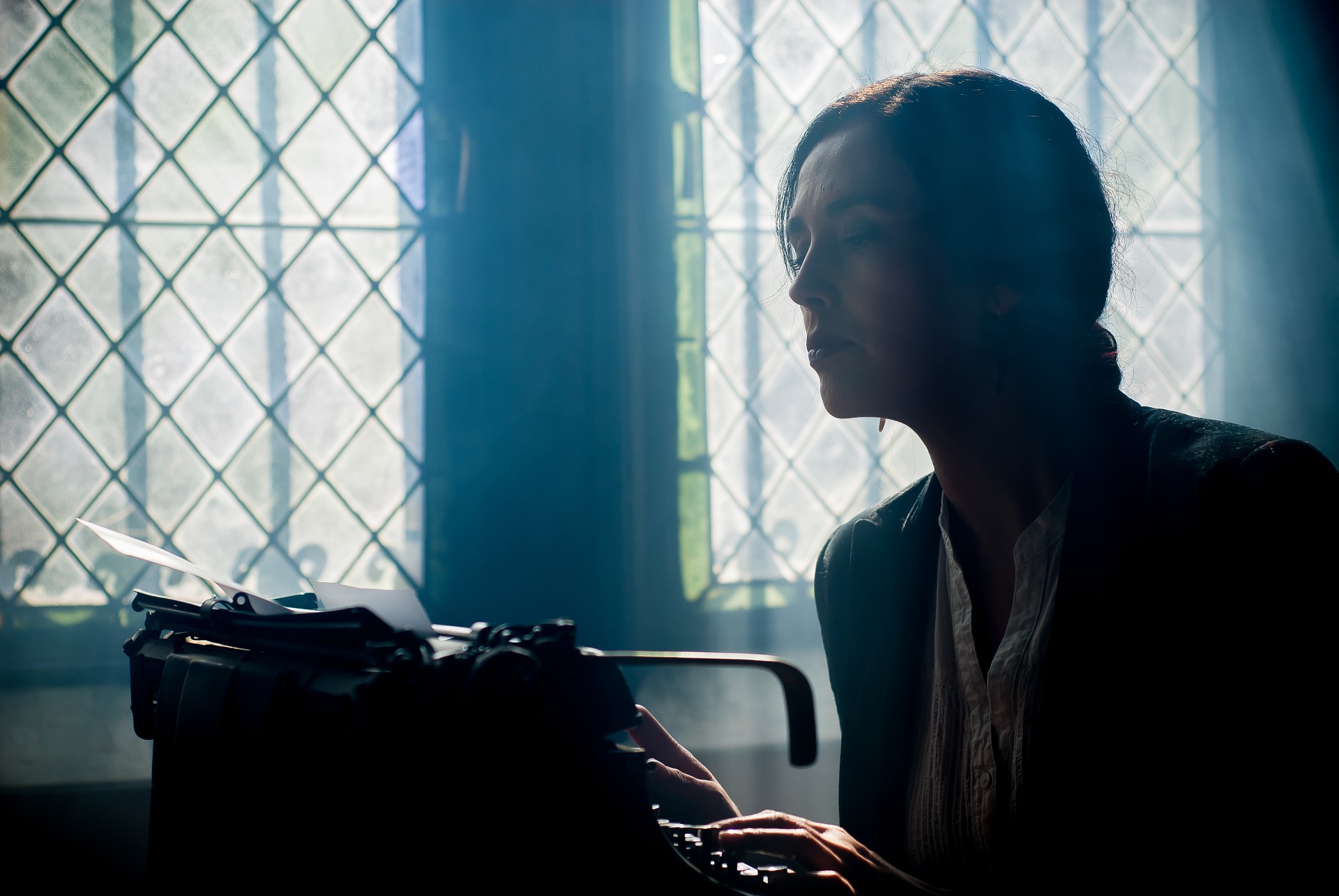
She wanted to write a story, so she sat down at her desk to do just that.

“I can’t possibly write without the right tools,” she thought, although she had an entire desk full of pens and pencils. (Just not the right ones.)

So she loaded up her car and her cash and went to the store to buy pens and pencils and new-and-improved ink that were just right for this story and special paper made in the tradition of ancient Egyptian papyrus which wasn’t particularly relevant to her story but the thought of which appealed to her mightily. These things she took home and, just to test them out, wrote her grocery list upon them, and they were as lovely as she had hoped. So she sat down to write.

But the temperature in the room was a little bit stuffy.

“I can’t possibly write in these conditions,” she said. “What if I begin to sweat? And the sweat drips upon the paper and the ink, so carefully picked out and perfect for my purpose, smears, leaving what I’ve written unreadable?”

So she got up to adjust the thermostat. As she did, she happened to glance out the window and see the weather. Delightful! Sunny and breezy and oh-so-inviting.

“Actually,” she said, “It would be such a treat to sit outside, surrounded by nature, to feel the breeze upon my skin and the sun upon my face. Such things would surely bring me even greater inspiration and make my story that much more perfect.”

So she gathered her belongings, her new pens and perfect paper, went to the front porch, and there sat down to write her story. But as she sat, she found that the outside was not at all like the comforts of her writing desk, and was perhaps not suited to the task at all. There was no place to rest her special paper except for her lap, which she felt was not the most conducive position for writing, and her pens, when they were not in use (which was often), tended to roll off her leg and clatter upon the woodwork with a noise not at all restive to her ears.

For that matter, come to think of it, while the sun did feel nice at first, it made her uncomfortable after a time, and she found herself wishing for shade. The breeze, when it blew, alleviated this, but also whisked her pages away, so that she had to chase them into the yard and down the street.

Also, there were bugs, which were not especially helpful to her practice. So she went back inside.

As she sat back down at her comfy, perfect desk, though, she made another unhappy discovery: the thermostat, previously adjusted, had cooled the room rather too much. She adjusted it again, and was again distracted by the lovely weather outside, even though she knew it hadn’t worked out well previously.

The temperature fully suited to her creative needs, she sat down, finally, to write. But there was something else.

“What if I get thirsty?” she wondered. Truly, it would be a shame to begin her task only to be interrupted by a minor physiological annoyance. Luckily, she had an entire assortment of heated caffeinated beverages to alleviate this problem. She spent the next twenty minutes brewing the perfect cup and waiting for it to reach the perfect temperature.

At long last, it was well and truly time to write. She sat down, sipped her heated beverage.

Unfortunately, she could think of nothing to write.

“What I need,” she said to herself, “is some inspiration.”

So she set aside the story she had not yet begun to write and went in search of other stories. She started with a book she hadn’t yet finished, working her way through a few chapters. She then moved on to an old favorite film whose concepts and themes had always intrigued her. True, she’d seen it before, but a fresh viewing was sure to send up some creative sparks. Then, finally, to a TV show which she didn’t have a particular personal interest in, but she had heard good things.

Fully saturated with inspirational material, she returned to her chair. But by now, the sun had gone down.

“This will never do, the light is not quite right,” she moaned. She adjusted the lamp so that the light fell, not so much directly upon her and her work, but rather against the wall, sort of splashing down almost by accident across her desk, and this, she felt, set the right ambient mood, and she was pleased.

“Well, the light is right,” she thought, sitting down once more, “but the silence is positively unnerving.”

She turned on the radio, but the music and the lyrics soon distracted her; what she needed was the right music, so she began to search and search, curating just the right playlist to suit the ups and downs and dramatic swells for the story she was now sure to write.

The playlist was 78 hours long, which she felt might be a bit excessive, but she could always audit it later.

Everything was, now, finally, and without exception, perfect.

She sat at her desk. She drew back her sleeves. She grasped her pen. She checked her watch.

Good heavens.

Well, it had been a good effort, but it was simply too late to write tonight.

“I’ll try again tomorrow,” she said, laying her pen down on her blank pages and turning off the lamp.

Image by Voltamax at Pixabay.com.
On Mindfulness and Depression (or, a Superpower You Didn’t Know You Had)


So here’s a dirty little secret: I’m off my meds, and have been for several weeks now. I didn’t go off lightly, and I didn’t go off without a plan, but from the moment I started taking meds I planned to go off them. And though I accept that I may, in fact, need the brain pills for the rest of my life, I don’t want to need them, and want to give myself a chance at being normal without them. Which is to say that going off them is a thing I view as an experiment, more than a man-I’m-glad-that’s-over step into a new chapter.

Several weeks in, though, I’ve met my first challenge: last night, for whatever reason, I felt the chasm yawning open beneath my feet, felt the old familiar monster beckoning me into the dark. True to form, I couldn’t point to what was causing it; I was fine one moment and overcome the next, the way a shadow slips, without notice, into existence when the clouds part and the sun shines down. Maybe it was the novel work I’d failed to get done over the last few days (even though my days of late have been extremely productive). Maybe it was the episodes of The Handmaid’s Tale we’ve been watching, poisoning my thoughts and my outlook. (Good TV, but man is it bleak.) Who knows.

Point is, the anxiety / depression / spiritual dread was there, unmistakably so, and I felt its pull. Walked right up to the edge, peered down into the dark, saw it there. Not terrifying, not menacing, just dark and vast and empty, like the ocean at night. And the messed up thing? I wanted to dive in.

Here’s where I need a detour.

One of my fascinations (I know, I know, add it to the list) of the last couple of years has been mindfulness. And it’s one of those fascinations where, like, I admire it at a distance, the way you admired your first crush from across the lunchroom but never actually had any plan for approaching them, let alone speaking to them. I haven’t done any real reading on mindfulness specifically, in other words, only brushed up against it in passing, thought “wow, that looks awesome, I should learn more about it,” and moved on knowing just enough to get me into trouble (as I do with so many other things in this life).

What I know about it is this: mindfulness is a superpower. And I say that not to exaggerate and overstate but to communicate how powerful it actually seems to be.

To fully explain THAT, I need another detour.

A fact of this life is: we’re ruled by our emotions. Mark Manson’s Everything is F*cked details this a lot better than I can, but essentially we have two brains: the rational brain and the emotional brain. We like to think that the rational brain drives the bus, but it doesn’t. Our emotional side drives, and it sometimes allows itself to be influenced by the rational side.

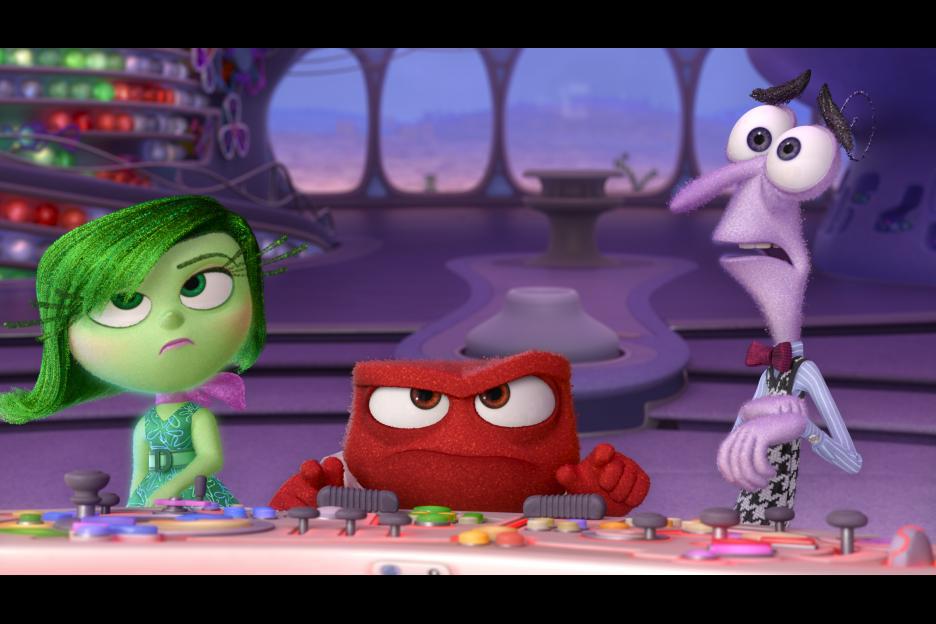
Think about the last time you were angry, and said or did something offhanded or rude to somebody you care about. Was that you doing or saying the awful thing? Well, yes, but it certainly wasn’t a rational, clearly thinking you. The rational, clearly thinking part of you knows that the things you do have consequences, and it will keep you from doing those things that have unfortunate consequences. Like shouting at your loved one. You wouldn’t do that normally, but you were angry, and it just came out. The Pixar film Inside Out represents this pretty clearly, come to think of it. The little girl’s emotions take turns behind the steering wheel, and when Anger or Sadness is driving, well, she acts accordingly. (For that matter, Intellect and Rationality are characters not appearing in Inside Out. Pixar is cleverer than we even realized.)

Lewis Black, Bill Hader, and Mindy Kaling in Inside Out (2015)
I’m sure I don’t need to tell you that these characters are property of Pixar, not of me.

Detour within detour over, let’s circle back to mindfulness-as-superpower. Mindfulness, as I understand it (and let me fully disclaim once again that I’m not an expert and don’t fully understand it), is simply the ongoing practice of examining what’s in your own head. Not trying to “fix” what’s in there, just noticing it. Moment to moment, turn a magnifying glass inward, see what’s in there.

Consider: A Jerk cuts you off in traffic, your blood pressure rises, maybe you pound the steering wheel or wave your hands at said jerk in socially unacceptable gestures, probably a few words come out of your mouth that wouldn’t come out in front of, say, your grandmother. Mindfulness says, pause, examine. That’s anger, your thinking brain will tell you. Anger is currently driving your bus.

Or: You’re at work, plugging away at a project you’re behind on, and a friend pops in, invites you to lunch. “I don’t have time,” you snap, probably more forcefully than you should, and the friend skulks away, and maybe you feel worse. If you can force yourself to be mindful in this moment, you do the pause and examine thing. That’s frustration, you realize. You’re snapping at your friend because you’re frustrated about work. Frustration is driving your bus.

Needless to say, the practice is difficult, especially when you need it most. But here’s why it’s worth practicing it (and why I am practicing it — in fits and starts and with various levels of success, but still, that’s why they call it “practice”): because emotions are no more material than fog, than a shadow, than the stinky aroma of last night’s leftovers that you forgot to put in the refrigerator. (Let’s just stick with the shadow metaphor.) The moment you turn a light on a shadow, it disappears. It simply evaporates; it cannot exist where there is light. Emotions do the same thing when faced with the harsh light of rationality.

What that means — and what I’ve experienced — is that the realization that emotion is in the driver’s seat kicks emotion out of the driver’s seat. The moment you can notice, when the jerk cuts you off in traffic, this is anger, you’re angry and that’s why you’re shouting and swearing, it suddenly feels very silly to continue shouting and swearing. Turn the floodlamp of mindfulness on the shadow of anger (or frustration, or disappointment, or whatever), and the shadow boils away. It may not fix the injustice — you still got cut off, after all — but it puts control back in your hands.

This is the superpower. If you don’t have to be ruled by your emotions in a world where everybody is ruled by their emotions, then you can act with a clarity that is denied to most people most of the time. You can literally change the way you feel just by noticing you’re feeling a way that you really rather wouldn’t.

For a bit more reference, Sam Harris also has a lot to say about this topic, though I couldn’t point you to any one particular clip or passage in particular. But this one looks good:

And here’s where we close the loop and I bring us all the way back (finally!) to myself, last night, standing on the edge of that cliff, feeling the pull of those depressive impulses, or if you like, feeling myself sliding down a crumbling dirt hillside toward the crevasse. Not thinking about the fact that I’m off my meds and that may be playing a role, not analyzing why I felt so crummy, just feeling bad and, perversely, thinking it was probably going to get worse, so why fight it?

Then: mindfulness.

This is depression, said the voice of rationality. For whatever reason, you’re feeling like sh*t. Depression is driving the bus right now. And, poof. I didn’t magically feel better, but the spiral stopped. I stepped back from the edge, I stopped sliding down the hillside. And I went to sleep thinking that was weird, I wonder what brought that on instead of thinking I feel sh*tty and everything is sh*tty and tomorrow’s probably gonna feel sh*tty too.

And I feel good this morning. Not great. I can still feel last night’s funk around the edges, but depression is not driving my bus. Restlessness is, a little bit, because I’d love to get out and do something but it’s too flipping hot. But so is contentedness, because I didn’t let myself fall into the abyss, and instead I’m writing (always a good thing) and my kids are on the sofa watching a movie together and being adorable, and I’m happy to let that feeling drive the bus for a while.

Mindfulness isn’t a cure-all. For depression especially, when you’re in the abyss, thinking isn’t gonna save you. But for the day-to-day struggles, when you feel yourself sliding? Mindfulness really is a superpower.

Terrible Reviews: Everything is F*cked


I picked up Mark Manson’s latest offering, Everything is F*cked, at my local library on the New Releases rack. Readers of the blarg will know that I love profanity, especially when it pops up in places it doesn’t belong (like a book title!). So I was intrigued. Of course, I also quickly realized that this is the same Mark Manson who wrote The Subtle Art of Not Giving a F*ck, a book whose title also pleased me mightily but which I never bothered reading because I figured — I’ve kinda got that covered. I’m notorious — and it drives my wife nuts — for not caring about what other people think, for giving the metaphorical finger to social niceties, for just putting my head down and minding my own business. But after reading Everything is F*cked, I’m rethinking my decision not to read The Subtle Art, if for no other reason than that I want to hear more of what Mark Manson has to say, on virtually any topic.

Anyway, I got the book and immediately began my campaign of defacement of public property, i.e. dog-earing the hell out of this book. Almost every page featured a passage or two that made me sit bolt-upright, the gremlin in my brain shouting “YES” at the top of its lungs, so this book took a beating. A loving, well-meaning beating (Dog-earing books shows them you care!), but a beating nonetheless.

Because I loved this book. I loved it so much that I had to read it slowly, digesting its insights and offerings over time, like the Sarlacc devouring its victims over thousands of years.

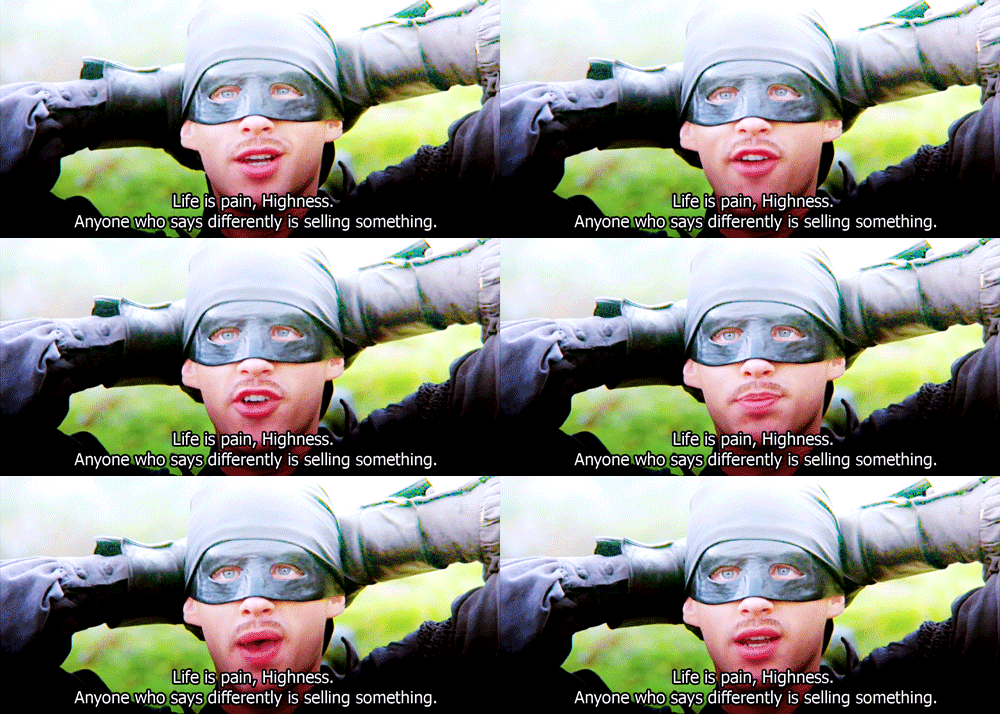
The thrust of the book is that Life is Pain, and the better we can understand and embrace that fact, the better off we will be.

Image result for life is pain gif

While this isn’t particularly surprising news for an atheist at least passingly acquainted with cosmology and the physics of the universe, it does rather put things into perspective.

Rather than try to review the entire book, I’m just going to provide some quotes from its pages, for your own edification and mine.

The Feeling Brain drives our Consciousness Car because, ultimately, we are moved to action only by emotion. That’s because action is emotion. (33)

Much of the first part of the book is given over to the dichotomy of Thinking Brain / Feeling Brain, and how we think that we live our lives with the Thinking Brain behind the wheel, but we really don’t — the Feeling Brain is always driving. Anyway — this quote in particular is relevant to me because this is a concept I’ve attempted to communicate to my Acting students, if never in such succinct language. So I’m gonna be assimilating this quote for future use.

… silencing the Thinking Brain will feel extremely good for a short period. And people are always mistaking what feels good for what is good. (37)

I don’t have a whole lot to add here, except to say that this phenomenon is probably responsible for a lot of the tribal behavior we see these days. You know. Politically. And so on. Ahem.

The pain may get better, it may change shape, it may be less catastrophic each time. But it will always be there. It’s part of us.

It is us. (106)

If the first half of the book is an examination of how our brain deceives us, the second half of the book is an exploration of the thing that drives us — which is pain, and more to the point, an avoidance of pain. We’ve sort of become slaves to the idea that we’re supposed to be happy all the time, that pain is this thing that crops up from time to time, but with the right outlooks and attitudes, we can avoid it or fend it off completely. Nonsense. We are defined and created by our pain, in the same way that the application of fire and heavy blows from a steel hammer create a sword.

Children are the kings and queens of antifragility, the masters of pain. It is we who are afraid. (230)

Antifragility is this concept Manson deals with a bunch in the final quarter of the book: in a nutshell, stress makes an antifragile thing (person, structure, idea) stronger. And because most of us try to hide from pain, our bodies and minds lose this quality. But kids, who haven’t yet been beaten down by the world, don’t know enough to hide from pain, so they run towards it — and this has the paradoxical effect of making them stronger.

The book is a fascinating read, and for a guy who has been sort of wracked by anxiety over the past year or so, it was an empowering and enlightening read.

It also gave me the best summation of my feelings as a writer that I have ever read:

Tips For Surviving A Family Vacation


The fam and I just got back from our vacation to the sunny (actually not so sunny) beaches of South Carolina. Weather was cloudy and overcast with threats of rain each day which actually made the trip delightful — not too hot, no sunburns, and the occasional afternoon cloudburst. Batteries recharged; time to get back to work around here.

Here, then, are five things about vacationing with family.

  1. Kids’ Energy Management. Being back and forth to beaches and pools and outdoor events and sights will wear the kids out. And I dunno about your kids, but when my kids (especially my adorable little girl) get tired, they get angry. You gotta keep their energy up. That means feeding them sugar in irregular large doses. Candy, ice cream, funnel cakes … just shovel it in. Eat meals at odd times. Routine is for the boring. And don’t even think about feeding them a vegetable — this is vacation, for science’s sake.
  2. Your Energy Management. All the problems your kids will have go double for you, because you’re old and tired. Luckily, the same advice also works. Lots of sugar, lots of huge meals at odd times (preferably fried food whenever you can get it, which is always). The golden ticket? You’re grown, so you get to add alcohol to the mix. Do so liberally. Bedtime is for suckers.
  3. Putting the Kids to Bed. Odds are, the sleeping arrangement is gonna leave something to be desired. It is what it is. And if you’ve been doing it right so far, they’re hopped up on sugar anyway. Leave them to their own devices, and they’re gonna invent games to play, babble at each other for hours on end, and otherwise avoid falling asleep. You need help, and the TV is your friend. It’s full of all sorts of programming that will distract and then zonk your kids right out. We discovered that the Weather Channel is excellent for this — their programming is somehow fascinating and boring enough to make you wish you were watching paint dry all at the same time.
  4. Mornings Are The Best Time. I know this never happens, but you might get lucky: since the kids are so wiped out, there’s a good chance they could sleep in an extra twenty or thirty minutes. You might feel compelled to seize the opportunity for a few extra Z’s yourself. Fight this impulse. Morning is a magical time — you just don’t appreciate it at home because you’ve seen it. Away from home, the magic is unmistakable. Have a tea. Meditate. Write. Run. Whatever. You can nap later.
  5. If At All Possible, Get Your Mother Drunk On Margaritas. Man, oh man, the things that will come out of her mouth.
Myrtle Beach, 6 AM. Got the street all to myself. Magic!

The Pen Makes the Writer (Except it Obviously Doesn’t)


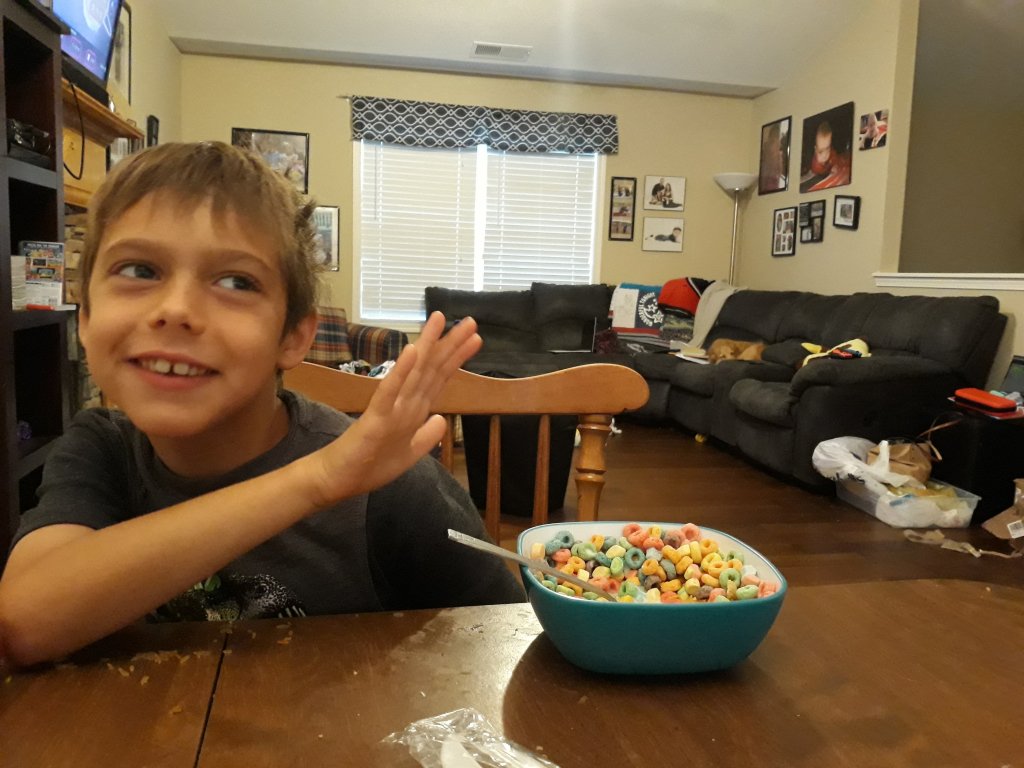
The prompt for this week’s SOCS post is open book, point, write. Now that sounds great and funny and creative for most people, but the problem is that our house is run by this little monster and his little monster sister, and as a result our house is full of their books.

Pay no attention to the clutter. We just got home from vacation, so I’m going to pretend that’s the reason for the mess, and that the house isn’t totally like this all the time.

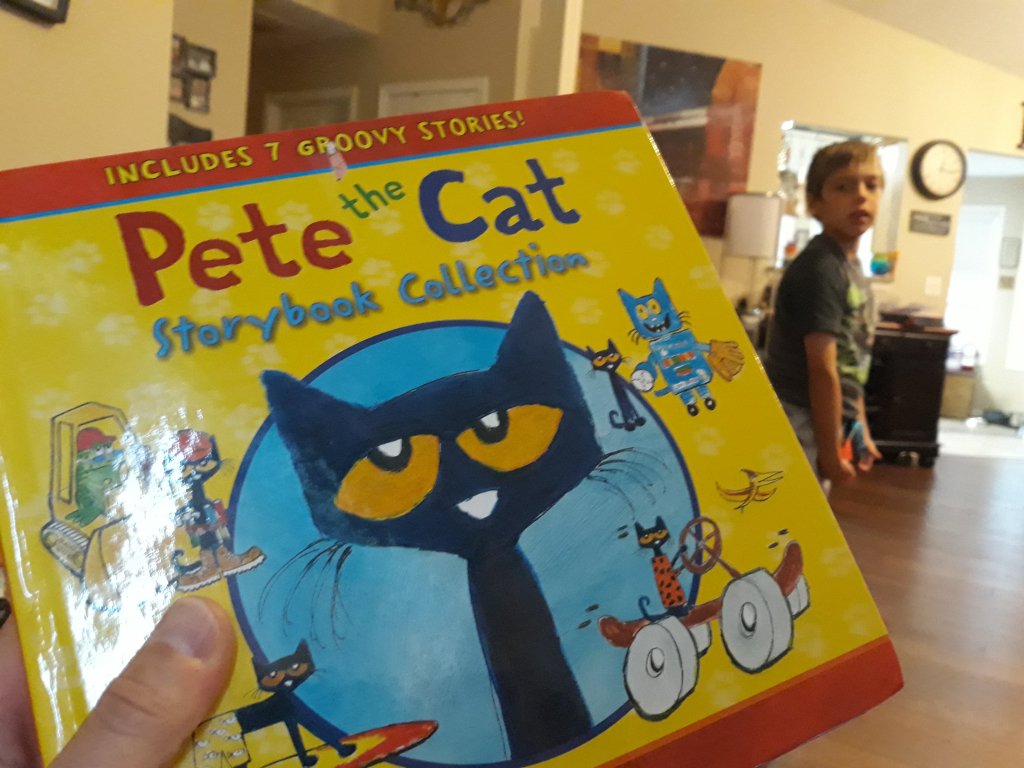
And because the house is full of their books, that literally means that their books are everywhere, so when the prompt says to reach for the nearest book, and you do it in good faith, you come up with this:

AKA “Pizza Cat”

And you don’t get an awesome word like “psychotherapy” or “Mondrian” or “motivation” or “clown car” (sure that’s two words but it’s a great concept in the book I should have reached for: Everything is F*cked by Mark Manson, more on that later). No, you reach for a Pete the Cat book and you get a word like “bat”, and it’s not even a usage of bat that’s fun for a writer to explore like, I dunno, vampire bats or something, no, it’s a literal bat because Pete is literally playing baseball. Not that there’s anything wrong with that, but I hate baseball (almost as much as I hate golf). Still, I’m a good soldier, and the prompt says to use that word, so here I go.

But but but, the prompt is also a Stream-of-Consciousness prompt, which means write whatever comes to mind, and my mind is decidedly not on bats or baseball. So I’m going to remain a good soldier by sticking to the intent of the prompt and going where my mind takes me, which is pens.

Literal pens, specifically, in fact one particular pen in particular, but also pens in the larger sense, the metaphorical sense. (See, if there were a Pete the Cat story about pens, we could have jumped straight to this point instead of all that dithering about with bats.)

Pens are on my mind because I’m having a sort of existential crisis about pens lately, and if you think that’s a silly thing to have an existential crisis about, then obviously you’ve never held a proper pen in your life. (Ok, that’s a little hyperbolic. A little.) Actually, I need to back up.

I’ve been writing by hand a lot over the last couple months, and when you do a thing a lot, you want to make sure you’re doing it right, which is to say, efficiently and, if possible, pleasurably. And while my Pilot G2 pens have been my go-to for years, with all this writing by hand, I wondered if there was a better option. (Writers, let me do you a favor. Stop now, if you value your sanity.) Well, you do a quick google on the issue, and you fall into a hole. Long story short, I invested a ridiculous amount of money in a single writing instrument (though not nearly as much as you could spend if you were of a mind to — the hole on pens goes DEEP) and quickly fell in love with it. It writes so smoothly! It feels so satisfying in the hand! All the good things! Seriously, if you fancy yourself a writer and you haven’t tried writing with a fountain pen, you are depriving yourself.

Thing about fountain pens, though, is they run out of ink and have to be refilled. I planned for this by buying some ink refills when I bought the pen, but I’m too clever for my own good; I took them to work with me (since that’s where I was doing my writing by hand at the time) and left them there. So my super nice pen ran out of ink, and I had no ink with which to refill it.

(Here I must detour to say, I know the amount of thought I’m putting into this is ridiculous. I KNOW. Okay? But again, if you think this is a silly thing to have an existential crisis over, then you obviously haven’t spent any time in a head anything like mine.)

It came time to write this morning’s pages and my fountain pen was down for the count. So I reached for any old pen sitting on the shelf, and I was immediately reminded why I have so quickly taken to fountain pens. The writing felt scritchy, the ink didn’t glide onto the page as smoothly … and as a result, writing my pages was not as much fun as it’s been lately.

Here’s where the existential crisis comes in. I’ve pretty much made it my mantra not to care about brand names, celebrity endorsements, advertisements … anything like that. If it does the job, it’ll work for me has basically become my phrase to live by. I only shop store brands at the grocery store, I order off-brand sneakers … I don’t even know the brand name of the clothes I’m wearing now. I drive my wife nuts because she has wanted to upgrade our almost-20-year-old Camry for years but I wouldn’t dream of it. Why would I? It runs fine. So why am I getting twisted up like hair in a blender about my pens?

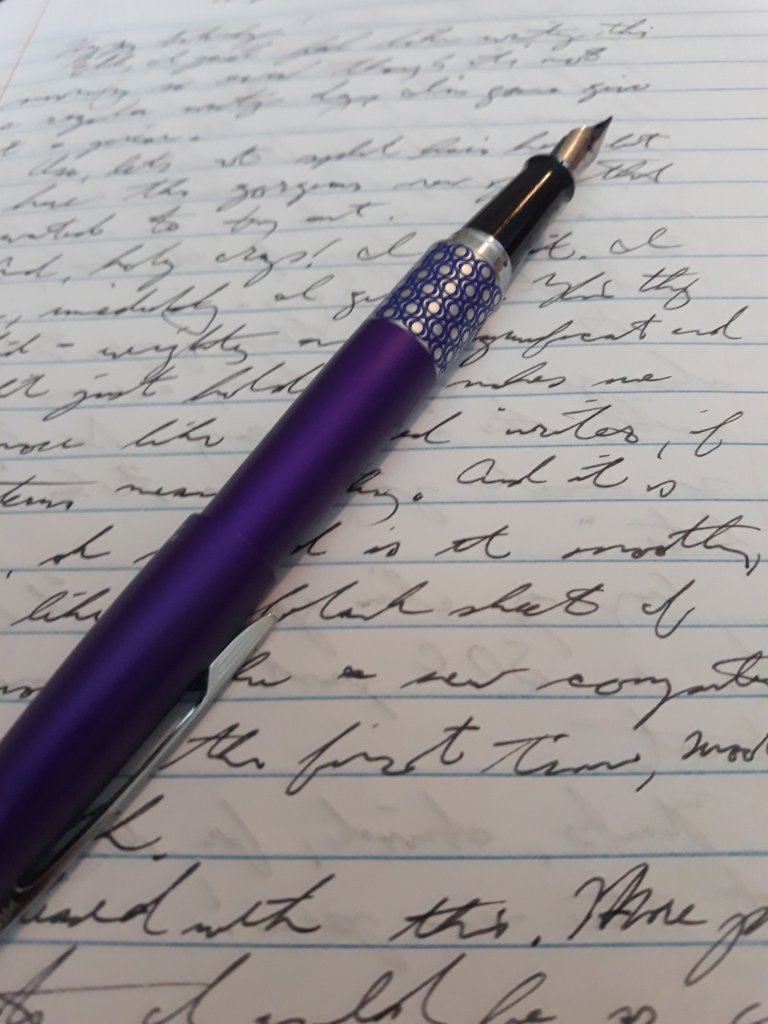
Here, I think, is why: the fountain pen, for one thing, feels really nice to write with. It’s hard to describe, but it literally glides on the page. And when you’re writing multiple pages at a whack, it makes a difference if the tactile experience itself is enjoyable or irksome. Also — the fountain pen just looks like a Real Writer’s Tool. Seriously. Look at that thing!

The weight of it! That nib! (Horrible word, that — “nib” — but who cares, the point of this thing looks like something Shakespeare himself would have used) The user of a writing utensil like this, my brain whispers in my ear, is a user who Knows What He Is Doing When He Puts Pen To Paper. I just feel like a real writer when I use it, and being suddenly deprived of it makes me feel the ever-dreaded less than.

Which is STUPID. A pen no more makes the writer than the clothes make the man (an idiotic expression if ever I’ve heard one). But the heart wants what it wants, and my heart wants my Real Writer’s Pen back. Which is why, even though I dutifully wrote my Morning Pages with an Any Old Pen I found in the drawer, I plan on picking up more ink when I head out later today.

I know, I know. It’s stupid. First world problems in the extreme. What can I say? My brain is broken; this is just the latest example.

This post is part of Stream-of-Consciousness Saturday.