Terrible Reviews: Rogue One (with bonus terrible review of a terrible review)


Whether the downplaying of the formidable cast’s charismatic energies is an intentional downplaying of the potential risk to the characters that they play—whether it’s a matter of not actually allowing viewers to get too attached to characters or actors, not allowing viewers to be bummed out by bad news but rather breezing past it in a spirit of fealty not to these characters or performers but to the franchise—is the kind of corporate Kremlinology that would rightly take the place of criticism in assessing the substance and tone of the movie.

That’s culled from Richard Brody’s review of Rogue One in The New Yorker, and holy crap. I mean, holy crap. That’s one sentence. One. I challenge you to read that sentence without going glassy-eyed.

But let me circle back to that review in a minute.

I saw Rogue One this weekend. It’s good. Overhyped, I felt, but then, what in the recent Star Wars universe isn’t a little bit overhyped?

The film sort of paints itself into a corner, though. It’s branded as a stand-alone chapter in the Star Wars Universe, not part of the saga, but just a story living in that particular story world. Which … kind of … okay, I guess? It was important that we learn how the rebellion got hold of the Death Star plans, maybe? I dunno. “Many Bothans died to bring us this information” was a bit too glib for some, I guess, but I guess it doesn’t hurt to tell the particular story of how they came by the plans.

Except, the story’s a bit too flat, a bit too pat, a bit too much rehashing of old tropes with not enough of the Star Wars sweeping grandiosity and magic for me. I know, I know. Rogue One‘s selling point is: no Jedi, no magic, no Skywalkers, no soup for you. Still. For me, it’s a bit of a miss, but one that still hits some targets — like aiming for that one stormtrooper that’s running right at you, but missing him and hitting the big crane behind him that dumps a big load of space rocks and crushes, like, five stormtroopers instead. Except then, you get shot down by that one stormtrooper, which is totally demoralizing, not just because you got blasted, but because you got blasted by a stormtrooper.

So let me explain (and here’s where I flash the big red SPOILER sign).

The best thing about the movie is Jyn.

Wait, scratch that. The best thing about the movie is Alan Tudyk’s K2S0, but if you’ve read any other reviews, you know that already. He’s Marvin, the Paranoid Android, of HHG2G renown, but with a healthy dose of ass-kickery thrown in for good measure, and he’s an absolute delight.

But yes, Jyn.

She’s the second heroine of the Star Wars Universe under the Disney regime, which is nice. Orphaned, scrappy, disillusioned, all par for the course; possessed of a convenient-but-not-gamebreaking skillset that will allow her to go far, but not without the help of some well-placed allies. Look, as a character, she’s fine. You’ll get no argument from me on Jyn, just like you’ll get no argument from me on Rey from TFA.

And I’ll go ahead and insert here the obligatory: the cast is diverse, which is a good thing. Female lead? Non-white males in major roles? Villains portrayed by the white dudes who would otherwise be excluded? Check, check, and check. Disney is making sure to show us that there are other things besides white guys in the galaxy. Some people might call that pandering, but for my money, there’s nothing forced about it. And that’s a welcome change.

The problem comes in, not with the actors playing the parts, but the characterization of  everybody else in the movie. I’ll be honest: I’ve entirely forgotten their names, and that’s not just because it’s two days after the fact and I’m up way past a martini. It’s because the characters are entirely forgettable.

There’s the captain of the ship, who’s tasked with bringing Jyn to a rebel leader for some help. He’s about as bland as they come, with hints of a dark past, but don’t go looking for any fleshing out of that dark past, because this is a stand-alone movie.

There’s the comedy-relief rock ’em sock ’em duo of Donnie Yen and another scraggly guy with a big heavy blaster. Yen is a blind monk who desperately wants to be in touch with the Force, and he kind of is, but not really? And his buddy is … well, he’s along for the ride, but we don’t particularly know why, and we won’t be finding out, because again, this is a stand-alone movie.

And there’s a defected Imperial pilot, who of course helps the ragtag band of adventurers sneak into the heart of the Empire to do the thing, and while it might be nice to find out why he defected or what he hopes to accomplish outside of suddenly-coming-to-his-senses-and-laying-down-his-life-for-the-good-guys, we won’t be finding that out either, because, as has been established, this is a stand-alone movie.

Look, it’s serious-spoilers-for-real time again, but remember how we established earlier that this movie painted itself into a corner? By dint of its placement (before episode IV, but after the prequels, which will not be mentioned) it practically shouts at you that none of these characters will have relevance outside of this movie. Which is shorthand for saying that they aren’t gonna make it out alive. I know, right? It’s a shock, except that it isn’t, because if Jyn and whoever the rest of these scrubs were actually played a role in the events that followed Rogue One, then where were they and why have we not heard of them in episodes IV through VI?

And therein lies the problem. We know from the start that they won’t be making it out of this — or even if they do, they retire to the edge of the galaxy and sip on blue milk for the rest of their lives — and so their stake outside of this movie is nil. Which means that, as far as an audience is invested in them, we have to make it count right away, right now, in this movie, in this moment.

But it doesn’t count. There’s no backstory for any of these guys except the standard Empire is evil, let’s band up and take them out because this is a movie and hey why not. Donnie Yen’s blind kung-fu master is awesome for a few fight scenes, but he gets himself killed because of course he does; he’s a blind man in the midst of a nutty laser battle. Then his buddy gets himself killed avenging Yen because what else is he gonna do? Imperial defector plays his role, too, and so does Captain NoName, and the bodies keep piling up.

Jyn, at least, has a lovely character arc established, and damn, if we don’t feel something when she goes. Problem is, what we feel is frustration, because we’ve been made to care about this heroine who then gets wiped off the table with all the ceremony of swatting a gnat.

So, Rogue One kinda sucks.

Except it doesn’t. It’s fantastically paced, visually striking (the overall drabness of the film as a whole contrasted with the final battle on a tropical beach planet? Superb), and witty — if mostly in the guise of the humble droid. It’s firing on many of the same cylinders as TFA, which, given it’s the second iteration of the franchise under Disney rule, isn’t surprising.

But TFA has something that Rogue One doesn’t, and that’s the give-a-fargo factor.

Rey and Finn, Han Solo and Chewbacca, Luke and Leia, Kylo Ren and Snoke? Yeah, I may be missing some backstory on some of them (*glares hard at Rey and her deliberately mysterious past*), but I know those details will be given to me in future chapters. These characters are woven from a larger tapestry, they expand beyond TFA, and that means I don’t mind being strung along a little in TFA because there’s a payoff coming. Jyn and captain guy, kung-fu dude and heavy blasters, K2s0 and imperial defector pilot? This is all we’re getting of them. There’s no more to come, so I’m not nearly as invested.

So, Rogue One, I’m sorry to say, doesn’t measure up to The Force Awakens. It just doesn’t. It’s a good Star Wars movie — I might even say it’s a decent movie in general — but TFA, for all its recycled tropes and paper-thin homages to the original films, is better in every phase of the game.

Still, Rogue One is way better than the prequels. Which isn’t much of a yardstick, but anyway.

Which brings me back to the review I quoted at the top.

The review is subtitled “Is It Time to Abandon the Star Wars Franchise,” and I know that the hotness these days is provocative, clickbait-y titles, but holy shark. Maybe The New Yorker‘s target demographic is a bit more intelligent than the average bear, but just try re-reading that sentence. Try it. That single sentence has more tentacles of dangling modifiers and criss-crossed clauses than Cthulhu, and more self-important verbal masturbation than Donald Trump’s twitter feed.

“Corporate Kremlinology”? “Time to Abandon the Star Wars Franchise”? Did I just watch another bit of fluff in the Star Wars Universe or a goldfingered treatise on socioeconomics in the alternate realities of a fascistic puppet regime?

Star Wars, for all that it’s a product of our times, and as such, has meaning beyond itself, and everything is symbolic, and yadda-yadda-English-teacher-babble blah blah blah. Fine and good. But sometimes? Sometimes we go to the movies to watch the rebels stick it to the Empire, whether the narrative is “perfect” or not, whether the movie delivers in all respects or not.

So can we maybe cool it on the microscopic overanalysis of a film which is, at its heart and core, just a bit of fluff and filler? A plate of cheesesticks and mozarella, delivered to us to keep Star Wars in our hearts in anticipation of ep VIII next year? THINGS DON’T ALWAYS HAVE TO MEAN THINGS.

TFA is a more perfect piece of the Star Wars Universe than Rogue One. It handles its characters better, it plays on the motifs of the saga and panders to its audience better. It’s a bloody fantastic aperitif for the banquet that looks to be in the making. (I watched it again this afternoon. It’s still awesome. When Ren freezes that laser blast in the beginning? The literal darkness overtaking Ren before he kills his father? Rey summoning Luke’s lightsaber right past Ren before their climactic duel? I STILL GET CHILLS.)

But that doesn’t mean that Rogue One is part of the prequel dumpster fire. It isn’t. It’s savvy and sharp and compelling like TFA, it’s got shout-outs and nods to the old, grizzled fans like myself while delivering enough of its own punch to stand outside of the saga as a whole, albeit less strongly than I’d like.

All of which is to say, it’s not a perfect film, by any stretch. But it’s a damned good time, a thrilling bit of escapism. And given the 2016 we’ve all been having, a bit of escapism is exactly what we need, no matter how flawed.

I give it three out of four Imperial AT-AT Walkers in smoldering ruin.

Constrained by a flat and inexpressive script, “Rogue One: A Star Wars Story” lets neither its characters nor even its special effects come to life.

PHOTOGRAPH BY JONATHAN OLLEY / WALT DISNEY STUDIOS MOTION PICTURES / LUCASFILM LTD. / EVERETT

Anyway. I know some people out there (including my dad!) think that Rogue One is basically the best thing to come out of Star Wars, but it didn’t do it for me. Your thoughts?
Penny Dreadful’s Dreadful Ending


We watched Penny Dreadful recently, a show that finished its run on Showtime a year or so ago and then washed up on the shores of Netflix. Of course, we began watching the series before reading the spoilers and reviews which suggested that the third (final) season was terrible and disappointing, but it starts off pretty gangbusters. Victorian heroes and heroines? Gothic stories, wicked violence, thrilling adventure? The perfect summer guilty pleasure, and so it was — we gobbled up two seasons in the space of about a week at the end of the summer.

Then we got about three episodes into season three and … just stopped. Partly because we ran out of time — when the summer goes for a family of educators, so goes the free time for binge-watching — and partly because the show lost its sense of what it was.

Here’s the part where I warn you that there are spoilers ahead for this show that’s over a year in the can, if spoilers are a thing you care about.

The first season was basically like the Avengers meets the League of Extraordinary Gentlemen meets all those dusty old novels you’ve thought about reading but never quite got around to: it mashes up Frankenstein, Dracula, Jekyll & Hyde and Dorian Gray, and turns them loose on the seedy, foggy streets of London. We end up with werewolves and gunslingers and vampires and witches stalking each other through back alleys and holy sharknado, is it a wild, dark, sexy ride.

The second season takes those heroes and fixes them firmly in orbit around the only female hero in the bunch, one Vanessa Ives. She’s a badass witch, and we learn just how she became so badass, and the perils of becoming so badass — she’s sought after by basically all the forces of darkness. More adventures. Frankenstein re-animates a woman for his monster and falls in love with her himself, but hey, whoops, turns out she won’t be owned, and she wreaks absolute hell in the streets of London herself.

That’s what made the show so satisfying: it was a bloodbath every episode, with a ragtag group of mercenaries fighting for their lives against the ultimate darkness, and the strongest, most fearsome, and most interesting characters in the series were the women.

Until season three. Wherein Vanessa, the most fearsome witch in the land, goes into a dark, existential struggle and gives in to become the bride of Dracula, and the aforementioned bride of Frankenstein falls into orbit with and becomes the diversion of Dorian Gray.

And it just becomes so … boring.

Well, we hate to leave a thing unfinished, and having sunk in the time to watch two seasons of what was once a pretty good show, we felt compelled to commit the time to finish the series out, to see if it turned itself around.

And it did … kind of.

There’s a sort of lovely duality to the final two episodes. The two women — Ives and the Bride — are both kept women, slaves to the men who have tamed them, bested them. But they respond differently: Vanessa gives up, stops fighting, and accepts that she can no longer fight against the forces that pursue her, even though she’s free to leave at any time, while the Bride fights with every breath, though she’s literally chained in a dungeon. Too much of it has escaped from memory, because I waited too long to put down these thoughts about it, but it’s all actually very poetic and sharp.

Except — and here’s the big spoiler — Vanessa kills herself at the end.

Which, I dunno, is a thing that makes sense, given the world that’s been built up around her. She has, after all, been pursued by the devil himself, and then by Dracula, and, due to the events of season three, been left by herself to stand against these advances. She sees no way out. She succumbs, and death and destruction ensue as the world’s most powerful witch and the father of vampires open the gates of hell.

But she kills herself. Or rather, she asks the man who loved her to kill her, and he does. And … that’s it. This woman who has been built up as the baddest, most indomitable spirit between heaven or hell? She sees no way out, gives up, and doesn’t even do it herself; she asks a man to kill her.

Horribly anticlimactic and disappointing.

Now, the Bride — she uses her cunning, plays upon her captor’s heartstrings, and escapes into the wild again. That’s an ending we can get behind. But the show isn’t about the Bride, not really. She’s a side-plot. If the show’s about anybody, it’s about Vanessa, and at the end, she gives up. And it’s hard to get behind that.

Not because she dies; a character choosing death can be valiant, if it’s for the right cause. And the argument can be made that Vanessa’s cause is valiant — the union between her and Dracula is literal poison for London, and eventually, for the world.

But she goes out weak. And I was led to believe, by everything that the show showed us up until the moment of her death, that this character was anything but weak.

That, I think, is why the show’s final season got panned. But it’s not like Showtime hasn’t seen horrible finales before — this is the network, after all, that turned one of the most compelling anti-heroes in recent memory into a reclusive lumberjack in his series finale. (Oh Dexter, we hardly knew ye.)

Tonight’s viewing? The first episode of Westworld. And initial impressions are double plus good.

Faithless


We’ve got a few hours left to wake up from this nightmare.

It’s a long shot, to be sure, but it’s the last shot for folks like me who still can’t quite believe that the Orange One is about to be our president. But is it such a long shot? All we need is for thirty or so people to come to their senses and realize that the American experiment is more important than the system that makes Trump the president.

The faithless elector. I didn’t realize quite how perfect that term was. Because it would take something like faith for the electors to vote for Trump given the circumstances.

He lost the popular vote by over three million.

He’s shown that he will endeavor to keep his family as close to his politics as possible.

He’s already pissing in the punch bowl of international affairs, before he’s even taken the office.

He’s naming a laundry list of offensive, unbelievable idiots to his cabinet (a racist, sexist idiot for chief of staff? a woman who’s never taught for secy of education? a man who “lived in the projects” for HUD?).

To say nothing of all the horrible, wickedly either negligent or downright evil things that somehow didn’t bring him down before the election (Trump U? Grab them by the pussy? “I like soldiers that don’t get caught?”).

I know, I know. Democrats have done nothing but moan and complain since the election, but consider for a moment if the shoe were on the other foot. Consider that Trump had amassed three million more votes than Clinton, but we were preparing for a Hillary presidency instead of a Trump one. There would be riots, both ideological and literal. There would be nothing but shut down the government talk, and rigged system talk, and burn the electoral college talk.

Notice that (most) democrats aren’t calling for that. Most of us have shut up, taken our medicine, and accepted that Trump won the election by the rules in place.

But he has also shown that he is uniquely undeserving of the office, and undeserving of the people who have awarded it to him. So we need faithless electors.

Consider:

Faith is believing something in spite of a lack of evidence, and this may come as a shock, but I don’t have that kind of faith.

It would take something like faith to believe that he will somehow turn all this around and become the president that we deserve.

It would take something like faith to believe that the people he’s surrounding himself with (the best people, believe me) can somehow control him.

It would take something like faith to believe that he’s actually going to deliver on any of his campaign promises that were the cornerstone of his rabid support (the Wall? Locking her up? Draining the swamp? Nope, nope, and nope — and again, this is all dead in the water before he’s even taken office).

Like I said, I don’t have that kind of faith. And I find it hard to believe that anybody looking at the world as it is, simply, truly, and honestly, does either.

I don’t even expect them to vote for Clinton. (I’m using up all my living-in-a-fantasy-world currency in even entertaining the possibility that the electors won’t go for him.)

I just want them to do the right thing, speak for the people, and send the message that this man is not what America stands for. He doesn’t deserve to speak for us.

Now, back to non-Trump, non-wallowing-in-denial programming.


Hardly Moot


The prompt for this week’s SOCS post is “moot,” a funny-sounding word which is one of those weirdly connotated things that no longer means what it actually means. Like literally. (Though internet outrage has kind of fixed the rampant misuse of “literally”.)

About the only way you see “moot” anymore is in the phrase “moot point,” a phrase that comes out of mock trials which essentially means meaningless or without consequence. But I can’t hear the word “moot” without thinking about this:

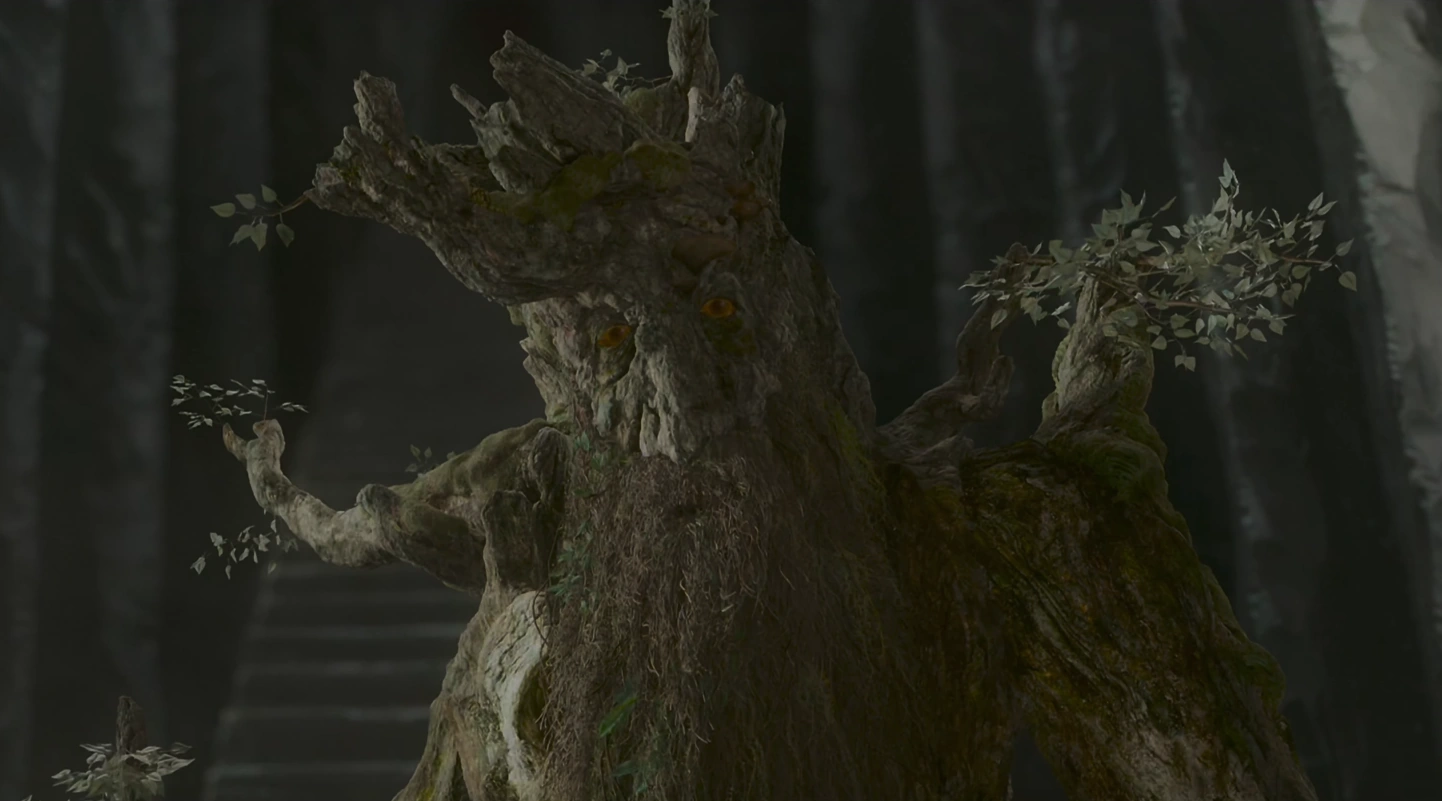
Image result for lotr treebeard

The mothertrucking entmoot from LOTR.

“Moot” means meeting, and in the second book (and, yeah, okay, the second movie), the ents — the living, sentient trees — hold an entmoot to determine the fate of their forest. The problem? The ents hold this moot in their native tree language, which is “a lovely language, but it takes a very long time saying anything in it, because we do not say anything in it, unless it is worth taking a long time to say.” (Which could, in fact, be the subtitle for this blog, given how I like to go on and on. The worthiness of the things I talk about to be talked about at length is, of course, another matter.)

Long story short (too late), the ents meet for several days before they decide that they will not meddle in the affairs of men, much to the chagrin of the hobbits who have petitioned them for aid. The world is going to sharknado all around them, the hobbits protest, and ents will be affected eventually even if nothing happens to them right away. But the ents take the isolationist path, pointing out that the trees will outlast whatever squabbles the creatures of the earth busy themselves with.

Then, of course, they learn that actually, the forces of darkness are chewing up the forest to fuel their war machine, and well, that’s that. The trees uproot themselves and wreck shop all over Isengard, because nothing motivates you like the threat of imminent destruction.

(I could point out that this is a pretty thinly-veiled dig at politics and politicians with their endless pontificating bureaucracies, but that’s not the point of this post.)

All that’s interesting and fascinating (though maybe just for me), but ultimately, well, moot in the contemporary sense, because the simple, understood definition of “moot” is that it doesn’t matter. The origins of the word are well and good, but these days it means this, so really, who cares?

And speaking of moot points, the problem is perspective and scope. Much of what we do in life, creatively or otherwise, is moot. Pancakes for breakfast, or cold cereal, or skip breakfast entirely? Doesn’t really matter. Take the long way to work or the quick way? As long as you get there on time, who cares? Read the Game of Thrones series so that you can claim superiority over the people who just watch the TV show, or don’t? Outside of the odd water cooler conversation, there really is very little difference in your life.

Put it on a bigger scale. There will be very little difference on a national level, or even a state level, over the life of one person, even a highly influential one. Things take the course they take, and not much will change it. A bigger scale still: consider, for example, Paris. Unless I have some readers in France I’m unaware of, I really am completely removed from anything happening in Paris. My entire existence, as far as Paris is concerned, is moot. Let alone the world.

But go even bigger. In our own solar system, humans have got some manned missions done in our neck of the woods, and we’ve sent a fair few probes out to the far reaches, but for the most part, all the accomplishments of humans are represented by a tiny speck of light in the night sky. A moot exercise, you might say, as we’ll never have that perspective — but astronauts get that perspective all the time. It’s called the Overview Effect (a thing I literally learned just now!)

If you zoom out far enough, everything becomes moot. And if you’re prone to Nihilistic thinking (cough, cough), the maw of that realization yawns wide beneath your feet at just about any moment. Why bother creating — it’ll all be lost to time and the void eventually. Why bother doing anything?

But taking the long view, while it’s probably good for planning your retirement and your diet, is maybe not the best thing to do in cases like this. Any story I could possibly tell is statistically unlikely to disturb the waters very much, even if it becomes profoundly popular. Those waters are thoroughly saturated already, if you’ll pardon the pun. But that doesn’t mean that, for a narrow slice, the stories aren’t worth writing (or reading!). In a lot of ways, the writer’s self-affirmation is not unlike the teacher’s: if I can reach just ONE student…

The truth is, I don’t think I even need to reach a single reader. It’d be nice if I do, of course — and better than nice if I could reach more than one. But when I create, I’m creating for me. It brings me tiny little pangs of joy to make up characters and bounce them around in the snow globes of my creation. On a global scale, or a national one, or even a local one, that might very well be moot.

But given that this life is the only one we get, it only makes sense to fill it with as much joy as we can.

This weekly remotivational post is part of Stream of Consciousness Saturday. Every weekend, I use Linda G. Hill’s prompt to refocus my efforts and evaluate my process, sometimes with productive results.

Wrestling with Character


My current work-in-progress is a superhero story about a guy who hates superheroes and therefore becomes a villain. And I just today wrote the start of a scene that kind of shocked me.

Without spoilerating my own story, this guy has a hostage problem to solve with no easy way out. (Which is exactly the sort of problem a good novel needs, right?) And in flinging myself against this problem, a solution occurred to my protagonist and myself simultaneously. Usually solutions for writers are good things, but this one is a little bit mixed.

It fits the character perfectly. It fits the narrative perfectly. But it makes me uncomfortable, because it’s a little rape-y. Not in the sexual assault way (it’s not that kind of book), but in the willful taking-by-force of a thing from a more or less helpless victim. A victim who was once something like a friend. And this taking … well, it’s pretty much going to color the relationship between these two forever, assuming I leave it in (and I don’t see how I can leave it out, at this point). It’s forceful. It’s traumatic. It has left me feeling a little bit icky after the words came out.

So, it makes me seriously uneasy, but it also really gets me fired up about the story, because it fits so well. And it hit me — this is the sort of thing that’s been missing from this story all along. My protagonist, much as I have been thinking of him as a villain, hasn’t done much that’s outright villainous; so for him to finally break bad like this feels a little shocking. Then again, at the same time, it feels long overdue, coming in the final third of the book.

But now I’m all conflicted. This isn’t the sort of thing I envisioned my protagonist doing, but now that the moment has presented itself, it’s hard for me to imagine him acting any differently. It’s not the act itself that has me vexed, though. The real quandary that’s sticking in my craw is that I don’t know if this guy (or this girl, for that matter) can come back from this. I don’t know if a choice like this can be redeemed, and that could be a problem in future installments of this story.

So many questions. Is this scene right? Is it happening at the right moment in the story, or should it happen sooner (establishing him as a real rotten dude right from the go would clear up some of the waffling he’s done thus far … then again, if this moment comes late, it feels more like a final step on a terrible path)? Can a character come back from something like this? And, for that matter, should he?

On the plus side, the last couple days’ writing has poured out of me like from a ruptured water main, so that, at least, makes me feel like I’m on the right track.