The Spell is Broken


Funny how editing your novel really shows off your literary limps. The little phrases you lean on, the sensory language you favor, the way you have to end every chapter, for some reason, on a sentence that is its own paragraph. (Why do you do that?)

Today I’m laughing at myself because I’ve just read through and marked up three more chapters, and I’m now keeping a tally mark in the side of my notebook every time I read the phrase “the spell is broken”. The count is five, now, and we’re in chapter 9.

“He shakes his head, and the spell is broken.”

“The spell is broken now, and …”

“He looks at her, the spell fully broken, and sees …”

I mean, come on.

Good news, I guess, is that I’m still able to laugh at myself over it. Bad news is that I’m still in the first third of the novel, which statistically means I’ve got at least ten more “the spell is broken”s before I make it to the end. Ten might be a bit much, but I know I’ve got some more lurking out there in the chapters ahead.

Course, this is why we edit. You take the hard look to see the irritating little things like these. So that you can take the buzzsaw to them in the second draft.

Ah, well. Lunch is over. The spell is broken. Guess it’s back to work.

Seriously gotta come up with better ways to say it, though. Ideas?


Kids with Guns


We were at a playground with the kids today. Beautiful day, tons of families out enjoying the sun.

And there was a kid — one single kid — running around with a toy gun. Pointing it at the other kids. “BANG BANG BANG!”

8321558133_1e9f4ba8b3_z
Photo: Andrew Kitzmiller @ flickr.

Pointing it at my six-year-old son. “BANG YOU’RE DEAD.”

At my three-year-old daughter. “BANG BANG HAHA KILLED YOU.”

At me. “BANG BANG DIE!”

And I’m looking around like, this is fine, I guess? Kid’s parents are (obviously) nowhere in sight. Nobody’s stopping him or telling him to, you know, maybe not make so much with the aggression and the pretending to shoot people at random.

I mean, how does any parent allow their kid to run around in a public place with anything that even slightly resembles a weapon in this day and age? In the last five days of class, the county I teach in (the COUNTY, to say nothing of the STATE) has had three students arrested for threats of gun violence. THREE! In a week!

Sure, they’re just playing.

Sure, boys will be boys.

But our kids keep dying, and everybody’s scared to death. My students this week asked me (and they were only half joking) if I would take a bullet for them. When the fire alarms went off on Monday, thirty pairs of eyes flashed to me in terror: is it real? or is it a ploy to get us outside?

And here comes this eight-year-old, on a playground swarming with kids, running from person to person going BANG BANG YOU’RE DEAD, over and over and over again.

I don’t understand how any parent who’s paying the slightest bit of attention to the world around them can let that happen. How they can let their kid out the front door to play in the yard with anything remotely like a gun. Let alone putting their kid in the car and allowing them to take the toy gun into a crowd.

I get it, I do. Our country is totally ass-over-elbows when it comes to guns. We love them and we’re terrified of them; they are the source of and the solution to all our problems; hell, some people are getting married with them now.

This is fine, I guess.

This post is part of Stream-of-Consciousness Saturday.

Caveat Pre-Emptor (Or, Why It’s Okay to Brag a Little)


So, like, I’m a writer, right? Or at least, I’m trying to be. I aspire. Along with the legions of others.

And once in a while, and I do mean a good while, somebody will ask me “how’s it going?” Or, even more rarely, the subject will come up for the first time and they’ll ask “what are you writing?”

And before I can even properly formulate my response, the caveats start flooding out of me like the air from a punctured tire. “Well, I haven’t been making the kind of progress I’d like, but —”, or “you know, I really haven’t been working on it for very long, so —”, or “I don’t have the time to really focus on it, and —”, or, you know, fill in the blank with whatever disclaimer is handy. I’m basically telling the person that whatever it is isn’t really up to standards (mine or theirs or some imaginary person’s? WHO KNOWS, I DON’T), and it’s basically just me noodling around on the page like that lame guy who knows three chords but pulls his guitar out at the party anyway.

All of which, I should point out, is true. I mean, I’d like to be making more progress, but THIS STUFF IS HARD. I really haven’t been working on it very long — writing in general for maybe three years, this project in particular about a year, all told — but that’s because THIS STUFF IS HARD and I only recently decided to take it on. And I don’t have the time to really focus on it, because THIS STUFF IS HARD and it takes a ton of freaking time and I have, you know, a job, bills, a family, etc, etc.

Damn, I even caught myself doing it when I was doing a little journaling the other morning. In a bit of personal writing, from MYSELF to MYSELF, meant for absolutely nobody else’s eyes ever, I put an asterisk on a statement of accomplishment. (I’d been for a run in the morning, and thanks to a nagging injury, my pace wasn’t exactly what I’d prefer, so I hemmed and hawed — again, AT MYSELF — about the fact that I got out there and ran my morning miles.)

Something — something deeply rooted and insidious like the fungus at the heart of an ancient elm — makes me shy away from “bragging”. Somehow, to talk about a thing I’ve done seems too much like grandstanding, like a ploy for accolades, like fishing for compliments. No, it’s even worse than that — I have this thing where I can’t stop thinking and analyzing. And because I’m always analyzing (especially when it comes to my own efforts and the stuff I create), I know, deep down in my bones, that what I’m doing is a far cry short of the best stuff out there, that it probably won’t appeal to the average person, and that therefore any horn-tooting about it would be very much amiss. Something about pride and falls and all that.

But you know what? It’s exactly because THIS STUFF IS HARD that it’s worth bragging about. Getting it done, regardless of the quality of it, is worth tooting my own horn, I think. I mean, just to put it in perspective: how many people out there didn’t run a 5k with their dog (in the rain!) before the sun even cracked an eye to reach for the snooze alarm? Almost all of them. How many people didn’t pen the last words of a draft and start the long, thankless process of editing their novel? Almost all of them. How many people didn’t carve time out of their lunch hour to itemize the entire plot of their story on notecards strictly for the purpose of mapping it out and seeing it better on the re-write? Pretty much all of them.

Almost all of them might sound like an exaggeration, but it’s really not. I’m reminded of a passage from Douglas Adams explaining that the population of the universe is essentially zero. How does that work, you ask? Owing to the staggering amount of empty space, the amount of space that has people in it compared as a ratio to the amount of space that doesn’t gives a value so infinitesimal that for all practical purposes, it might as well be zero. By that rationale, sure, there are tons of writers and runners in the world, but they are outnumbered on a planetary scale by people who aren’t writers or runners — so, basically, virtually nobody writes or runs. (This is a fun way to claim significance for just about anything.)

And why didn’t almost every person out there do any of these things? BECAUSE THIS STUFF IS HARD. But I did it anyway. Regardless of the time it took to finish, or the quality of the product as I look back on it, or how I felt or didn’t feel as I was doing it, I did these things.

To hell with layering it, like a damned wedding cake, with asterisks. To hell with putting disclaimers on it. That’s a hot pile of horse puckey. I did these things, and they were worth doing. Doesn’t matter if it could’ve been better; doing it was better than not doing it. Doesn’t matter if it took a long time; it’s done now. And if I don’t show some pride in the things I’m doing, who the hell else is gonna do it for me?

To hear me tell it, basically everything I’ve done is only a half-measure. Sure, I wrote a few plays after college, but they were just those lame murder-mysteries you can see anywhere. And yeah, I wrote a full-length play that was a smash hit at my old high school, but it’s really too long and there’s all kinds of things wrong with it. Yup, I’ve finished a novel, but I’m not published yet. Or yeah, I run, but only about fifteen miles a week these days. Sure, I’ve run long-distance races — but only a half-marathon. (By the way, somebody seriously needs to get on re-branding the half-marathon — the title itself is a caveat. And get out of here with that Pikermi crap, you can’t be serious in a run if people think a digitized cartoon rat goes dancing across the finish line.)

See how lousy that sounds? But strip the caveats out, and that turns into:

I run four days a week. And I’ve run over 13 miles at a stretch before.

I’ve written plays. (Plural.) Which were performed for audiences which paid money to watch them.

I’ve written a novel. (And am working on more.)

See how much better that sounds? That sounds like a guy who’s got his life together. That sounds like a guy you’d buy a cup of coffee for, if you could, and maybe hear a little bit of what he has to say.

So here’s a challenge for me and for you: cut out the caveats and the disclaimers. Stop knocking yourself down before you’ve even properly stood up. Accomplish whatever it is you’re trying to accomplish and be proud of the accomplishment.

Stuff your caveats in a sack. Then set the sack on fire and shoot it out of a cannon.

Guess Winter’s Over


20180222_170952.jpg

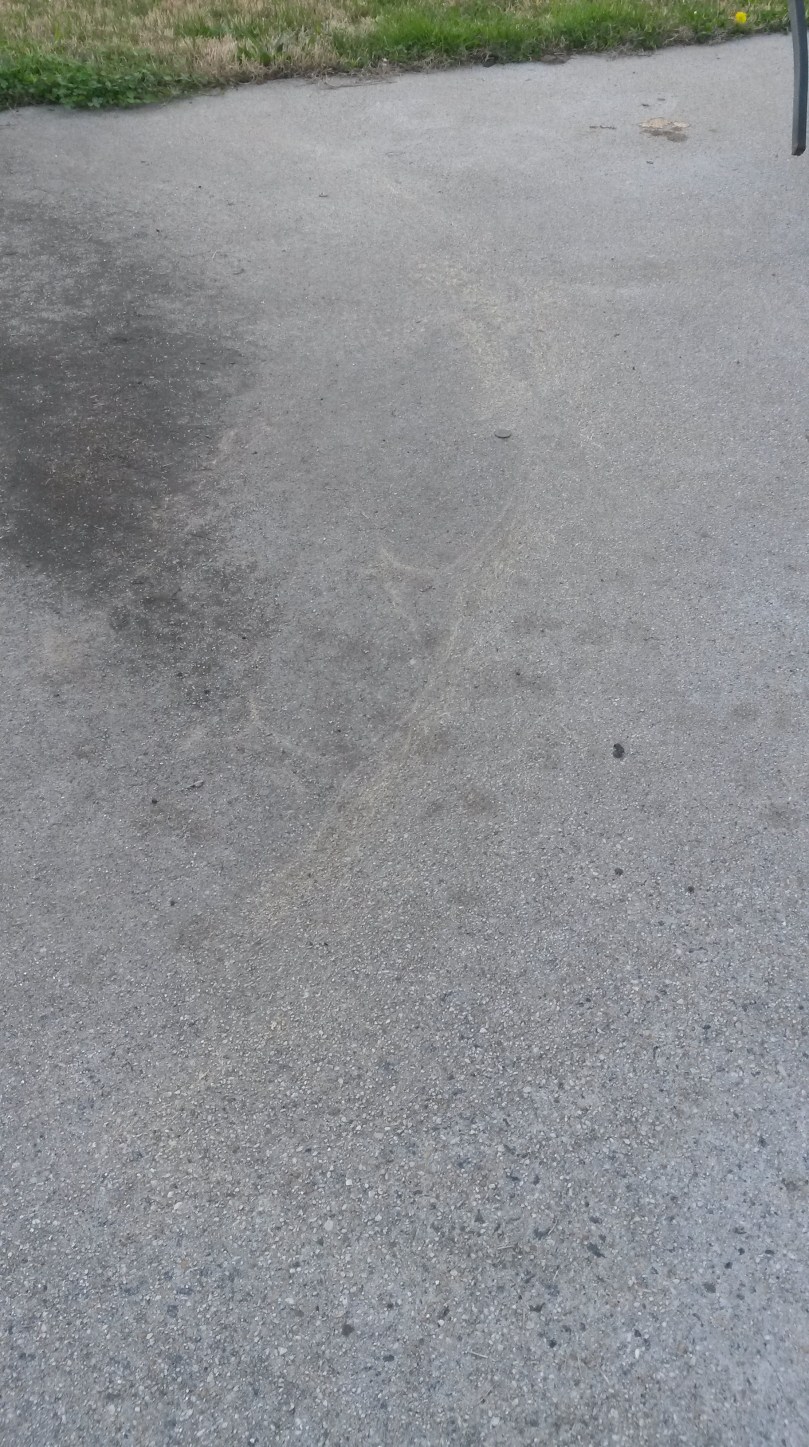
Meanwhile, this is my driveway. Color doesn’t quite come through, but that’s a distinctive pollen ring. Which means winter is over, and summer is coming.

In the South, we don’t have white walkers. Our walkers are covered in yellow dust, red-eyed and sneezing.

And it is terrifying.

It’s only February. I wonder how many record high months we’ll have this year?

The Doors of “Frozen”: Subconscious Storytelling At Its Best


You know that song from the opening third of Frozen? Princess Anna has just met Prince Hans (who she doesn’t yet know is a scheming sharknadobag) and starts singing. And because it’s a Disney musical, of course Prince Hans is ready to start singing right along with her. And dancing. Okay, I’m not here to kvetch about the willful suspension of disbelief; we’re talking about a fantasy story with talking snowmen and ice-casting princesses. (And don’t forget about the rock turds. I mean trolls. Even though they’re turds. For some reason I hate those things.)

Nope, today it’s the extended metaphor of doors. “Love is an open door,” Anna and Hans sing, and somehow I didn’t catch it on first viewing, but the movie is shot through with the door metaphor.

After Anna is injured, the parents separate the sisters by giving them separate rooms; and Elsa’s door is locked. After the parents die and Anna and Elsa are left alone, the door remains closed and Anna lingers outside it. She could just open it and talk to her sister, but she doesn’t — the door has become its own barrier, symbolic of the growing divide between them. In her very next song, Anna sings about opening up the gates of the castle, and how long it’s been since that happened.

Then, of course, it’s “love is an open door”, and we’re on to the second half of the movie, where Anna follows her sister into the wilderness only to find she’s built herself a totally badass ice castle, but she hesitates right on the threshold of — the giant ice door. (Quoth the snowman: “why doesn’t she knock? Do you think she knows how to knock?”) The doors in the ice castle are massive, but Elsa can open them with just a thought — they really are simply barriers of the mind, not the impenetrable barriers Anna takes them for.

The final third of the movie finds both the sisters trapped by the now-evil Prince Hans: Elsa in a dungeon, Anna in a sumptuous castle bedroom. Of course, both cells feature locked doors the princesses cannot escape. How will they overcome their captivity? Elsa channels a bit of power and counters the locked door with an exploded window, while Anna gets rescued by her childhood snowman, who picks the lock with his disembodied nose. It’s a funny moment, but viewed another way, Olaf the snowman seems like the purest manifestation of love in the story, so of course he can open any door he encounters. (Think back: “why doesn’t she just knock?” Doors are not a problem for him.)

The movie ends with the sisters reunited and committed to tearing down the barriers between them (blah blah an act of true love can thaw a frozen heart blah). And how does the movie end? With Elsa vowing that the gates will forever remain open. Probably not the greatest policy in terms of security, but for symbolic significance between the sisters, it’s as rich as it gets.

So I guess it should shock nobody that Disney knows how to give good story, but the extended metaphor of the door in Frozen shows how story elements can function behind the scenes to do subconscious work on an audience.

AnnaDoor

This mini-essay is a part of Stream-of-Consciousness Saturday. This week’s prompt: “door”.