Why I Love/Hate My First Chapter


Beginnings are the worst.

Just ask the guys muscling for position at the starting line of a race; all elbows and hip checks and ankles getting stomped on. Ask the folks dragging themselves out of bed for a pre-dawn workout, fighting against the gravitational pull of the singularity created by a warm bed. Ask the authors, staring at the terrible white expanse of the blank first page.

The beginning of any endeavor is the worst, because each step is a battle. Every inch of ground is an inch that must be won not only from the enemy (your competitors, the weights you’ll lift, the miles you’ll run, the white space you’ll reclaim in ink) but also from your own momentum — momentum that wants to let you slide to the back of the pack, stay in bed, watch TV… do ANYTHING but fight that fight.

So it goes with writing.

I’ve just started a second novel, and MAN is it tempting not to do it. As much as I’m excited about the prospect of a new project, I know that for the few months of fun in drafting I’ll have the long slog of a better part of a year or more in edits ahead. Then, there’s the story itself. I don’t know for entirely sure where it’s going yet. I’ve got some moments and ideas mapped, but it’s still a lump of clay. It needs shaping. The result is that each foray into this new world feels a bit like a fish flopping around on a riverbank: There’s water just over there, just at the edge of vision, and if I can just get there, if I can just find the flow, everything will be okay. Problem is, a fish is designed for swimming, slicing through the water, carving liquid paths in currents and bubbles… the movement comes out as herky-jerky twitching on land, and I can’t even tell if it’s moving me closer to my goal or not.

I’m also pretty sure I’m terrible at writing beginnings anyway. Every word that goes on the page feels like needless exposition; clunky, unnecessary, and obtrusive, like riding an elephant to work. Any attempt at action takes a hard left with an explanation of who this person is, what the place looks like, why it’s even going on… end result? The 3000 words or so I’ve written so far feel positively glacial. My sneaking suspicion is that it’s crap, and I should probably pack this thing in, cut my losses, and do something more productive with my time.

But.

Much as the drafting is frustrating, it is freeing: the first draft is not constrained by the need to be perfect or even good. It doesn’t even have to hang together; it can have unformed limbs, elbows that bend the wrong way, or a vestigial tail. All that crap — the characters that randomly appear and disappear throughout the narrative, the note that you forgot to plant earlier in the story, the the gobs and gobs of exposition that feels like so many monster trucks spinning their wheels, spraying mud all over the walls — can be fixed when the narrative surgery begins, in the edit.

The draft is raw, bleeding genesis, messy and gory, staining the earth red in its wake. (Give me Genesis!)

The draft is rainbows spewing from the netherparts of unicorns, coloring the sky with a riot of sound and fury. It’s a newborn eagle spreading its wings for the first time after its mother boots it out of the nest: nervous at first, stumbling over its own tangle of talons and beak, but then — then! — the wind catches its wings and it soars. The story creates its own momentum and, once tilted over the edge, it rolls and tumbles and picks up crumbs and absorbs stray cats and it barrels down the hill, absorbing everything in its path.

At least, that’s how I think it will be. I’ve only done this once before, after all. But having done it once, the inertia is that much easier to break; the fear of failure is that much easier to overcome.

The first draft is awesome.

The first draft is awful.

The starting is the hardest part, but the good news is, as long as you keep your momentum up, you only have to start once.

Word Wars: A New Hope


I’ve been in a writing funk for, gosh, let’s just go ahead and call it three months.

I’d been beating my head against the wall of the edit of my novel and… it’s just so exhausting. Reading the pages over and over again. Checking for continuity. Evaluating the language. Fixing this. Tweaking that. Blasting holes in the drywall and going back in with a blowtorch to re-weld the pipes. The most tedious and thankless of work.

Yeah, WORK. Who ever thought this writing thing would be WORK? It turned into such an ungainly mass of WORK that just like real work, I was hiding from it, finding excuses not to do it, stretching it out, and basically procrastinating myself into a corner, and teaching myself to hate it at the same time. Seriously, if I didn’t love it so dearly, I could almost say I hated the project right now.

But it’s out of my hands now. I’ve passed it on to a few beta readers and I have feelers out for a few more, so now it’s time to cut the cord and let that one fly away (birds have cords, right?). I started thinking about the other novel ideas I had kicking around in my head from a few months back. I stopped stressing about the details of the “finished” work. I began thinking about what sort of deadline I could impose upon myself for a new project; how many words a day I could write, how many months it might take. I started dreaming up characters and themes and plots and motifs and a hundred other little things I want to include in the next story. I cobbled together some notes and a ghost of an outline in Evernote (god I love Evernote, it’s like a personal assistant I don’t have to pay or buy lunch for).

And then last night, the craziest thing happened. I cracked the seal on a brand new word document, breathed in the heady aroma of that blank page, and started writing. Originally I only planned to get a couple hundred words down — just the introduction of a character and a place — but before I knew it I was back in top drafting form, slinging words with abandon, hastily leaving notes to myself, swearing at myself in the margins, in short having a ball of a time. Within just forty five minutes, I’d penned a thousand words, and it had felt as effortless as falling off a toaster. This, I reminded myself, is what it’s supposed to feel like. This is why writing is awesome. Creating people, giving life to worlds, unearthing plot devices from the raw soil of my cerebellum… ahh yeah, that’s the stuff.

The months of ennui fell away like a cobra’s skin. Underneath was the churning engine of creation that so wrapped me up and carried me away at about this time, one year ago. Still purring like a kitten, still snarling like a junkyard dog to chew up some words and spit out some copy. I felt glorious; I felt renewed. I guess this is the start of the next chapter.

When I started my blog last year hand in hand with my novel project, I had a simple system for organizing posts. Everything I posted about the novel here on the blarg last year, I tagged “the project” and/or “commitment 2014”. I had promised myself that I’d get the first draft written before 2014 was out, and I fargoing did it despite my own expectations that I wouldn’t. I’m on Twitter now, so I guess it’s only right that I start the tradition anew.

#TheProject lives.

#Commitment2015 is here.

Fasten your seat belts and hide your children.

How to Crush your Saturday Morning (a guide for schlubs)


At its heart, this blog is a journal. A daily (more or less) recounting of what’s front-of-mind. I dispense a fair bit of advice on this blog, much of it about writing and parenting, but occasionally, I like to step out of my comfort zone and write about things that I probably shouldn’t, and today feels like one of those days. The flavor du jour?

Saturday morning.

As a guy not so long out of his twenties, more or less recently become a father, and still very much making it up as I go along, it occurred to me not long ago that I was really screwing up my Saturday mornings. I used to think Saturday morning was the initiation of the weekend, and that meant sleeping as late as you possibly could, then slothing around the house until you could no longer put it off. But the older I get, the more I feel that Saturday is just another day in which lots of things have to be done. Maybe it’s the grocery store. Maybe it’s your kids’ soccer games. Maybe it’s a crapton of yard work. (Ha ha, I don’t care about my yard, score one for me.) And as the health organizations have been telling us, what’s the cornerstone of a good day? Breakfast.

Problem is, if you’re like me, you learned how to do Saturday morning lazy, and you don’t know how to bridge the gap. You end up eating cold cereal or leftover pizza instead of eating proper breakfast fare. Maybe you don’t know how to cook. Maybe you’re crap at time management. Let’s work on that.

I’m no master chef, but I do believe that anybody can learn to cook one or two basic things and then parley that knowledge into fleecing people into believing that you know how to cook. And the easiest place to start? Breakfast. Why breakfast? First of all, it’s simple. Breakfast doesn’t have a lot of options as far as cooking goes. Eggs, bacon, pancakes, toast… You branch out from there, but those are the basics. Secondly, eggs are super cheap, so while you learn to cook ’em, you won’t be breaking the bank (because, let’s be honest, you WILL screw up a few times). Third, who doesn’t love a hearty eggs ‘n bacon breakfast? Nobody, that’s who. You’ll be a hit if you can serve up some tasty eggs and bacon in the morning.

So, for those guys (and gals!) like me, who are totally lost when it comes to cooking and starting your weekend off right, I want to share with you my method for CRUSHING your Saturday morning in just about thirty minutes. This is especially designed for guys (or gals!) who have a significant other and/or kids they need to feed first thing in the morning, but you know, you can scale it to your needs.

So, get your eggs and bacon ready.

Step 1: Preheat the oven to 400 or so.

Purists will say bacon should be cooked in the pan. Nonsense, I say. I learned about cooking bacon in the oven about two years ago and I’ve never looked back. Bacon in the pan requires constant attention, lots of turning, and I always ended up with raw bits and blackened bits on the same piece. In the oven it’s picture-perfect every time, and the slow cook of the oven frees you up to do other things.

Step 2: Dishes (first time).

Oh, you’re one of those who unloads the dishwasher as soon as it’s done washing? YOU DON’T NEED THIS GUIDE. Look, doing the dishes is a chore, and it’s best done when you have nothing better to do, which is almost never. But now, you’re waiting for the oven to preheat, so take those five minutes or so to clear that thing out. It’s full of the dishes you ran last time, and you’re going to need the space in a minute… stop putting it off and unload those dishes.

Step 3: Bacon in.

Line a cookie sheet with tinfoil (you’ll thank me later) and lay the bacon in. Cooking time will depend on how thick your bacon is, but the sweet spot for me has been about 19-20 minutes at 400, depending on how crispy you like it. If in doubt, start checking it as early as 15 minutes. Set your timer and forget about it.

Step 4: Dishes (second time).

Oh, you’re one of those who washes dirty dishes the moment they’ve been used and leaves your sink empty at night? YOU DON’T NEED THIS GUIDE. Seriously, who feels like doing dishes right before you go to bed? You left them in the sink just like I did; don’t pretend you’re fooling anybody. That bacon needs 20 minutes to cook and you’ve got ten minutes before the next step starts; might as well dive in. You just emptied the dishwasher, and a dishwasher isn’t happy unless it’s full of dishes. MAKE YOUR DISHWASHER HAPPY.

Step 5: Prep the eggs.

Get your skillet on medium heat, and, if you prefer, get the butter out. I prefer bacon grease, but use whatever brings you the most joy. Now, if you don’t mind the idea of flavoring your food with the grease of delicious pigs, follow closely. Pull the bacon pan from the oven (there are probably about five or six minutes left, you might want to check and see how it’s doing anyway), and tilt the pan slightly. A bunch of grease will run down the pan; use a spoon and scoop a bit of it into your skillet. I like a teaspoon for 2-3 eggs, both to grease the pan and to make the eggs taste like literal heaven on a fork. Adjust as necessary; 2 eggs per person is usually pretty reasonable. Me, I like eggs, so I go for a little more. If I’m feeding myself, my son, and my wife (the infant is still on baby food), six eggs does the job pretty perfectly.

Step 6: Eggs in.

Yolks or not depends on taste and cholesterol needs in your household, but you cook them the same either way. You have to experiment with your stove to get the cook time right, but for me, eggs in any form take no more than 3-4 minutes in the pan. (If you’re keeping track of the time, you see what’s developing here: the eggs should finish up within a minute or two of the bacon.) Start with scrambled eggs, and you can get fancier with your prep as time goes on. If in doubt, scrambled eggs are done when they’re firmish and still glistening. When they lose their glisten, they’re getting dry. I’ve heard that you shouldn’t season the eggs until late in the cooking process because the salt can screw up the flavor if it goes in while the egg is raw, but I’ve never been so sensitive to the taste to notice the difference. Also, if you know that much about seasoning, again, YOU DON’T NEED THIS GUIDE. Anyway, I like to season once the eggs start to firm up just a little bit, but you know, figure out what works for you.

Step 7: Toast (optional).

Yeah, carbs are the devil. I’ve stopped taking toast with my breakfast, but toast is easy enough. Pop it in about the time you get the eggs in the pan and you’ll be fine.

Step 8: Plates.

If you timed it right, the timer’s going off on the bacon within about a minute of the time you’re pulling your eggs off. It’s ideal if the bacon’s done first so that you can get it on a plate to cool and pat some of the grease off first, but that’s not a deal breaker. Anyway, spatula the bacon onto a plate lined with paper towels to draw some excess grease off. While it’s draining, spoon the eggs onto plates (along with the toast, if you made it). Serve, and enjoy.

My plates look nothing like this. Who cares? If it’s delicious (and it will be), nobody cares. And if you put that green thing on your plate for breakfast at home, I’ll kill you.

Step 9: Dishes (last time).

Remember how nice it was having a clean sink about halfway through this process? It was glamorous, right? Well, now you’ve got all these dishes from your cooking adventure mucking up that canvas. Don’t go into Saturday with dirty dishes hanging over your head. Take the five minutes and finish up; that egg skillet will never be easier to clean than right after you cook with it — leave your dishes and that egg residue turns into lacquer. Know what lacquer is? They used it to protect paintings back in the day because it doesn’t wash off. Clean it now, before it sets.

Step 10: Enjoy the rest of your freaking day.

See that? Do you see what just happened? You fed your family, cleaned up after yourself, ate a hearty breakfast, and demonstrated your role as provider and master of the house, and now you get to carry that feeling of accomplishment with you for the rest of the day. You feel like a boss, right? And it only took you thirty minutes. For bonus points, next weekend, do the same thing all over again, but this time, get up before everybody else so that the aroma of your boss-cooked bacon hypnotizes them to walk dreamlike down the stairs for the breakfast you have waiting for them.

Now your schedule is all cleared for that SVU marathon you’re totally going to end up watching instead of fixing the toilet like you were supposed to do.

This post is part of Stream of Consciousness Saturday.

First Run in Hokas – A Terrible Review


I have a history of conducting really bad science when it comes to fixing myself. For starters, I’m balls awful at self-diagnosing, whether it’s writing or running or dadding or whatever… see, to fix a problem, you first have to know what the problem is, and I’m pretty bad at that. It’s why I married a woman much smarter than I am — so that I have somebody to point me at the right targets. Then, I tend to take on too many things at once or dive headfirst into new things rather than easing in, to the effect that whether I succeed or fail, I never really know what to attribute the success or failure to.

But I’ve got this injury. In my foot. For a while I thought it might have been tendonosis, but lately it feels like good ol’ plantar fasciitis, but one way or another, my freaking foot hurts, and it’s been hurting for a while. And I’ve tried a handful of things to fix it, including seeing a podiatrist, taking breaks from running, stepping up my running, eating only fried chicken on Fridays, consulting with spirit guides… and it still hurts. So it’s time for drastic measures.

I’m not the kind of guy that believes in magic bullets, but there comes a point — and that point in my case is when I’ve been dealing with more-or-less chronic pain for the better part of a year — where you’re willing to try just about anything. So among the many things I’m trying to fix the pain right now are some new shoes.

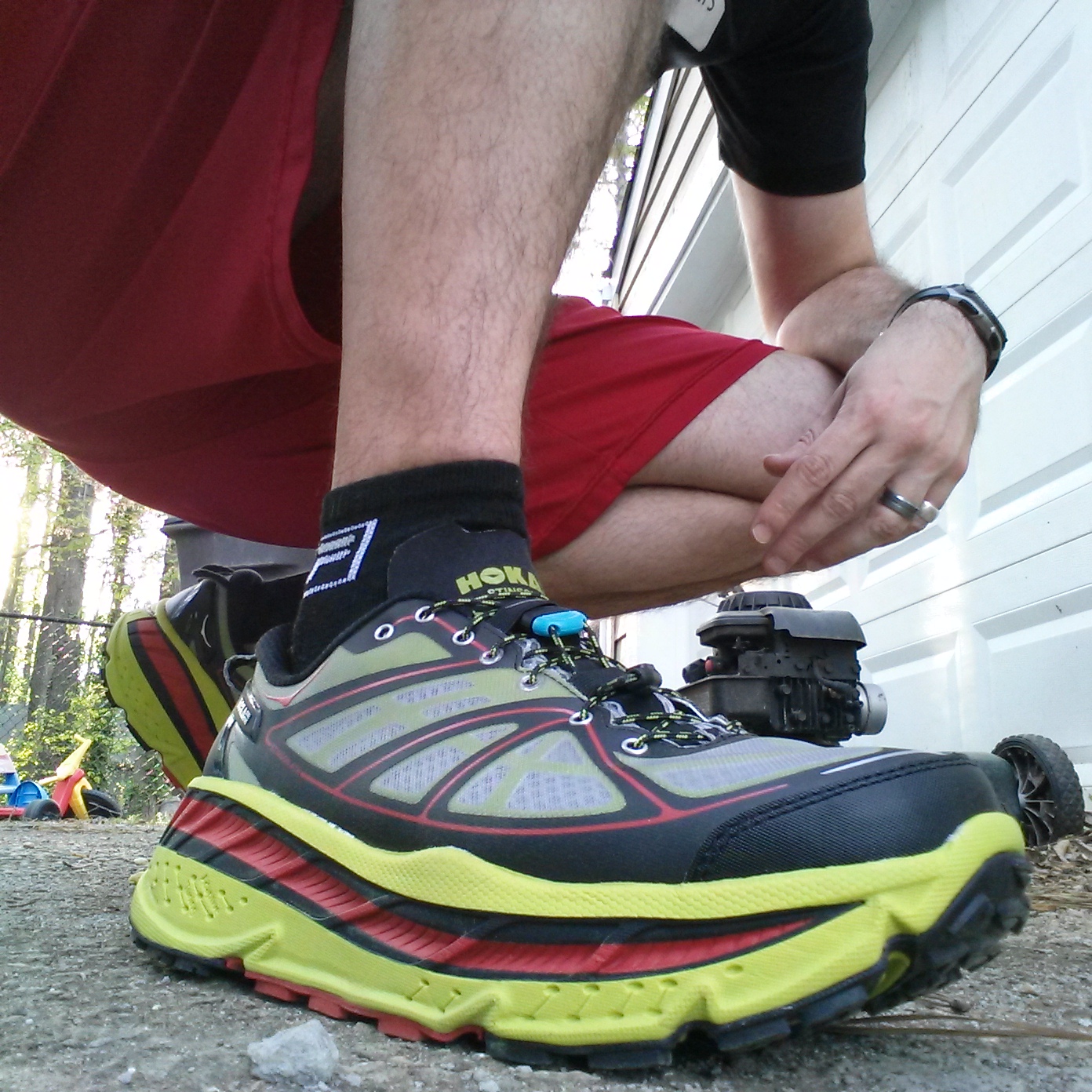
wpid-20150408_185956.jpg

I know, I know.

They look ridiculous. But I got a pretty sweet deal on them and, like I said, I’m willing to try anything.

If you don’t run in running circles (haw) you might not be familiar with Hokas and their ilk, so to put them in a nutshell (which is impossible, I mean, just look at the size of them), they are a new thing in running, the inverse pendulum swing from the minimalism trend that happened in the late aughts. Where minimalist shoes aimed to make shoes feel less like shoes by dint of removing padding and stabilizing elements and “putting you more in touch with the road,” Hokas and other so-called “maximalist” shoes take the opposite tack: they add frankly ridiculous amounts of padding to desensitize you to the surfaces you’re running on entirely. (I should note that “desensitize” is my word, not theirs.)

Now, I think minimalist shoes are the bomb. I think they are the way and the truth. They may have contributed to my injuries, and I’m willing to own my part in that, because I probably jumped in too fast and didn’t give myself the appropriate time to adjust. That said, I still believe in minimalism, because I believe in evolution, and I don’t think that millions of years of adjustment to the earth below our feet would have crafted a foot that needs perfect shoes to make us good at, you know, walking or running on said earth. Shoes being a construct of the past couple of millenia of human development, I’m going to trust natural selection and say that probably our feet are just fine as they are, and maybe it’s the way we’re treating our feet that’s fargoed up. But I digress. I’m not here to argue minimalism vs maximalism, I’m not here to open the Born to Run debate or touch on barefoot running or any of that.

I’m here because in desperation I ordered these shoes, and I’m going to try them out as part of my latest effort to fix my feet so that I can run pain-free again.

Let me make all appropriate disclaimers: “maximalist” shoes are too new for there to be any studies drawing far-reaching conclusions about their effectiveness at preventing or recovering from injury. However, there is a ton of anecdotal evidence out there, and much of that anecdotal evidence comes in the form of gobsmacked distance runners who are amazed that these shoes have allowed them to start running pain-free after extended bouts with hip pain, knee pain, ankle pain, back pain, foot pain… you name it. So I ordered them, and they got here, and I took them for a run yesterday, and here’s what I learned.

  1. They are huge. I’ve sat at 5’11” my whole life, and these shoes put me comfortably in the 6’3″ range. My wife, a demure and delightful 5’2″, tried them on and was able to look me in the eye for the first time in her life. The air just feels a little thinner while you’re wearing them, and maybe that makes you a little lightheaded, and maybe that’s why the pain goes away.
  2. They are soft. Boy, are they soft. Reviewers often describe them as “like walking on clouds”, which is the most overused simile in shoes, and I won’t be using it, because it’s nonsense. You can’t walk on clouds in the first place, and no shoe is going to remove all the groundfeel from your feet. That said, even just stepping into them and taking a few tentative steps around the living room I could feel my feet sinking into their pillowy depths. They compress like a worn-in tennis ball, which is to say, quite a bit, but not so much that you go right through it like you would with a down pillow or, if you must, a cloud. The padding underfoot is sensational, and it really does feel awesome just to walk around in them.
  3. They are bouncy. That tennis ball analogy I used was not a mistake. I thought hard about the best way to describe what running feels like with these things on, and it struck me. Every step is like landing perfectly on a tennis ball. You land, you feel the resistance, the resistance gives more than you expect, and then as your weight transfers over, there’s a spring effect that feels like the shoe is catapulting you forward just a little bit. That effect was disorienting in the first half mile or so, but once you get used to it, it feels normal.
  4. They are grippy. Here’s my primary concern about these shoes, especially having tried minimalist shoes and even my bare feet: you get used to feeling what’s under your feet and adjusting accordingly. That’s impossible in these clunkers. My kitchen floor feels exactly like my lawn feels exactly like my driveway feels exactly like pavement feels exactly like the rocky mudfield out back of the tire shop I run past every day. My concern is that I’d end up slipping because I can’t feel the little rocks or sticks or tiny bumps in the ground or whatever, but this concern broke apart in the atmosphere before I got to the end of the street. The sole of the shoe compresses so much that it actually seems to conform to whatever’s on the ground like a coat of paint going on over my shoddy drywall work in the bathroom. In short, the entire sole gets down on every step. It even makes this sound, like you’re running on velcro, with every step. The sound will probably go away as the shoes break in, but it demonstrated pretty clearly what the shoe was doing: bending and flexing to every contour of the road/lawn/tire lot.
  5. They are light. Enormous as they are, they’re as lightweight as any traditional shoe I’ve had, which seems counterintuitive I guess, until you begin to think about the composition of that sole that bends and flexes and compresses like silly putty.
  6. They are snug. Shoe sizes vary depending on manufacturer, yeah, I get that, but these fit me oddly. The length is fine, but it’s almost as if there isn’t enough room for the height of my foot in the shoe, which makes me wonder about taking out the insoles, even though I’ve never had to do that with any other shoe. Also, the toe box is — for my taste — exceedingly narrow, and my toes feel pretty squished in there. I can’t say I love that feeling. It’s hard for me to imagine running five or six or ten miles or more that way, but maybe they’ll loosen up as the shoe breaks in.
  7. They are huge. Did I say this already? It bears saying again. They’re enormous.

The question is, how did they do on the run?

First impressions only, but they felt pretty damn good. The pain in my foot lately feels like a needle going up into my heel, and I had a bit of that at first (as I do on every run). But by the end of the first quarter mile or so, that pain was gone completely; so completely that I switched to a heelstrike briefly to see if the issue was still there (spoiler alert, it was — and the shoes didn’t protect me from feeling the pain in a heelstriking stride), but as soon as I readjusted, it evaporated again. Lovely. Now, my aches and pains have a tendency to work themselves out after the first mile or so, so my good feels might be attributed to that alone, and not the shoes… but I didn’t have any additional pain later in the evening like I’ve had after my last few runs.

There’s more to be seen, here, but at least for the moment, I’m hopeful that the Hokas are going to help me out. It’s my hope that I can use the Hokas to start getting some regularity back in my runs — start pushing my distance up again, in other words — while allowing my feet to “rest”, while I can continue to use my minimals once or twice a week to keep strengthening my feet. We’ll see how that plays out.

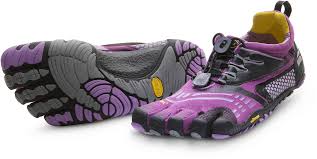
In the meantime, however, there is no cure for how goofy they look. Temper that, of course, with the fact that I much prefer wearing something like this…

vibrams

Easy Money — But the Hatred is Free


I know, I know. For the past few weeks it’s RFRA this, human rights that. But I’m not here today to argue about whether the RFRA functions properly as a backdoor allowing prejudice in a society that is trying to move past such a thing. Okay? I’m not here to talk about that. Never mind that, you know, it’s the 21st century, and we still have people in this country who think it’s vastly more important that they not have their feelings hurt by having to think about what goes on behind the closed doors of other people than to look out for the actual human rights of vast swathes of society… okay, god, it hurts to be so vague. Specifically the people behind RFRA, and in fact, behind the pizzeria I’m talking about here, feel really icky about homosexuals. To be more specific, they don’t feel that people that don’t like homosexuals (and, you know, whoever else they decide to hate that day) should be allowed to order cakes for weddings, or have a slice of pizza, or, god, I dunno, use the same water fountains as the rest of us.

But ahhh, there I go, talking about the issue I didn’t come here to talk about. Hate gay people if you want. In some states, it’s even going to be legal soon!

No, I’m here to talk about all the sweet, sweet green that’s out there waiting for you if you’re savvy enough to hop on the train early.

See, Memories Pizza is a trendsetter. They’ve shown us that you don’t have to work really hard, or even offer a good product, to make money… all you have to do is uphold a controversial point of view, get “persecuted” for it, and then complain to people — usually religious people, but I suspect it would work with other groups — and wait for the donations to roll in.

Because what’s important to people in this day and age are causes, not individuals.

Let’s say I have $20 that I don’t particularly need for myself. I know this is a stretch for most of us, but just work with the hypothetical. I don’t need this $20, and I want to use it to make a difference. I could take the money down to a homeless shelter and donate it directly, or maybe I go to the thrift store and buy a pile of coats and take those down to the homeless shelter. Maybe I prefer animals, so I take my money to the pet shelter instead. Or maybe there’s a donations bucket for wounded veterans or something out front of the grocery store. In those scenarios, I give my money to people that need it, though I don’t really get anything back for doing it — aside from the warm fuzzies in my heart.

Or, I could find a cause that I agree with and send the money there. A political campaign. The donations plate at my church. The GoFundMe page for a pizzeria that’s been closed down because of protests. Now I’m actively supporting something. Which means my money is speaking a little bit louder than just quietly buying meals or clothes for an anonymous group in need. I can put a face to the people getting my money. I can say that this person’s or group’s success is thanks to me. I’m part of something. And that’s important.

It’s so important that the pizzeria in question raised over $800,000 in the first 24 hours. That $800,000 didn’t come from the restaurant’s patrons; it came from anonymous people all over the country that wanted to support this particular pizzeria’s cause in discriminating against gay people.

That’s awesome, isn’t it? The owners can retire and never bake another pizza again, all because they hate the gays, and there were enough people in the country that think it’s bad they got backlash for hating the gays to send them almost a million dollars IN A DAY.

It’s all so clear now.

I’ve been laboring under the false pretense that the American Dream involved working really hard in your job and making enough money to provide you and your family a decent living. Picket fences and all that. But that’s yesterday’s dream.

In the age of the internet, there’s a new American Dream, and man oh man is it sweet.

The dream goes like this:

  1. Work somewhere. Anywhere. It’s probably better if you own your own business, but I don’t think it’s necessary.
  2. Acquire some controversial beliefs. Gay issues are hot right now and thus are probably overdone. Maybe look into weird oppressive stances on dwarf boxing, or insist that the earth is flat.
  3. Operate your business as usual until you meet somebody who runs afoul of your chosen controversial belief. Refuse to offer this person your goods and/or services based on your dispute over said belief.
  4. Make a big stink on social media about the argument that ensues. If necessary, call a local news station. (It’s better if the person you refused service to does this for you, but however the dumpster fire gets started, it works out in your favor.)
  5. Close down your business or resign your position, citing “protests from the community” or “online threats” or “fear of magical civil rights fairies”. Again, make a big deal about it on social media.
  6. Create a GoFundMe page in support of re-opening your business or getting your job back.
  7. Retire in Aruba.

This will work for as long as fools and their money remain in close quarters with each other. Oh, and for as long as people continue to hold their religious (or social, or scientific, or whatever) beliefs more dear to them than the rights of individuals.

Which will probably be forever.