Faithless


We’ve got a few hours left to wake up from this nightmare.

It’s a long shot, to be sure, but it’s the last shot for folks like me who still can’t quite believe that the Orange One is about to be our president. But is it such a long shot? All we need is for thirty or so people to come to their senses and realize that the American experiment is more important than the system that makes Trump the president.

The faithless elector. I didn’t realize quite how perfect that term was. Because it would take something like faith for the electors to vote for Trump given the circumstances.

He lost the popular vote by over three million.

He’s shown that he will endeavor to keep his family as close to his politics as possible.

He’s already pissing in the punch bowl of international affairs, before he’s even taken the office.

He’s naming a laundry list of offensive, unbelievable idiots to his cabinet (a racist, sexist idiot for chief of staff? a woman who’s never taught for secy of education? a man who “lived in the projects” for HUD?).

To say nothing of all the horrible, wickedly either negligent or downright evil things that somehow didn’t bring him down before the election (Trump U? Grab them by the pussy? “I like soldiers that don’t get caught?”).

I know, I know. Democrats have done nothing but moan and complain since the election, but consider for a moment if the shoe were on the other foot. Consider that Trump had amassed three million more votes than Clinton, but we were preparing for a Hillary presidency instead of a Trump one. There would be riots, both ideological and literal. There would be nothing but shut down the government talk, and rigged system talk, and burn the electoral college talk.

Notice that (most) democrats aren’t calling for that. Most of us have shut up, taken our medicine, and accepted that Trump won the election by the rules in place.

But he has also shown that he is uniquely undeserving of the office, and undeserving of the people who have awarded it to him. So we need faithless electors.

Consider:

Faith is believing something in spite of a lack of evidence, and this may come as a shock, but I don’t have that kind of faith.

It would take something like faith to believe that he will somehow turn all this around and become the president that we deserve.

It would take something like faith to believe that the people he’s surrounding himself with (the best people, believe me) can somehow control him.

It would take something like faith to believe that he’s actually going to deliver on any of his campaign promises that were the cornerstone of his rabid support (the Wall? Locking her up? Draining the swamp? Nope, nope, and nope — and again, this is all dead in the water before he’s even taken office).

Like I said, I don’t have that kind of faith. And I find it hard to believe that anybody looking at the world as it is, simply, truly, and honestly, does either.

I don’t even expect them to vote for Clinton. (I’m using up all my living-in-a-fantasy-world currency in even entertaining the possibility that the electors won’t go for him.)

I just want them to do the right thing, speak for the people, and send the message that this man is not what America stands for. He doesn’t deserve to speak for us.

Now, back to non-Trump, non-wallowing-in-denial programming.
 

Hardly Moot


The prompt for this week’s SOCS post is “moot,” a funny-sounding word which is one of those weirdly connotated things that no longer means what it actually means. Like literally. (Though internet outrage has kind of fixed the rampant misuse of “literally”.)

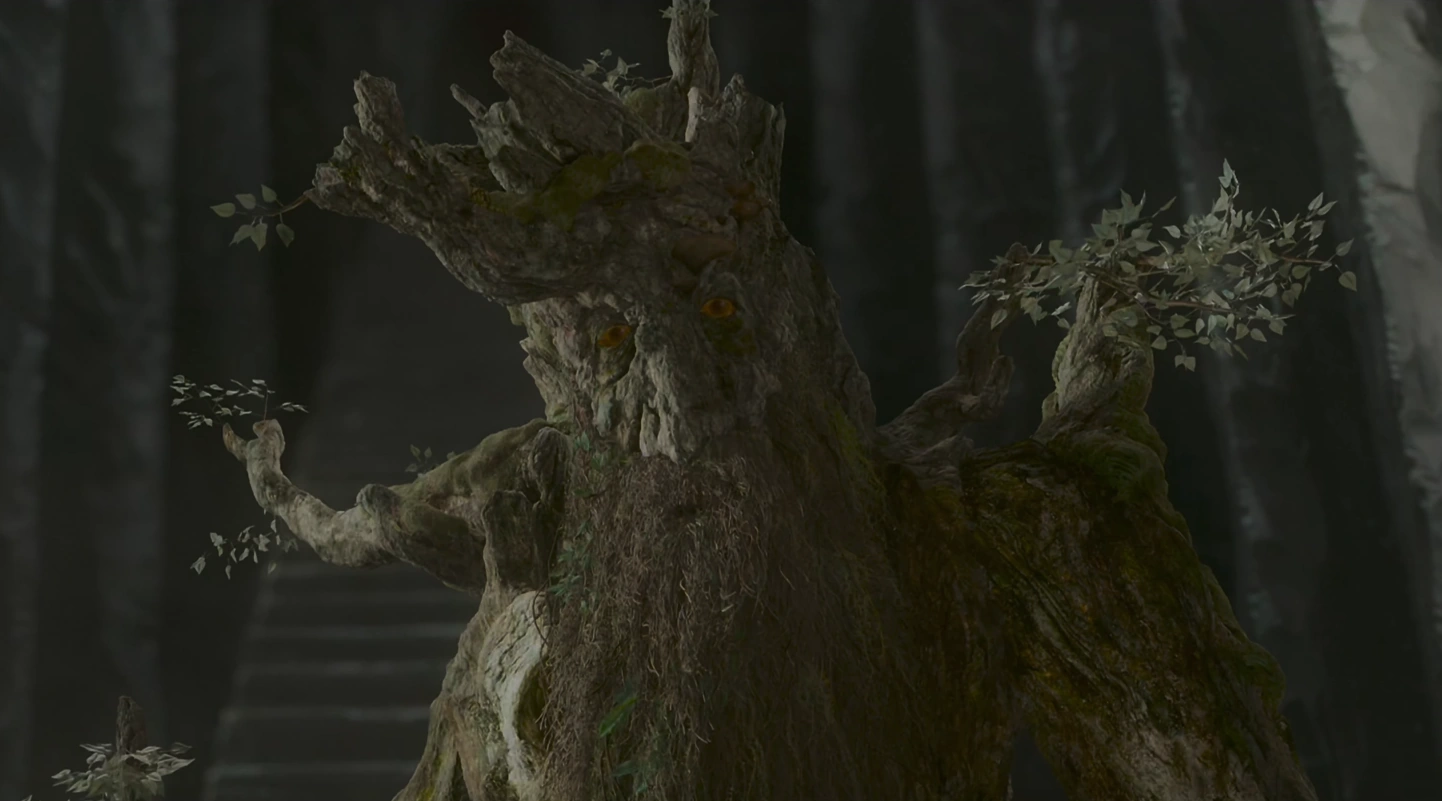
About the only way you see “moot” anymore is in the phrase “moot point,” a phrase that comes out of mock trials which essentially means meaningless or without consequence. But I can’t hear the word “moot” without thinking about this:

Image result for lotr treebeard

The mothertrucking entmoot from LOTR.

“Moot” means meeting, and in the second book (and, yeah, okay, the second movie), the ents — the living, sentient trees — hold an entmoot to determine the fate of their forest. The problem? The ents hold this moot in their native tree language, which is “a lovely language, but it takes a very long time saying anything in it, because we do not say anything in it, unless it is worth taking a long time to say.” (Which could, in fact, be the subtitle for this blog, given how I like to go on and on. The worthiness of the things I talk about to be talked about at length is, of course, another matter.)

Long story short (too late), the ents meet for several days before they decide that they will not meddle in the affairs of men, much to the chagrin of the hobbits who have petitioned them for aid. The world is going to sharknado all around them, the hobbits protest, and ents will be affected eventually even if nothing happens to them right away. But the ents take the isolationist path, pointing out that the trees will outlast whatever squabbles the creatures of the earth busy themselves with.

Then, of course, they learn that actually, the forces of darkness are chewing up the forest to fuel their war machine, and well, that’s that. The trees uproot themselves and wreck shop all over Isengard, because nothing motivates you like the threat of imminent destruction.

(I could point out that this is a pretty thinly-veiled dig at politics and politicians with their endless pontificating bureaucracies, but that’s not the point of this post.)

All that’s interesting and fascinating (though maybe just for me), but ultimately, well, moot in the contemporary sense, because the simple, understood definition of “moot” is that it doesn’t matter. The origins of the word are well and good, but these days it means this, so really, who cares?

And speaking of moot points, the problem is perspective and scope. Much of what we do in life, creatively or otherwise, is moot. Pancakes for breakfast, or cold cereal, or skip breakfast entirely? Doesn’t really matter. Take the long way to work or the quick way? As long as you get there on time, who cares? Read the Game of Thrones series so that you can claim superiority over the people who just watch the TV show, or don’t? Outside of the odd water cooler conversation, there really is very little difference in your life.

Put it on a bigger scale. There will be very little difference on a national level, or even a state level, over the life of one person, even a highly influential one. Things take the course they take, and not much will change it. A bigger scale still: consider, for example, Paris. Unless I have some readers in France I’m unaware of, I really am completely removed from anything happening in Paris. My entire existence, as far as Paris is concerned, is moot. Let alone the world.

But go even bigger. In our own solar system, humans have got some manned missions done in our neck of the woods, and we’ve sent a fair few probes out to the far reaches, but for the most part, all the accomplishments of humans are represented by a tiny speck of light in the night sky. A moot exercise, you might say, as we’ll never have that perspective — but astronauts get that perspective all the time. It’s called the Overview Effect (a thing I literally learned just now!)

If you zoom out far enough, everything becomes moot. And if you’re prone to Nihilistic thinking (cough, cough), the maw of that realization yawns wide beneath your feet at just about any moment. Why bother creating — it’ll all be lost to time and the void eventually. Why bother doing anything?

But taking the long view, while it’s probably good for planning your retirement and your diet, is maybe not the best thing to do in cases like this. Any story I could possibly tell is statistically unlikely to disturb the waters very much, even if it becomes profoundly popular. Those waters are thoroughly saturated already, if you’ll pardon the pun. But that doesn’t mean that, for a narrow slice, the stories aren’t worth writing (or reading!). In a lot of ways, the writer’s self-affirmation is not unlike the teacher’s: if I can reach just ONE student…

The truth is, I don’t think I even need to reach a single reader. It’d be nice if I do, of course — and better than nice if I could reach more than one. But when I create, I’m creating for me. It brings me tiny little pangs of joy to make up characters and bounce them around in the snow globes of my creation. On a global scale, or a national one, or even a local one, that might very well be moot.

But given that this life is the only one we get, it only makes sense to fill it with as much joy as we can.

This weekly remotivational post is part of Stream of Consciousness Saturday. Every weekend, I use Linda G. Hill’s prompt to refocus my efforts and evaluate my process, sometimes with productive results.

Wrestling with Character


My current work-in-progress is a superhero story about a guy who hates superheroes and therefore becomes a villain. And I just today wrote the start of a scene that kind of shocked me.

Without spoilerating my own story, this guy has a hostage problem to solve with no easy way out. (Which is exactly the sort of problem a good novel needs, right?) And in flinging myself against this problem, a solution occurred to my protagonist and myself simultaneously. Usually solutions for writers are good things, but this one is a little bit mixed.

It fits the character perfectly. It fits the narrative perfectly. But it makes me uncomfortable, because it’s a little rape-y. Not in the sexual assault way (it’s not that kind of book), but in the willful taking-by-force of a thing from a more or less helpless victim. A victim who was once something like a friend. And this taking … well, it’s pretty much going to color the relationship between these two forever, assuming I leave it in (and I don’t see how I can leave it out, at this point). It’s forceful. It’s traumatic. It has left me feeling a little bit icky after the words came out.

So, it makes me seriously uneasy, but it also really gets me fired up about the story, because it fits so well. And it hit me — this is the sort of thing that’s been missing from this story all along. My protagonist, much as I have been thinking of him as a villain, hasn’t done much that’s outright villainous; so for him to finally break bad like this feels a little shocking. Then again, at the same time, it feels long overdue, coming in the final third of the book.

But now I’m all conflicted. This isn’t the sort of thing I envisioned my protagonist doing, but now that the moment has presented itself, it’s hard for me to imagine him acting any differently. It’s not the act itself that has me vexed, though. The real quandary that’s sticking in my craw is that I don’t know if this guy (or this girl, for that matter) can come back from this. I don’t know if a choice like this can be redeemed, and that could be a problem in future installments of this story.

So many questions. Is this scene right? Is it happening at the right moment in the story, or should it happen sooner (establishing him as a real rotten dude right from the go would clear up some of the waffling he’s done thus far … then again, if this moment comes late, it feels more like a final step on a terrible path)? Can a character come back from something like this? And, for that matter, should he?

On the plus side, the last couple days’ writing has poured out of me like from a ruptured water main, so that, at least, makes me feel like I’m on the right track.

In other news…


Clicks and views from Taiwan have trailed off (but are still trickling in!).

The question now is: do I consider this spike in views a fluke and return to regular programming? Or do I chase this trend and court views from overseas going forward?

Considering I just read a facebook post about “hitting your kids” and I’m just about this close to boiling over at all the righteous indignation and smarmy condescension on both sides of the internet argument, I’m actually inclined to post more about a dog’s POV than I am to try talking any sense into any humans right now.

Image result for arguing on the internet

Seven school days until the much-needed Christmas break. Set phasers to kill.

Discomfort Lasts About Thirty Seconds


Is Georgia officially in a drought?

It seems impossible that we wouldn’t be, given that we’ve basically been in a drought for every year I can remember, though I can’t specifically remember hearing about it this year. Given that this is a stream-of-consciousness post, I won’t be stopping to do research on that, but it seems fair to assume, especially since, prior to this week, it had been about six weeks since we glimpsed a raindrop.

Yup. Most of October and basically all of November slipped by without even a sprinkle here in the Greater Atlanta area, so the rains of the last two weeks have been welcome.

But as you know (maybe), I’m a runner, and one that won’t be confined to the indoors for a run even in the worst of conditions. (We do own a treadmill, but feh. That’s for if you’re 1000 steps short of your daily goal and you still have an episode of Brooklyn Nine-Nine to watch. And yeah, there’s gym memberships, but paying money to go to a sweaty room and run indoors is sort of the antithesis of why I run to begin with, so, nope, no gyms for me.)

So of course it happened: the first rain in over a month, and to boot, some of the nastiest to come our way came about on a run day, in the wee hours of the morning last week.

And while running in the rain can be delightful in the summer, in the winter (inasmuch as winter actually exists in the Southeastern United States), it’s not so much. Damp shoes mean blisters. Sodden clothes mean chafing. To say nothing of the sheer demoralizing cold that can seep into your bones in the throes of a windy, whipping rain on a thirty-five degree morning.

It’s more than a runner should be asked to bear, in other words, and it inspired in me that rare notion: that I could, I really could, just take the day off. Nobody would know but me. I’ve been diligent of late, and at this point, I know that missing a day doesn’t mean I fall off the train for good — a fear I had in my early days as a runner and that I still occasionally have as a writer. And, apologies to any readers north of the Mason-Dixon line, being an Atlanta native for basically my entire life, thirty-five degrees is cold. Add rain and wind and it’s prohibitively cold. In other words, this was an excellent candidate for a sleep-in morning (although sleeping in, in my house, means you’re up at 5:40 instead of 4:40. God, my college-aged self is spinning in his sheltered little womb just thinking about it.)

And, come to think of it, that’s how a lot of my writing days have felt of late. It’s rainy out there, and dark, and cold. It feels like harder work than I want it to be. The blank page doesn’t offer you much in return, and man, it sure would feel good just to take the time that I would have spent writing and use it on something else. An extra thirty minutes in bed. Getting some lesson planning done (how am I always so far behind? Oh yeah, because in my free time, I run and write instead of planning lessons). Reading. Squeezing in a nap.

But, y’know, I’ve gotten to the point that it’s not so much about convincing myself to do the thing that looks uncomfortable from the outside. Nine mornings out of ten, I’m just going to go for the run. I don’t have to berate myself, call myself a fat slob, chide myself about how lazy I’m going to feel … those days are gone. I know now, intrinsically, that the day is always better if I run. So I run. And, likewise, I don’t have to talk myself into facing down the blank page anymore, either. I just do it, as naturally and automatically as kicking my shoes off when I get in from work. It just feels wrong if I don’t. Getting the daily word count in is just the thing I do now.

All of which is to say that, despite the fact that it was a great morning for not getting the run in, I got the run in. It was as miserable as advertised. Within two minutes I was soaked through two layers. Half-blind from rain in the eyes. Feet squishing in my shoes. Huffing and coughing and slogging it through the cold, grinning wanly and shaking my head at the lonely cars driving by in the dark, laughing at what they must have been thinking seeing me out there.

I finished with nasty blisters on both feet (I almost never get blisters — not even from my six-mile mud run), which are still ailing me a week later. I had sore, stinging nips that itched uncomfortably under my shirt for the rest of the day, despite the band-aids I covered them with (nobody ever said running was glamorous). My chest-rattling cough resurged … the one I’ve been tangling with since October.

But it reminded me of a thing I already know: no matter how daunting the run looks, or how intimidating the blank page may be? Once you get over the fear of the thing and get into the guts of the thing, all of a sudden, it becomes a lot easier. In fact, once I got over the initial shock of the cold and the rain (which took about thirty seconds), it became just another run like virtually any other. The discomfort doesn’t last. After it passes, you just put your head down and go to work.

In short? The first step, the first word, the first day, the first anything? That’s the hardest. But once you’re in the thing — the run, the writing, the new job, whatever the challenge is — it becomes easier. Shockingly quickly, in fact, it becomes bearable when just moments before it was unthinkable.

It’s always better to take that first step despite the fear. (Well, I guess, unless that first step happens to be out your front door during the zombie apocalypse. In that case, maybe do sleep in.)


This weekly remotivational post is part of Stream of Consciousness Saturday. Every weekend, I use Linda G. Hill’s prompt to refocus my efforts and evaluate my process, sometimes with productive results.