Things Writers Need — Books


Every Thursday I write a little piece for people who are thinking of writing books or for people who have writers in their lives.  A collection of things that a writer’s life is not complete without.  To continue in my series in Things Writers Need, here are some of my thoughts on one of the most important things in any writer’s life: books.

Nobody takes up soccer because they think it’d be nifty to kick a ball around without using their hands for an hour and a half.  They take it up because they watch a game or two and think it looks like fun and they start to practice and they get decent at kicking the ball around and that’s how we get soccer teams now.

Nobody takes up stand-up comedy because they think it’d be nifty to stand in front of a crowd and ramble about whatever minutiae are going on in his or her life at the time while a bunch of strangers sip overpriced drinks or shout abuse.  No, they see other comedians on TV or on stage and they appreciate the humor they see on display and they practice telling jokes to their friends and one day they step up to an open mic and that’s how we get stand-up comedians.

Writing is maybe a little different in that I think there may be an intrinsic desire to write things down and tell stories; something encoded in our DNA that makes us want to pass tales on to the rest of our clan.  But people don’t set out to write hundreds of pages without seeing it done several times, learning the intricacy of storytelling, learning the way characters can sprout fully-formed from mere words, learning the way an otherwise rational adult can develop a really unhealthy relationship with a collection of pulverized wood and ink: taking it to bed at night, carrying it around in a purse, caressing and holding its pages, staring into its face for hours and hours and hours on end.

Any great writer was a great reader first.  You can’t run before you walk.  You can’t write before you read.  Writers learn to love writing by reading lots and lots of books, and they learn to write by reading lots and lots of high-quality books on all sorts of things.  So, a writer needs books.

Think about your favorite book.  It changed your life, or at the very least, changed the way you thought about the world, right?  If writers want to write books that can do the same for others, we have to learn from the masters, we have to imitate their work, we have to transmogrify their talent and their teaching into our own twisted wonderful creation.

Reading is the lifeblood of the writer.  In order to keep up the steady flow of words out of our brain-holes, we need a just-as-steady flow of words in the other side.  Words are weird, words are a paradox.  You can never lose a word, but you can sure as hell use one until it’s so tired it can no longer lift its own head.  They’re a renewable resource, but you can only carry so much at a time.  I can only juggle a couple of story ideas in my head before they start knocking each other out through the ears.  And sure, I can write down every idea that comes to me, but that doesn’t necessarily help me.  The idea I jot down in February because it sounds brilliant looks like a puddle of mushy dogsharknado by the time I get around to wanting to write it in June.  These ideas have an expiration date, I think; a use-by warning that causes them to decay the longer they’re left on the shelf.

So if words and story ideas can go bad like so much Aldi produce, how does one keep fresh stock on the shelves?  You go to the grocery store, naturally.  But not Aldi — their produce goes bad in just a few days.  No, you need the good stuff; you go to Publix, or the farmer’s market.  You go to books.

In reading and pondering the intricacies of the last book I read (The Eyre Affair, by Jasper Fforde) I had no less than three ideas for new stories of my own, riffing off of elements found in Fforde’s book from genetically engineered pets to holding works of art hostage.  They might have been crap ideas, but I had them, and a lot of writing I think is in the exercise; it’s about the journey, as they say, rather than the destination.  I also rekindled a bit of my love for science fiction and the ridiculous, which I think is at the core of my contemporary writer self.  It was a welcome discovery after the detour into YA lit I’ve had over the last couple of years.  The heavy tropes and weighty themes of Dystopian Futures and Society Must Be Saved and The Chosen Ones have weighed on me and made my writing a little bleak, a little encumbered, a little melodramatic, perhaps.  (I’m talking about the Divergents, the Matcheds, the Hunger Gameses which have been so popular in recent years.  It’s good stuff, but man, it ain’t uplifting.  Pity the children being raised on this stuff!)

Now, that’s not to say there’s nothing to gain from those books.  Far from it.  No, in every book there’s something to be learned, even if all you learn is that you don’t want to write a story like the one you just read, ever.  (I’m looking at you, Wuthering Heights.)  It’s a foolish student that turns aside the tutelage of his predecessors.  Writers need books like football players need to review tape.  Like babies need mothers’ milk.  Like a hurricane needs an area of warm, high pressure air moving into an area of cool, low pressure air.

Now, every writer out there has their preferences and tendencies.  One will gravitate toward sprawling works of incredibly detailed interpersonally linked tales of fantasy, a la Game of Thrones.  Another will splash around in the deep and impenetrable waters of gritty crime and mystery stories in the vein of The Girl With the Dragon Tattoo.  Still another will lounge in the comforting pages of a classic romance like Pride and Prejudice.  But tendencies and preferences aside, I think it’s necessary for all writers to consume all types of literature at least occasionally.

I’ll grant that attempting to read books in all genres is a perhaps insurmountable task just given the volume of what’s out there.  You could read a book a week for a year and still leave out some of the obscure genres like, oh I dunno, Interstellar Revenge Comedy Romance.  And maybe that’s a genre best left untapped (or maybe I just got an idea for a story…).  But I think it’s far too easy to stay in your own little cabin in the woods, reading books you know you’ll like before you read them, never sampling the waters in the streams and ponds that crisscross the landscape.

I think a good book is going to have lots of elements of lots of different genres and stories; a little something for everybody.  It’s an anemic adventure story if there isn’t a little bit of romance along the way.  No science fiction yarn is complete without a good solid dose of gritty down-to-earth human interest at the bottom of it.  Thrillers go amiss if there isn’t a little bit of a fantasy element in there; a bit of something that plays outside the rules of reality.  And I don’t know a single story in any genre, no matter how dark or dismal or defeatist, that wouldn’t be better off for at least a little dose of humor.  We must bring balance to the force, and if we want to bring balance, we must ourselves be balanced.

So, the writer needs a steady diet of books.  We need books that we like and books that we hate.  Great books and terrible books.  Books we can read cover-to-cover twenty times and books we can’t penetrate beyond the first chapter.  Books that uplift and books that depress.  Books that make you want to run out of your front door and start hugging people and books that make you want to nuke the planet from orbit.  We need to read it all so that we can write all of it into our own stories.  Writers are tasked with communicating the unending message of the human condition to those who will come after us; we don’t have the right to leave any of it out.  We have to read as much as we can so that we can tell our own stories as completely as possible.

If you’re a writer, you need a library card, or you need Amazon’s new book-rental service, or you need a bookstore in your neighborhood that will let you park in an armchair and read for hours at a time, or you need a friend with a crapton of books that you can borrow.  If you’re a friend of a writer, you can never go wrong by buying that friend a book.  Doesn’t matter what kind, what genre, what author; buy them a book.  But for god’s sake, don’t give them a gift card, don’t just buy something off Oprah’s Book Club or whatever… pick out a book that you like or a book that you think they’ll like or hell, just pick out a book with an interesting cover.  They’ll read it just the same, and maybe on the next thing they write, they’ll credit you with putting that book in their hands that inspired the new story.

What book has most influenced you as a writer?  As a person?  What would be your desert-island book?  If you could make one book required reading for everybody in the world, what would it be?
Finally Truly Back From Injury (I Hope)


My first year of running saw me rack up about 500 miles in just over 8 months.  My second year saw me come this close to 1000.  I enjoyed a meteoric rise in my ability to cover distance and run at speed and naturally it left me feeling like I could accomplish just about anything.

So when I suffered a pair of crippling injuries at the beginning of this year, it was humbling.  I went from running 25 miles a week or so to being sidelined for three and four weeks at a time.  I went from a long weekend run of 10 or 12 miles on average to barely finishing a 5k.  For a guy like me who thought he was bulletproof, the injuries and my inability to bounce back from them were a blow to both my health and my ego.

I’ve tried not to think too hard about it, not to dwell and fixate and obsess over how much speed I’ve lost, how much my fitness has declined and how frustrated I’ve been.  If you’re a habitual runner like me, I need say no more — you know the pain of not running.  If you’re not, I’d liken it to having the flu for weeks on end.  You feel weary, you feel caged in, like you’re just a drain on yourself and the people around you, like you’re asleep on your feet.

But then, a few weeks ago, a turn.

I’d been intentionally taking it easy; easier than easy, really, being careful not to push too hard and set myself back; for over a month, not running more than 5 miles outside of one 10k race (which did set me back).  Then I had one run of six miles with a friend from high school and suffered no ill effects.  Then the next week I ran five to be safe, and this past weekend I ran six again for good measure.

Well, what can I say?  My feet feel healthier than they have since before my injuries.  I’m not sure what the turnaround was, but I spent a few months after my podiatrist visit in a purgatory of not having serious pain but not feeling 100% healthy either.  Last few weeks, the injured foot feels about 95% most of the time.  It’s been a long road back, and I’ve been totally scattered: one moment I’m overly optimistic, lying to myself about my recovery to make it seem like it’s been better.  Next, I’m beating myself up for pushing too hard too fast and I’m skipping a run or cutting one short because I’m scared of injury.  Now, though, I can finally say that I’m getting back to normal.

Sidenote.

For some reason I’m feeling more keenly than ever how tedious it must feel to a non-runner to read a runner’s writing about running.  I mean, I hear the words flowing out of my fingertips (more or less) and all the athlo-babble about distance and biomechanics and injuries and pacing and negative splits and I almost want to punch myself in a mouth.  Damn.  How to approach this differently?

What’s a long run?  I guess a long run is a distance that’s significantly longer than your standard run.  Say 40% or more beyond your weekly runs.  It’s the equivalent of locking the doors and unplugging the phone and turning off the computer and cranking up your music or your white noise machine or your internal monologue.  If daily runs are your morning cup of joe, the long run is a series of espresso shots, dropping one just after the high of the first fades.  The long run is the me-time that you chase but can never catch during the week.  It’s the cherry on your sundae, the finish on your cigarette, the long dark tea-time of the soul.  And I’ve been without it for MONTHS.

Well, I’m getting it back and it’s glorious.  I feel more confident about my running than I’ve felt since the year ticked over.  I feel like I’ve been pretending about getting myself back in shape all this time and now I can embrace it for real.  I feel like I’ve got something to work toward vis-a-vis pushing my distance up again, rather than spinning my wheels in a weather-delayed holding pattern as I’ve done for months.

I picked out a route that I haven’t run since December because it’s just been too far and I couldn’t trust my feet.  I didn’t just run it; I attacked it, setting a pace I’ve not set in half a year and finished, sweating and breathing hard and lurching in exhaustion up the hill to the house (living at the top of a hill SUCKS at the end of every run).  I stretched and took stock and realized that I felt physically better than I have in months.  I waited for a few hours and re-evaluated that impression: I’ve been so mental over the injury that I can’t trust myself.  I think I feel better when I don’t.  I want to feel better but I can’t.  I feel like I can’t run that much but I can.  Hours later, the evaluation held up.  A switch has been flipped, and it feels like I’m back.

I’m burning to go for 7 this weekend but I’m going to do the “smart” thing and not jump too far too fast.  I’ll play it conservative and do 6 one more week and then I’ll go for 7.  I’ve no idea what pace I’m going to aim for or what’s even within reach, but I think the distance will be there.  I think I can finally count on my body to hold up over long distance again.  

It’d be time to start thinking about my next half marathon if we weren’t so broke.

Remote Controlled Lunatic (Or, children make you insane, vol. 271)


Being a parent means so many little changes in your life.  Big ones, too, naturally, but little ones that don’t even really trip the radar.  There’s the level of ambient noise you perceive as “normal” in your house or the world (increases the longer you have kids).  There’s a general level of cleanliness you’re willing to accept (and which deteriorates over time).  There’s the idea of being awakened in the middle of the night for things short of the house literally being in flames or an actual intruder coming to murder your face (goes from “hardly ever acceptable” to “pretty much planned and expected every night”).  And you’re aware of these things in a detached way but not so much that you actively think about them.

Then there are the things that sneak up on you and which you accept so completely and unquestioningly that it shocks you in retrospect.  For example, I am willing to believe just about anything my wife tells me that I know about or knew about.  She could lie to me and tell me that she explained the meaning of life to me in all its nuanced poetic simplicity over pancakes yesterday, and I would believe it in a heartbeat despite not actually being in possession of said knowledge, and also knowing full well that we did not have pancakes yesterday.  My mind has become a leaky sieve, and I am no longer a good judge of whether or not I have heard something before and whether I told a thing to somebody or whether I remembered to put on pants before the family came over for dinner (spoiler alert: I didn’t, and continued to prep dinner for thirty minutes in my pajamas before my wife pulled me aside to correct the situation).

All that is to say that I no longer trust myself to know what’s actually going on right in front of me, and I will latch like a facehugger onto any explanation which presents itself, whether that explanation is reasonable or not.

Case in point.

I’m driving to work the other morning.  It’s not even a discombobulated, late, running-out-the-door-with-shaving-cream-still-on-my-ear kind of morning.  I woke up, ran, showered, shaved, had breakfast, said goodbye to the wife and kids, and got into the car and drove off.  I even remembered my pants.  I turn on the radio and I’m listening to the prattle of the Bert Show as one of the DJs (is she a DJ if she doesn’t wrangle music?… whatever) professes that she can divine facts about a person’s life just by looking at their wedding registry.  You know, high-brow entertainment.  So I’m driving and not-really-listening when I hear this voice.

It’s a strange voice.  It’s too high and too stilted and the cadence is weird and I can’t make out a word of what it’s saying.  It’s not speaking a foreign language, it’s just speaking at the lower register of what’s audible.  I turn down the radio and it stops.  “Okay,” my brain thinks, “it’s just ambient noise from the studio, maybe somebody forgot to squelch a mic or wandered through the studio gossiping about their weekend.  No worry.”  And on I drive.

Then I hear it again, same weird pitch, same weird cadence, same inaudible volume.  But I hear it more distinctly now.  A voice outside the car?  I’m driving through a neighborhood so it’s possible it could have been a kid shouting.  I buy it until I look in the mirror and see no evidence of any kids waiting on buses anywhere in the vicinity.  I turn the radio off and it stops again.  Fishy.  On I drive.

It’s when I hear the alien voice for a third time that my brain just throws up its hands and says, “Okay, I give up, you’re obviously going insane and hearing voices is just a part of your life now.”  I still can’t make out the words, but the voice is insistent and deliberate under the drone of the radio.  I’ve switched stations so I know it’s not an artifact of the studio.  I’m no longer in a residential area so it can’t be somebody speaking outside the car.    Yet there it is, sounding almost like it’s coming from inside my own head.  Do I have to be concerned about hearing voices?  Does it matter if there’s a sinister voice telling me to kill people if I can’t understand what it’s saying?  Maybe it’s my subconscious whispering to me in German because I somehow subliminally understand German from a past life I had living in feudal Germany?  I turn off the radio to be alone with my thoughts and drive for a solid five minutes under the assumption that this oddball voice is just something I’m going to have to learn to live with.

Then I come up on a red light and stop, and I hear the voice again.  Without the hum of the radio and the whimper of the car’s engine, the voice is suddenly crystal clear, if still muffled and distant sounding in my head.

“Nine!  This is the number, NINE.”  *Boing, boing, boing*

And immediately my mind flashes back in time two months to the time my son brought this horribly annoying Grover “remote control” that talks to you when you push its buttons and how much I hated that toy and how happy I didn’t realize I was when he somehow didn’t have it when we got out of the car; so happy I didn’t bother to think what had happened to it.  Obviously it slipped from his hand and slithered across the cheeto- and cheerio-crusted floor and found its way up under the driver’s seat and wedged itself in amongst the discarded coke cans and the seat’s guide rails and waited, WAITED for me to forget all about it so that it could one day — THIS DAY — begin using the momentum of the car to fling itself against a screw, which would depress the number “9” button, so that it could prattle its inane message that “THIS IS THE NUMBER NINE” into my subconscious under the guise of being radio interference.

Look, the toy is not sentient, okay?  I know that.  I HAVE TO BELIEVE THAT.  This story is not about the toy, it’s about the mind of an adult turning to mush after two years of looking after a tiny human.  It’s about the fact that it seemed — and I am not exaggerating in the least here, though I am wont to do so — more reasonable to me that I had actually gone GIBBERING INSANE on my ride into work than that a perfectly innocuous toy might have been triggered in the backseat and started singing about the number nine.  In other words, simple problem-solving strategies and common sense filters completely failed me in that moment.

Why have they failed me?  Because there is no simple problem solving strategy, and there is no such thing as common sense when you have a toddler.  I found a stuffed animal crammed into one of our living room lamps the other night.  I don’t even know how the kid was able to reach high enough to get the thing in there, or how my wife and I failed to notice it lurking, bright orange and horribly silhouetted, against the lampshade for the weeks it was up there (judging from the healthy layer of dust).  I had to tell my kid not to drink bathwater out of his little pitcher thingy not thirty seconds after he had nearly drowned himself in the tub DRINKING BATHWATER OUT OF THE LITTLE PITCHER THINGY.  The phrase, “You can’t have any smarty-candies because you didn’t make a poop” actually came out of my mouth.  I’ve cleaned MUSTARD off of the TELEVISION.  And that was all just in the last two days.

I don’t want to say that the kid(s) made me crazy.  They didn’t.  They’re only tiny little humans.  What they’ve done is eroded my mind and made me into something like a child again myself.  Higher-level thinking goes out the window when you’re a parent.  You start believing in fantastical, ridiculous sharknado because you forget to care about whether it makes sense or not.

Did I give the impression that all this was a bad thing?  I’m not sure that it is.

Things Writers Need — TIME


School is back in session, and as you might have noticed if you’re a regular here at Pavorisms, it’s taking a toll.  My writing has suffered a vicious setback at the hands of being back to work and will likely continue to be set back until I get a handle on a new routine for the year.  That said, today’s topic for “Things Writers Need” is particularly salient.

 
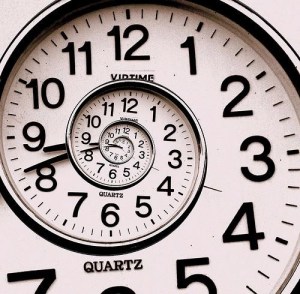
Today’s thing is time, bloody precious uninterrupted sacred time.  Time to make deadlines, time to think up story ideas, time to actually write the blighted thing.  Specifically, I want to talk about the actual time you need when actually actively writing.
 
Let’s get this straight.  Writing is HARD.  Even when you’re writing about something you love, it’s knuckle-whitening, teeth-grinding, marathon-running HARD.  The best writing is a greased pig with a hot poker applied to its nether bits; it darts this way and that, wails like crazy and will kick mud in your face the moment you think you have a handle on it.  Even if you do manage to lay hands on the thing, without the utmost focus it will twist right out of your arms, leaving you sprawled in the mud and wondering whether the sweet savory taste of bacon is worth all the trouble.  (It is.)  You can’t corner it.  You can’t strategize it.  You just have to chase after it and hope to get lucky enough to scoop it up every now and then before it leaves you in the dirt.  Every once in a while the magic just happens.  But it can’t happen if you don’t have time to chase the pig around the yard.
 
Time
There’s a quote I loved from the much-adored John Green’s The Fault in Our Stars, “What a slut time is.  She screws everybody.” Doesn’t even buy you diner first.
 
The fact that I am realizing lately more than ever before in my life is that time is a fixed, non-renewable and ultimately precious resource.  Life is filled up with so very many things we must do that it can feel like a mug’s game trying to decide what to do with the time you have left over.  Writing, sad to say, takes up a lot of time.  Even on a good day, I can get maybe 1000 words an hour.  Measure that against the novel I just drafted at 89000 words and that’s ninety hours at a minimum, but let’s be more pragmatic and assume it was closer to a hundred and fifty.  Where does a guy with a full-time job and two full-time kids get that kind of time?
 
You get it at the expense of other things.  You have to cannibalize the things you hold most dear and use the sweet sweet time you harvest from their still-breathing husks to do the thing that matters.  My thing is video games and TV.  I’ve been a video game junkie since I was five years old and played my first round of “Skier”, in which you steered a pixelated blob down a white expanse dotted with pixelated tree-like green things and pixelated brown lumps and pixelated H-shaped things which somebody assured me you were supposed to navigate between but I was too busy crashing my pixelated blob guy into trees and cackling like a Bond villain to care.  (Seriously, ask my dad about my experiences with “Skier” and he will laugh until he’s blue in the face.)
 
And TV, holy god!  I used to think that TV was a drain on my life before we got Netflix.  Now it’s a ravenous all-consuming black hole.  On one side you’ve got brilliant network shows one-upping each other with crime dramas and sitcoms, on another side you have cable shows pumping out blistering tour-de-forces in character study and horrible dark drama, on another side you have premium channels hawking epic escapist fantasy and historical fiction, and then there are the on-demand streamers giving you a smorgasbord of bizarre and compelling no-holds-barred excursions in the secret lives of everyday people.  I really think one could watch eight to ten hours of television a DAY and still miss out on some of the incredible programming that’s coming out of TV in the last ten years or so.  I say that not as a rant against television but more as a statement of awe.  There’s SO MUCH GOOD STUFF out there.  As a writer, watching a good show is research, right?  RIGHT??
 
Point is, it has to go.  Or at least, most of it has to go, because, see, if you want to create, you need large, unbroken swathes of time to let your mind stretch out in.  You need to be able to stew in your thoughts, to fart around with your characters and work on the Gordian knot of tangled plotlines and entrapments that your stories turn into.  I’m not even talking about the actual act of writing, I’m talking about just thinking about writing.  You have to carve out these huge chunks of time in which to operate.  Writing isn’t a microwave dinner, it’s a slow cooker.  You can’t catch ten minutes here, twenty minutes there and expect to turn out Hamlet.  (I understand that some writers work that way, and bully for them.  Honestly.  But how much better could they be if they didn’t have to write that way?)
 
I read a fantastic article a few months back on NerdFitness.com (yeah, ‘net browsing is another thing that could do with some cannibalizing) called “Why ‘I don’t have time’ is a Big, Fat Lie”.  Steve Kamb has it right here.  It’s true.  So true, it hurts.  In short, the article encourages you to change the way you think about time.  We all have the same amount of time in our day, no matter how much we might wish it otherwise, and some of us are doing amazing things with that time and others are withering on the vine.  Instead of saying, then, that “I don’t have time” to write that novel or run those three miles before work or cook that nice dinner, Steve encourages you to say instead “it’s not a priority.”  Because we make time for the things we prioritize, even if the decision to do so is not a conscious one.  Sitting on your donk and watching TV or playing a video game gobbles up your precious time, so while you’re doing that, you’ve made it a priority.  This is not to say, of course, that TV or video games should be eschewed entirely.  Far from it.  (TV is research, right??)  But we (and by “we” I mean “I,” and by “I” I mean “writers,” and by “writers” I mean “everybody”, really) have to make time for the things we want to do even when the making of time is difficult.  And I really shouldn’t say “make time”, because the time is just there.  You just have to steal it away from the other unimportant sharknado in your life that wants to steal it first.
 
So you have to fight for your time.  In full battle-armor and with broadsword polished and flailing and a tiny little holdout dagger in your belt ready when the fighting gets really gnarly, if necessary.  You have to carve that time out of your schedule anywhere there is meat left on the bone, and when there is no meat left, you might just have to cut the bone, too.  I operated on six hours of sleep most nights this summer because I’d stay up late writing after sprout #2 went to bed late and then wake up early when sprout #1 popped out of bed like a happy tornado at six AM.  (Of course, my wife operated in staccato bursts of two hours of sleep at a time, so I bow to her masterful experience there!)  It sucked, but I got it done.  I’m trying to find the groove now for being back at work with two kids at home leaving footprints in the jello, and it’s difficult, but I’ll find that groove somewhere.
 
However you find it, you have to make writing the priority, and that means you have to make the time to do it.  That’s the bottom line.  Writers need time to do what they do if they want to do it well.  If you’re a writer, you have to claim that time however you can.  If you’re dating or married to a writer, well… maybe cut him (or her!) a break once in a while.  Give him (or her!) an hour’s break from the kids — take ’em to the park or something — or take a girls’ or guys’ night, or I dunno, build him (or her!) a temporal displacement chamber in the basement so that he (or she!) can by god create more time and get some damn writing done, paradoxes like meeting your future self or becoming your own grandfather be damned.
 
No, seriously, if anybody has any leads on that temporal displacement thingy, let me know.
 

The Equal Amateur


A Random Title Challenge from Chuck this week.  In keeping with my last several posts, I thought long and hard about how to attack this prompt, and then realized that the right way was literally right under my nose.

Here, then, is The Equal Amateur, a tale of a cold and heartless world where all your efforts and learning and experience don’t mean sharknado next to the bright and talented young upstart.


The Equal Amateur

“Son of a bitch,” Nick thinks, casting a subversive eye at the lump of protoplasm squirming in the holding unit at the far end of the cell.  “What’s happening here?”

It’s swatting at imaginary flies now, but that always precedes the screaming.  Sure enough, after just a few moments of flailing its stubby suggestions of arms (they look more like tiny, squishy marshmallows conglomerated on sticks to Nick), the lump begins to wail, a wordless, plaintive cry that somehow seems to permeate his consciousness.  He sets down his brightly colored blue plastic floor-smasher and stares at her.  He almost sighs and shakes his head, but he hasn’t yet learned the significance of such a gesture.  “It’ll never work, kid.  Words.  Words are the future.”

But even as he thinks it, one of the Keepers hops up from the sitting apparatus and hurries — practically sprints — to the lump, scoops it up in loving arms, and begins to babble incoherent speech at it in a tone Nick sort of remembers in his own unfinished cortex.  A tone of soothing, of comforting.  Nick’s mouth hangs open and he stares, astounded, furious, perplexed.  “I’ve got to throw myself on the ground outside — get all that painful red smeary stuff on my parts — to get that kind of attention.  And the lump just has to whine a little bit?”

Time was, Nick reflects, that seniority spoke for something around here.  When he could get the Keepers’ attention with just a cock of his head or an insignificant, purposeless spasm of his fingers.  He’s put in the time learning their language, learning where the food is kept, learning which of the animals can be safely ridden and which scream and yowl when touched.  Now all the Keepers seem concerned with is shoving a variety of foodstuffs under his nose or into his hands, removing the smelly brown goop from his privates when it inexplicably shows up, and making sure he sleeps more than he would particularly care to.  Sure, they laugh and clap when he manages to pronounce some new word in their alien tongue, but their joy is fleeting and quickly forgotten.

Then there’s the lump.  The lump has been in the detention center for only a few days, but has already started throwing her weight around.  For some reason Nick can’t wrap his tiny cranium around, the Keepers respond to every twitch, every whimper, every little thing the lump does with a care and affection and concern he’s not known since he can remember, although to be fair, the rapid expansion of his brain and the constant barrage of new interesting information — new things to ingest, new words to try out, new colored sticks to rub against the walls to mark the period of his imprisonment — doesn’t leave a lot of room for memory and reflection.  Still, it seems unjust.  He’s put in two years with the Keepers, knows their routines, knows how to get a rise out of them, knows how to get them to leave him alone.  Knows that if he ululates at just the right frequency, he can get the male’s eye to twitch, and then he can get anything he can find the word to ask for.  Unfortunately for him, he only knows words like “popsicle” and “string cheese” and has not yet learned the words for “existential fulfillment” or “the sweet relaxing freedom of a nap among the daffodils.”  Knows that if he pretends to be hurt, the female will hug him and squeeze him and tell him that she loves him, and then it’s time to ask for more popsicles.

No, the lump doesn’t even have to ask and they’re showering her with clean dressings.  The lump needs only twitch and they pick her up and bundle her close.  Should the lump begin to cry, they lock down the unit and find a way to make her happy, even going so far as to put her in the Swing.  The thought makes Nick’s blood boil.  He doesn’t fit in the Swing anymore, and they haven’t shown any signs of getting one that fits him.  Funding, probably, or maybe they just don’t care.  He’s tried to sneak into it anyway but the Keepers shout at him and threaten him with solitary confinement: the dreaded “Time Out.”   Much though he loathes them, is frustrated by them, attempts to find ways to skirt their authority, the thought of their separation is more than he can bear. He shudders and bites back the bubble of indignant anger that chokes his throat.

The lump has quieted.  The female Keeper puts her back into the holding unit and returns to her vantage point, failing to acknowledge Nick at all but for glancing in his direction to make sure she doesn’t step on him.  He wistfully holds up a crayon to her, willing her to understand his plaintive desire to tell his story, to connect with another like him, to step outside and taste the freedom and run in circles until his tiny legs can no longer support him.  “That’s a good crayon, Nicky.”  The male keeper is falling asleep at his post.  Typical.

Then it dawns on him.  Maybe it’s not that the Keepers don’t love him anymore.  Maybe the lump is just better adapted for the world than he is, for all his practice.  Equal to him, perhaps, without the cumbersome training.  He watches her with suspicious eyes.  Is there something to learn from her?  Fewer words, more inarticulate screaming?  Less intelligent manipulation of the environment, more flailing and stomping and smashing?  It’s a disquieting thought that all he’s learned can be overthrown by one tiny little infant, but it’s hard to argue with the results.  With dawning terror, he realizes that he has a lot to learn from the lump.