I Can’t Just “Watch Movies” Anymore


It’s no great secret that being a writer — well, being an artist at all, but specifically being somebody who spends a lot of time thinking about storytelling — warps the way you see the world a bit. In fact, part of my general unease of late centers on the fact that the real world functions so very decidedly unlike a story.

Still, it’s hard to help how you think, and while I’m hairline-deep in the editing process trying to make my drivel readable and coherent (a task that seems more in need of a blowtorch than a laptop most days), I can’t help seeing story everywhere I look. They say that when your only tool is a hammer, every problem looks like a nail; but what does that mean when every problem you see looks like it could be solved with a bit of narrative restructuring?

Anyway: my wife and I are sitting down last night watching Wonder, one of those feel-good movies designed to play on your heartstrings at the expense of a satisfying narrative. (See also: Parenthood, This is Us, or any other contemporary drama starring a big cast with a troubled family and scored with the sounds of a sweet, sweet soulful acoustic guitar. My wife will give me heck for not liking the movie. It’s not that I didn’t like it, I just don’t feel satisfied by it. Emotions are not my thing since I’m basically a robot in a skin-suit. But it was fine. HONEY IT WAS FINE.) And, as we’re watching, in my head I’m silently going down the list.

Call to action: check.

Meeting the mentor: check.

Crossing the threshold: check.

(What? This is how I watch movies now.)

And we get to the final third of the movie, and — no big spoiler here — the family dog gets sick, gets taken to the vet, and dies. (Okay, spoiler-for-everything alert — if the family pet is shown to be exceptionally adorable or loyal in the first act, it will die by the third act. Call it Chekhov’s Canine.) I jump up from the couch, pointing like Sherlock Holmes discovering the crime-solving clue, and shout “THE WHIFF OF DEATH!”

See, I’ve been reading Blake Snyder’s Save the Cat!, and I know that there comes a moment toward the second half of the story where somebody or something close to the hero dies, reminding the hero of their mortality and spurring them to make the change necessary for the resolution of the central conflict. Snyder calls this the “whiff of death,” and for whatever reason, I forgot about it, or wasn’t expecting to see it in this movie, or maybe it’s vacation so we were a couple of adult beverages in and I got a little enthusiastic. Anyway, the moment dropped like a a blue whale falling through the stratosphere and I HAD TO POINT IT OUT TO SOMEBODY.

My wife is unimpressed. She’s puzzled, and a little affronted, since she’s in her feelings watching the dad come home, sad-faced and apologetic, to deliver the bad news to the kids. It’s kind of a bolt-from-the-blue moment in the story. The dog isn’t really relevant to the narrative at all. But I saw it — and SEE it — for what it is: a cattle prod up the posterior of the protagonist to get him hustling into the final third of the movie. I try explaining this to her with lots of full-bodied gesticulation and noises about character development and guttural grunting. “THE WHIFF OF DEATH,” I exclaim again, both hands flung out toward the TV in a can’t-you-see-it gesture.

“Yeah,” she says. “The dog died. It’s sad.”

Which is right, too, I guess.

I have no idea how the movie ended; writing was so much on my brain by that point that I had to stop watching in favor of jotting down several book-saving ideas that I had failed to write down earlier in the day because I am an idiot.

Just kidding: (spoiler alert!) everything works out okay for the kid in the end, and everybody in the kid’s orbit learns some important lessons about life. See? It’s uplifting, and not at all like real life!

Now to figure out what we’re going to “watch” tonight.


Top 20 Posts of 2017


Capture

Ladies and gentlemen, children of all ages…

My name is Glen Donaldson and I am a most regular reader of this blog. If that statement sounds even vaguely like some kind of soul-bearing admission usually reserved for the opening minutes of an AA (Alcoholics Anonymous) meeting, allow me to correct that impression and say it’s not at all meant to.

Before I launch into the detail of how and why ACCIDENTALLY INSPIRED came to stitch a multi-coloured, metaphor-dipped square of appreciation and loyalty into my personal soul quilt, I should make a few things clear off the bat –

  • Matt Pavlak (aka Pavowski) and I have never met.
  • Living more than 14 000 kilometres apart on two different continents (I’m in Brisbane, Australia)  it’s quite possible and more than likely we may never meet.
  • It took  some serious arm twisting on my part to convince Matt to publish this post, which, if stripped down to its bare basics, essentially represents a fan’s glowing tribute to both the blog and its owner’s considerable writing talents.

Via ACCIDENTALLY INSPIRED, Matt Pavlak’s been hitting literary jukeboxes to make them play beautiful word music just like Fonzie used to since as far back as March 2014. I joined the party as a follower sometime during 2015 and quickly realized I’d struck pay dirt as far as quality blog writing goes. Since that time I’ve grown even more convinced the blend of worldly wisdom and hilariously observed, downright Seinfeldian recall of life’s micro trial’s and tribulations that make up the content on ACCIDENTALLY INSPIRED represents the very tip of the blogosphere spear.

This year Matt attracted his 500th follower. As he’s one blogger who would never think to stoop so low as inflicting anything approaching mediocrity on his readers, not even a single time and not even for a sentence fragment’s duration, I feel confident in saying the quality of his writing warrants easily twenty times that number of followers.

At the risk of labouring the point, if ACCIDENTALLY INSPIRED ever decided to install a paywall and charge people to read his musings, I’d no doubt be one of the first to sign up. With thought pieces that hit like the shock wave of a concussion grenade plus channeled wordery that, frankly speaking, rises on very regular occasions to be things of sheer beauty, I can say, quite unequivocally and without word of a lie, he’s that good.

By his own standards, Pavowski claims to have had a somewhat less than stellar year as far as writing goes. Regular readers of this blog will know he’s put this down to a state of mild disorientation brought on by the situational insanity of house selling and moving as well as a slew of time and energy sapping work commitments. Matt’s so-called less than stellar year would be most other people’s Pulitzer Prize winning year, and trust me, he’s not paying me to say that.

Before I launch into counting down my pick of his 20 most memorable posts of 2017, selected from more than a hundred published on ACCIDENTALLY INSPIRED throughout the year, I will address the question of what has moved me to cover myself so unashamedly from head to toe in brightly coloured nerd froth. Simply stated, in a world experienced by most of us as a never-ending series of mixed blessings (or put another way, quoting the insight of modern man’s answer to Socrates, Forest Gump – “Life is like a box of chocolates, you never know what you’re gonna git”), it’s a revelation to come upon something you consider genuine quality. And it’s kinda fun to celebrate it on the rare occasions you do stumble across something like that.

Here then are my nominations, counting down in order, for the best 20 posts of 2017 as appearing on Matt’s blog ACCIDENTALLY INSPIRED

Capture

# 1.  Never Go Back to your Alma Mater (June)

A trip back to The University of Georgia evokes mixed feelings.

“Going back to your Alma Mater is a little bit like looking up an ex. You do it out of pure curiosity, with the purest of intentions. Just want to see what they’re up to, what they’ve got going on. But it can only end in depression”.

Remember it here

#2. PBV Syndrome (August)

Unpacking the highway phenomena of vehicles (particularly trucks and SUV’s) competitively speeding up when you attempt to pass them.

Remember it here

#3. Stupid House-Selling Stories : Stairs (May)

The sticking point for a prospective house buyer was “too many stairs!”

Remember it here

#4. Faking It (May)

With disarming honesty, Pav hints that easy interactions and an air of confidence may not always be his native tongue.

Remember it here

#5. Toddler Life Chapter 148: Because it’s Hard (September)

The joys of completing late night ‘Sprout’ homework (“The bloody firefighter presentation is tomorrow”).

Includes a reference to ROCKY and a quote from JFK.

Remember it here

#6. Toddler Life Chapter 68: Lack of Sleep Chronicles (June)

A guide to coping with alternative family sleeping arrangements while on vacation amidst “strange barometric pressure”.

Includes a profound use of the word “discombobulates” as well as a nostalgic reference to “planking videos from five years ago”.

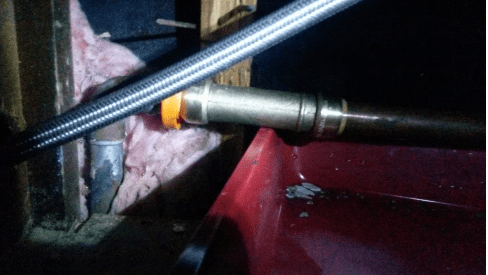
#7. Fixer of Things (March)

Home handyman par excellence saves $300 and in the process baths in a warm inner glow of a job well done. Includes a contender for Picture of the Year.
Capture

#8. Scrub Up and Slice In (May)

Narrative surgery.

“The problem is, like an insane spider’s web, every part of the thing is interconnected”.

#9. Watch out – There’s Girls Driving! (June)

An incident at the supermarket that perfectly illustrates why Pav and his family prefer to shop on a Sunday morning at 8am.

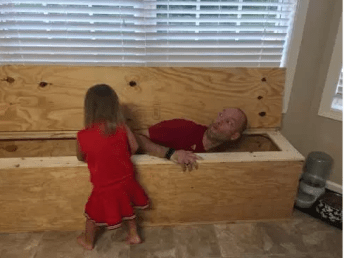
#10.  Splinters (September)

Giving praise to the Gods of Carpentry and what it takes to build a kitchen bench.

Includes maverick use of the word “perambulate” and Picture of the Year.
Capture

#11. Cleansing the Stream (February)

A writer’s brain is compared to a mountain stream.

This majestic post boasted an inspired use of the word ‘panoply’.

#12. Can’t Complain (March)

Where Pav pops the lock on his formula for living a happy life.

Includes a quote from Ferris Bueller.

#13. Project Projections: 80% Chance of Bloodbath (March)

A gripping confessional where he admits the plot of his current novel in progress needs work.

“The plot needs work to be sure, but it’s more multi-knotted rescue rope with the odd loose end than formless hairball of half-digested tail fur.”

This is also the post where Matt comes clean on the worst kept secret on the blogosphere – that he loves a good simile or metaphor like he loves a third slice of cake.

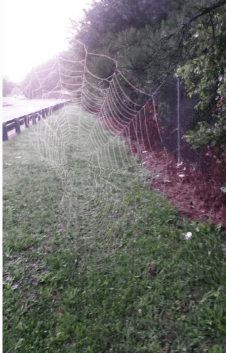
#14. Spiderwebs (July)

Pavowski’s spidey sense tingles overtime in this classic post.

“Spiders spin webs because their spidery nature compels them to. They spin webs because if they don’t they will literally die. That’s writer-y”.

Includes sublime use of the word ‘topiary’ and another strong contender for Photo of the Year.
Capture

#15.  A Burp of Inspiration (January)

Matt let’s on one of his favourite quotes comes from Pablo Picasso (1881-1973), the one about “Inspiration exists, but it has to find you working.”

#16. Who Ever Wanted More Deadlines? (May)

The motivating force of impending deadlines.

Plus a bonus: Matt reveals he’s accepted an offer on his (then) current house.

#17. WriterSpawn (June)

The day Pavowski’s asked his five-year old son if he wanted to go down to the beach and he replied, “No, I want to finish making my book. I’m so excited to read it to you.”

#18. Toddler Life Chapter 419 – Cite Your Source (May)

Where Pav observes his five year old son can craft an argument, make a literary allusion and cite his source. Admits also he grows to hate all books his son loves.

#19. The Fly (November)

The fly is that little idea that gets into your head.

Kenny Rogers is a quoted source of wisdom in this post that contained quite the buzz as well as the classic ‘a fly flew’ “obviosity”.

#20. Magic Signs are BS (June)

There’s no such thing as a sign that it’s time to write that novel.
Capture


On behalf of everyone who regards ACCIDENTALLY INSPIRED as blogging royalty, thank you Matt for a spectacularly entertaining 2017. Good luck with getting the agent representation we know you are seeking for your two novels and we look forward to reading another swag of true-life literary gems in 2018.



Metaphor Tuesday (Let’s not kid ourselves): Weird Little Dials


Do you know what a tachometer is?

I only know because I played video games like most people breathe when I was a kid — and not only did I play them, I read about them religiously. Strategy guides and reviews. I had a subscription to Nintendo Power magazine. I read the instruction manuals with new games, for goodness sakes. And one of the racing games I played (It might have been Top Gear or something, before that was a TV show), of course, had the display that looked like a car’s console. This console featured, in addition to the course map, rearview mirror, and speed (the only thing a kid really cares about), the tachometer.

That was a long way of saying your eyes probably pass over the tachometer on your car every day. It’s that dial next to your speedometer that tells you how many times your engine is turning over in a minute. Ever step on the gas while the car is in park? The tachometer spins up even though you’re not going anywhere. It measures not how fast you’re going, but how hard your car is working. Which, by certain metrics, makes it a much more important indicator in your vehicle, though one we hardly pay attention to.

We watch the speedometer, because we want to know how fast we’re going. Or maybe because we want to avoid the flashing blue lights in the rearview mirror. Or because the guy in front of you is moving maddeningly slowly and you want to know EXACTLY how slowly because that information will surely benefit you, somehow. We watch the scenery passing by outside the windows, because that tells us where we are. Trees and buildings; keep those a safe distance from the side of the car. Other cars get to drift in and out of that space; all fine as long as they’re pointing in the proper directions. And of course, we watch the road ahead, because if we don’t pay attention to where we’re going we’ll never get there, and we may in fact fail to get there very very quickly.

But we don’t watch that meter that tells us about the vehicle we’re taking the journey in. Or, at least, we don’t watch it until we have reason to — when something may be wrong. When the engine’s overheating and we’re struggling to maintain speed, or the transmission has slipped and we can’t get out of a lower gear, or … I dunno. My lack of car knowledge betrays me, here, but you get the idea. All of a sudden, we’re just not GOING like we want to, and we check that little tachometer and, huh, holy cow, that thing’s pushed all the way into the red. That can’t be good. So you limp your car (or, given my luck lately, you more likely tow it) to the shop and find out it’s gonna cost a couple thousand dollars to get it fixed and you sit there and question your entire life leading up to this moment.

That’s when you realize how important the tachometer is. If you had noticed it earlier, seen the engine was working too hard before you ran it into the red, you might not have broken whatever you broke to find yourself here on the side of the road with a useless vehicle. You could perhaps have treated the problem or replaced an overworked component before the whole engine melted down. But you didn’t. And here you are.

Or rather, here I am.

For months I’ve been focused and wrapped up in all kinds of stuff. The play in production. The novel(s) I’m trying to write. Running and exercising every day. Day-to-day work and planning for my classes. Playing Mr. Fix-it around the house, or paying people to come in and do the same (or, sometimes, paying people to come to the house only to tell me that their contract forbids them from fixing that particular problem, so hey, you get to play Mr. Fix-It after all, less a couple hundred bucks). To say nothing of being a dad and husband who isn’t a complete jerk.

I was redlining, and I didn’t know it. Instead, I was paying attention to the road ahead (fraught with obstacles as far as the eye could see) and the scenery creeping past (moving not nearly as fast as I would have preferred). I just wasn’t getting enough done, and that shortcoming was all I could think about. Not enough words written. Not enough miles run. Not enough paperwork finished. Not enough.

Boom. Blowout. All of a sudden, I’m afflicted with some sort of creeping crud for the third week in a row: congestion and cough and all that good stuff. My heel goes haywire from some phantom injury and I can’t run. A week’s gone by and I haven’t even opened my novel. I’m barely making it out of bed in the morning in time to get the kids up and dressed and off to school, and it feels like I’m accomplishing nothing during my working hours.

The tachometer is a metaphor, then, for something on the body, I’m just not sure what it is. Maybe it’s your sleep schedule. Maybe it’s your blood pressure, or your stress level, or whatever else. Point is, whatever it was, it was out of whack with me and I didn’t pay attention to it and I spent a couple weeks with the car in the shop and taking the bus to get around, as it were.

I make a lot of noise about momentum and staying busy around here, but the fact is, I think I’ve been overdoing it and not being honest with myself about the fact. Residual stress from the move this summer. Frustrations at things going wrong (and costing us lots of money!) around the house. Unforgiving standards for my creative endeavors. Dogged insistence in my exercise habits. It all adds up.

But the play is over, as of this past weekend. And you know what? All of a sudden — the very next day, even! — I felt lighter, calmer, better. Just knowing that that particular source of stress was gone (for now, at least) made the next breath of air come in that much cleaner.

Maybe I need to find a way to relax a little.

And I definitely need to pay more attention to the weird little dials.

Metaphor Monday: The Painted Closet


Metaphor Monday is a new thing we’re trying out around here. Every week, I’ll pick a thing and compare it to another thing. Probably writing, since that’s what this blog is about, but who knows? Metaphors are awesome. Alliteration, doubly so. Got a suggestion for next week’s metaphor? Drop it in the comments. And yeah, I’m a day late today — you’ll see why below.

We’re moving (finally!) and as a result, most of my thoughts bend in that direction. The whole affair got delayed and postponed and we ran out of time this summer to deal with it the way we would have liked, and now we’re having to rush through things. Instead of two weeks to sort our lives out before we got back to work, we were left with more like two days, so it’s a frantic rush of movers and building furniture and unloading boxes and the house looks like a war zone if the war were fought between rival manufacturers of styrofoam peanuts.

So we’re hustling to get the kids’ rooms painted (because if we don’t do it now, it’ll never happen), and I catch my wife sort of staring into the closet. Hands on hips. Thoughtful frown on her lips.

“What’s up?” I ask.

“I don’t know if I can handle these closets,” she says.

I look. While most of the rest of the house is immaculate, the closets are not — especially the ones in the kids’ rooms. They were obviously occupied by kids before, and bear the scars of it. Dings and chips in the drywall where toys or sporting equipment were chucked heedlessly in. Aimless, careless scribbles in crayon and marker — not a design or an attempt at artwork, just an outburst of uncertain creative energy.

I shrug. “It’s a closet.”

“I know, but it’s going to bother me.”

Really? I’ve got bunkbeds to build and a rain forest in the backyard to trim down and about a bajillion boxes to haul up the stairs and you want to waste time painting a closet? Why? Who’s going to see it?

Come to think of it, I mean, when’s the last time you saw the back of your own closet, let alone anybody else’s? Leaving the closet in that state is a crime without a victim; literally nobody will ever know. I begin to protest, but I don’t get very far.

“No, I really want to paint over them.”

Happy wife, happy life, they say. So I go down to the basement in search of the primer. We crack it open and go to work with the rollers, and the job is done in less than an hour. We don’t even do a good job, really — the color’s not a perfect match to what’s in there already, and some of the really dark marks show through — but the closets look miles better.

And my wife is smiling a little more.

And so am I.

So, what’s a painted closet have to do with anything? Well, it’s exactly what it is: a lovely little detail that nobody else knows is there. It’s Van Gogh’s signature twisted into the whorls of a sunflower. An authorial flourish added, not for the well-being of the observer, but for the well-being of the author.

An oft-quoted bit of advice for the writer is “kill your darlings.” Generally, it means that those weird little things that you stuck into the work for your own benefit? Because they made you laugh, or amused you, without serving the story as a whole? Those are things which distract from the narrative, that seem to stand for bigger things and thus demand the reader’s attention, and then frustrate the reader when they don’t. They’re a waste of time, in other words. Everybody involved has better things to do. So they deserve, to butcher syntax in a way I feel rolls right off the tongue, to be got rid of. (Diagram that sentence, Ms. Finch!)

But a closet doesn’t take that much time to paint, and there’s the odd house guest who might poke their nose into the nooks and crannies of the place; wouldn’t we rather give them a nice, finished closet to look at rather than a pockmarked and graffitied (graffiti’d?) hidey-hole we hoped would never see the light of day?

By the same token, a story needs a few diversions. A few rabbit holes for readers to dive into, even if there’s nothing hiding at the bottom.

And, after all, a happier wife is worth an hour’s worth of work with a paint roller.


Riding The Wave


We’re back from a week’s vacation. Back from a week of beaches and relaxation and not thinking about work at all and HA HA no, we were on vacation with our kids naturally, so it was pretty much life as usual: waking up before the sun, stretching out every activity by about 50% to allow for tantrums and foot-dragging and lost shoes / stuffed animals / underwear, and remember when I said that thing about relaxing? There’s no such thing as relaxing when your kids are five and three and will fight about literally anything if given ten seconds of opportunity.

So: didn’t get as much opportunity to write as I’d hoped.

But on the night when we were uncertain whether the storm of the decade was coming through, my wife and I did sneak down to the ocean to ride some (for the gulf) killer waves. Actually, to be clear, my wife had the good sense to not try riding the waves, but as good sense is rarely one of my dominant characteristics, I jumped in with both feet, and often my head.

Surfing (okay, fine, boogie-boarding because I’m not that coordinated or cool) is a great way for a thirty-something guy to get thoroughly humiliated and smacked around in return for a few sparks of short-lived adrenaline.

But I realized — as I was on vacation, hiding from responsibilities and from my craft of choice — it’s also a pretty good parallel for writing.

To wit: here’s how surfing works. You grab your board and you head out into turbulent waters, fighting the current and the crashing waves to get yourself out a decent distance from shore, where the waves are fewer and farther between but bigger, more powerful. There, you wait until just the right one comes along, and then — with every ounce of strength and dexterity you can muster, you abandon your fingernail grip on safety and attempt to ride that thing all the way back to the shore.

Fun, but also pointless and much more likely to leave you smashed against the ocean floor, unsure which way is up, filling your lungs with ocean water than to deposit you safely on the shore, stepping casually off your board as if the thing you just accomplished were really no big deal as the ocean breeze ruffles your sun-kissed hair.

Which is basically writing. Let’s be honest: life would be easier if you just didn’t. The world doesn’t want you to write, like the world doesn’t want you to surf. Those waves are monstrous, relentlessly pounding you back to shore, which is really where you should be hanging out: grinding out your daily routine, seeing to your land-lubberly responsibilities (i.e. your job), sticking to the land you evolved to walk upon and not the sea which your evolutionary ancestors abandoned.

Every wall of water that breaks upon you is shoving you back toward land. The sea doesn’t want you there — it knows you don’t belong. Just like the writer trying to make time for himself when he has family and job and mortgage payments to contend with. That’s where you and your energy belong, not splashing around in the ocean that’s just going to leave you cold and bruised and waterlogged. But you fight your way out anyway, whether you’re chasing a thrill or an escape or because somewhere deep in your primeval brain you feel like you do belong out there.

Then you wait. The shore — and the safety and normalcy it represents — is distant. All around you break waves that you allow to pass by for one reason or another: Not big enough, not breaking at the right time, too fierce. The waves are the writer’s ideas: plentiful and without end, but mostly useless to the writer, for many of the same reasons: too big in scope for the author to tackle, too small to really hold his attention, or interesting but just not one he’s feeling right now. Most of them roll right by.

But eventually, you see the one. It’s just right, this wave, big enough to give you a thrill but also just big enough to scare you a little. (It’s the idea that frightens you a bit that will keep you writing.) So you jump on it, and this, too, is a struggle — because in the build-up to the wave, the current changes. The ocean draws the water back to itself to gather strength for the new wave, and it pulls you out to sea with it. But you find yourself atop it nonetheless, and then everything changes. Now you’re flying along at the speed of creativity, as this madcap idea explodes and crashes all around you in an erupting chaos of foam and spray — the castoffs of a story being woven from nothing.

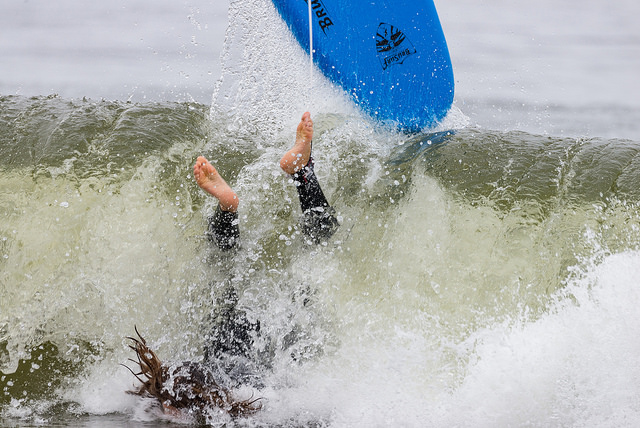
And who knows? Maybe the wave turns on you — it breaks over your head and tumbles you end-over-end. It slams you into the sand and the ocean rushes into your mouth and nose and ears and you feel like you might as well be a mile underwater for all you can see and feel. This is where the idea leaves you and the inspiration rushes right out leaving you lost and adrift and doubting every decision that brought you to this point, reconsidering an easier life, perhaps as an accountant.

https://www.flickr.com/photos/johnkay/28911174342/
Image by John K at Flickr.

Or maybe you ride it all the way home, bumping gently onto the sand as you stick a perfect landing: the ending writes itself, the conflicts wrap themselves up neatly, and you step off the board, nary a hair out of place.

Either way, you find yourself back on land again — beaten and half-drowned or charged up and riding high — but not quite satisfied either way. Nobody heads out to ride just one wave, do they? There’s an infinity of stories out there waiting to be told, an interminable ocean of waves waiting to be ridden.

Grab your board.

Or, y’know. Your pen. Or keyboard. Or whatever.