Things Writers Need — TIME


School is back in session, and as you might have noticed if you’re a regular here at Pavorisms, it’s taking a toll.  My writing has suffered a vicious setback at the hands of being back to work and will likely continue to be set back until I get a handle on a new routine for the year.  That said, today’s topic for “Things Writers Need” is particularly salient.

 
Today’s thing is time, bloody precious uninterrupted sacred time.  Time to make deadlines, time to think up story ideas, time to actually write the blighted thing.  Specifically, I want to talk about the actual time you need when actually actively writing.
 
Let’s get this straight.  Writing is HARD.  Even when you’re writing about something you love, it’s knuckle-whitening, teeth-grinding, marathon-running HARD.  The best writing is a greased pig with a hot poker applied to its nether bits; it darts this way and that, wails like crazy and will kick mud in your face the moment you think you have a handle on it.  Even if you do manage to lay hands on the thing, without the utmost focus it will twist right out of your arms, leaving you sprawled in the mud and wondering whether the sweet savory taste of bacon is worth all the trouble.  (It is.)  You can’t corner it.  You can’t strategize it.  You just have to chase after it and hope to get lucky enough to scoop it up every now and then before it leaves you in the dirt.  Every once in a while the magic just happens.  But it can’t happen if you don’t have time to chase the pig around the yard.
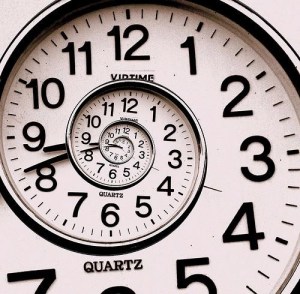
 
Time
There’s a quote I loved from the much-adored John Green’s The Fault in Our Stars, “What a slut time is.  She screws everybody.” Doesn’t even buy you diner first.
 
The fact that I am realizing lately more than ever before in my life is that time is a fixed, non-renewable and ultimately precious resource.  Life is filled up with so very many things we must do that it can feel like a mug’s game trying to decide what to do with the time you have left over.  Writing, sad to say, takes up a lot of time.  Even on a good day, I can get maybe 1000 words an hour.  Measure that against the novel I just drafted at 89000 words and that’s ninety hours at a minimum, but let’s be more pragmatic and assume it was closer to a hundred and fifty.  Where does a guy with a full-time job and two full-time kids get that kind of time?
 
You get it at the expense of other things.  You have to cannibalize the things you hold most dear and use the sweet sweet time you harvest from their still-breathing husks to do the thing that matters.  My thing is video games and TV.  I’ve been a video game junkie since I was five years old and played my first round of “Skier”, in which you steered a pixelated blob down a white expanse dotted with pixelated tree-like green things and pixelated brown lumps and pixelated H-shaped things which somebody assured me you were supposed to navigate between but I was too busy crashing my pixelated blob guy into trees and cackling like a Bond villain to care.  (Seriously, ask my dad about my experiences with “Skier” and he will laugh until he’s blue in the face.)
 
And TV, holy god!  I used to think that TV was a drain on my life before we got Netflix.  Now it’s a ravenous all-consuming black hole.  On one side you’ve got brilliant network shows one-upping each other with crime dramas and sitcoms, on another side you have cable shows pumping out blistering tour-de-forces in character study and horrible dark drama, on another side you have premium channels hawking epic escapist fantasy and historical fiction, and then there are the on-demand streamers giving you a smorgasbord of bizarre and compelling no-holds-barred excursions in the secret lives of everyday people.  I really think one could watch eight to ten hours of television a DAY and still miss out on some of the incredible programming that’s coming out of TV in the last ten years or so.  I say that not as a rant against television but more as a statement of awe.  There’s SO MUCH GOOD STUFF out there.  As a writer, watching a good show is research, right?  RIGHT??
 
Point is, it has to go.  Or at least, most of it has to go, because, see, if you want to create, you need large, unbroken swathes of time to let your mind stretch out in.  You need to be able to stew in your thoughts, to fart around with your characters and work on the Gordian knot of tangled plotlines and entrapments that your stories turn into.  I’m not even talking about the actual act of writing, I’m talking about just thinking about writing.  You have to carve out these huge chunks of time in which to operate.  Writing isn’t a microwave dinner, it’s a slow cooker.  You can’t catch ten minutes here, twenty minutes there and expect to turn out Hamlet.  (I understand that some writers work that way, and bully for them.  Honestly.  But how much better could they be if they didn’t have to write that way?)
 
I read a fantastic article a few months back on NerdFitness.com (yeah, ‘net browsing is another thing that could do with some cannibalizing) called “Why ‘I don’t have time’ is a Big, Fat Lie”.  Steve Kamb has it right here.  It’s true.  So true, it hurts.  In short, the article encourages you to change the way you think about time.  We all have the same amount of time in our day, no matter how much we might wish it otherwise, and some of us are doing amazing things with that time and others are withering on the vine.  Instead of saying, then, that “I don’t have time” to write that novel or run those three miles before work or cook that nice dinner, Steve encourages you to say instead “it’s not a priority.”  Because we make time for the things we prioritize, even if the decision to do so is not a conscious one.  Sitting on your donk and watching TV or playing a video game gobbles up your precious time, so while you’re doing that, you’ve made it a priority.  This is not to say, of course, that TV or video games should be eschewed entirely.  Far from it.  (TV is research, right??)  But we (and by “we” I mean “I,” and by “I” I mean “writers,” and by “writers” I mean “everybody”, really) have to make time for the things we want to do even when the making of time is difficult.  And I really shouldn’t say “make time”, because the time is just there.  You just have to steal it away from the other unimportant sharknado in your life that wants to steal it first.
 
So you have to fight for your time.  In full battle-armor and with broadsword polished and flailing and a tiny little holdout dagger in your belt ready when the fighting gets really gnarly, if necessary.  You have to carve that time out of your schedule anywhere there is meat left on the bone, and when there is no meat left, you might just have to cut the bone, too.  I operated on six hours of sleep most nights this summer because I’d stay up late writing after sprout #2 went to bed late and then wake up early when sprout #1 popped out of bed like a happy tornado at six AM.  (Of course, my wife operated in staccato bursts of two hours of sleep at a time, so I bow to her masterful experience there!)  It sucked, but I got it done.  I’m trying to find the groove now for being back at work with two kids at home leaving footprints in the jello, and it’s difficult, but I’ll find that groove somewhere.
 
However you find it, you have to make writing the priority, and that means you have to make the time to do it.  That’s the bottom line.  Writers need time to do what they do if they want to do it well.  If you’re a writer, you have to claim that time however you can.  If you’re dating or married to a writer, well… maybe cut him (or her!) a break once in a while.  Give him (or her!) an hour’s break from the kids — take ’em to the park or something — or take a girls’ or guys’ night, or I dunno, build him (or her!) a temporal displacement chamber in the basement so that he (or she!) can by god create more time and get some damn writing done, paradoxes like meeting your future self or becoming your own grandfather be damned.
 
No, seriously, if anybody has any leads on that temporal displacement thingy, let me know.
 

The Equal Amateur


A Random Title Challenge from Chuck this week.  In keeping with my last several posts, I thought long and hard about how to attack this prompt, and then realized that the right way was literally right under my nose.

Here, then, is The Equal Amateur, a tale of a cold and heartless world where all your efforts and learning and experience don’t mean sharknado next to the bright and talented young upstart.


The Equal Amateur

“Son of a bitch,” Nick thinks, casting a subversive eye at the lump of protoplasm squirming in the holding unit at the far end of the cell.  “What’s happening here?”

It’s swatting at imaginary flies now, but that always precedes the screaming.  Sure enough, after just a few moments of flailing its stubby suggestions of arms (they look more like tiny, squishy marshmallows conglomerated on sticks to Nick), the lump begins to wail, a wordless, plaintive cry that somehow seems to permeate his consciousness.  He sets down his brightly colored blue plastic floor-smasher and stares at her.  He almost sighs and shakes his head, but he hasn’t yet learned the significance of such a gesture.  “It’ll never work, kid.  Words.  Words are the future.”

But even as he thinks it, one of the Keepers hops up from the sitting apparatus and hurries — practically sprints — to the lump, scoops it up in loving arms, and begins to babble incoherent speech at it in a tone Nick sort of remembers in his own unfinished cortex.  A tone of soothing, of comforting.  Nick’s mouth hangs open and he stares, astounded, furious, perplexed.  “I’ve got to throw myself on the ground outside — get all that painful red smeary stuff on my parts — to get that kind of attention.  And the lump just has to whine a little bit?”

Time was, Nick reflects, that seniority spoke for something around here.  When he could get the Keepers’ attention with just a cock of his head or an insignificant, purposeless spasm of his fingers.  He’s put in the time learning their language, learning where the food is kept, learning which of the animals can be safely ridden and which scream and yowl when touched.  Now all the Keepers seem concerned with is shoving a variety of foodstuffs under his nose or into his hands, removing the smelly brown goop from his privates when it inexplicably shows up, and making sure he sleeps more than he would particularly care to.  Sure, they laugh and clap when he manages to pronounce some new word in their alien tongue, but their joy is fleeting and quickly forgotten.

Then there’s the lump.  The lump has been in the detention center for only a few days, but has already started throwing her weight around.  For some reason Nick can’t wrap his tiny cranium around, the Keepers respond to every twitch, every whimper, every little thing the lump does with a care and affection and concern he’s not known since he can remember, although to be fair, the rapid expansion of his brain and the constant barrage of new interesting information — new things to ingest, new words to try out, new colored sticks to rub against the walls to mark the period of his imprisonment — doesn’t leave a lot of room for memory and reflection.  Still, it seems unjust.  He’s put in two years with the Keepers, knows their routines, knows how to get a rise out of them, knows how to get them to leave him alone.  Knows that if he ululates at just the right frequency, he can get the male’s eye to twitch, and then he can get anything he can find the word to ask for.  Unfortunately for him, he only knows words like “popsicle” and “string cheese” and has not yet learned the words for “existential fulfillment” or “the sweet relaxing freedom of a nap among the daffodils.”  Knows that if he pretends to be hurt, the female will hug him and squeeze him and tell him that she loves him, and then it’s time to ask for more popsicles.

No, the lump doesn’t even have to ask and they’re showering her with clean dressings.  The lump needs only twitch and they pick her up and bundle her close.  Should the lump begin to cry, they lock down the unit and find a way to make her happy, even going so far as to put her in the Swing.  The thought makes Nick’s blood boil.  He doesn’t fit in the Swing anymore, and they haven’t shown any signs of getting one that fits him.  Funding, probably, or maybe they just don’t care.  He’s tried to sneak into it anyway but the Keepers shout at him and threaten him with solitary confinement: the dreaded “Time Out.”   Much though he loathes them, is frustrated by them, attempts to find ways to skirt their authority, the thought of their separation is more than he can bear. He shudders and bites back the bubble of indignant anger that chokes his throat.

The lump has quieted.  The female Keeper puts her back into the holding unit and returns to her vantage point, failing to acknowledge Nick at all but for glancing in his direction to make sure she doesn’t step on him.  He wistfully holds up a crayon to her, willing her to understand his plaintive desire to tell his story, to connect with another like him, to step outside and taste the freedom and run in circles until his tiny legs can no longer support him.  “That’s a good crayon, Nicky.”  The male keeper is falling asleep at his post.  Typical.

Then it dawns on him.  Maybe it’s not that the Keepers don’t love him anymore.  Maybe the lump is just better adapted for the world than he is, for all his practice.  Equal to him, perhaps, without the cumbersome training.  He watches her with suspicious eyes.  Is there something to learn from her?  Fewer words, more inarticulate screaming?  Less intelligent manipulation of the environment, more flailing and stomping and smashing?  It’s a disquieting thought that all he’s learned can be overthrown by one tiny little infant, but it’s hard to argue with the results.  With dawning terror, he realizes that he has a lot to learn from the lump.

Simmering my Brainmeats in a Fragrant Crockpot of Creative Doubt


My Flash Fiction from last week is enjoying a bit of success over at terribleminds.com.  So good, in fact, that I stand to win a free e-book off the back of it (yay free stuff!).  That thread is here:  Three Sentence Stories.  And it got me to thinking, which is a bad habit I have.  Because I love these little Flash Fiction challenges; I take great pleasure jumping into them with both feet no matter how difficult or ridiculous or outside of my comfort zone they may be.

If you’re going along with this post, you might want to check out my series of stories from last week, because I’m stewing over them right now.  Simmering my brainmeats in a fragrant crockpot of creative doubt.

Writing the last one — I should say the last set, since I expanded on the topic and wrote way more than I perhaps should have — was instructive, because the development of the stories was so strange to me.  With only three sentences to tell a story, I agonized for the weekend over what story I could tell, what characters I could bring to bear, what possible development and twists I could effect within such a short period.  My first story was good but fell into my typical vein of the dark and somewhat horrific account of a more or less mild-mannered somebody taking part in senseless violence.  It’s a little bit of a motif with me, I’m afraid, and I’m just not sure how effective it really is.  It wasn’t bad, but the moment I wrote it, I realized just how much of a step into an old shoe it was, which is why I decided to write another one.

So I rebooted, kept my central idea and parameters, and brought in new characters, new conflicts.  New perspective, new story, new twist.  And v2 was better, I think, though it still fell in the same dark, depraved vein of the first.  But twisting the idea in my brain felt refreshing, so I tried again.  If the first story was a cruise down a familiar highway, the second was a short detour on a quaint exit ramp for a franchise burger.  A bit different but nothing incredible.

So for the third go-round, I decided to take a hard left into the ditch.  Rather than characters, I characterized inanimate objects (more or less), let them talk and explore human emotions and ideas, and … end up at the same dark murderous place.  Hmm.  The new take on characters was like a fantastic little food truck discovered set up around the corner from my office.  Totally new and exciting food in a familiar and comforting setting.  I knew I was getting warmer.

On the fourth go-round, I struck gold.  I re-imagined the central idea once again, personified an inanimate object and used my scenario to describe a situation that happens every day.  Not an earth-shattering revelation about everyday, just a little thought experiment on what might be happening when the vending machine at the end of the hall rejects your dollar.  Somehow, it felt like gold.  An ostensibly ridiculous premise with an endearing (at least, I think so!) character whom you don’t expect, giving an unexpected perspective and staying light and upbeat.  So it was a bit out of my comfort zone, a bit funny, a bit ridiculous, and very much me.  As I was writing it, before it was finished (yeah, that quickly, even before I could finish three sentences), I could tell it was the best one.  That “magic” was happening, that crazy feeling where you feel like you’ve tapped into the magical mind-juice of the universe and your pen (okay, your keyboard) is acting as a conduit for the timeless universal stories that speak to everybody.  You know, a good writing session.

The fifth attempt felt a little forced, so I pulled the plug after that one.

So, to reflect, I wrote one story in my usual vein, a second with one foot out of the vein, a third with an eye on a different horizon, and a fourth that struck out toward that horizon and — by all accounts — seems to be resonating with folks who read it.  So now, I’ve got another prompt in front of me for the weekend, and I’m all in my own head, wondering if I need to write three junk stories before I get at the “real” one.  For that matter, I’m working on an extended short story and boy oh boy, does it feel awkward and forced.  Like I’m in touch with the central idea, and I’m enjoying the premise, but I can tell as I’m writing it that I’m not telling the story the right way.

Do I need a few crap attempts at the topic to “clear the pipes” so that I can get down to writing the story that I want to write?  If so, how far do I have to carry those stories out?  When I wrote Rejected v1, it felt like a pretty good story to me, but in retrospect I can see that it’s awfully derivative.  The current version of Powdered Chaos, at about 30% completion, already feels crap.  Do I need to carry it to is conclusion before I take another stab at it?  Or, having written about 4000 words on it already, can I legitimately realize it’s crap and start over without crashing my creative process?

In short, just what the hell is my creative process anyway?  This is seriously bugging me, and it’s bogging down my writing hard while I’m trying to carry my momentum through this lull before I jump into editing Accidentally Inspired.

Need to figure this out.  Anybody else have anxiety like this about your drafts?  How do you attack it?  Do I just write the crap to clear the pipes or do I resist the urge to waste time on the crap and hold out for the good ideas to strike?

Things Writers Need – Dictionaries


In this next installment, it’s time to talk about more tools of the trade.

Last time, of course, I talked about the word processor, and why I like small, minimal ones instead of monolithic, fully-featured ones — for the drafting process, at least. Today, another staple: the dictionary.

Every writer should own a dictionary.  Scratch that — every writer should own a Dictionary, capital letters and italics included and necessary.  There’s a gargantuan difference between a Dictionary and a dictionary, and I’m not just talking about the price point.  Of course, there are alternatives.  To effectively draw a distinction, we need to consider what you’re using a dictionary for. To my mind, there are basically two functions that the dictionary should serve for you.

One, the dictionary needs to let you find and define words that you don’t already know the meaning of.  (Yeah, I just ended a sentence with a preposition.  SOMETIMES IT’S OKAY, OKAY?  Would you rather have read “words whose meaning you don’t already know” or “words of which the meaning you do not know” or the thing I wrote?  YEAH I THOUGHT SO.)  If you’re reading age-appropriate literature, odds are there will be a tasty handful of these little gems sprinkled in there.  Why?  Because variety is the spice of life, and you can only read the word “good” or “fast” or “slow” so many times before you want to pluck your eyes from their sockets and puree them into a gristly soup so that you don’t have to read those boring words any more.  Good writers avoid having their readers puree their eyeballs by using a broad swathe of words so that you don’t get bored to the point where eye-pureeing seems like a good idea.  That means that they will, by necessity, exhaust the canon of “ordinary” words that the average person lives with in his average life and strike out for the far reaches of the unknown, where words have four or five or six syllables (multisyllabical words, oh my!) and the sad fact is that a lot of us just don’t know all those highfalutin’ words well enough to use them in our everyday speech or writing, if at all.  And I say that with full confidence in my vocabulary as an English teacher.  I know my vocabulary sucks.  Sorry, it’s atrocious.

I read once that the English language is composed of something like three hundred thousand adjectives, which is more than 850% of the total words in the language.  Statistics are always true.  The point is there are more words in the language than you have room in your brain for, and a good storyteller will push your limits by throwing some of those words in there.  Sure, you can figure them out on context a lot of the time, but isn’t it satisfying to look up a fancy word so that you know it and can then toss it offhandedly into your water cooler conversation like a foppy prince tossing a bag of change at a servant?  “That episode of The Walking Dead was so guttaperchic, man.  I mean, positively seminiferous.”  See, if you knew those words, you’d know that at least one of those statements is absolute nonsense. The other reason (and it flows from the first, really) you need a solid Dictionary is to help you discover new words to use in your own writing.  Think of it this way.  Electricians have tools.  Carpenters have tools.  Missile building geniuses have tools (right John?).  Hell, even a Comcast Service Technician has a truck full of tools.  What do all those tools do?  Well, unless you have a lifetime of experience running wires or building vestibules or being a totally worthless appendage of a company best likened to the Sarlaac — sorry, a Comcast Service Technician — you don’t know!  Sure, you can guess that the clippy-looking-thingy might be used to, I dunno, cut things, or that the pointy-bit-on-the-end-of-a-steel-doodad could be used to poke holes in things, but when it comes to poking the proper holes in the proper things in the proper place, you’re as educated as a Comcast Service Technician.  (Truthfully, CST’s I’ve had experience with have all been pretty decent human beings, even if they work for the most unholy corporation in the known universe, a corporation that now apparently has religious freedom, so HAVE FUN WORSHIPPING THE BLACK MAW.  Thanks, Supreme Court!)

Ahem.  Writers have a job just like carpenters and electricians and rocket scientists and… no, we’ll leave the Comcast Service Techs out of this one.  Unlike those, you know, technically-abled sorts, we don’t have trucks or toolboxes or closets to keep our tools in, because our only tools are words.  A good, solid dictionary is the best tool repository you can hope for, and on a per-word basis, even an expensive dictionary is the equivalent of getting a 5,000-piece drill-bit and screwdriver-attachment set for $19.99.  You wouldn’t set out to build an addition onto your house with just a manual screwdriver and a hammer. All that said, let’s look at your options.

Online Resources.  Here’s your web-based dictionaries, i.e., Merriam-webster.com, dictionary.com, or whatever website floats your boat.  And don’t get me wrong, these are AWESOME, but they come up short in that “discoverability” factor in the same way that Amazon doesn’t quite measure up to a good old fashioned bookstore with actual walls and shelves and books and snooty clerks.  With an online dictionary, you can only find the words that you’re looking for.  Now, that’s a great feature — albeit one you can accomplish with an old-fashioned dictionary in the absence of a working internet connection, and for those write-at-the-edge-of-society-so-as-to-commune-with-nature types, that’s a monstrous plus.  Sure, these sites will highlight words from time to time and post “words of the day” and other fun stuff, and again, those are GREAT.  But you miss the tactile feel and sense of wandering among corridors and pages of words that a hard copy brings. By the way, just for poops, I scrolled down on the Merriam-Webster site and found a list of the top 10 most searched words in the last week.  They are:

  1. bestiality
  2. bigot
  3. pedantic
  4. et al
  5. biweekly
  6. comradery
  7. holistic
  8. sex
  9. culture
  10. closed-minded

And I think that says JUST A LITTLE BIT about the insane perverted prudish idiotic political culture that we live in.

Cheap, dollar-store dictionaries and pocket dictionaries.  This is a step backwards from online resources, because there is not nearly enough depth or breadth in these.  I saw one in a dollar store once that was literally one hundred pages long.  That was boasted on its cover.  How many words can you cover in one hundred pages?  Not enough.  The really tasty words just aren’t going to be in there, and even the definitions are condensed and crap, like a microwave dinner.  These are useful until about the time you finish high school, assuming you’re not particularly interested in expanding your horizons beyond high school.

Abridged dictionaries.  Now we’re getting somewhere.  If a dollar-store dictionary is a microwave dinner, an abridged edition is a meal-in-a-box.  You don’t feel as dirty using it as you would if you just tossed your food — THE FOOD THAT YOU EAT TO SUSTAIN YOUR LIFE — in the microwave for its entire cooking process, but you know in your heart that you can do better than boiling water to dump the noodles in or preheating the oven to 350 and then cooking for an hour.  The definitions are better and you get a lot more depth and breadth and you start seeing some of those juicy words, but you’re still only dredging the shallows.

Dictionaries.  Here I’m talking about books that might be better classified as bricks.  This book is probably hardcover, because a paperback won’t stand up to being cracked open and laid bare along its spine the way a hardback will, not to mention that there are SO MANY PAGES a paperback wouldn’t even support them.  This is a book whose presence on your shelf demands notice, like an elbowy mafia fatman squirreling for space in an elevator.  It uses that ultra-thin paper like bibles use because the printing costs would be astronomical if it used standard paper; that paper that feels like it would dissolve in direct sunlight, that paper that makes you feel like you need the steady hands you developed from years of playing Operation just to turn the pages without crinkling them.  And ooh, that smell.  Smells like knowledge.  Crack this book open and you can just taste that delicious aroma of every word that’s ever been thought of crashing through your olfactory nerve and wrecking your frontal cortex with the pungent stank of knowledge.  Thumb through the book, put your finger down on any random page and discover words like isogamete and nasturtium and teetotalism (which actually means the OPPOSITE of what I thought it means, in fact I didn’t even think teetotal was a word until just now, I always thought it was “T-total”, like “capital T Total”, in other words COMPLETELY MOTHERTRUCKING TOTAL, but it DOESN’T.  The more you know!).  Add them to your daily lexicon and impress your friends (or, more likely, earn yourself a few raised eyebrows and punches in the mouth).

I’m not making any secret what my preference is.  At the moment I’m flipping through the weathered pages of a Webster’s Collegiate Dictionary, a book bound in beautiful royal blue and weighing in like a bowling ball.  This book could classify as a home defense system if you could get a good swing with it.  And it’s not even a “big” dictionary.  To my mind, if you’re writing in any arena beyond high school, you owe it to yourself to have a hefty hardbacked capital-D Dictionary handy.  One that’s heavy with wordstuffs, so heavy you need a packmule to carry it around.  Thumb through it from time to time.  Make it into a drinking game — one shot for every word that features a schwa.  But more importantly, use it to GROW YOUR LANGUAGE-FU.

What else do writers need?  What else do people think writers need?  Am I wrong about dictionaries?  Let me hear it.

“Keep Running, Faggot!”


Short one tonight.

Most of the time when I run, it’s either in the dark of the wee hours or it’s off the beaten path away from traffic.  Today, however, I went for an evening run in the vicinity of the main drag near my house.  Why an evening run?  Well, I missed the chance to go this morning, but more and more in my life of late I am realizing that momentum matters, so I didn’t want to just let it slide, so after the sprout went down to sleep, I laced up.

It was hot out, but the sun was down and a breeze was blowing through courtesy of the cold front that’s on its way in, so it was all pretty pleasant.  And then I hit the little side street by the post office where the sidewalk disappears for about a thousand feet.  I was alternating between the curb and the runaway grass when I heard a honking horn and a brash male voice shouting at me (from the opposite side of the road, let the record show), “Keep running, faggot!”

Not that it matters, and certainly not to generalize where generalizing would be inappropriate, but he was driving a big ol’ truck, probably to match his enormous manhood.

I have to say, I’m perplexed.

First of all, I know that for all the “progress” we’re making in the world, there are still people out there that have no truck with forward thinking and want to stay racist and homophobic and idiotic and drunk all the time.  But it’s a little saddening to me to learn firsthand that we still live in a world where an idiot feels just fine — probably righteously justified or even compelled — to lean out the window and shout at me for no other reason than that he thought he knew something about me.

Second, I really don’t know what he was implying.  Was he implying that there was something I was already running from  and should continue to flee?  His own indignant and puny and inwardly terrified hate speech, for example?  Or was he in a weird and twisted way trying to offer encouragement (keep going!  You got this!) and then forgot himself and added the homophobic epithet at the end?

Third, I cannot for the life of me think what he hoped to gain by his shout.  A momentary chuckle and boost in the eyes of his paleolithic social circle?  That superior feeling you get from watching over-made-up faux-celebrities pull each others’ hair in a flurry of bleeped language on reality TV (well, at least my life isn’t THAT crazy)?  More likely, he just wanted me to feel like an idiot.  I have news for you.  I already know.  You don’t go running during the waking hours in Georgia in the summertime if you don’t have at least one or two screws loose.  Or maybe he wanted to hurt my feelings.  But sticks and stones and all that.  All I really felt, ultimately, was sorry for him.

I know this is a biiiig stretch and a helluva long way to walk, but I wonder if this is an inkling of what women must feel when guys (is it ever anything other than idiotic, small-minded guys?) catcall them for running or in fact for just being a woman in public.  I’m not saying I know how it feels, but I’m saying maybe I can empathize a little bit.  For just a moment — I mean a brief, fleeting, lightning-strike of a passing moment — I felt hurt.  Not because he’d struck at the depths of my soul with his comment, but because it was just so egregiously disrespectful.  Then after that, I felt sad, because for one reason or another, this walking (and driving!) bacterium has made it through his life without anybody telling him that that sharknado is totally out of line and uncalled for, regardless of whether it’s true.  Finally, I felt frustrated that this spineless sack had occupied as much of my thinking as he has, as evidenced by the fact that I took the trouble to write about this little interlude.  I’m sure I was out of his gadfly’s brain without a second thought moments after the encounter, but he stuck with me, and I wonder if that doesn’t make me at least a little bit of the idiot in this tale.

Is there anything more cowardly than the drive-by shouting?